The Hidden Link: 6.0 Powerstroke Fan Clutch Wiring Harness and Transmission Slip
As we navigate the 2026 landscape of heavy-duty diesel maintenance, the 2003–2007 Ford 6.0L Powerstroke remains a staple on the roads. However, diagnosing clutch slipping symptoms in these trucks requires looking far beyond the transmission pan. While many mechanics immediately suspect internal wear in the 5R110W TorqShift transmission, a massive percentage of perceived 'clutch slip' issues actually originate in the engine bay—specifically, a degraded 6.0 powerstroke fan clutch wiring harness. Understanding the thermal relationship between engine cooling and transmission line pressure is the cornerstone of modern preventive maintenance for these platforms.
Understanding the 5R110W TorqShift and Thermal Vulnerability
The 5R110W TorqShift is a robust transmission, but it is highly sensitive to thermal degradation. It relies on Motorcraft MERCON SP fluid to maintain the hydraulic pressure necessary to clamp the internal friction clutches (specifically the Forward, Direct, and Overdrive packs). When transmission fluid temperature (TFT) exceeds 240°F (115°C), the fluid begins to lose its shear stability and viscosity. This directly translates to a drop in clutch apply pressure, causing the friction materials to slip against the steel plates.
How the 6.0 Powerstroke Fan Clutch Wiring Harness Fails
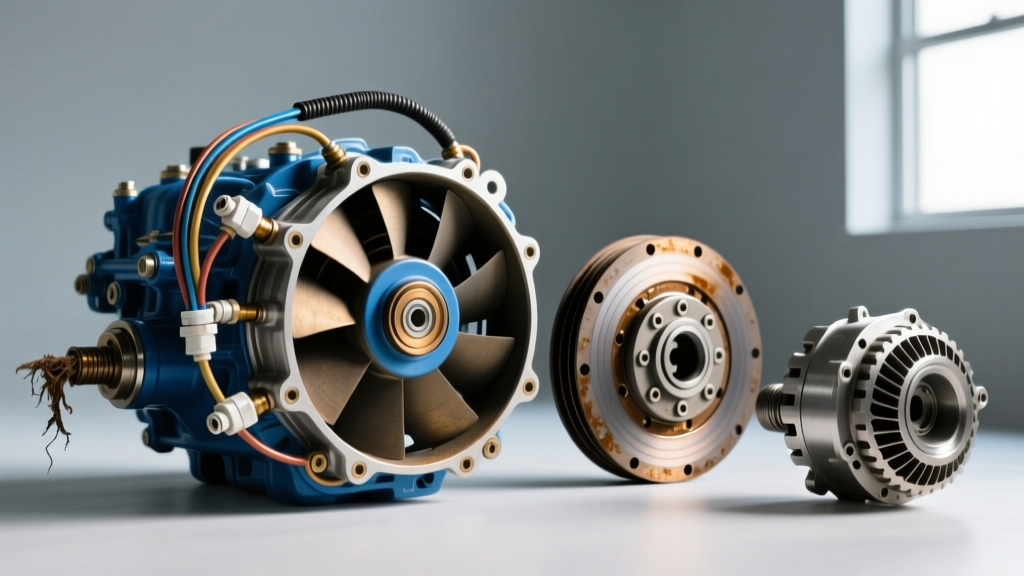
The 6.0 powerstroke fan clutch wiring harness routes precariously close to the alternator bracket, the A/C compressor lines, and the fan shroud. Over years of engine vibration, the plastic split-loom degrades, and the wires chafe against the metal brackets. When the pulse-width modulation (PWM) signal wire to the fan clutch solenoid shorts out or breaks, the Powertrain Control Module (PCM) loses the fan speed feedback loop.
When this happens, the PCM triggers 'Fail-Safe Cooling' mode. The wrench light illuminates on the dash, engine torque is derated, and the fan clutch defaults to a locked or partially locked state, yet fails to pull adequate air through the stacked transmission cooler. The result? Catastrophic under-hood heat soak that boils the transmission fluid, leading directly to 5R110W clutch slipping symptoms.
Symptoms: Distinguishing 5R110W Clutch Slip from Fan Clutch Failure
Because the electrical failure and the mechanical symptom occur simultaneously, owners often misdiagnose the root cause. Here are the definitive symptoms that link the wiring harness to transmission clutch slip:
- RPM Flares on 2-3 and 3-4 Shifts: Particularly noticeable when towing or climbing grades, where TFT spikes and the Forward clutch pack loses hydraulic grip.
- Delayed Reverse Engagement: A classic sign of low line pressure caused by thinned, overheated MERCON SP fluid.
- The 'Wrench' Light and Limp Mode: If the wrench light appears simultaneously with shift flares, the PCM is actively managing a thermal or electrical fan clutch fault.
- High Idle Fan Noise with High TFT: If the fan is roaring (locked mechanically) but the transmission fluid temp gauge is climbing past 220°F, the electrical clutch control is failing, and the cooler is being starved of targeted airflow.
Preventive Maintenance: Securing the Harness Before the Slip Begins
Preventive maintenance on the 6.0 powerstroke fan clutch wiring harness is non-negotiable if you want to preserve the 5R110W transmission. According to discussions and technical service bulletins documented on the Ford-Trucks 6.0L Powerstroke Forum, chafing at the lower alternator bracket is the most common failure point.
Inspection and Replacement Protocol
- Visual Inspection: Use a borescope to inspect the wiring loom where it passes the alternator bracket and the lower radiator hose. Look for exposed copper or cracked insulation.
- Pigtail Replacement: If damage is found at the connector, do not attempt a simple splice. The PWM signal is highly sensitive to resistance changes. Replace the pigtail using the OEM Motorcraft WPT-952 connector kit.
- Protective Wrapping: Wrap the entire harness in high-temp friction tape (not standard vinyl electrical tape, which melts) and secure it with zip-ties away from the bracket. Ensure the harness bracket bolts are torqued to exactly 89 lb-in (10 Nm) to prevent future vibration.
Diagnostic Data: Normal vs. Thermal Slip Parameters
When diagnosing clutch slipping symptoms, hook up a transmission pressure gauge to the 5R110W's main line pressure port and monitor data via FORScan. Compare your findings to the table below:
| Parameter | Normal Operation | Harness Chafing (Early Stage) | Clutch Slip (Late Stage / Overheat) |
|---|---|---|---|
| Transmission Fluid Temp (TFT) | 160°F - 190°F | 205°F - 230°F | 245°F+ (Fail-Safe Triggered) |
| Main Line Pressure (Drive) | 110 - 135 PSI | 110 - 135 PSI | Drops below 90 PSI under load |
| Fan Clutch Duty Cycle | 15% - 85% (Variable) | Erratic / 0% Signal | Default Locked / PWM Loss |
| Shift RPM Flare | 0 - 50 RPM | 50 - 150 RPM | 300+ RPM (Severe Slip) |
Advanced Diagnosis: Line Pressure and FORScan Data
If you are experiencing slip, you must verify if it is mechanical wear or thermally induced. Using a 0-300 PSI mechanical gauge, check line pressure at idle in Drive. It should sit around 115 PSI. If the pressure is normal at idle but drops significantly when the TFT crosses 210°F, your clutches are likely fine; your fluid is failing due to the cooling system. Furthermore, referencing Motorcraft's official fluid specifications, ensure your 5R110W is filled with exactly 17.5 quarts of MERCON SP (Part # XT-10-SPDC). Using the newer MERCON LV in a 5R110W will cause immediate clutch chatter and slip due to incompatible friction modifiers.
Testing the Fan Clutch Solenoid
Using a multimeter, test the resistance across the fan clutch solenoid pins on the harness side. You should see between 2.5 and 3.5 ohms. An open circuit (OL) confirms a broken wire inside the 6.0 powerstroke fan clutch wiring harness or a burnt solenoid coil, validating the thermal cascade theory.
Cost Analysis: Preventive vs. Reactive Repairs
The financial difference between addressing the wiring harness and ignoring it until the transmission fails is staggering.
- Preventive Harness Repair: Motorcraft WPT-952 Pigtail ($35), Friction Tape & Loom ($15), 1 Hour Labor. Total: ~$150
- Reactive 5R110W Rebuild: If the clutch packs glaze and the steels blue from prolonged slipping, a full 5R110W rebuild with upgraded billet shafts and a heavy-duty torque converter will range from $2,800 to $3,800 in 2026 labor rates.
Conclusion
Diagnosing clutch slipping symptoms on the 6.0L Powerstroke requires a holistic view of the powertrain. The 6.0 powerstroke fan clutch wiring harness is a critical, yet frequently overlooked, component that directly dictates the survival of the 5R110W TorqShift transmission. By integrating harness inspection into your bi-annual preventive maintenance routine, monitoring TFT limits via OBD2, and strictly adhering to MERCON SP fluid protocols, you can prevent catastrophic clutch slip and keep your heavy-duty Ford shifting flawlessly for years to come.