The Physics of Limited Slip Differentials in Modern Drivetrains
As we navigate the 2026 automotive landscape, the mechanical limited slip differential (LSD) remains a cornerstone of high-performance and off-road traction management. While electronic torque vectoring and brake-based traction control have proliferated, mechanical LSDs provide instantaneous, predictable torque biasing that software simply cannot replicate on loose surfaces. Understanding limited slip differential operation and maintenance requires a deep dive into two primary architectures: clutch-pack and helical gear systems.
Clutch-Pack LSDs (e.g., Ford 8.8 Traction-Lok, Dana Trac-Lok)
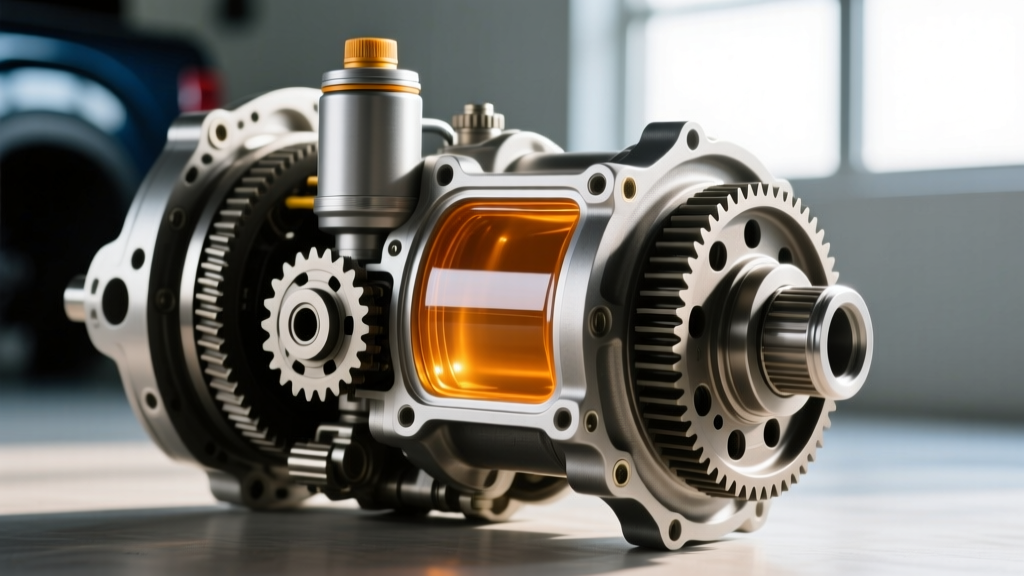
Clutch-type differentials utilize a series of alternating steel and friction-lined clutch packs positioned behind the side gears. When torque is applied, the side gears push outward against the clutch packs, locking them together via a ramp or cone mechanism. This creates a fixed torque bias ratio (typically 2.0:1 to 3.0:1). Maintenance for these units is highly fluid-dependent, requiring specialized friction modifiers to prevent low-speed chatter during tight cornering.
Helical Gear LSDs (e.g., Eaton Truetrac, Torsen)
Helical units operate on the principle of worm gear binding. Under normal driving, they function as open differentials. When wheel slip occurs, the helical side and pinion gears generate axial thrust, wedging against the differential housing to create friction and torque bias (often 2.5:1 to 3.5:1). Crucially, helical LSDs contain no wearable clutch packs and do not require friction modifiers, making their long-term maintenance profile significantly simpler.
Why Precision Matters: The Differential Backlash Tool
Whether you are rebuilding a Dana 60 for rock crawling or setting up a GM 12-bolt for drag racing, ring and pinion gear clearance is non-negotiable. Backlash is the amount of rotational play between the ring gear and the pinion gear. If backlash is too tight (under 0.004 inches), thermal expansion under heavy load will cause the gears to bind, leading to catastrophic tooth shearing and bearing seizure. If backlash is too loose (over 0.015 inches), shock loads will cause the ring gear to slap against the pinion, resulting in spalled gear faces and excessive whine.
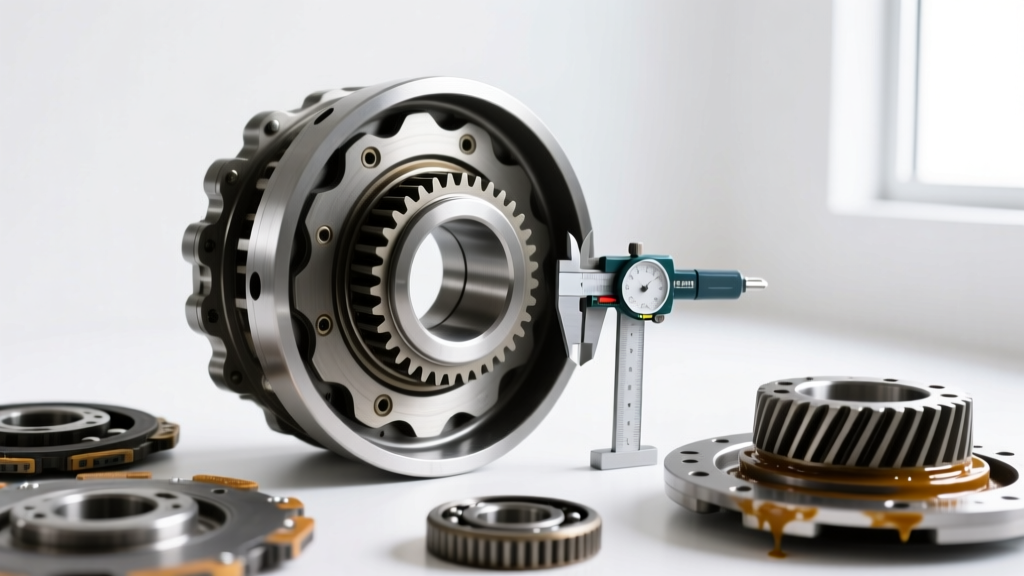
Expert Insight: Many DIY mechanics attempt to measure backlash using feeler gauges through the carrier window. This is fundamentally flawed. A high-precision differential backlash tool—specifically a dial indicator with a magnetic articulating arm—is the only way to measure true rotational lash at the gear's pitch line.
Step-by-Step LSD Backlash Calibration
Setting the backlash on an LSD carrier requires a methodical approach. For this procedure, we will reference the industry-standard Mitutoyo 2046S dial indicator (0.001-inch resolution) paired with an OTC 7103 magnetic base.
- Secure the Indicator: Mount the magnetic base to a non-moving surface, such as the differential housing or a heavy steel bench block. Position the indicator's plunger perpendicular to the face of a ring gear tooth, near the outer edge.
- Apply Preload: Compress the plunger by approximately 0.050 inches and zero the dial. This ensures you are measuring in the middle of the indicator's travel range.
- Lock the Pinion: Use a pinion yoke holding tool to prevent the pinion gear from rotating. The ring gear must be the only moving component.
- Measure the Lash: Gently rock the ring gear back and forth by hand. Do not use excessive force, as you will deflect the carrier bearings and yield a false reading. Record the total sweep on the dial.
- Verify in Three Locations: Rotate the carrier 120 degrees and repeat the measurement. Ring gears can have slight runout; you must adjust to the average of three points, ensuring the tightest spot does not fall below minimum specifications.
OEM Backlash Specifications Reference
- Ford 8.8-inch (Clutch LSD): 0.008" - 0.012"
- Dana 44 (Helical/Clutch): 0.006" - 0.010"
- Toyota 8-inch (Clutch LSD): 0.005" - 0.007"
- GM 10-Bolt 8.5-inch: 0.006" - 0.010"
LSD Fluid Matrix: Viscosities and Friction Modifiers
Proper limited slip differential maintenance extends far beyond mechanical clearances; it relies heavily on tribology. The interaction between the gear oil's zinc/phosphorus EP (Extreme Pressure) additives and the clutch pack's friction material dictates the LSD's engagement smoothness. Using the wrong fluid in a clutch-type LSD will result in violent shuddering during parking maneuvers, while using friction modifiers in a helical LSD can reduce the torque bias ratio by decreasing internal housing friction.
| Fluid / Additive | Type | Viscosity | Application & LSD Compatibility | Est. Cost (2026) |
|---|---|---|---|---|
| Red Line 75W-90NS | Synthetic GL-5 | 75W-90 | Helical LSDs (Truetrac, Torsen). Contains NO friction modifiers. | $22 / qt |
| Motul Gear 300 | Ester Synthetic | 75W-90 | Open diffs and helical LSDs. High thermal stability for racing. | $26 / qt |
| Ford XL-3 (EST-M2C118-A) | Friction Modifier | N/A | Required for Ford/Auburn clutch-pack LSDs. Add 4oz before gear oil. | $14 / 4oz |
| Amsoil Severe Gear | Synthetic GL-5 | 75W-90 | Clutch LSDs (requires separate Amsoil Slip Lock additive). | $24 / qt |
Troubleshooting LSD Chatter and Noise
Even with a perfectly calibrated differential backlash tool, an LSD can exhibit undesirable NVH (Noise, Vibration, and Harshness) characteristics if the chemical or mechanical parameters are slightly off. Use this diagnostic framework before tearing down the differential.
Scenario A: Low-Speed Cornering Chatter
Symptom: A rhythmic clicking or shuddering sensation when turning sharply in a parking lot. Root Cause: Depleted friction modifier in clutch-type LSDs. The clutch packs are grabbing and releasing (stick-slip phenomenon) instead of slipping smoothly. Solution: Drain 4 ounces of gear oil and add 4 ounces of OEM friction modifier (e.g., GM 1052358 or Ford XL-3). Drive in tight figure-eights for 10 minutes to circulate the additive into the clutch porous surfaces.
Scenario B: Deceleration Whine
Symptom: A howling noise that occurs only when lifting off the throttle (coast side of the gear). Root Cause: Excessive backlash or improper pinion depth setup. The differential backlash tool will likely read over 0.012 inches, or the gear contact pattern will show coast-side contact riding high on the toe of the tooth. Solution: Adjust side bearing adjusters or carrier shims to reduce backlash to the 0.008-inch sweet spot. Re-verify the pattern using yellow zinc oxide paste.
Torque Specifications and Hardware Protocols
An LSD rebuild is only as reliable as its fasteners. The ring gear is subjected to thousands of pounds of rotational shear force. Never reuse stretched ring gear bolts, and always apply a medium-strength threadlocker.
- Ring Gear Bolts (Ford 8.8 / GM 12-Bolt): 70 - 85 lb-ft. Apply Loctite 243 (blue) to the threads. Allow 24 hours for full cure before filling with fluid and applying load.
- Bearing Cap Bolts (Dana 44 / Dana 60): 60 - 80 lb-ft. These caps locate the carrier; under-torquing will allow the carrier to walk, instantly destroying your backlash settings.
- Pinion Nut (Crush Sleeve Axles): Typically 180 - 250 lb-ft to achieve 15-25 in-lbs of rotational preload. Never back off a pinion nut once crushed; if you overshoot, you must install a new crush sleeve and spacer.
Mastering limited slip differential operation and maintenance bridges the gap between mechanical assembly and chemical engineering. By utilizing a precision differential backlash tool to guarantee exact gear mesh, and pairing it with the correct 2026-spec synthetic fluids and modifiers, you ensure your drivetrain delivers maximum traction and decade-long reliability.