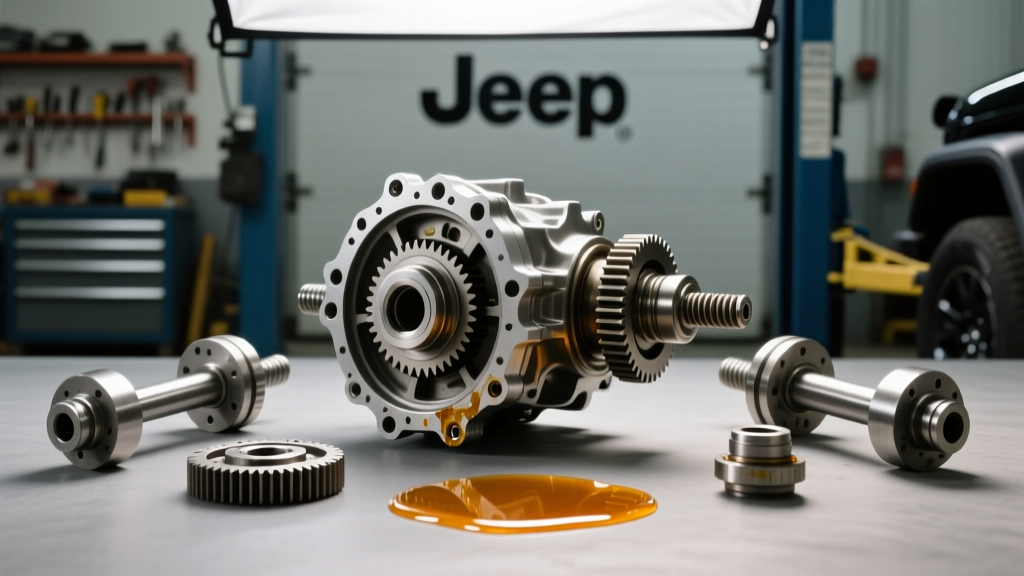
Why Regearing Matters for an SUV with a Locking Rear Differential
If you have recently upgraded your off-road SUV with 35-inch or larger tires, you have likely noticed your transmission hunting for gears, sluggish acceleration, and a drastic drop in fuel economy. For modern SUVs equipped with advanced 8-speed or 10-speed automatic transmissions (like the ZF 8HP or Ford 10R80), the factory gearing is optimized for stock tire diameters and highway cruising. When you add larger, heavier tires, you effectively change your final drive ratio, robbing the engine of its mechanical leverage.
This issue is compounded if you drive an SUV with a locking rear differential. When a mechanical locker (such as an Eaton E-Locker, ARB Air Locker, or Detroit Locker) engages on the trail, it forces both rear wheels to turn at the exact same speed. If your engine is lugging due to overly tall factory gears, the immense rotational stress transferred through the locked axle shafts can snap components or overheat the differential fluid. Performing a proper ring and pinion gear setup is not just a performance upgrade; it is a critical drivetrain preservation measure.
The Anatomy of the Gear Setup
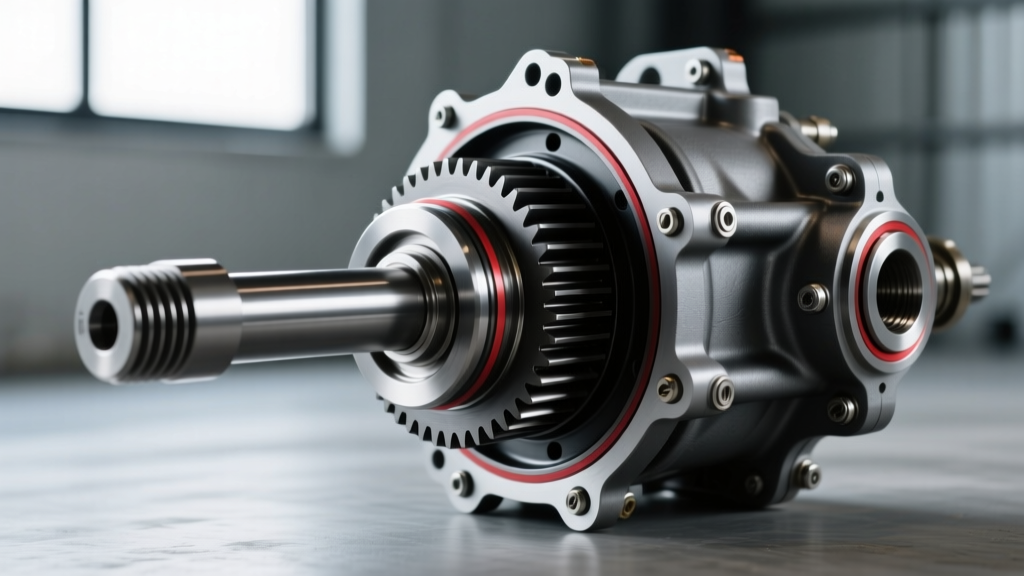
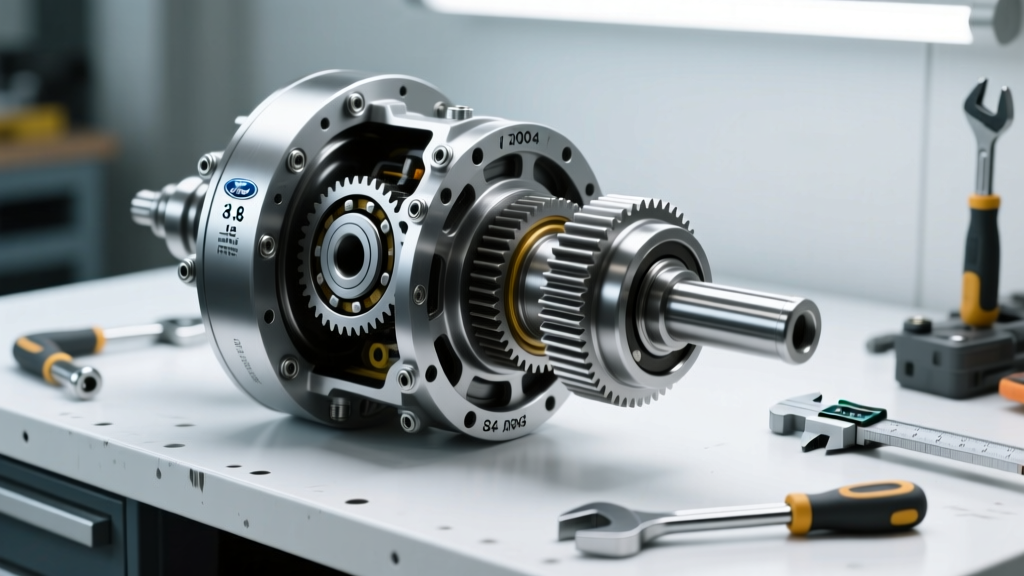
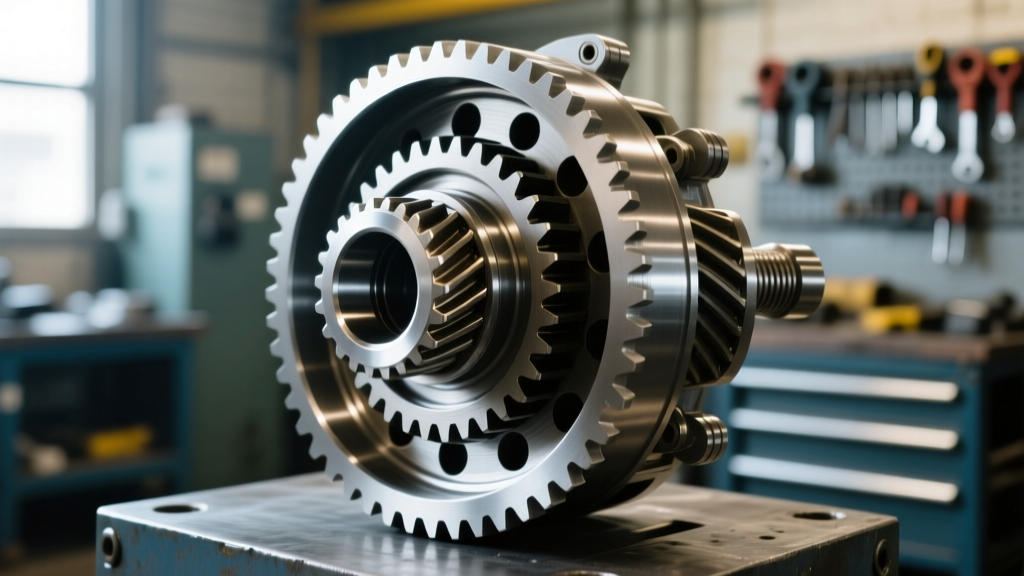
Before turning a single wrench, it is essential to understand what a ring and pinion setup actually entails. You are not simply swapping out two gears; you are rebuilding the entire differential carrier assembly to exact micrometer tolerances. According to technical guidelines from Spicer Parts, a successful setup relies on four interdependent measurements:
- Pinion Depth: The exact distance from the centerline of the ring gear to the face of the pinion gear.
- Pinion Bearing Preload: The rotational resistance of the pinion bearings, measured in inch-pounds.
- Backlash: The microscopic gap between the mating teeth of the ring and pinion gears.
- Gear Contact Pattern: The physical footprint the gears leave on each other under load, verified using marking compound.
Step-by-Step Beginner Breakdown of the Setup Process
While a master technician can set up a differential by feel, a beginner must rely on precision measuring tools. Here is how the process unfolds in a professional shop environment.
1. Setting Pinion Depth and Bearing Preload
Every pinion gear is machined with a specific variance, usually etched onto the head of the pinion (e.g., +2 or -3). This number dictates the thickness of the shim placed between the pinion head and the inner bearing. If the pinion is too deep, it will bind against the ring gear; if it is too shallow, it will ride on the very edge of the teeth, leading to catastrophic failure under the heavy load of a locked axle.
Once the depth shim is installed, the pinion nut is torqued to crush the collapsible spacer (or set the solid spacer shim stack) to achieve the correct bearing preload. For most Dana 44 or Ford 8.8 axles, new bearings require a rotational torque of 15 to 25 inch-pounds. Never use a standard foot-pound torque wrench for this; you must use a dial-type inch-pound beam wrench.
2. Dialing in Backlash
Backlash is the amount of rotational free-play between the ring and pinion. Using a magnetic base dial indicator mounted to the axle housing, you measure the movement of the ring gear while holding the pinion stationary. For most street-and-trail SUV applications, the target backlash is between 0.006 and 0.010 inches. This is adjusted by moving the carrier shims (or threaded adjusters on Dana 60/70 axles) left or right. Too tight, and the gears will overheat and seize; too loose, and the gears will clunk and chip teeth when the locking differential engages abruptly.
3. Reading the Yellow Ochre Pattern
Numbers only tell half the story. You must paint three to four teeth on the ring gear with yellow gear marking compound and rotate the assembly under light braking pressure. You are looking for a specific pattern:
The Ideal Pattern: The contact mark should be centered on the tooth face, slightly biased toward the toe (the inner part of the gear) on the drive side, and moving slightly toward the heel (the outer part) on the coast side. If the pattern is high on the tooth, the pinion is too shallow. If it is low, the pinion is too deep.
The Crucial Role of Differential Fluid in Break-In and Longevity
Because this guide falls under differential fluid maintenance, we must address the most common point of failure in DIY regearing projects: improper break-in lubrication. When new ring and pinion gears mesh for the first time, the microscopic peaks on the machined steel surfaces grind against each other. This generates immense friction and heat.
Break-In Fluid vs. Synthetic
Do not fill your newly built axle with full synthetic 75W-90 gear oil for the first 500 miles. Synthetic oils are too slippery and will prevent the gears from properly mating and hardening their wear surfaces. Instead, use a high-ZDDP (Zinc and Phosphorus) mineral-based break-in oil, such as Lucas Break-In Oil or a dedicated mineral 80W-90 gear oil. The ZDDP additives provide a sacrificial boundary layer that prevents metal-on-metal welding during the critical break-in phase.
Locking Differential Fluid Nuances
The type of locking rear differential in your SUV dictates your post-break-in fluid choice:
- True Mechanical Lockers (ARB, Eaton E-Locker, Ox, Detroit): These do not use friction clutches. You should use a standard, high-quality synthetic 75W-90 or 75W-140 GL-5 gear oil. Do not add friction modifiers, as they serve no purpose and can alter the fluid's thermal properties.
- Clutch-Based Limited Slips (Ford Traction-Lok, Trac-Loc): If your SUV has a clutch-type LSD rather than a true locker, you must add a friction modifier additive to prevent clutch chatter during tight, low-speed turns.
Common SUV Axle Specifications and Fluid Capacities
Below is a reference table for popular SUV axles, illustrating the shift in ratios required for larger tires and the specific fluid volumes required for the post-break-in service.
| Axle Model | Common SUV Application | Factory Ratio (Stock) | Target Ratio (35" Tires) | Fluid Capacity | Drain/Fill Plug Torque |
|---|---|---|---|---|---|
| Dana 44 (Solid) | Jeep Wrangler Rubicon | 3.73 or 4.10 | 4.88 or 5.13 | 2.0 Quarts | 25-35 ft-lbs |
| Ford 8.8 (IRS/Solid) | Ford Bronco / Explorer | 3.55 or 3.73 | 4.56 or 4.88 | 1.8 - 2.2 Quarts | 20-30 ft-lbs |
| Toyota 8.0" (Solid) | 4Runner / FJ Cruiser | 3.73 or 4.30 | 4.56 or 4.88 | 2.4 Quarts | 29-35 ft-lbs |
Cost Expectations and When to Call a Professional
As of 2026, the cost of a complete ring and pinion setup has stabilized, but it remains a labor-intensive investment. If you are outsourcing this to a reputable 4x4 drivetrain shop, expect the following pricing breakdown per axle:
- Ring and Pinion Gear Set (e.g., Yukon, Motive, Spicer): $250 - $450
- Master Rebuild Kit (Bearings, seals, shims, crush sleeve): $150 - $220
- Shop Labor (8 to 12 hours at $120-$150/hr): $960 - $1,800
- Break-in and Final Synthetic Fluids: $60 - $90
Total costs generally range from $1,420 to $2,560 per axle. While purchasing a dial indicator, inch-pound torque wrench, and bearing puller kit might tempt you to tackle this in your garage, the margin for error is zero. A backlash variance of just 0.004 inches can result in a whining differential or total gear destruction within 1,000 miles. For beginners, the most actionable advice is to understand the theory, insist on a proper mineral break-in fluid procedure, and hire a specialist who sets up differentials daily. For more in-depth technical specifications on gear tolerances, refer to the engineering resources available at Yukon Gear and Axle.
Final Thoughts on Drivetrain Harmony
Upgrading your SUV with a locking rear differential and larger tires transforms it into a trail-conquering machine, but only if the underlying mathematics of the drivetrain are corrected. A meticulous ring and pinion gear setup, paired with a strict differential fluid break-in protocol, ensures that your axle assembly will survive the immense torque multiplication generated by modern V6 and V8 engines. Treat your differential fluid as a vital wear component, not just a lifetime fill, and your locked axle will provide years of reliable, quiet service both on the highway and deep in the backcountry.