The Mechanics of Limited Slip Differentials and Fluid Shear
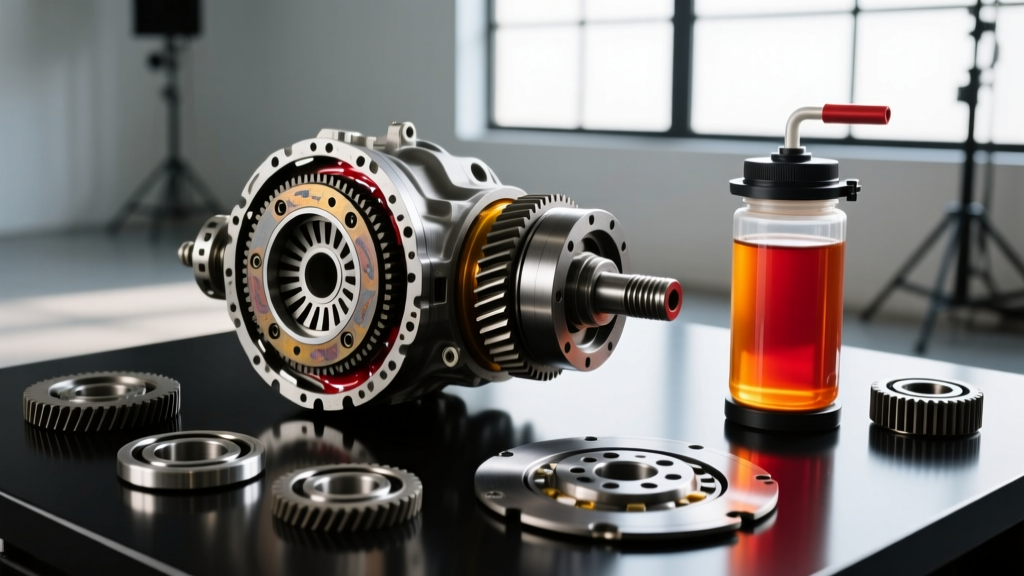
Limited slip differentials (LSDs) represent a critical evolution in drivetrain engineering, bridging the gap between open differentials and locking lockers. Whether you are running a clutch-type Eaton Positraction, an Auburn cone-style unit, or a helical-gear Torsen, the internal friction management is entirely dependent on the chemical and physical properties of your differential oil. Unlike standard open differentials that merely splash lubricant onto hypoid ring and pinion gears, clutch-type LSDs subject the fluid to immense shear forces across alternating steel and friction-paper clutch packs.
Clutch-Pack vs. Helical Gear: Why Boundary Lubrication Matters
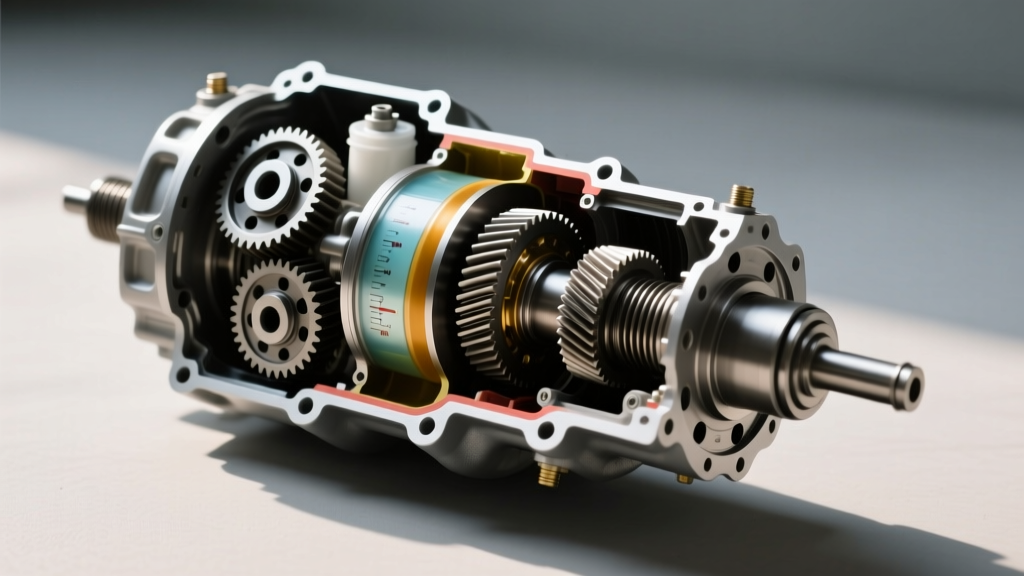
In clutch-type LSDs (common in the Ford 8.8, GM 10-bolt, and Dana 44 axles), the differential oil must perform a dual-duty paradox. It must provide extreme pressure (EP) protection for the hypoid gear mesh while simultaneously allowing the clutch packs to slip smoothly under low-torque cornering, yet lock firmly under heavy throttle. If the differential oil lacks the correct friction coefficient, the clutch packs will experience the 'stick-slip' phenomenon, manifesting as audible chatter, shudder, and accelerated wear to the friction discs.
Conversely, helical-gear LSDs like the Eaton Truetrac do not utilize clutch packs. They rely on the side-gear mesh and helix angles to multiply torque. While they do not require friction modifiers, they still demand high-quality GL-5 differential oil to protect the high-sliding-velocity gear teeth from micro-pitting and scuffing.
Decoding Differential Oil Specifications for LSDs
The American Petroleum Institute (API) classifies gear oils primarily by their EP additive packages. For virtually all modern hypoid axles, API GL-5 is mandatory. GL-5 oils contain high levels of sulfur-phosphorus additives that react with the extreme heat and pressure of the hypoid gear sliding contact to form a sacrificial solid film. Using GL-4 in a hypoid LSD will result in catastrophic ring and pinion failure within a few thousand miles.
| Fluid Characteristic | Conventional 80W-90 GL-5 | Synthetic 75W-90 GL-5 | Synthetic 75W-140 GL-5 |
|---|---|---|---|
| Viscosity Index | Moderate (Prone to shear thinning) | High (Stable across temperature deltas) | Very High (Ideal for heavy towing/track use) |
| Friction Modifier Required? | Yes (for Clutch LSDs) | Yes (for Clutch LSDs) | Yes (for Clutch LSDs) |
| Typical Cost per Quart | $8 - $12 | $16 - $24 | $22 - $30 |
| Best Application | Stock daily drivers, mild climates | Performance street, off-road, cold climates | HD towing, drag racing, severe duty |
The Friction Modifier Dilemma: Eliminating Clutch Chatter
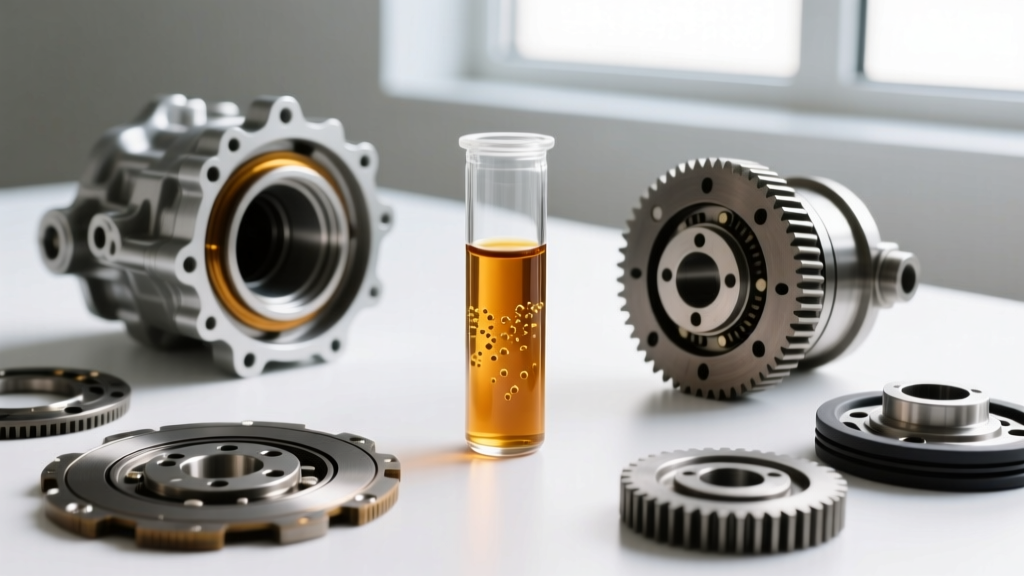
The most common maintenance error in LSD service is mismanaging the friction modifier (FM). Friction modifiers are long-chain polar molecules that attach to the metal surfaces of the clutch packs, altering the static-to-dynamic friction ratio. Without them, static friction exceeds dynamic friction, causing the clutches to grab, slip, grab, and slip—producing the notorious low-speed cornering shudder.
Expert Synthesis: Never assume a 'Limited Slip' labeled differential oil contains enough friction modifier for your specific clutch pack material. Aftermarket clutch packs (like those from Yukon Gear or Eaton) often have different porosity and friction coefficients than OEM packs. Always keep a dedicated bottle of FM on hand during the service.
Recommended Friction Modifiers include Motorcraft XL-3 (approx. $9) and Red Line Limited Slip Friction Modifier (approx. $12). The standard dosage is typically 2 to 4 ounces per axle. However, the exact amount must be calibrated using the 'Figure-8 Test':
- Perform the initial drain and fill with base GL-5 differential oil.
- Add 2 ounces of friction modifier.
- Drive the vehicle in a parking lot, performing tight, low-speed figure-8 maneuvers (5-10 circles in each direction).
- If chatter persists, add 1 more ounce of FM and repeat. If the differential feels 'slushy' or loses lock-up under hard acceleration, you have over-treated it and must drain a portion of the fluid to dilute the modifier concentration.
Step-by-Step LSD Service: Torque Specs and Capacities
Servicing the differential oil requires precision. A stripped fill plug or an over-torqued differential cover can turn a $60 fluid swap into a $400 repair. Always follow the golden rule of axle service: Remove the fill plug before removing the drain plug or differential cover. If the fill plug is seized or stripped, you do not want to be stranded with an empty axle housing.
Common Axle Torque Specifications and Capacities
- Ford 8.8-Inch (Super 8.8 / Standard): Fill plug torque is 15-20 ft-lbs. Cover bolts (if equipped) are 33 ft-lbs. Capacity is typically 2.0 to 2.5 quarts depending on the differential cover depth.
- Dana 44 (Jeep Wrangler / Trucks): Fill plug torque is 25-35 ft-lbs. Capacity is approximately 2.0 quarts. Note that the fluid level should be exactly at the bottom of the fill hole threads.
- GM 8.5-Inch 10-Bolt: Cover bolts torque to 25 ft-lbs in a crisscross pattern. Capacity is roughly 2.1 quarts. Use a high-quality RTV silicone (like Permatex Ultra Black) if the axle lacks a reusable gasket, and allow 12 hours of cure time before filling with differential oil.
Diagnostic Flowchart: Troubleshooting LSD Noise and Shudder
When diagnosing drivetrain NVH (Noise, Vibration, and Harshness), isolating the source is critical. Differential oil condition can tell a forensic story about the health of your LSD.
Fluid Forensics: What Your Drained Oil Reveals
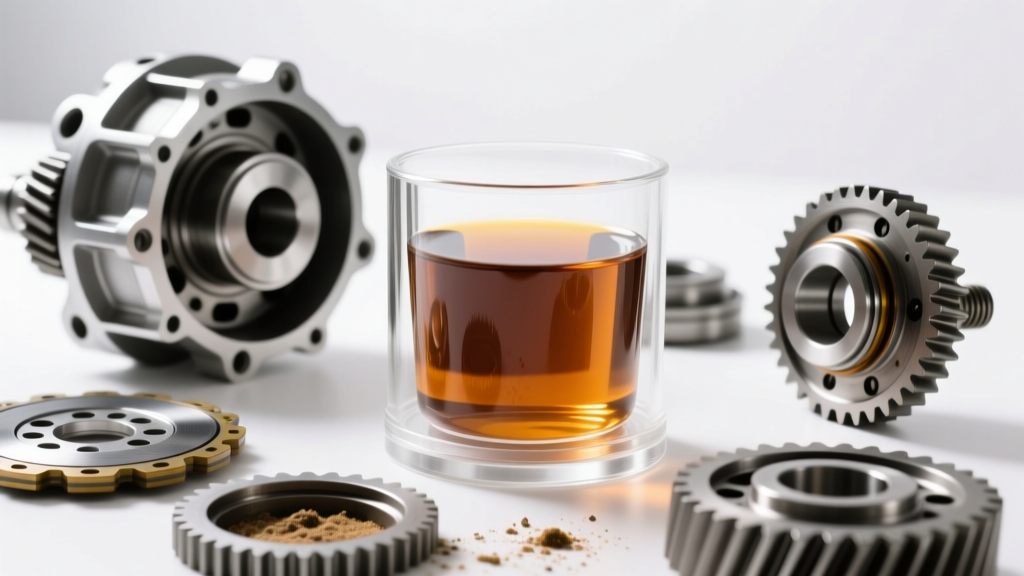
- Fine Metallic Glitter (Paste-like): Normal wear for the first 30,000 miles. The break-in process of the ring and pinion generates fine particulate that suspends in the differential oil.
- Large Metal Flakes or Chunks: Catastrophic failure imminent. Indicates spider gear wear, thrust block disintegration, or bearing cage failure. Requires a complete teardown.
- Burnt Smell / Black Sludge: The differential oil has exceeded its thermal limits. Common in unmodified trucks towing heavy loads up grades. Upgrade to a 75W-140 synthetic and consider an aftermarket differential cover with cooling fins.
- Water Contamination (Milky Emulsion): Axle vent clogging or submerged water crossings. Water destroys the EP additive package and strips the friction modifier from the clutch packs. Immediate flush is required.
Edge Case: Synthetic Fluid Swaps in High-Mileage Auburn Units
Auburn cone-type differentials (found in older GM trucks and muscle cars) rely on a very specific friction profile. Swapping a high-mileage Auburn unit from conventional to full synthetic differential oil can sometimes cause sudden slipping. Synthetic oils possess superior detergent packages and lower boundary friction coefficients, which can cause worn cone clutches to lose their grip. If your Auburn unit has over 100,000 miles on conventional oil, stick to a high-quality conventional 80W-90 GL-5 with a dedicated cone-style friction modifier, or risk rebuilding the carrier.
For further technical specifications on gear oil viscosity and hypoid gear protection, refer to the AMSOIL Gear Oil Viscosity Guide and Eaton's Differential Engineering Documentation. Properly maintaining your differential oil is not just about lubrication; it is about preserving the complex mechanical synergy that keeps your power planted to the pavement.