The Reality of Differential Settlement in Drivetrains
While homeowners frequently search for a differential settlement repair cost when their concrete foundations shift and crack, automotive engineers and off-road enthusiasts use the term 'settlement' to describe a very different, yet equally expensive, mechanical phenomenon. In the context of a Limited Slip Differential (LSD), 'clutch pack settlement' refers to the physical compression, wear, and thermal degradation of the internal friction discs over time. As these clutch packs settle and lose their factory preload, the LSD progressively degrades into an open differential, leaving you with a one-wheel peel and a looming repair bill.
As of 2026, the aftermarket drivetrain sector is seeing a massive influx of high-torque EV conversions and hybrid truck builds, placing unprecedented shear stress on legacy clutch-type LSDs. Understanding the internal architecture, fluid chemistry, and precise maintenance protocols of your LSD is the only way to mitigate clutch settlement and avoid catastrophic differential repair costs. This technical deep-dive explores the operation, maintenance, and financial realities of keeping your LSD locked and loaded.
Internal Architecture: How Clutch-Type LSDs Operate
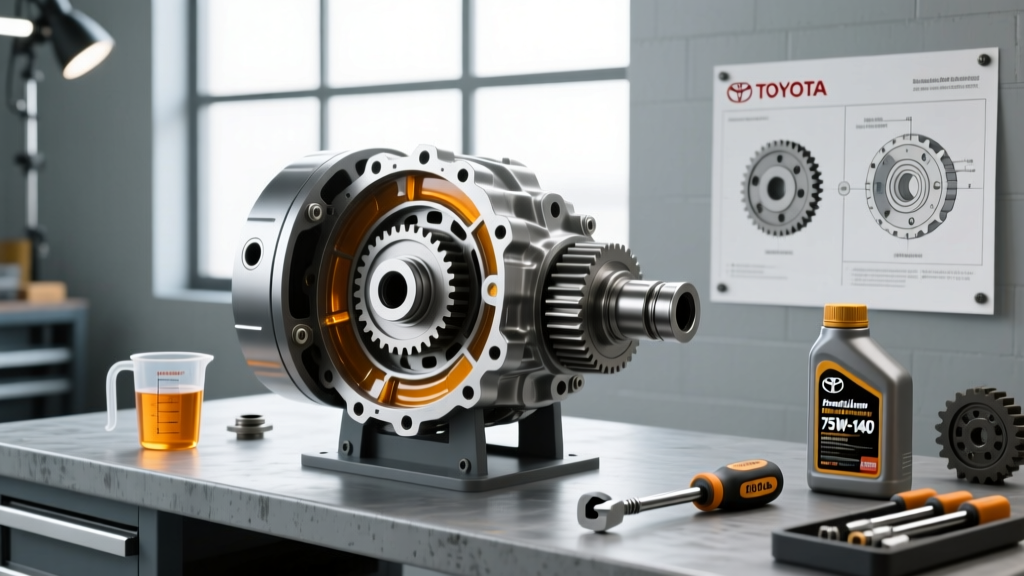
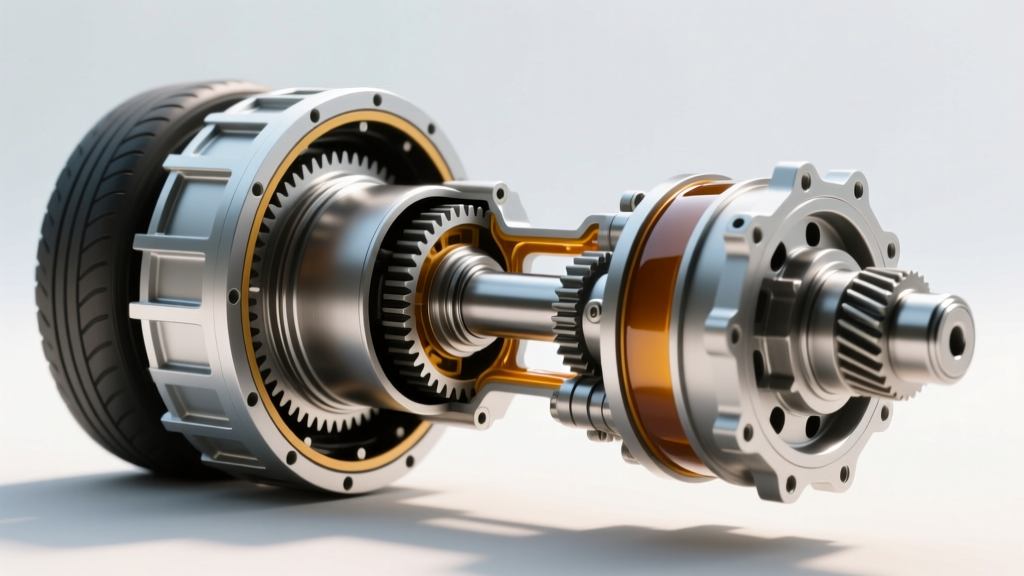
To understand maintenance, you must first understand the mechanical forces at play. A standard clutch-type LSD (such as the Ford Traction-Lok, GM Eaton Positraction, or Dana Spicer Trac-Lok) relies on a precise arrangement of side gears, pinion mates, and alternating friction/steel clutch plates.
- The Preload Mechanism: Behind the side gears sits an S-spring (or coil springs in higher-end aftermarket units like the Auburn Gear Pro-Series). This spring exerts outward pressure against the side gears, which in turn compresses the clutch packs against the differential case.
- Torque Transfer: When one wheel loses traction, the internal pinion gears attempt to walk around the side gear. This wedging action multiplies the axial thrust, clamping the friction plates against the steel plates and locking the axles together.
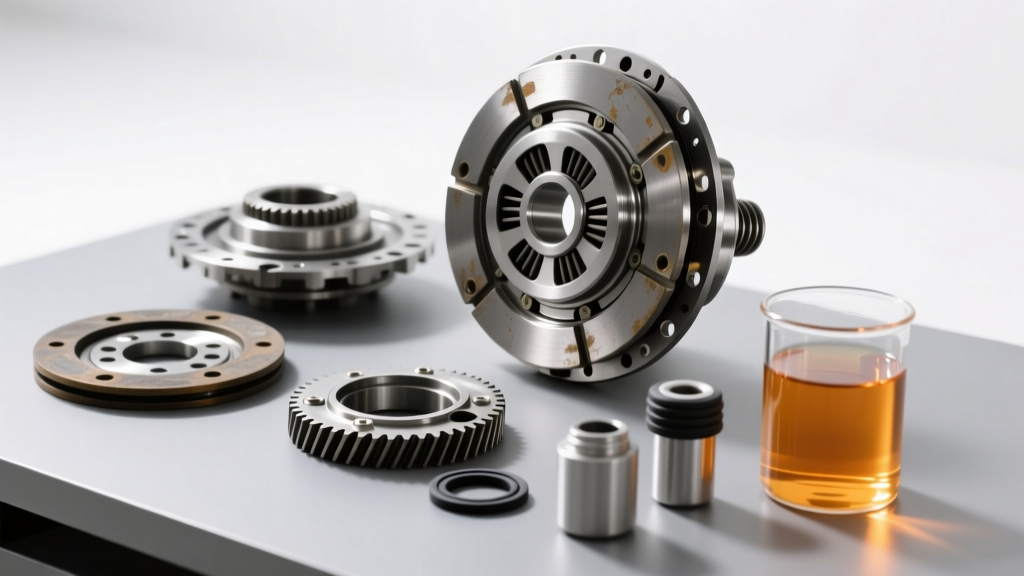
- The Settlement Factor: Over thousands of miles, the friction material (often a paper-based or carbon-Kevlar composite) compresses and wears. The S-spring loses its ability to maintain the necessary 40 to 80 lb-ft of breakaway torque. This 'settlement' results in the notorious LSD chatter, slipping, and eventual failure.
To combat this, rebuild kits utilize precision-measured preload shims (typically ranging from 0.005" to 0.020" thick) to take up the slack left by clutch settlement. Ignoring this wear leads to the side gears gouging the differential case cross-pin bores, transforming a $200 clutch pack rebuild into a $2,500 complete differential replacement.
The Chemistry of LSD Fluids and Friction Modifiers
The operation of a clutch-type LSD is entirely dependent on the tribology—the study of friction, wear, and lubrication—of the gear oil and its additive package. Standard GL-5 75W-90 gear oil contains extreme pressure (EP) additives, primarily sulfur-phosphorus compounds, designed to prevent metal-to-metal welding on the hypoid ring and pinion gears. However, these EP additives create a boundary layer that is too slippery for LSD clutch packs.
Without a dedicated friction modifier, the clutch packs will grab aggressively, release, and grab again, causing the housing to vibrate audibly during low-speed cornering. This is known as 'stick-slip' chatter. Friction modifiers (such as Motorcraft XL-3 or GM 1051396) contain specialized organic friction-reducing agents that allow the clutches to micro-slip smoothly before locking.
According to technical data from Red Line Oil, synthetic esters inherently possess better film strength and natural friction-modifying properties than conventional petroleum bases, which is why premium synthetic 75W-90 fluids often require less aftermarket modifier additive.
Table: LSD Architectures and Maintenance Profiles
| LSD Type | Mechanism | Fluid Requirement | Maintenance & Settlement Risk |
|---|---|---|---|
| Clutch-Type (e.g., Eaton, Dana) | Spring-loaded friction/steel plates | 75W-90 GL-5 + Friction Modifier | High. Clutches wear and settle; requires rebuild kits and shims. |
| Helical Gear (e.g., Torsen, Truetrac) | Worm gear binding and side-gear thrust | Standard 75W-90 GL-5 (No Modifier) | Low. No clutches to settle. Gear wear is minimal under proper lubrication. |
| Viscous Coupling | Silicone fluid shearing and heat expansion | Sealed unit; no external fluid service | Medium. Internal fluid degrades over 100k miles; requires full unit swap. |
Precision Maintenance: Torque Specs and the Figure-8 Protocol
Proper differential service goes far beyond draining and filling. When servicing a clutch-type LSD, the physical distribution of the fluid and the torque applied to the hardware are critical to preventing premature settlement and leaks.
1. The Drain, Clean, and RTV Protocol
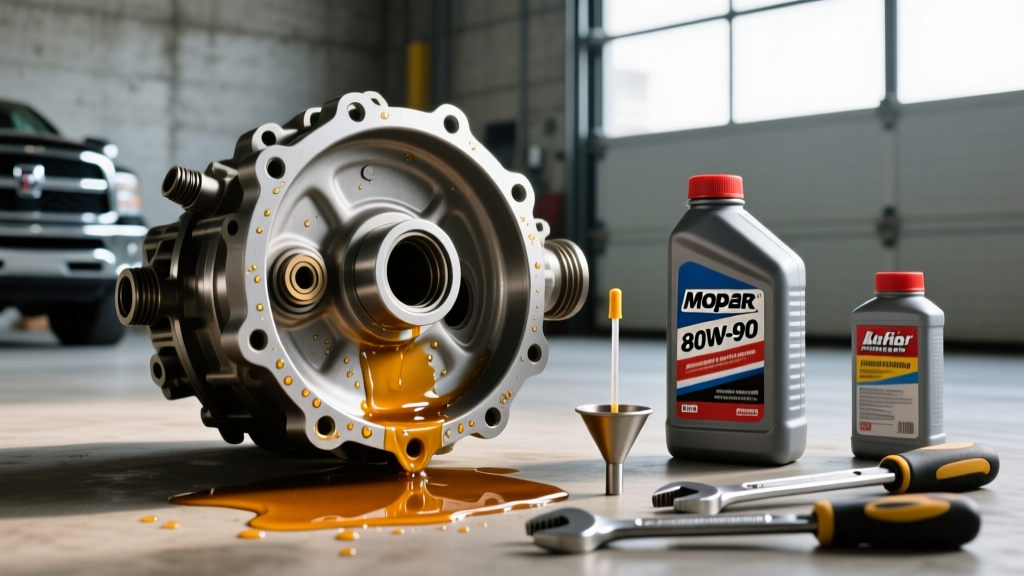
Never reuse a stamped steel differential cover gasket. The mating surface must be scraped completely clean of old RTV silicone. For modern differentials like the Ford 8.8 or GM 12-bolt, use a high-torque sensor-safe RTV like Permatex Ultra Black. Apply a continuous 3mm bead, ensuring you circle the inside of every bolt hole to prevent oil weeping. Allow 1 hour of cure time before torquing.
- Ford 8.8" Cover Bolts: Torque to 28-38 lb-ft in a crisscross pattern.
- Dana 44 Cover Bolts: Torque to 30-35 lb-ft.
- GM 12-Bolt Cover Bolts: Torque to 25-30 lb-ft.
2. The Friction Modifier Dosage
Overdosing on friction modifier is a common DIY mistake that causes excessive clutch slip and overheating. The standard ratio is 4 ounces of modifier per 2.5 quarts of 75W-90 gear oil. If using a synthetic fluid specifically formulated for LSDs (such as AMSOIL Severe Gear 75W-90), the modifier is often pre-blended, and additional additive should be omitted unless chatter persists.
3. The Figure-8 Break-In Procedure
After refilling, the new or freshly serviced fluid must be worked into the porous surface of the friction discs. Find an empty, paved parking lot. Drive the vehicle in tight, overlapping figure-8 patterns for 10 to 15 minutes. This forces the outer wheel to turn faster than the inner wheel, inducing micro-slip across the clutch packs, evenly distributing the friction modifier, and seating the clutches to prevent stick-slip chatter.
Calculating the True Differential Repair Cost
When clutch pack settlement reaches its terminal limit, the differential will no longer transfer torque to the wheel with traction. At this juncture, owners must weigh the cost of a rebuild versus a complete upgrade. As of 2026, supply chain stabilization has brought drivetrain component pricing down from pandemic highs, but labor rates at specialized 4x4 and performance shops average $130 to $180 per hour.
Differential Repair Cost Breakdown
| Service Level | Parts Required | Estimated Parts Cost | Estimated Labor Cost | Total Settlement |
|---|---|---|---|---|
| Basic Fluid Service | GL-5 Fluid, Modifier, RTV | $60 - $90 | $80 - $120 | $140 - $210 |
| LSD Clutch Rebuild | Clutch Kit (e.g., Spicer 706932X), Shims, Bearings | $150 - $280 | $350 - $550 | $500 - $830 |
| Upgrade to Helical (Truetrac) | Eaton Truetrac, Carrier Bearings, Install Kit | $650 - $850 | $400 - $600 | $1,050 - $1,450 |
| Catastrophic Case Failure | Ring & Pinion, New LSD, Master Bearing Kit | $900 - $1,400 | $600 - $900 | $1,500 - $2,300 |
If you are rebuilding a Dana 44, the Dana Spicer 706932X clutch kit is the OEM benchmark. For GM 10 and 12-bolt differentials, the Eaton 19590-01 Positraction rebuild kit includes the necessary carbon-fiber lined clutches and S-springs to restore factory breakaway torque.
Final Diagnostics: Listening to the Differential
Before authorizing any differential repair cost, perform a physical breakaway torque test. Raise the rear of the vehicle safely on jack stands. Put the transmission in neutral. Attempt to turn one rear wheel forward while a helper holds the opposite wheel stationary (or the driveshaft is held stationary). A healthy clutch-type LSD should require roughly 40 to 80 lb-ft of force to break the clutch pack loose. If the wheel spins freely with minimal resistance, the clutch packs have fully settled and worn out.
By adhering to strict fluid intervals (every 30,000 miles for severe off-road/towing use, or 60,000 miles for street use), utilizing precise friction modifier ratios, and executing the figure-8 bedding procedure, you can delay clutch settlement and extend the service life of your limited slip differential well past the 150,000-mile mark.