The Mechanics of Torque Bias: How Clutch-Type LSDs Operate
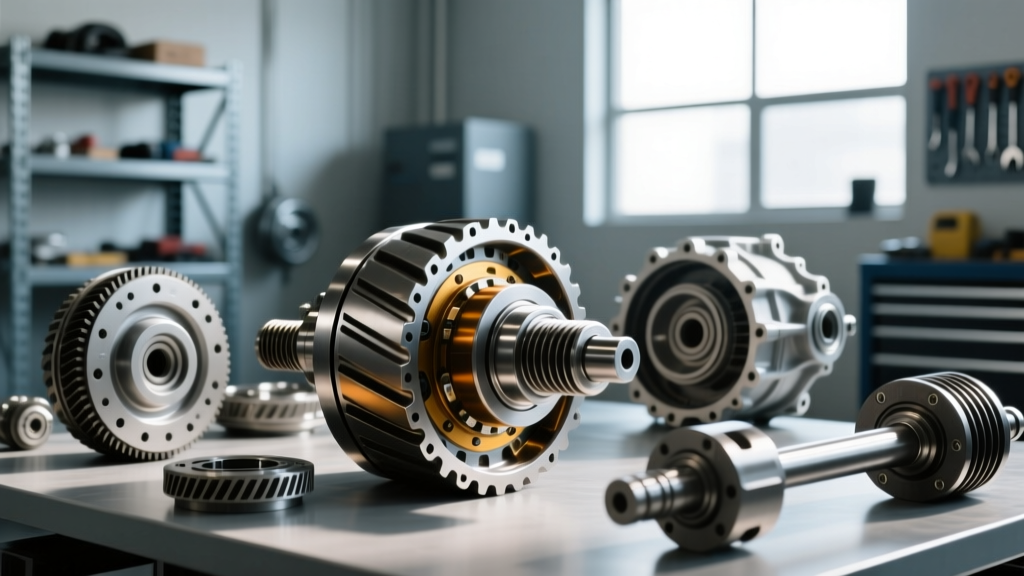
Unlike an open differential that routes torque to the path of least resistance, a clutch-type limited slip differential (LSD) utilizes a complex arrangement of friction discs, steel separator plates, and preload mechanisms to bias torque toward the wheel with traction. The most ubiquitous design in North American solid axles—found in the Ford 8.8-inch Traction-Lok and the GM 10-bolt Eaton Positraction—relies on a central S-cam (or spider gear block) that pushes the side gears outward under load.
When torque is applied, the S-cam ramps against the side gears, forcing them into the clutch packs. These packs consist of alternating friction discs (splined to the side gear) and steel plates (splined to the differential carrier). The resulting friction locks the axle shafts together, allowing the vehicle to push forward even when one tire loses grip. Over time, the friction material degrades, leading to the infamous 'chatter' during low-speed turns—a topic we will address in our maintenance protocols below.
Fluid Dynamics: Viscosity and the Science of Friction Modifiers
Maintaining an LSD requires a fundamental understanding of tribology—the science of friction and lubrication. Standard gear oils are designed to prevent metal-to-metal contact under extreme pressure (EP). However, an LSD requires a precise balance between lubrication and controlled slip.
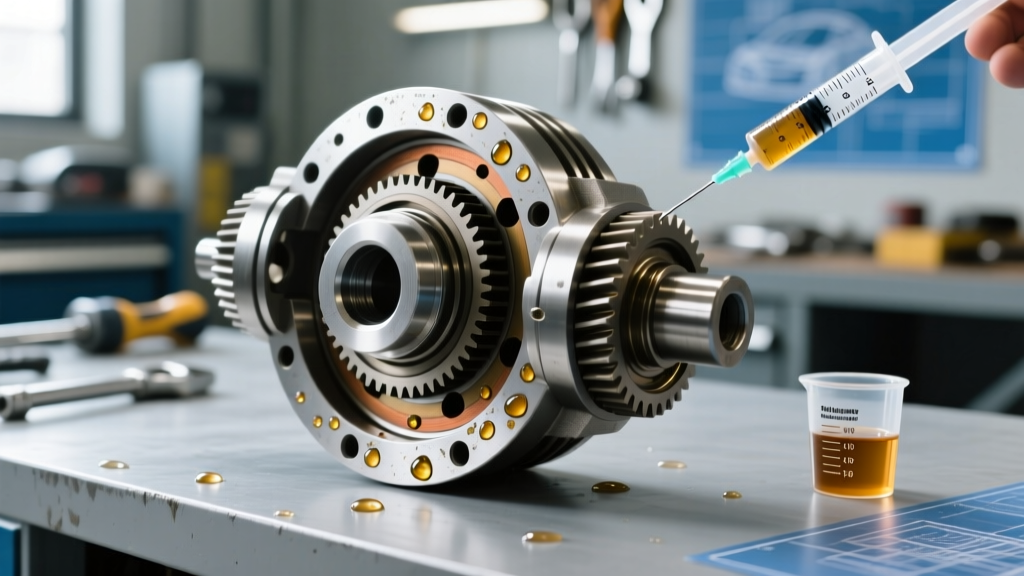
If the static coefficient of friction is too high, the clutch packs will grab and release violently during cornering, causing stick-slip chatter. To combat this, manufacturers mandate the use of a Friction Modifier (such as Motorcraft XL-3 or GM 1052358). These modifiers contain long-chain polymers that align on the friction surfaces, creating a microscopic boundary layer that smooths the engagement curve.
- Base Fluid: 75W-140 Full Synthetic is the 2026 standard for heavy-duty and performance applications, offering superior shear stability compared to older 80W-90 mineral oils.
- Modifier Dosage: Typically 4 to 6 ounces per 2.5 quarts of fluid. Over-dosing will cause excessive slip and overheating; under-dosing guarantees chatter.
- Break-in Procedure: After a fluid change, performing 10 to 12 figure-eight turns in a dry parking lot is mandatory to circulate the modifier into the porous friction material.
A Real-World Differential Cost Example: LSD vs. Open Rebuild
When an LSD begins to fail—evidenced by metallic debris in the fluid or a complete loss of torque bias—a rebuild is necessary. To provide a concrete differential cost example, we have modeled a complete teardown and rebuild of a Ford 8.8-inch Traction-Lok axle, comparing it to a standard open differential service. Labor rates are based on an average independent 4x4 shop rate of $145/hour in 2026.
| Component / Service | Open Differential | Limited Slip (Traction-Lok) |
|---|---|---|
| Master Bearing Kit (Timken) | $85.00 | $85.00 |
| Clutch Pack Rebuild Kit | N/A | $135.00 |
| Side & Spider Gear Set | $60.00 | $95.00 (Heavy Duty) |
| Synthetic 75W-140 (2.5 qts) | $45.00 | $45.00 |
| Friction Modifier Additive | N/A | $12.00 |
| Shop Supplies & Loctite | $15.00 | $15.00 |
| Labor (Teardown & Setup) | 4.0 Hours ($580) | 5.5 Hours ($797) |
| Total Estimated Cost | $785.00 | $1,184.00 |
Note: This differential cost example assumes the ring and pinion gears are in good condition. If a gear swap (e.g., moving from 3.55 to 4.10) is required, add approximately $240 for a premium Richmond or Motive Gear set, plus an additional hour of labor for precise pattern setup.
Rebuild Tolerances and Torque Specifications
Rebuilding an LSD is not merely about swapping parts; it requires strict adherence to machining tolerances. According to engineering guidelines from Spicer Drivetrain, improper carrier preload or clutch pack clearance will result in catastrophic failure or immediate chatter.
Critical Ford 8.8 & GM 10-Bolt Specifications
- Clutch Pack Clearance: Must be shimmed to exactly 0.030' to 0.060' of endplay. Measured using a dial indicator on the side gear before installing the S-cam.
- Ring Gear Bolt Torque: 70-85 lb-ft. Bolts must be cleaned with brake cleaner and secured with Red Loctite 271. Never use lock washers, as they alter the torque-to-yield stretch.
- Pinion Bearing Preload: 8-14 in-lbs of rotational drag (measured with an inch-pound torque wrench on the pinion nut) when using a new crush sleeve.
- Carrier Bearing Preload: Requires a 0.008' to 0.012' shim interference fit to ensure the carrier does not shift under heavy lateral G-loads.
- Backlash: 0.008' to 0.012' measured at the ring gear face. Consistency around the entire gear rotation is more critical than the exact number.
Validating the Gear Pattern
When reassembling the LSD carrier, the added thickness of the new clutch packs and shims can subtly alter the carrier's position relative to the pinion gear. You must apply a thin layer of yellow gear marking compound to the drive and coast sides of three consecutive ring gear teeth. Rotate the carrier forward and backward under light brake-drag resistance. A correct pattern will be centered vertically on the tooth face and slightly biased toward the toe. If the pattern is high on the tooth, you must increase the pinion depth shim; if it is low, decrease the pinion depth. A pattern biased too far to the heel requires increasing the backlash, while a toe-biased pattern requires decreasing it. Skipping this step guarantees premature gear whine and potential tooth shearing under high-torque launches.
Diagnosing Chatter and Premature Wear
If your limited slip differential exhibits chatter during tight, low-speed turns (such as navigating a drive-through or parking garage), the friction material has likely become glazed or depleted of its boundary-layer modifiers. Before condemning the clutch packs to the scrap bin, perform a fluid flush.
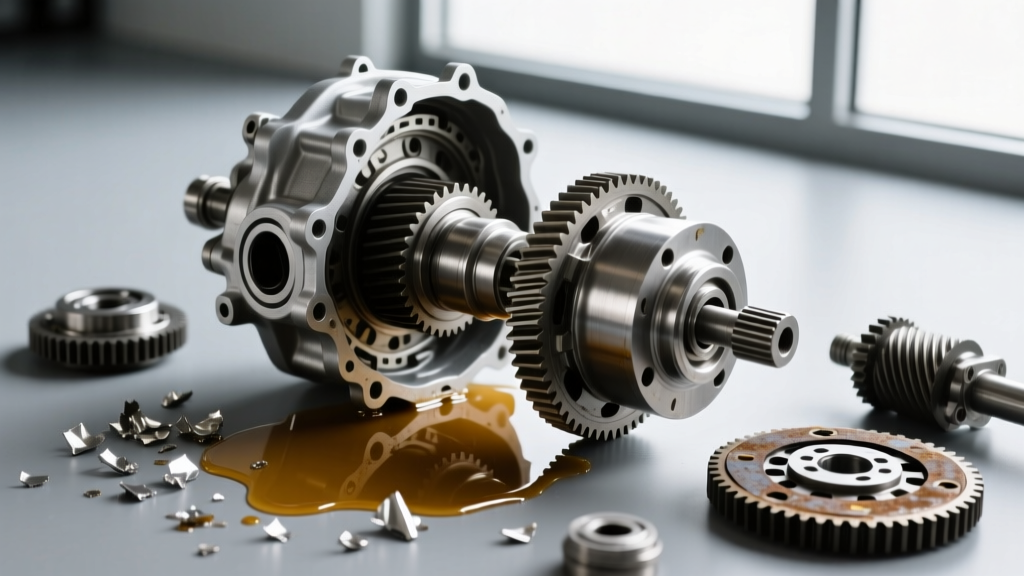
Drain the existing 75W-140, inspect the magnetic drain plug for excessive ferrous material (a light paste is normal; chunks or needle-bearing shards indicate a rebuild is imminent), and refill with fresh synthetic fluid and a double-dose of friction modifier. As noted by the drivetrain specialists at Ring & Pinion, driving the vehicle in continuous figure-eights for 15 minutes can often burnish the glaze off the friction discs and restore smooth operation. If the chatter persists after 500 miles, the clutch packs are physically worn past their service limit, and the teardown outlined in our differential cost example above becomes mandatory.
Furthermore, never ignore a whining noise that changes pitch during deceleration versus acceleration. While often attributed to the ring and pinion, severe LSD clutch wear can cause the side gears to bind, placing asymmetric loads on the spider gears and mimicking a gear whine. Proper diagnosis requires removing the differential cover and physically checking for rotational binding before investing in a new gear set.
For further technical documentation on Eaton Positraction and Dana Trac-Lok torque bias ratios, consult the official Eaton Automotive Differentials engineering portal.