The Hidden Toll of Locking and Limited Slip Differentials on Bearings
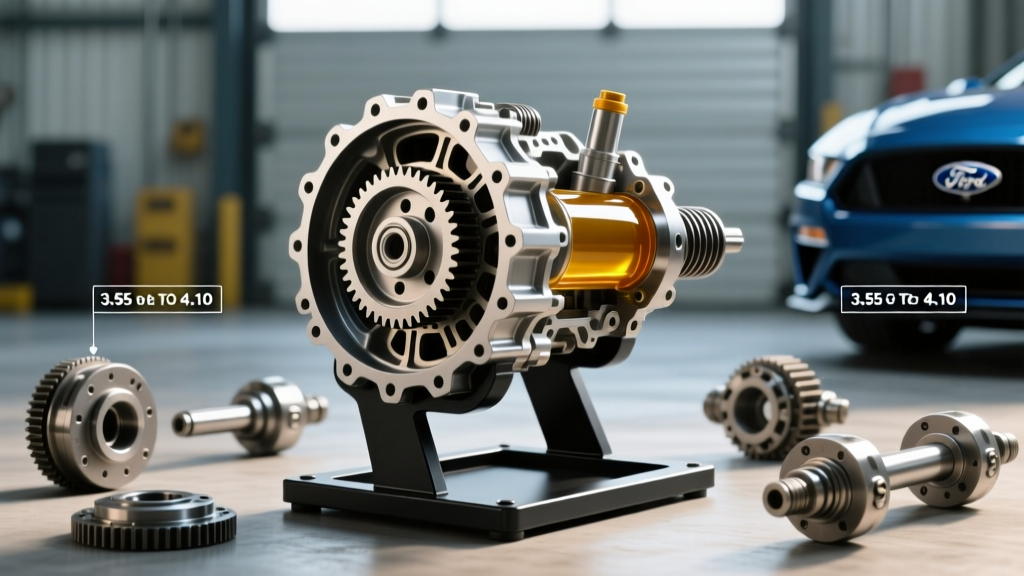
When enthusiasts upgrade to a high-performance locking limited slip differential (LSD)—such as an Eaton Detroit Truetrac, an Auburn ECTED, or a factory Ford Torsen unit—they often focus entirely on traction. However, the internal mechanics of these units place extraordinary stress on the supporting carrier and pinion bearings. Unlike standard open differentials, clutch-based and helical-gear locking LSDs generate immense localized heat and shear forces during torque transfer. Over time, clutch pack degradation or gear wear introduces microscopic metallic and friction material debris directly into the gear oil. This contaminated fluid acts as a lapping compound, accelerating the pitting and spalling of precision bearing races.
As we navigate the 2026 automotive landscape, axle assemblies are subjected to higher torque outputs from modern turbocharged engines and heavy EV platforms. Consequently, differential bearing and seal replacement is no longer just a high-mileage repair; it is a critical preventative maintenance procedure for any vehicle equipped with a performance locking LSD. In this expert guide, we break down the precise diagnostics, teardown procedures, and fluid protocols required to execute a flawless bearing and seal rebuild.
Diagnosing Seal Leaks vs. Bearing Failure
Before pulling the cover or dropping the third member, accurate diagnosis is paramount. Misdiagnosing a simple seal leak as a catastrophic bearing failure can lead to unnecessary teardowns, while ignoring a failing pinion bearing will destroy your ring and pinion set.
Identifying Seal Failure Points
- Pinion Seal Leaks: Typically manifest as gear oil slung onto the underside of the vehicle, directly above the pinion yoke. For a common Ford 8.8 axle, the National 710128 or Timken 710128 are the standard replacement seals. Modern 2026 replacements often feature Viton (FKM) sealing lips rather than traditional Nitrile, offering superior resistance to the 220°F+ operating temperatures generated by locking LSDs.
- Axle Seal Leaks: Found at the wheel hubs, often contaminating the brake rotors or drums. The SKF 23262 is a benchmark replacement for many GM 10-bolt and 12-bolt applications. If an axle seal fails repeatedly, check the axle shaft bearing surface for a deep groove worn by the old seal lip; an axle shaft speedi-sleeve or full shaft replacement is required.
Auditory Bearing Diagnostics
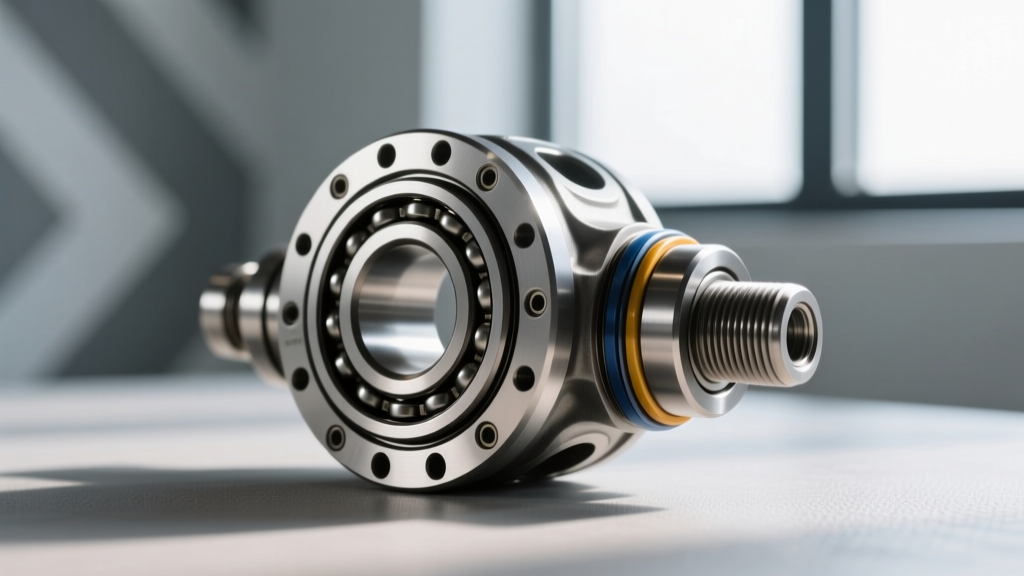
Bearing noise is highly specific to the load condition. According to drivetrain specialists at Randy's Ring & Pinion, a failing pinion bearing (such as the Timken SET 36 used in many Dana 44 and Ford 8.8 applications) will emit a high-pitched whine that changes pitch precisely with vehicle speed, regardless of whether you are on the throttle or coasting. Conversely, carrier bearing failure usually presents as a low-frequency rumble or growl that shifts intensity when loading and unloading the drivetrain (e.g., transitioning from acceleration to deceleration). If the noise only occurs during tight, low-speed turns, you are likely dealing with locking LSD clutch pack chatter, not a bearing failure—a condition usually resolved with friction modifier additives.
Expert Teardown: The Solid Spacer Upgrade
When replacing the pinion seal, many DIY mechanics attempt the "quick fix" of leaving the pinion gear in place and simply prying out the old seal. This is a critical error. To properly replace a pinion seal and guarantee bearing longevity, the pinion yoke must be removed, which destroys the factory crush sleeve used to set pinion bearing preload.
Expert Tip: Never reuse a crush sleeve. Once compressed, the metallurgical memory of the steel is altered. Over-crushing a new sleeve to achieve preload is a common mistake that leads to pinion bearing burnout within 5,000 miles.
The industry best practice for any locking limited slip differential rebuild is to eliminate the crush sleeve entirely. Upgrade to a Solid Pinion Spacer Kit (such as the Ratech 1200K for Ford 8.8 axles, retailing around $35-$45). A solid spacer uses precision-machined shims to set the exact pinion bearing preload. This not only makes the initial setup vastly more accurate but also allows for future pinion seal replacements without the risk of over-torquing and destroying the pinion bearings.
Critical Torque Specifications and Preload Settings
Setting bearing preload is where amateur rebuilds fail. Preload is the amount of rolling resistance placed on the bearings before any external load is applied. Below are benchmark specifications for two of the most common performance axles equipped with locking LSDs.
| Specification | Ford 8.8 (Super 8.8) | Dana 44 (JK/JL Rubicon) |
|---|---|---|
| Pinion Bearing Preload (New Bearings) | 14 - 19 in-lbs (rotational) | 16 - 22 in-lbs (rotational) |
| Pinion Bearing Preload (Used Bearings) | 8 - 14 in-lbs (rotational) | 10 - 15 in-lbs (rotational) |
| Pinion Nut Torque (Crush Sleeve) | 200 - 250 ft-lbs (to achieve preload) | 220 - 260 ft-lbs (to achieve preload) |
| Carrier Bearing Cap Bolts | 70 - 85 ft-lbs | 60 - 75 ft-lbs |
| Ring Gear Bolts (Grade 8 / 10.9) | 70 - 85 ft-lbs (with Loctite 262) | 55 - 65 ft-lbs (with Loctite 262) |
Note: Always measure rotational preload using a calibrated beam-style inch-pound torque wrench. Digital click-style wrenches are inaccurate at low inch-pound thresholds. For comprehensive OEM tolerances, consult the Dana Spicer Resource Center or factory service documentation.
The Fluid Factor: Flushing Debris and Seal Compatibility
Because bearing and seal replacement requires draining the differential, this is the optimal time to address the lifeblood of your locking LSD: the gear oil. When a bearing begins to spall, or when LSD clutch packs wear down, the resulting ferrous and non-ferrous debris settles in the lowest points of the axle housing and gets trapped inside the axle tubes.
The Axle Tube Flush Protocol
Simply draining the pumpkin will leave up to 30% of the contaminated fluid trapped in the axle tubes. Before installing the new cover and seals, use a fluid extraction pump to vacuum out the axle tubes from the carrier opening. Follow this by flushing the housing with a dedicated solvent or a cheap, low-viscosity flushing oil, rotating the axle shafts by hand to push the trapped debris back into the center section.
Selecting the Correct 2026 Fluid Chemistry
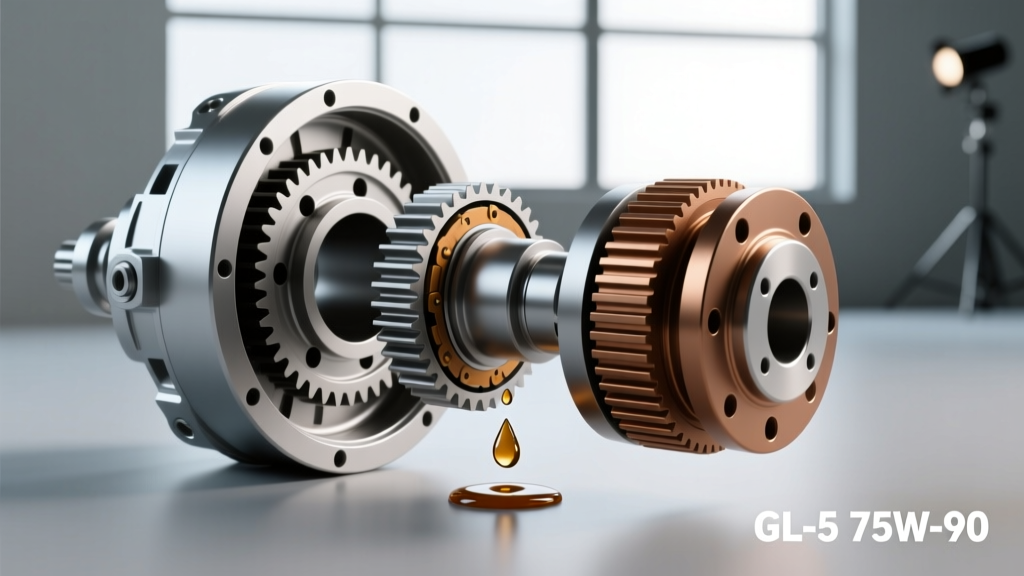
Locking limited slip differentials require a delicate balance of extreme pressure (EP) additives to protect the ring and pinion, and specific friction modifiers to allow the clutch packs to engage smoothly without chatter.
- Viscosity: For heavy-duty or tracked applications, step up to a 75W-140 Full Synthetic (e.g., Amsoil Severe Gear or Red Line 75W140). The higher high-temperature high-shear (HTHS) viscosity maintains a thicker fluid film across the carrier bearings under extreme LSD locking loads.
- Friction Modifier Dosage: If using a clutch-type LSD (like an Auburn or Eaton Posi), you must add a friction modifier. For Ford axles, the Motorcraft XL-3 equivalent is standard. The baseline is typically 4 oz per 2.5 quarts of gear oil. Add the modifier before filling the rest of the axle to ensure it circulates into the clutch packs immediately upon startup.
- Seal Compatibility: Ensure your chosen synthetic gear oil is compatible with Viton seals. Some older, high-sulfur EP gear oils can cause certain elastomers to swell and weep over time. Modern synthetic formulations from major brands are explicitly engineered for Viton and PTFE seal compatibility.
Cost Breakdown and Professional Benchmarks
Understanding the financial landscape of a differential bearing and seal job helps you evaluate shop quotes and budget for high-quality OEM or aftermarket components.
- Master Bearing Kit (Timken/Koyo): $120 - $180. Includes pinion bearings, carrier bearings, races, pinion seal, crush sleeve (or solid spacer), and shims.
- Axle Seals & Hardware: $30 - $60.
- Premium Synthetic Gear Oil & Additives: $60 - $90.
- Professional Labor (Complete Rebuild): $800 - $1,400. This includes pulling the third member, pressing bearings on and off the carrier (which requires a hydraulic press and specialized pullers), setting gear backlash to within 0.003 inches, and setting bearing preload.
While replacing an external axle seal or a pinion seal can be tackled by an advanced DIYer with the right pullers and torque wrenches, a full bearing replacement involving carrier shim selection and gear backlash adjustment requires specialized measuring tools (dial indicators, case spreaders). If your locking limited slip differential is exhibiting rotational bearing whine, invest in the master kit and hand the assembly over to a dedicated driveline specialist. The cost of a professional setup is a fraction of the price of replacing a destroyed ring, pinion, and LSD unit caused by improper bearing preload.