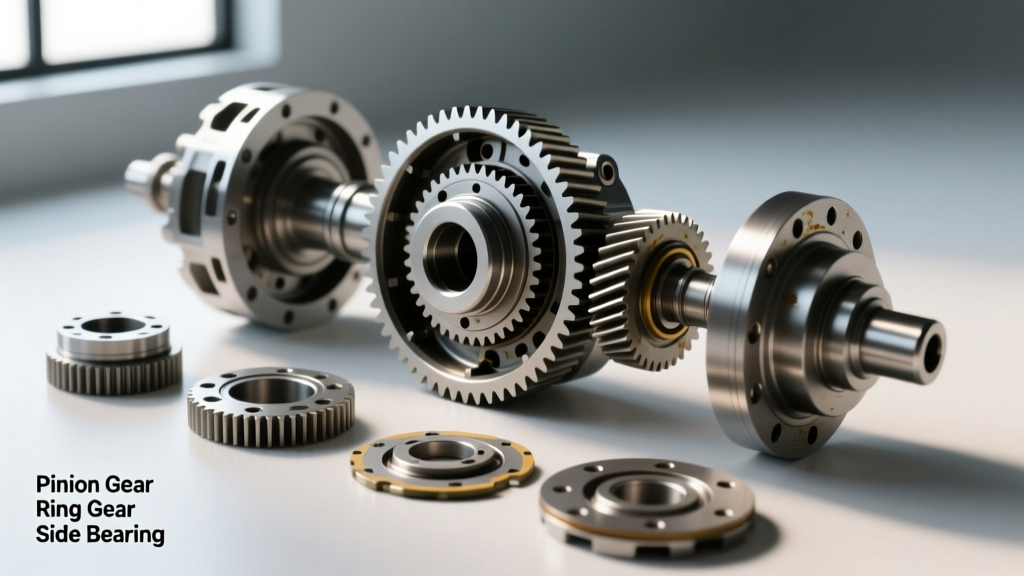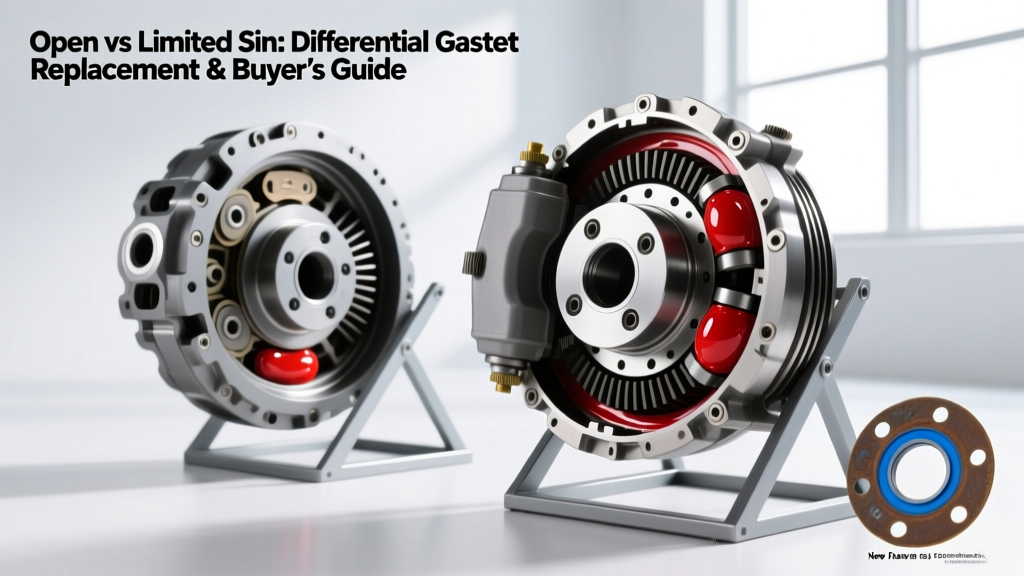
When pushing a truck, SUV, or track car to its limits, the factory open differential is often the first component to surrender. Before you tear into the axle housing and order replacement parts, it is crucial to accurately diagnose the issue. Recognizing the signs you need differential repair is the first step in deciding whether to simply rebuild your factory carrier or take the opportunity to upgrade to a high-performance locking differential. In this comprehensive performance and upgrade guide, we will explore the exact symptoms of differential failure, break down the mechanics of popular locker types, and provide the critical torque specs and setup data required for a flawless installation.
Diagnosing the Axle: Signs You Need Differential Repair
Differentials operate under immense rotational stress and thermal loads. When internal clearances exceed factory specifications, the resulting metal-on-metal contact produces distinct auditory and physical warnings. If you are experiencing any of the following symptoms, a teardown is imminent:
- Coast-Drive Whine: A howling noise that changes pitch when transitioning from acceleration to deceleration typically indicates worn pinion bearings or incorrect ring and pinion backlash. If the whine occurs only under load, the pinion bearing is likely failing; if it occurs only on coast, the carrier bearing or ring gear backlash is the culprit.
- Clunking on Engagement: A sharp metallic 'clunk' when shifting from Reverse to Drive points to excessive wear in the spider and side gears, a worn pinion mate shaft, or a stretched ring gear bolt. In high-horsepower applications, this can also signify a cracked differential case.
- Chatter During Cornering: If the rear end shudders or binds during low-speed turns, the internal clutch packs (in an LSD) are degraded, or the spider gears are galled and failing to differentiate properly.
- Metallic Contamination: Inspecting the differential cover during a fluid change is mandatory. While a fine, dark metallic paste on the magnetic drain plug is normal, finding chunky metal shavings, brass-colored fragments (indicating thrust washer failure), or broken gear teeth means catastrophic internal damage has occurred.
According to drivetrain specialists at Yukon Gear & Axle, ignoring these early warning signs often leads to a spun pinion bearing, which will gouge the axle housing bore and turn a $500 repair into a $2,500 axle replacement.
Why Repair When You Can Upgrade? The Case for Lockers
If your factory open differential or worn clutch-type limited-slip differential (LSD) has failed, simply replacing it with another OEM-style unit is a missed opportunity. Factory open diffs waste power by sending torque to the wheel with the least resistance. By upgrading to a performance locking differential, you force both wheels to turn at the exact same speed, maximizing traction whether you are crawling over boulders, launching on a prepped drag strip, or navigating deep snow.
Locking Differential Types: A Performance Buyer’s Guide
Selecting the right locker depends entirely on your vehicle's primary use case. Here is a deep dive into the most popular performance differentials on the market.
Automatic Lockers (e.g., Detroit Locker, Spartan Locker)
Automatic lockers utilize a sprag and clutch-tooth mechanism to lock the axles together under straight-line acceleration while allowing the outside wheel to ratchet and spin faster during cornering. The Eaton Detroit Locker (Part #225SL198 for a Dana 44 35-spline) is the gold standard for heavy-duty off-roading and drag racing. While they are incredibly robust and require no external wiring or air lines, they can exhibit harsh engagement and 'bang' during turns on high-traction pavement, making them less ideal for daily-driven street vehicles.
Selectable Air Lockers (e.g., ARB Air Locker)
For the ultimate dual-purpose rig, selectable lockers are unmatched. The ARB Air Locker (Part #RD116 for Dana 44) uses an onboard 12V air compressor to pressurize a sealed pneumatic piston inside the carrier. This piston pushes a locking collar that engages the side gear to the case, creating a 100% solid lock. When the air is vented, heavy-duty return springs disengage the collar, reverting the axle to a smooth, factory-style open differential. The trade-off is the higher cost (typically $800-$1,000 for the locker, plus $300 for the compressor kit) and the complexity of routing air lines through the axle housing.
Selectable Electronic Lockers (e.g., Eaton E-Locker)
The Eaton E-Locker uses an electromagnetic coil and a ramp-and-pinion mechanism to engage the locking collar. Because it requires no air compressor, wiring is significantly simpler. It is highly favored in modern overland builds and rock crawlers where instant, push-button engagement is desired. However, the internal ramp mechanism can be slightly more prone to shock-load failure compared to the pneumatic force of an ARB if subjected to extreme high-horsepower drag launches.
Spools and Mini-Spools
A full spool replaces the entire differential carrier, permanently locking the axles together. A mini-spool replaces only the internal spider and side gears with a solid steel block. While they are lightweight, inexpensive ($150-$250), and indestructible, they force the tires to skip and chirp around every corner on pavement. These are strictly reserved for dedicated drag cars, mud boggers, or dedicated trail rigs that are trailered to the event.
Selection Matrix: Matching the Locker to Your Build
| Locker Type | Example Part (Dana 44) | Est. Cost (2026) | Street Drivability | Best Application |
|---|---|---|---|---|
| Automatic (Detroit) | Eaton 225SL198 | $750 - $850 | Fair (Noisy in turns) | Heavy Off-Road, Drag Racing |
| Air Selectable (ARB) | ARB RD116 | $900 - $1,050 | Excellent (Open when off) | Daily Driven Rock Crawlers |
| Electronic (Eaton) | Eaton 19977-01 | $850 - $950 | Excellent (Open when off) | Overland, Trail Running |
| Mini-Spool | Yukon YP MS-D44-30 | $120 - $180 | Poor (Tire chirping) | Dedicated Track/Mud Bogging |
Installation Essentials: Gear Setup, Torque, and Fluids
Upgrading to a locking differential requires precision machining and setup. The Eaton Corporation explicitly states that improper gear setup will void the warranty and lead to rapid ring and pinion failure. When installing your new locker, adhere strictly to these parameters:
Critical Torque Specifications
- Ring Gear to Case Bolts: 70-85 lb-ft (depending on axle model). Always use Grade 8 hardware and apply Red Loctite 271 to the threads. Never reuse stretched factory bolts.
- Bearing Cap Bolts: 45-65 lb-ft. Ensure the caps are installed in their exact original locations and orientation; they are line-bored with the housing and are not interchangeable.
- Pinion Nut (Crush Sleeve Axles): 180-250 lb-ft. Use an inch-pound torque wrench to verify pinion bearing preload. For new bearings, target 18-25 in-lbs of rotational drag; for re-used bearings, target 10-15 in-lbs.
Backlash and Pattern Verification
Before finalizing the build, you must verify the ring and pinion backlash using a magnetic-base dial indicator. For most performance applications (like a GM 12-bolt or Ford 8.8), the target backlash is between 0.006" and 0.010". Use yellow gear marking compound on the ring gear teeth to verify the contact pattern. The pattern should be centered on the tooth face, moving slightly toward the toe under load. If the pattern is biased toward the heel or root, adjust the pinion depth shim and carrier shims accordingly.
Gear Oil and Friction Modifiers
Locking differentials like the Detroit Locker or ARB Air Locker do not use clutch packs, meaning you should avoid adding limited-slip friction modifiers to the gear oil. Friction modifiers are designed for clutch-type LSDs (like the Auburn or Eaton Posi) to prevent chatter. Adding them to a mechanical locker can cause the internal clutch teeth to slip under high torque. Fill the housing with a high-quality, API GL-5 certified synthetic gear oil, such as Amsoil Severe Gear 75W-90 or 75W-140, depending on your ambient temperatures and towing loads. Capacity for a standard Dana 44 is approximately 2.5 to 3.0 pints.
Final Thoughts on Axle Upgrades
Ignoring the early signs you need differential repair can lead to catastrophic axle failure on the trail or track. By diagnosing the issue early and using the teardown as an opportunity to install a purpose-built locking differential, you transform your vehicle's weakest link into its greatest asset. Whether you choose the pneumatic precision of an ARB or the brute-force reliability of a Detroit Locker, precision setup and the correct fluid selection will ensure your drivetrain survives the abuse.