Decoding the Automobile Differential Diagram: The Foundation of Traction
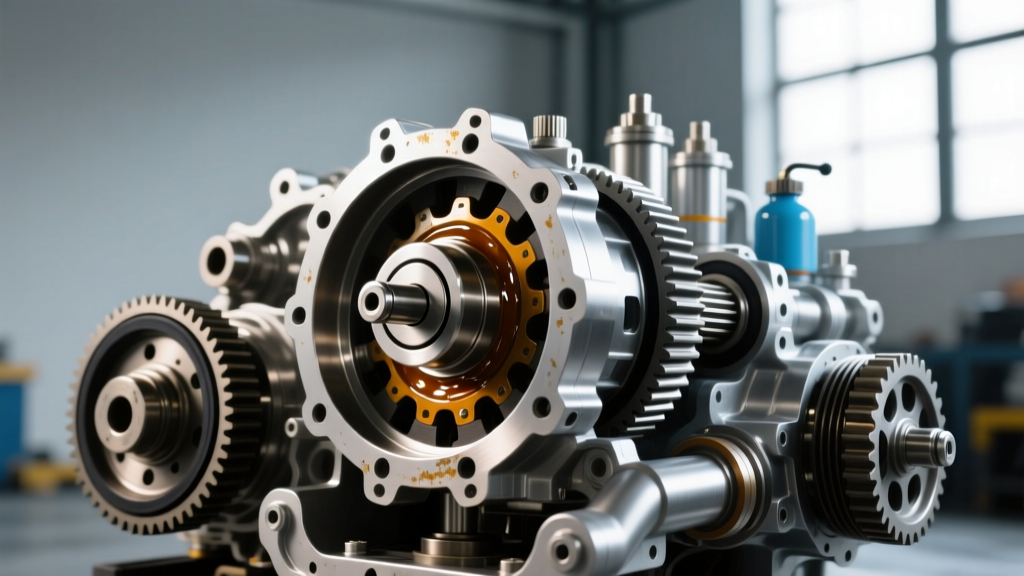
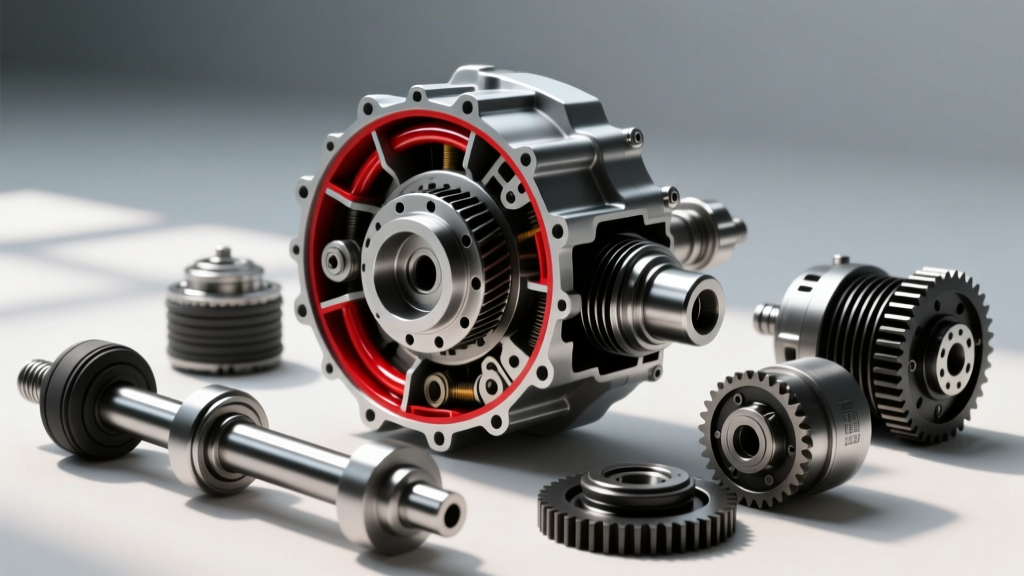
Upgrading from an open differential to a dedicated locking unit remains the single most transformative traction modification you can perform on a rear-wheel-drive, four-wheel-drive, or all-wheel-drive vehicle. Whether you are building a dedicated rock crawler, a high-horsepower drag car, or an overlanding rig, understanding the internal mechanics is critical. When studying a standard automobile differential diagram, you will identify the primary torque-transferring components: the ring gear, pinion gear, differential carrier, side gears, spider (cross) gears, and the cross pin. In an open differential, torque follows the path of least resistance. If one wheel loses traction, the spider gears spin freely on the cross pin, sending all rotational energy to the slipping wheel while the opposing wheel remains stationary.
To eliminate this parasitic power loss, performance differentials introduce mechanisms to lock the side gears to the carrier, forcing both axle shafts to rotate at the exact same speed regardless of available traction. As we navigate the 2026 performance aftermarket landscape, selecting the correct locker requires a deep understanding of your specific use case, budget, and willingness to perform precision drivetrain setup.
The Performance Spectrum: Automatic vs. Selectable Lockers
Locking differentials are broadly categorized into two distinct operational families: automatic (mechanical) lockers and selectable (driver-controlled) lockers. Each interacts with the drivetrain differently, dictating street manners, off-road capability, and installation complexity.
Automatic Locking Differentials
Automatic lockers utilize internal ratcheting mechanisms, sprags, or cam-and-ramp systems to lock the axles under load and unlock during cornering to prevent drivetrain binding. The most iconic example is the Detroit Locker (manufactured by Eaton). Replacing the factory spider gears and cross pin with a NoSPIN mechanism, the Detroit Locker provides 100% lockup under throttle. Part numbers like the Eaton 225SL-104 (for GM 12-bolt, 30-spline applications) remain industry staples. While unbeatable for heavy-duty off-road and drag racing applications, automatic lockers introduce distinct handling quirks on high-traction pavement, often producing a loud "bang" or "clunk" during load reversals and requiring drivers to adapt their steering inputs during low-speed cornering.
Selectable Lockers: Air and Electromagnetic
Selectable lockers offer the ultimate compromise: open-differential street manners with on-demand 100% lockup. The ARB Air Locker utilizes a pneumatic piston housed inside the carrier that engages a locking collar when compressed air is introduced via a sealed axle tube. For a Dana 44, 35-spline rear axle, the ARB RD147 is the go-to part number, retailing around $1,150 in the current market. Installation requires routing a copper or synthetic air line through the axle housing and sealing it with a specialized O-ring bulkhead fitting, powered by an onboard 12V air compressor.
Alternatively, the Eaton E-Locker relies on an electromagnetic coil. When 12 volts are applied, the magnetic field pulls a locking collar that engages the side gears. The E-Locker eliminates the need for air compressors and leak-prone air lines, requiring only a simple two-wire harness routed through the axle tube. However, the electromagnetic coil (typically exhibiting 12-15 ohms of resistance) is sensitive to extreme heat and requires precise shimming during installation to prevent coil drag on the carrier.
Comparative Selection Matrix
Choosing the right differential requires balancing traction requirements with daily drivability. Use the matrix below to evaluate your options:
| Differential Type | Traction Level | Street Manners | Off-Road / Track | Avg. Cost (2026) |
|---|---|---|---|---|
| Open Differential | 1-Wheel Drive | Flawless | Poor | OEM / N/A |
| Helical (e.g., Torsen) | Torque-Biasing | Excellent | Moderate | $650 - $900 |
| Clutch-Type LSD | Variable (1.5 Way) | Good (Requires Modifiers) | Good | $500 - $800 |
| Automatic Locker (Detroit) | 100% Lockup | Poor (Noisy/Unpredictable) | Excellent | $750 - $950 |
| Selectable (ARB/Eaton) | 100% On-Demand | Flawless (When Open) | Superior | $1,000 - $1,400 |
Installation Realities: Torque Specs, Backlash, and Setup
Bolting in a new locking differential is not a simple swap; it requires precision machining tolerances and strict adherence to torque specifications. According to Yukon Gear & Axle setup manuals, improper installation will destroy a $1,200 locker and a $400 ring-and-pinion set in under 500 miles.
Critical Setup Measurements
- Ring Gear Bolt Torque: Ring gear bolts must be Grade 8 or OEM equivalent. For most GM 10-bolt, 12-bolt, and Ford 8.8-inch carriers, ring gear bolts are torqued to 70-85 lb-ft. Crucially, you must apply a high-strength threadlocker like Red Loctite 272 to the threads to prevent backing out under high-torque shock loads.
- Backlash Specification: Backlash is the rotational play between the ring and pinion gears. Most performance street/strip setups require a backlash between 0.006" and 0.010". Lockers that generate immense heat (like the Detroit Locker) may require setting backlash on the tighter end of the spectrum (0.006") to account for thermal expansion of the aluminum or cast-iron carrier.
- Ring Gear Runout: Measured with a dial indicator mounted to the carrier, runout must not exceed 0.002 inches. Excessive runout indicates a warped ring gear or debris trapped between the ring gear and the carrier mounting flange, leading to cyclical noise and premature tooth fatigue.
- Carrier Bearing Preload: Measured via rotating torque (inch-pounds). A typical setup requires 20 to 35 in-lbs of total rotational drag. This is achieved by using setup shims or adjustable carrier bearing sleeves to press the bearings into the housing, eliminating lateral carrier deflection under load.
Fluid Selection and Friction Modifier Protocols
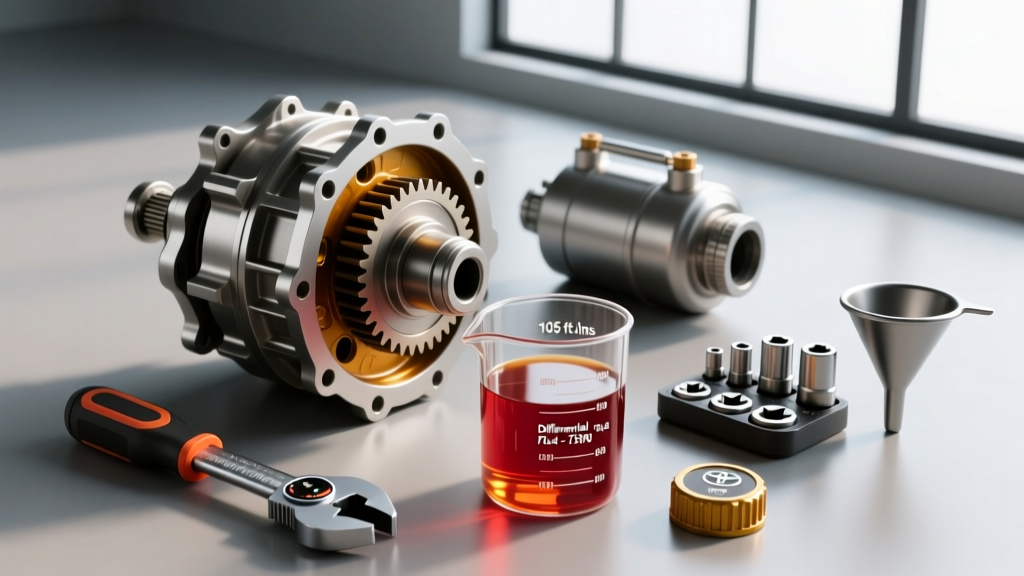
The internal environment of a locking differential dictates strict fluid requirements. For heavy-duty applications, rock crawling, or high-horsepower drag racing, a 75W-140 full synthetic gear oil is mandatory to maintain film strength under extreme pressure (EP). For lighter street/strip applications, a 75W-90 synthetic may suffice to reduce parasitic drag and improve fuel economy.
Critical Warning: Friction modifiers (often labeled as "Limited Slip Additive") are designed exclusively for clutch-type limited-slip differentials (LSD) to prevent chatter during clutch pack engagement. Never add friction modifiers to a full locking differential (Detroit, ARB, Eaton E-Locker) or an open differential. Doing so alters the coefficient of friction on the internal thrust washers and ratcheting components, potentially causing slippage, delayed engagement, or catastrophic internal binding.
Common Failure Modes and Edge Cases
Even the best lockers will fail if subjected to edge-case abuses. A common failure mode in automatic lockers is "shock loading"—dropping the clutch at high RPM on high-traction surfaces, which can snap the internal driver teeth or shear the carrier pins. Selectable lockers face different threats; ARB Air Lockers can suffer from O-ring seal degradation if the air line is routed too close to the exhaust system, while Eaton E-Lockers can experience coil burnout if the wiring harness is spliced without a proper 40A relay and inline fuse, causing the electromagnetic coil to draw excessive amperage due to voltage drop.
By understanding the anatomy shown in any comprehensive automobile differential diagram, respecting the torque specifications, and selecting the correct fluid, your locking differential upgrade will provide years of unyielding traction and performance.