Decoding Engine Cooling Clutch Symptoms: Beyond the Transmission
When automotive technicians and DIYers navigate the "Clutch System Diagnostics" category, the immediate focus is often on manual transmission friction discs or automatic torque converter lockup clutches. However, one of the most critical torque-transfer assemblies under the hood is the engine cooling fan clutch. As of 2026, with the proliferation of heavy-duty towing packages and high-output diesel platforms like the Ford 6.7L Powerstroke and GM 6.6L Duramax, the thermal and electronic fan clutch is subjected to immense parasitic load and thermal cycling.
Diagnosing fan clutch failure modes requires a deep understanding of viscous fluid dynamics, pulse-width modulation (PWM) solenoids, and specialized removal tools. This buyer's guide and diagnostic manual breaks down the root causes of fan clutch failure, outlines exact symptoms, and evaluates why the lisle 44180 fan clutch spanner wrench remains an indispensable tool for professional teardown and root cause analysis.
Primary Fan Clutch Failure Modes & Symptom Profiles
A failing fan clutch rarely presents as a simple binary "broken" state. Instead, it degrades across specific mechanical and thermal vectors, creating symptoms that can easily be misdiagnosed as transmission drag, engine misfires, or water pump failures.
1. Viscous Shear Breakdown (The "Free-Wheel" Failure)
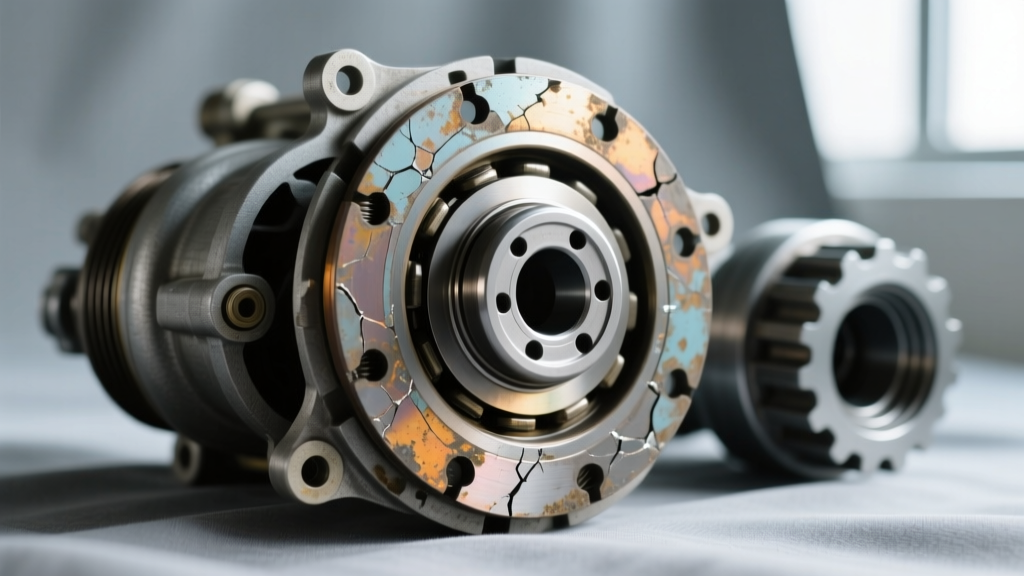
Inside a thermal fan clutch is a reservoir of specialized silicone fluid, typically ranging from 10,000 to 60,000 centistokes in viscosity. Over time, extreme thermal cycling (exceeding 220°F in the engine bay) causes the silicone polymers to shear and degrade.
- Symptom: Engine overheating at idle or during low-speed towing.
- Symptom: Poor A/C condenser cooling, leading to high-side HVAC pressure spikes.
- Diagnostic Test: With the engine off and cold, attempt to spin the fan blade by hand. If it spins with zero resistance and completes multiple rotations, the viscous fluid has completely degraded or leaked past the primary shaft seal.
2. Bimetallic Strip & Valve Fatigue (The "Locked" Failure)
Thermal clutches rely on a bimetallic coil spring on the front face to actuate a valve, allowing silicone fluid to cross the shear gap. If this strip fatigues or the internal valve jams in the open position, the clutch locks the fan directly to the water pump shaft.
- Symptom: A deafening "jet-engine" roar immediately upon cold startup that does not dissipate as the engine warms up.
- Symptom: Severe parasitic horsepower loss (up to 25-30 HP on heavy-duty diesels), resulting in sluggish acceleration and decreased fuel economy.
- Risk Factor: Prolonged locked-clutch operation can overstress the water pump bearings, leading to catastrophic coolant leaks.
3. Electronic Solenoid & PWM Harness Failure
Modern heavy-duty trucks utilize ECM-controlled electronic fan clutches. The Engine Control Module sends a 12V PWM signal to an electromagnetic coil inside the clutch hub.
- Symptom: Intermittent overheating coupled with a Check Engine Light (e.g., DTC P0526 or P0691).
- Root Cause: Wiring harness chafing against the fan shroud or water pump housing, shorting the PWM signal to ground. When the ECM loses the signal, the clutch defaults to a locked or fully disengaged state, depending on the manufacturer's fail-safe logic.
Root Cause Analysis Matrix
Use the following diagnostic matrix to correlate customer complaints with internal mechanical failures before initiating teardown.
| Observed Symptom | Internal Failure Mode | Root Cause | Verification Method |
|---|---|---|---|
| Cold-start roaring noise | Valve Jam / Bimetallic Fatigue | Fluid contamination or spring metallurgy failure | Cardboard block test (measure temp delta across radiator) |
| Idle overheating / AC cutoff | Viscous Fluid Shear | Seal degradation, polymer breakdown | Hand-spin resistance test; check for fluid weeping on hub |
| Random DTC P0526 / Fan Drag | PWM Solenoid Short | Harness abrasion on shroud | Oscilloscope PWM duty cycle trace at clutch connector |
| Wobble / Water Pump Leak | Bearing Seizure | Unbalanced fan blade or excessive locked-clutch torque | Dial indicator runout test on fan hub |
Tool Comparison: The Lisle 44180 Fan Clutch Spanner Wrench vs. Alternatives
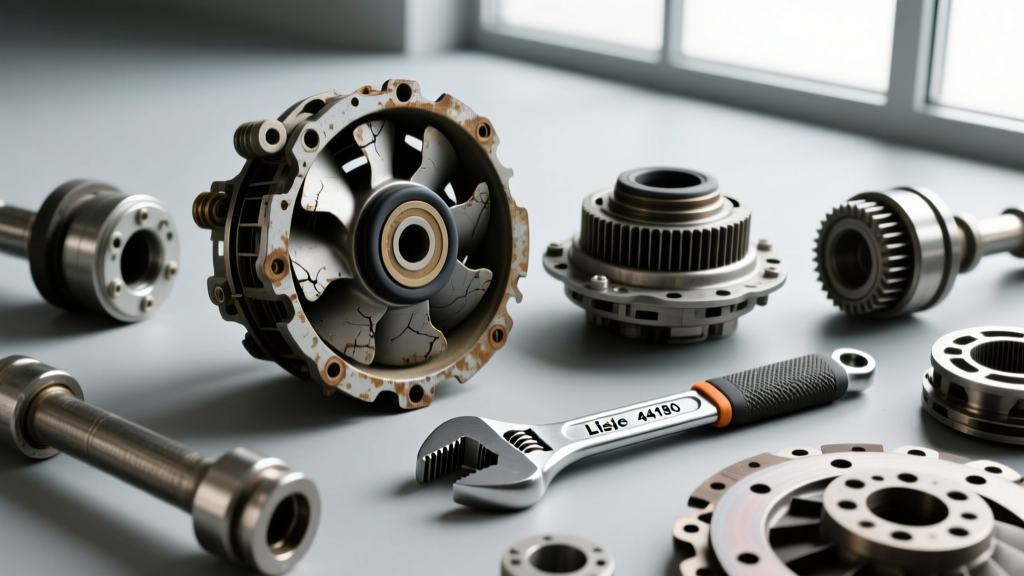
When root cause analysis confirms internal failure, removal is the next hurdle. Heavy-duty fan clutch nuts are notoriously difficult to break loose due to corrosion, extreme heat cycling, and the inherent leverage of the fan blade assembly. This is where tool selection becomes critical. The lisle 44180 fan clutch spanner wrench is engineered specifically to address the tight clearance constraints of modern engine bays.
Buyer's Guide: Heavy-Duty Fan Clutch Wrenches
| Tool Model | Application / Profile | Material & Build | Estimated Cost (2026) | Verdict |
|---|---|---|---|---|
| Lisle 44180 | Heavy-Duty Offset (Ford 6.7L, GM Duramax) | Drop-forged alloy steel, precision-machined 36mm/1-1/4" pins | $45 - $55 | Best Overall: The offset head clears restrictive fan shrouds without requiring bumper removal. |
| OTC 4579 | Standard Flat Profile (Light Duty / Import) | Stamped and welded steel | $30 - $40 | Good for older, open-bay engines, but bends under heavy impact on seized diesel nuts. |
| Generic Stamped Sets | Universal (Multiple pin sizes) | Low-carbon stamped steel | $15 - $25 | Avoid: Pins routinely shear or round off the water pump nut, turning a 30-minute job into a 4-hour ordeal. |
According to tool testing data referenced by Lisle Corporation, the 44180's drop-forged geometry prevents the flex and pin-walk common in stamped wrenches. When applying a 1/2-inch breaker bar or a moderate air-impact strike, the Lisle 44180 transfers torque directly to the nut's flats, preventing the rounding of the 36mm water pump shaft nut.
Step-by-Step Diagnostic & Removal Protocol
Executing a proper teardown requires adherence to specific torque specs and thread orientations. The most common mistake made during fan clutch removal is assuming standard right-hand threads.
CRITICAL WARNING: The vast majority of Chrysler, Ford, and GM longitudinal engine fan clutches utilize LEFT-HAND (reverse) threads. To loosen the nut, you must turn the wrench CLOCKWISE (when facing the front of the engine). Turning it counter-clockwise will tighten it, potentially snapping the water pump shaft.
The Teardown Procedure
- Serpentine Belt Removal: Relieve tension on the automatic belt tensioner and route the belt off the water pump pulley. This eliminates parasitic drag and prevents the pulley from spinning during the breakaway phase.
- Pulley Immobilization: You must hold the water pump pulley while breaking the clutch nut loose. Use a dedicated pulley holding tool (such as a strap wrench or a pin-style spanner like the Lisle 43150) gripped firmly against the pulley grooves.
- Breakaway Torque: Seat the lisle 44180 fan clutch spanner wrench onto the nut. Apply a sharp, controlled strike with a 3-lb dead-blow hammer to the wrench handle, or use a 1/2" breaker bar. Expect initial breakaway torque to exceed 120 lb-ft due to thermal welding and thread-locker compounds.
- Unthreading & Extraction: Once broken loose, spin the nut off clockwise. Carefully slide the fan blade and clutch assembly rearward, clearing the shroud. Note: Keep the assembly perfectly upright. Tilting a partially worn viscous clutch can cause air bubbles to enter the shear gap, ruining the clutch if you plan to reuse it for further bench testing.
Reinstallation & Torque Specifications
When installing the replacement OEM unit (sourced from reliable distributors like RockAuto or your local dealer), clean the water pump shaft threads with a brass wire brush. Apply a single drop of medium-strength blue threadlocker (Loctite 243) to prevent backing out.
- Ford 6.7L Powerstroke (36mm Nut): Tighten counter-clockwise (left-hand) to 63 lb-ft (85 Nm).
- GM 6.6L Duramax (L5P/LML): Tighten counter-clockwise to 74 lb-ft (100 Nm).
- RAM 6.7L Cummins: Verify thread direction (some newer electric viscous modules use standard right-hand threads); torque to 55 lb-ft (75 Nm).
Final Diagnostic Thoughts for 2026
As engine bays become increasingly packaged for aerodynamics and crash-safety compliance, the physical space available for tool swing has vanished. Diagnosing cooling system clutch symptoms requires more than just a multimeter and an infrared thermometer; it requires the right mechanical leverage.
By understanding the distinct failure modes of viscous and PWM-controlled clutches, and by investing in purpose-built, heavy-duty removal tools like the Lisle 44180, technicians can accurately isolate root causes without inflicting secondary damage to the water pump or front engine cover. For further reading on cooling system diagnostics and thermal management, consult the technical archives at AA1Car.