The Mechanics of Slip: Educational Models vs. Real-World Automatics
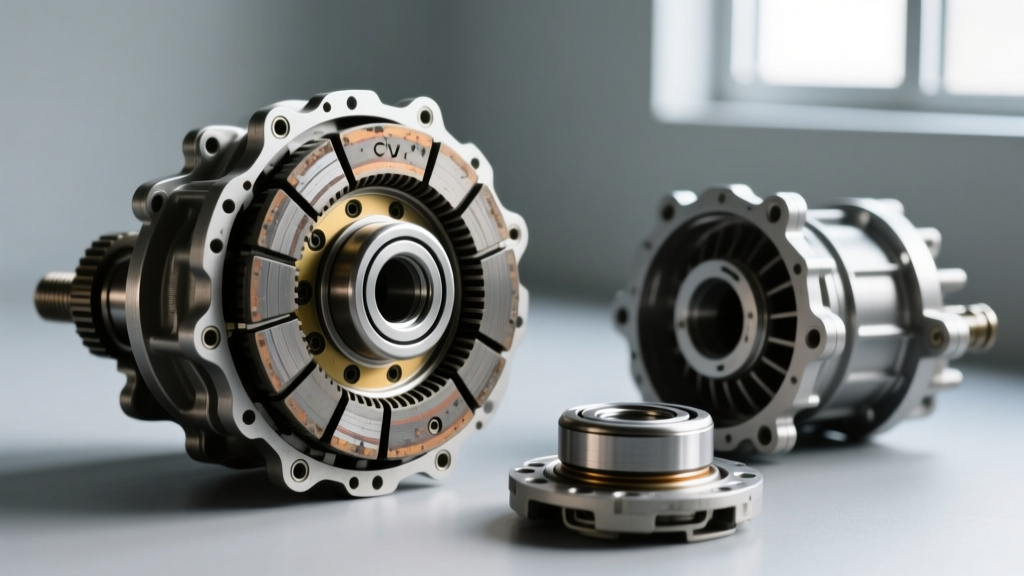
Understanding torque limitation and friction material degradation is the cornerstone of automatic transmission diagnostics. For STEM educators, engineering students, and entry-level technicians, the LEGO clutch gear (specifically Technic part 6539c) serves as a brilliant, tactile buyer's choice for modeling mechanical slip. However, when transitioning from scale models to the high-hydraulic-pressure environment of modern automotive drivetrains, the stakes—and the diagnostic complexity—increase exponentially.
This 2026 comparison and buyer's guide bridges the gap between foundational mechanical principles and advanced automatic transmission clutch problems. We will compare the mechanical slip of educational models to real-world clutch pack failures in ubiquitous transmissions like the GM 6L80 and the ZF 8HP, providing professional diagnosticians and educators with the exact part numbers, torque specs, and pricing needed to make informed purchasing and repair decisions.
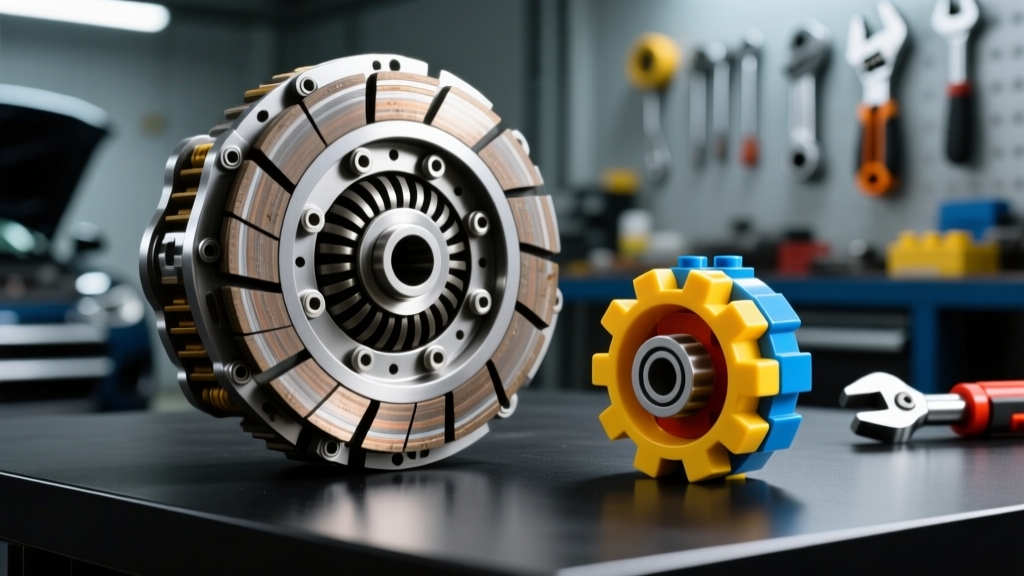
How the LEGO Clutch Gear Simulates Torque Limitation
The LEGO Technic clutch gear utilizes an internal spring-loaded friction ring designed to slip when torque exceeds approximately 1.5 to 2.0 Nm. This prevents plastic gear teeth from shearing under high-load binding. In an automatic transmission, a similar concept of 'controlled slip' is utilized during gear shifts to manage shift feel, and in the Torque Converter Clutch (TCC) to eliminate parasitic fluid losses at cruising speeds. However, instead of a mechanical spring, modern automatics rely on precisely modulated hydraulic line pressure—often controlled by variable force solenoids (VFS) pushing against apply pistons—to clamp alternating layers of friction and steel plates.
2026 Buyer’s Guide: Diagnostic Training Tools vs. Scale Models
If you are outfitting a training facility or upgrading your diagnostic arsenal, understanding where physical models end and electronic diagnostics begin is critical. Below is a buyer's comparison of slip mechanisms and the tools required to diagnose them.
| Component / Tool | Torque Limit / Diagnostic Mechanism | Common Failure Symptom | 2026 Est. Cost |
|---|---|---|---|
| LEGO Technic Clutch Gear (6539c) | Internal Spring Friction (Mechanical) | Free-spinning under physical load | $2.50 per gear |
| Torque Converter Clutch (TCC) | Hydraulic Apply + Carbon Friction Liner | Shudder, P0741 DTC, RPM flaring | $450 - $1,200 (Installed) |
| GM 6L80 3-5-R Clutch Pack | Steel/Friction Plates + Wave Plate | Loss of 3rd, 5th, and Reverse gears | $180 - $250 (Parts Kit) |
| ZF 8HP Clutch 'E' Assembly | Multi-disc + Mechatronic Pressure | Slip in 3rd, 5th, 7th, and 8th gears | $65 (Adapter Sleeve) |
| Snap-on ZEUS+ Diagnostic Scanner | Bi-directional Solenoid Command Testing | N/A (Identifies VFS electrical faults) | $6,500 - $8,200 |
Diagnosing Real Automatic Transmission Clutch Problems
While a LEGO clutch gear slips by design to save components, an automatic transmission clutch pack slipping is a catastrophic failure mode. When friction materials glaze, burn, or lose hydraulic clamping force, the transmission control module (TCM) detects a discrepancy between input shaft speed (ISS) and output shaft speed (OSS), triggering ratio error codes (e.g., P0730 series).
GM 6L80: The Infamous 3-5-R Clutch Wave Plate Failure
The GM 6L80 and 6L90 transmissions are notorious for a specific mechanical failure that mimics a hydraulic pressure loss. The 3-5-R clutch housing utilizes a waved apply plate designed to cushion the engagement of the clutch pack. Over time, particularly in vehicles used for towing or operating with degraded Dexron VI fluid, this wave plate fatigues and fractures.
- Symptom: Sudden loss of 3rd, 5th, and Reverse gears. The TCM will often set DTC P0733 (Gear 3 Incorrect Ratio) or P0735 (Gear 5 Incorrect Ratio).
- Root Cause: The fractured wave plate sends hardened steel debris directly into the 3-5-R clutch pack and the pump stator support shaft, scoring the aluminum bushings and ruining the hydraulic seal rings.
- Buyer's Solution: Do not simply replace the burnt clutches. You must purchase an upgraded 3-5-R clutch housing kit. The Sonnax ZIP Kit (Part # 6L80-ZIP) or an OEM ACDelco updated wave plate (Part # 24238913) is mandatory.
- Torque Spec: When reinstalling the valve body to the case, the M6 bolts must be torqued to exactly 8 Nm (71 lb-in) to prevent valve body warping and cross-leaks.
ZF 8HP: Mechatronic Leaks and Clutch Pack 'E' Clearance
The ZF 8HP70 and 8HP90 transmissions (found in BMW, Audi, Dodge, and Jaguar applications) represent the pinnacle of modern 8-speed engineering. However, they suffer from a highly specific pressure leak that causes severe clutch chatter and slip.
Clutch 'E' is responsible for actuating 3rd, 5th, 7th, and 8th gears. The hydraulic fluid reaches Clutch 'E' through the Mechatronic unit (valve body) via a plastic adapter sleeve that seals against the transmission case. As the transmission experiences thermal cycling, this plastic sleeve degrades and cracks, bleeding off apply pressure.
- Symptom: Harsh 2-3 shifts, followed by RPM flaring (slipping) in 4th and 8th gears as the TCM attempts to compensate for the pressure loss by maxing out the VFS solenoid duty cycle.
- Buyer's Solution: Before condemning the $2,800 Mechatronic unit or pulling the transmission to replace the Clutch 'E' friction discs, purchase the updated ZF Mechatronic Sleeve Adapter (ZF Part # 1068.298.037). It costs under $65 and resolves 80% of Clutch 'E' pressure complaints.
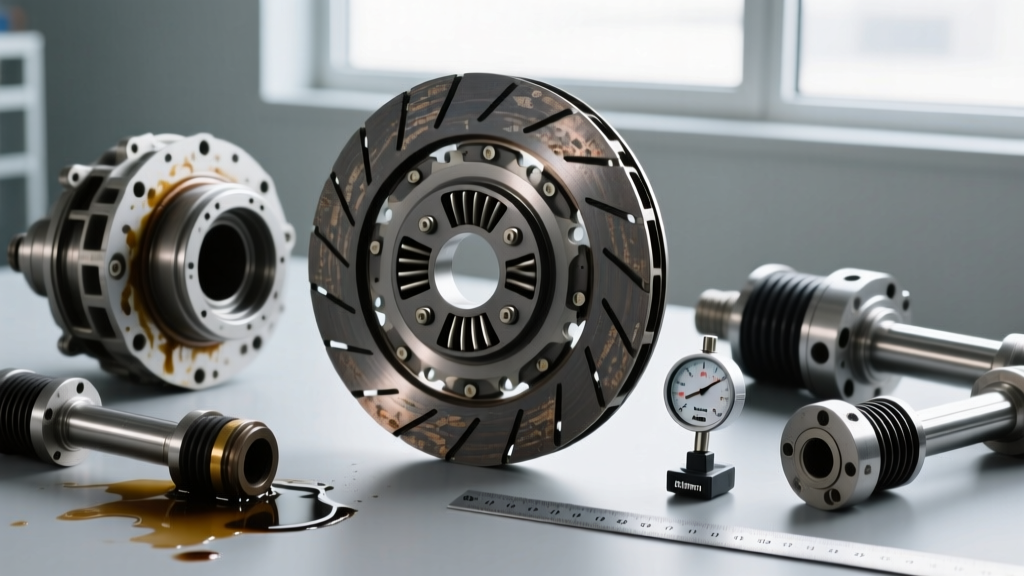
- Clearance Spec: If a full teardown is required, the clutch pack 'E' clearance must be measured with a dial indicator. The factory ZF specification for Clutch 'E' selective snap-ring clearance is strictly 1.20mm to 1.60mm. Exceeding 1.60mm will result in delayed engagements and burnt friction materials.
Fluid Dynamics: The Lifeblood of the Clutch Pack
In educational models, friction is a dry, mechanical constant. In automatic transmissions, the automatic transmission fluid (ATF) acts as both a hydraulic medium and a coolant for the clutch packs. Using the incorrect fluid alters the coefficient of friction on the paper/carbon-based clutch linings, leading to immediate chatter or slip.
Expert Warning: Never substitute ZF LifeguardFluid 8 with generic 'multi-vehicle' ATFs in an 8HP transmission. The specific friction modifiers in Lifeguard 8 are calibrated to the porous sintered bronze and carbon linings used in ZF clutch packs. Incorrect fluid will cause TCC shudder within 500 miles.
For the GM 6L80, Dexron VI (or the newer Dexron ULV for 10-speed variants) is required. Fluid capacity for a dry 6L80 build is approximately 11.2 liters, but a standard pan-drop service only yields about 6.0 liters due to fluid trapped in the torque converter.
Sourcing OEM vs. Aftermarket Transmission Parts
When addressing automatic clutch problems, the buyer's market is split between OEM dealerships and specialized aftermarket manufacturers. According to industry data published by Transmission Digest, the aftermarket has largely overtaken OEMs in providing updated, bulletproof components for known failure points.
- Friction Materials: OEM friction discs (e.g., GM # 24236929) are reliable, but aftermarket brands like Alto Products or Raybestos offer 'High Energy' (HE) or 'Red Eagle' friction plates that feature superior thermal thresholds for modified or heavy-duty applications.
- Steel Plates: Always replace warped steel separator plates. If the blue tempering color is gone, or if a straight-edge reveals warping greater than 0.15mm, the plate will cause localized hot spots and burn the adjacent friction disc.
- Sealing Rings: For the 6L80 stator support shaft, upgrade from the OEM Teflon rings to aftermarket Scarf-cut sealing rings to prevent hydraulic cross-leaks at high line pressures.
Final Verdict: From Toy Box to Transmission Bay
The LEGO clutch gear remains an unparalleled, low-cost buyer's choice for teaching the fundamental physics of torque limitation and mechanical slip. It perfectly illustrates why a drivetrain needs a 'fuse' to protect downstream components. However, diagnosing clutch problems in modern automatic transmissions like the GM 6L80 and ZF 8HP requires moving beyond mechanical springs and into the realm of hydraulic line pressure, variable force solenoids, and microscopic fluid clearances.
By understanding the exact failure modes—such as the 6L80's fractured wave plate or the ZF 8HP's degrading mechatronic sleeve—technicians and buyers can avoid unnecessary full-transmission replacements. Armed with the correct torque specs, clearance measurements, and updated part numbers, you can accurately diagnose and repair automatic clutch failures, ensuring the drivetrain operates flawlessly for another 150,000 miles. For further reading on hydraulic clutch apply dynamics, refer to the latest drivetrain engineering papers available via SAE International.