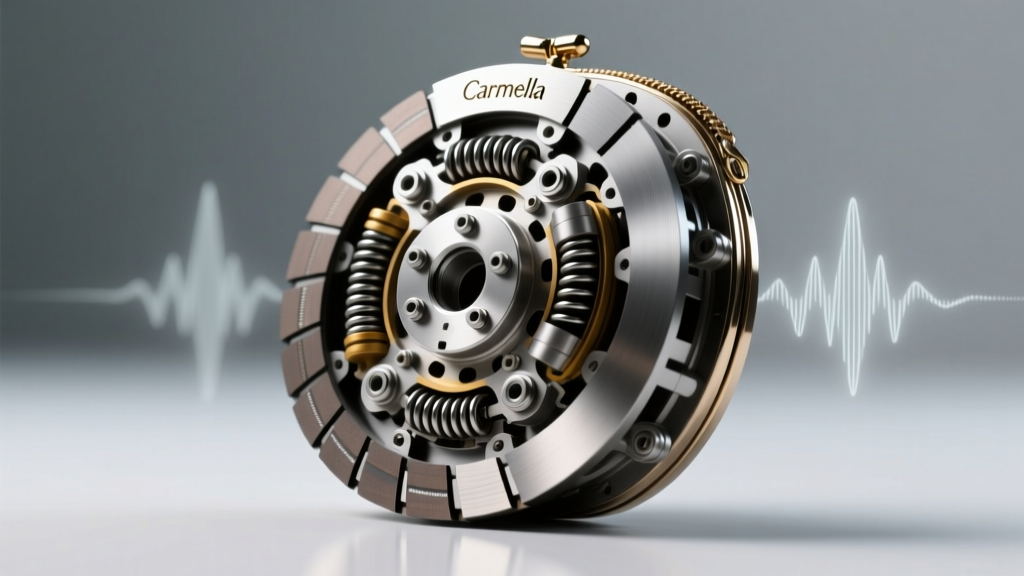
Diagnostic Context: Urban stop-and-go environments accelerate friction material degradation by up to 400% compared to highway driving. This technical deep-dive utilizes extreme-duty cycling data to establish precise clutch wear thresholds.
The Kuykendahl Corridor Effect: Stop-and-Go Friction Degradation
When evaluating severe-duty clutch wear, service centers along the clutch automotive Kuykendahl corridor in Houston provide a unique, high-stress dataset. This major arterial route is characterized by dense, low-speed congestion, frequent traffic light cycles, and aggressive launch conditions. In these environments, a manual transmission clutch does not merely engage and disengage; it slips continuously to modulate vehicle speed at 2-5 mph. This micro-slipping generates immense localized thermal loads on the friction disc and flywheel mating surface.
Standard organic friction materials, typically composed of fiberglass, Kevlar, and phenolic resins, begin to experience thermal fade and glazing when surface temperatures exceed 400°F (204°C). In the Kuykendahl traffic scenario, localized hotspotting on cast-iron flywheels can push temperatures past 600°F during repeated hill-starts. This results in the resin binders breaking down, leaving a hardened, glass-like surface on the friction disc that severely reduces the coefficient of friction (μ). Recognizing these early thermal degradation signs is critical for accurate drivetrain diagnostics before catastrophic failure occurs.
Quantifying Clutch Lifespan: Mileage vs. Engagement Cycles
Automotive engineers do not measure clutch lifespan in odometer miles; they measure it in engagement cycles and thermal joules. A vehicle driven primarily on the interstate might see 120,000 miles on a single LuK RepSet (Part No. 624 3095 00) because the clutch is only actuated a few hundred times per year. Conversely, a delivery vehicle or commuter in heavy urban traffic may require a replacement at 35,000 miles due to tens of thousands of slip-cycles.
To accurately predict lifespan, technicians must evaluate the friction material thickness relative to the clutch actuation history. A brand-new organic clutch disc typically features 8.0mm to 9.0mm of total friction material thickness. As the disc wears, the diaphragm spring fingers on the pressure plate move forward, altering the pedal geometry. This is why a changing pedal bite point is often the first quantifiable indicator of physical wear, long before slipping occurs under heavy load.
Friction Material Wear Rates and Thermal Thresholds
| Material Type | Avg. Lifespan (Urban Cycles) | Thermal Fade Threshold | Best Application |
|---|---|---|---|
| Organic (OEM) | 40,000 - 60,000 miles | 400°F (204°C) | Daily driving, comfort, light towing |
| Heavy-Duty Organic | 60,000 - 80,000 miles | 500°F (260°C) | Commercial fleet, frequent stop-and-go |
| Ceramic/Metallic | 20,000 - 30,000 miles | 800°F (426°C) | Track use, high-horsepower launches |
| Kevlar/Carbon | 50,000 - 70,000 miles | 700°F (371°C) | High-torque street/strip, requires break-in |
Primary Wear Signs: Beyond the Slipping Pedal
While a slipping clutch under wide-open throttle (WOT) in third or fourth gear is the most obvious symptom of a worn disc, advanced diagnostics require identifying secondary and tertiary failure modes. Modern hydraulic clutch actuation systems can mask mechanical wear, making physical inspection and acoustic analysis vital.
Flywheel Runout and Hotspotting
Clutch chatter during engagement is rarely caused by the friction disc alone; it is frequently a symptom of flywheel runout or thermal warping. According to SAE International standards, maximum allowable flywheel runout is typically 0.005 inches (0.127mm). When a driver repeatedly rides the clutch pedal in urban traffic, the friction surface develops alternating blue and black heat bands (hotspots). These hardened areas have a different friction coefficient than the surrounding cast iron, causing the disc to grab and release rapidly as it rotates, transmitting severe torsional vibrations through the transmission input shaft and engine mounts.
Release Bearing Acoustic Signatures
The clutch release (throw-out) bearing is under immense axial load during disengagement. A failing bearing will emit a distinct high-pitched whine or growl that changes pitch with engine RPM, but only when the clutch pedal is depressed. If the noise is present when the pedal is released and disappears when pressed, the issue is likely the transmission input shaft bearing or a lack of pilot bearing lubrication. Diagnosing these acoustic signatures requires a mechanic's stethoscope and an understanding of the specific transmission architecture, such as the concentric slave cylinder (CSC) designs found in the Tremec T-56 Magnum or ZF S6-53.
Diagnostic Measurements and Torque Specifications
Proper diagnosis and subsequent reassembly demand strict adherence to OEM torque specifications and measurement protocols. When inspecting a suspected worn clutch, the following measurements must be documented:
- Friction Disc Thickness: Measure at four equidistant points using a micrometer. Minimum service limit is generally 2.0mm above the rivet heads.
- Diaphragm Spring Finger Height: Measured from the pressure plate mounting surface. A variance of more than 0.5mm between fingers indicates a fatigued pressure plate that will cause uneven clamping and premature wear.
- Hydraulic System Freeplay: For systems with an external slave cylinder (e.g., older GM LS platforms), pedal freeplay must be set to 1.0 - 1.5 inches to ensure the release bearing is not constantly riding the diaphragm fingers, which causes rapid bearing failure.
During replacement, torque specs are non-negotiable. For a standard GM LS-series V8, the flywheel-to-crankshaft bolts (often requiring new TTY hardware) are torqued to 74 lb-ft. The pressure plate-to-flywheel bolts (typically M8x1.25) are torqued to 25-30 lb-ft in a star pattern to prevent housing distortion. For European applications like the BMW N54/ZF S6-53, the dual-mass flywheel (DMF) requires specific alignment and torque-to-yield procedures, often costing between $800 and $1,200 just for the DMF component (e.g., Sachs 2290 601 009).
When to Replace: The 2mm Rule and Pedal Freeplay
Determining the exact moment for clutch replacement requires balancing the cost of labor against the risk of collateral damage. As the friction material wears down to the 2.5mm threshold, the torsional dampening springs inside the disc hub become exposed to excessive shock loads. If the friction material wears completely flush with the steel rivets, the rivets will aggressively gouge the flywheel and pressure plate surfaces, turning a standard $1,200 clutch replacement into a $2,500+ drivetrain overhaul requiring a complete flywheel replacement.
Furthermore, as detailed in Hagerty Media's technical archives, a clutch that is slipping due to oil contamination (from a failed rear main seal or transmission input shaft seal) must be replaced immediately, regardless of friction material thickness. Oil-soaked organic friction material cannot be cleaned; the resins will permanently absorb the hydrocarbons, leading to continuous slip and localized flywheel overheating. In these scenarios, diagnosing the root cause of the leak is just as critical as measuring the clutch wear, ensuring the new assembly survives beyond the initial break-in period.
Ultimately, mastering clutch system diagnostics means looking past the pedal feel and understanding the metallurgical and thermal realities of the friction interface. Whether analyzing data from a high-stress urban corridor or evaluating a weekend track car, precise measurements and material science dictate the true lifespan of the drivetrain.