The Physics of 35-Inch Tires on the KRX 1000 CVT
As UTV enthusiasts push the boundaries of off-road performance in 2026, outfitting a Kawasaki Teryx KRX 1000 with massive 35-inch tires has become the standard for rock crawling and deep-dune running. However, this aggressive modification introduces a severe mechanical bottleneck: rotational mass. Upgrading from the stock 31-inch tires to 35-inch alternatives increases unsprung weight and rotational inertia by roughly 35% to 40%.
In a traditional manual transmission, this added load would overwhelm a standard friction disc, leading to immediate slipping and glazing. In the KRX 1000’s Continuously Variable Transmission (CVT), the traditional 'clutch disc' is replaced by high-friction composite shoes and precision-machined aluminum sheaves. When the rotational resistance of a 35-inch tire exceeds the clamping force and friction coefficient of the stock CVT components, the primary clutch fails to shift out properly, the drive belt rides too low in the sheave, and catastrophic heat buildup occurs. Selecting the correct krx 1000 clutch kit for 35 inch tires is not just about acceleration; it is a critical thermal management and drivetrain survival upgrade.
Symptom Diagnosis: Is Your Stock CVT Failing?
Before tearing into the CVT housing, you must accurately diagnose whether your friction components are failing due to tire size or underlying mechanical wear. Use the diagnostic matrix below to pinpoint your CVT friction and clutching issues.
| Symptom | Operating Condition | Root Cause & Friction Component Check |
|---|---|---|
| Belt Squeal on Takeoff | Low RPM, high load (e.g., rock crawling) | Glazed friction shoes; insufficient secondary clutch clamping force. Inspect shoes for hard, shiny surfaces. |
| High RPM Bog / No Shift Out | Wide Open Throttle (WOT) on flat terrain | Primary clutch weights are too light for the 35-inch tire mass; belt is failing to climb the primary sheave. |
| Burning Rubber Smell | Sustained speeds above 45 MPH or deep sand | Belt slip generating 400°F+ heat. Friction shoes have lost their thermal bite; belt cords are likely compromised. |
| Engagement Shudder | Transitioning from idle to 1,500 RPM | Uneven wear on the primary sheave bushing or contaminated friction shoe pads (oil/grease ingress). |
Performance Friction Options: The CVT 'Clutch Disc' Equivalent
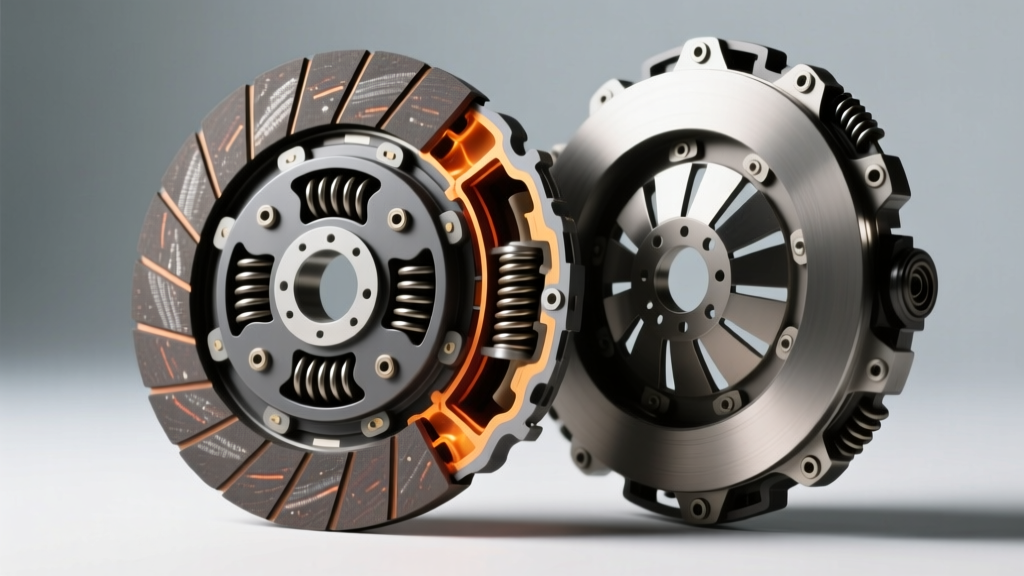
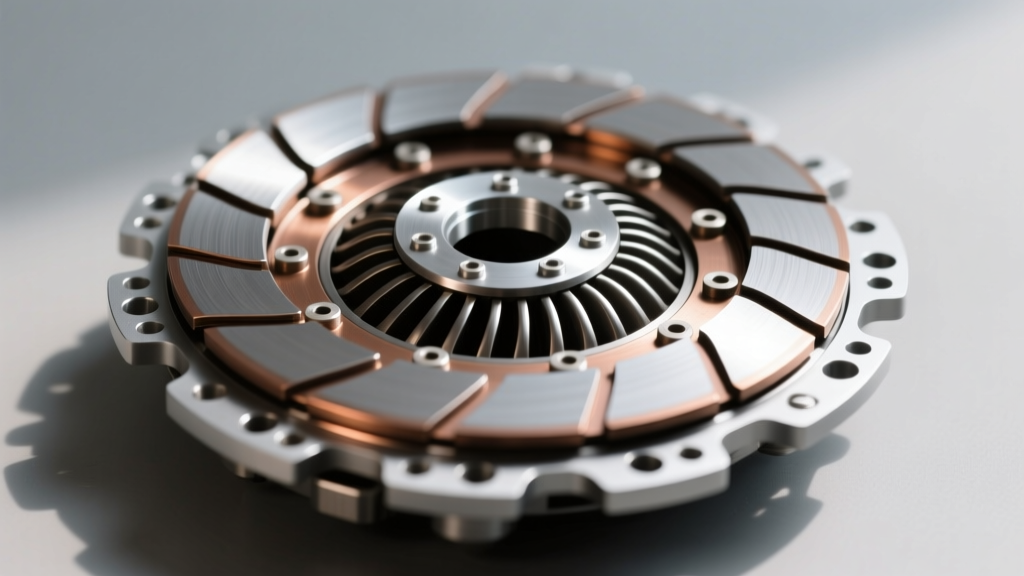
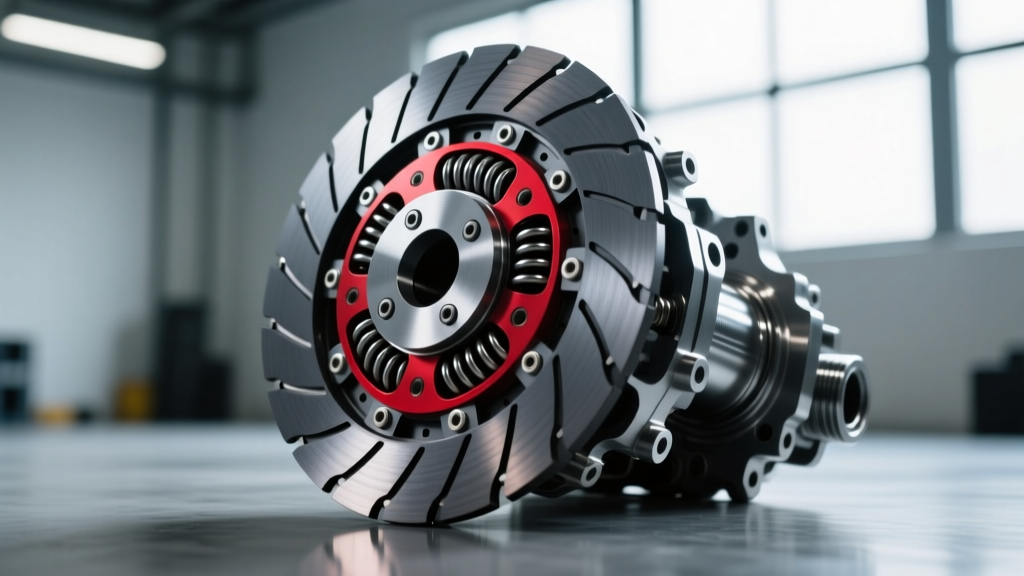
When addressing the 'clutch disc, plate, and components' category for UTVs, we must look closely at the CVT friction shoes (often called clutch pads or sliders). These components press against the moving sheave to transfer engine torque to the belt. Just as automotive performance clutch discs utilize advanced friction materials to handle high horsepower, UTV performance kits rely on specialized shoe compounds to handle the extreme rotational mass of 35-inch tires.
Organic vs. Kevlar-Aramid vs. Sintered Composites
- Stock Organic Compounds: Designed for 31-inch tires and moderate loads. They offer smooth engagement but begin to glaze and fade at temperatures exceeding 300°F. Completely inadequate for 35-inch tires in high-load scenarios.
- Kevlar-Aramid Blends: The gold standard for heavy-tire UTV builds. Kevlar-infused friction shoes maintain a high coefficient of friction even at 450°F. They provide an aggressive 'bite' that prevents belt slip during low-speed, high-torque rock crawling, effectively mimicking a Stage 2 ceramic-organic manual clutch disc.
- Sintered/Ceramic Composites: Reserved for extreme racing applications. While they offer unparalleled heat resistance, they can be overly aggressive, leading to accelerated wear on the aluminum sheave faces if not properly bedded.
Top Rated Kits: Selecting the Right Setup for 35-Inch Tires
To properly recalibrate the KRX 1000 for 35-inch tires, you must address both the friction materials and the clamping geometry (springs and weights). Here are the top-tier performance solutions available on the market.
1. Dalton Industries DPK KRX 1000-35 Calibration Kit
Dalton Industries is widely regarded as the authority in CVT geometry. Their specific kit for 35-inch tires (Part# DPK KRX 1000-35, typically priced around $295 - $330) does not just swap springs; it alters the shift profile. The kit includes custom-machined heavy-duty clutch weights that compensate for the delayed rotational acceleration of the larger tires. By altering the weight profile, the primary clutch forces the belt higher into the sheave earlier in the RPM band, reducing friction-induced heat at the belt's contact patch.
2. EPI Performance Heavy-Duty Clutch Kit (WE285410)
EPI Performance offers a comprehensive solution (Part# WE285410, approx. $240 - $270) that focuses heavily on secondary clutch clamping force. When running 35-inch tires, the driven (secondary) clutch must squeeze the belt with significantly more force to prevent slip under load. EPI’s stiffer secondary torsion spring and compression spring combination increases clamping pressure by roughly 25%, ensuring the friction shoes maintain constant contact with the belt under high-torque loads.
3. Trinity Racing High-Temp Friction Shoes
If your diagnostic check revealed glazed or worn shoes, you must replace them. Trinity Racing’s Kevlar-infused replacement shoes (approx. $85 - $110) are a direct bolt-in upgrade that dramatically increases the thermal threshold of the primary clutch engagement zone.
Precision Installation: Torque Specs and Sheave Tolerances
Installing a performance CVT kit requires strict adherence to torque specifications. The KRX 1000 CVT operates under immense centrifugal force; a loose primary clutch bolt will result in catastrophic sheave separation. For detailed OEM exploded diagrams and part numbers, always cross-reference Partzilla's Kawasaki OEM CVT diagrams before beginning work.
Required Tools & Fastener Specs
- Primary Clutch Puller: M22 x 1.0 thread pitch. Never use an improper puller, as you will strip the internal crankshaft threads.
- Primary Mounting Bolt (M12 x 1.25): Torque to 74 lb-ft (100 Nm). You MUST apply a medium-strength threadlocker (Loctite 243) to the threads. Clean the bolt and crankshaft threads with brake cleaner prior to application.
- Secondary Clutch Mounting Bolt: Torque to 59 lb-ft (80 Nm) with a drop of Blue Loctite.
- Belt Deflection Spec: After installing the new kit and OEM replacement belt (Part# 59011-0035), check belt deflection. Apply roughly 2.2 lbs (1 kg) of downward pressure on the belt span. Deflection should measure between 1.25" and 1.5" (32-38mm). Adjust the secondary clutch notched ring if necessary.
For further calibration theory and weight profile charts, the Dalton Industries CVT Calibration Guide remains an indispensable resource for understanding how centrifugal weights interact with spring rates.
Post-Install Troubleshooting & Bedding Procedure
Just like a traditional performance clutch disc, new CVT friction shoes and belts require a proper bedding procedure to transfer an even layer of friction material onto the aluminum sheave faces.
- The Bedding Run: Find a safe, flat dirt road. Perform 5 to 8 moderate accelerations from 0 to 40 MPH, allowing the vehicle to coast down and cool between runs. Avoid wide-open throttle (WOT) and heavy towing during the first 50 miles.
- Diagnosing Post-Install Shudder: If you experience shudder after installing a stiffer secondary spring, your belt may be slightly glazed from previous slip. Remove the belt, wash it with warm soapy water, and scuff the sheave faces with a maroon Scotch-Brite pad and isopropyl alcohol to remove old rubber deposits.
- Monitoring CVT Temperatures: Even with the correct clutch kit for 35-inch tires, airflow is critical. Ensure your CVT intake and exhaust ducting are free of mud and debris. If CVT temperatures still exceed 200°F during slow rock crawling, consider adding an aftermarket CVT blower fan to force ambient air over the friction shoes and belt.
Final Verdict on 35-Inch Tire Clutching
Running 35-inch tires on a Kawasaki Teryx KRX 1000 without addressing the CVT friction and clutching geometry is a guaranteed path to stranded trail rides and melted drive belts. By treating the CVT friction shoes with the same diagnostic rigor as a manual transmission clutch disc, and by utilizing precision-calibrated weight and spring kits from manufacturers like Dalton and EPI, you can reliably transfer the KRX’s 999cc parallel-twin torque to the ground. Diagnose your symptoms accurately, respect the torque specs, and your drivetrain will survive the most punishing 2026 off-road trails.