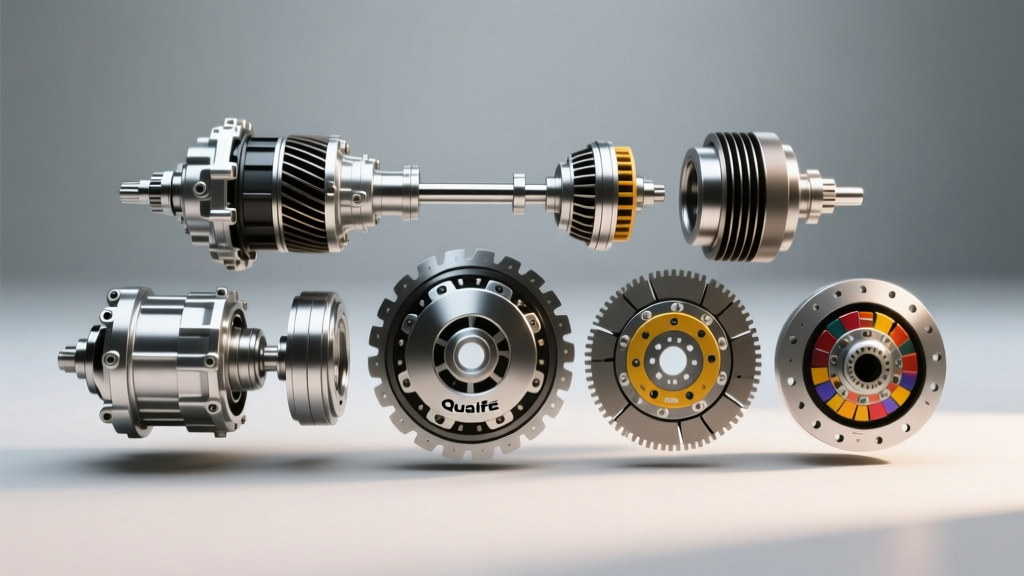
When most enthusiasts think of performance platforms, the Kia Soul rarely tops the list. However, as we navigate the 2026 aftermarket landscape, this quirky, boxy FWD hatchback has carved out a dedicated niche in grassroots rallycross, time-attack, and canyon-carving communities. The secret lies in its lightweight chassis, tunable turbocharged powerplants, and a surprisingly robust transaxle architecture shared with its Hyundai siblings. If you are looking to put power down effectively, optimizing the Kia Soul drivetrain is the most critical step in your build.
Whether you are piloting a second-generation (AM) 1.6T with the 7-speed Dual Clutch Transmission (7DCT) or a third-generation (SK3) 2.0L equipped with the Kappa Intelligent Variable Transmission (IVT), the factory setup is tuned for fuel economy and comfort, not hard launches or high-G cornering. This comprehensive performance guide breaks down the exact modifications, part numbers, and torque specifications required to transform your Kia Soul drivetrain into a reliable, track-capable system.
Understanding the Kia Soul Drivetrain Architecture
Before ordering parts, you must identify your specific transaxle. The Kia Soul is strictly a Front-Wheel Drive (FWD) platform, meaning the engine, transmission, and differential are all housed in a single transaxle unit driving the front wheels.
- Gen 2 (2014–2019): The 1.6L Turbo models utilize the 7DCTA6GF1 6-speed automatic or the M6GF1 6-speed manual.
- Gen 3 (2020–Present): The 1.6T retains an updated 7DCT, while the 2.0L NA switched to the chain-driven Kappa IVT (Continuously Variable Transmission).
Because FWD vehicles suffer from inherent torque steer and traction limitations under heavy acceleration, the primary goals of modifying the Kia Soul drivetrain are eliminating wheel hop, maximizing mechanical grip, and managing thermal loads.
Stage 1: Drivetrain Lash & Wheel Hop Elimination
The most common failure point in a tuned FWD Kia isn't the transmission internals; it's the CV joints and axle shafts. The factory uses soft rubber motor and transmission mounts. Under hard acceleration, the engine twists violently, causing 'wheel hop.' This rapid oscillation sends catastrophic shock loads through the CV joints, leading to snapped axle shafts.
Polyurethane Mount Inserts & Billet Mounts
Upgrading to polyurethane is the highest-ROI modification you can make. Pierce Motorsports offers polyurethane inserts (Part No. 93516 for the lower torque strut) and complete billet engine/transmission mounts. By reducing engine movement from over an inch to mere millimeters, you ensure that throttle input translates immediately to forward momentum rather than twisting the drivetrain.
- Cost: $60 (Inserts) to $250 (Full Billet Mounts)
- Installation Note: Expect an increase in NVH (Noise, Vibration, and Harshness) in the cabin. Use an 80A durometer polyurethane for a balanced street/track setup.
Stage 2: Traction & The Open Differential Problem
The factory open differential in the Kia Soul is a major bottleneck. If you apply aggressive tuning to the 1.6T Gamma II engine (pushing past 220 whp), an open diff will simply spin the inside wheel during corner exit or hard launches on uneven surfaces.
Quaife ATB Limited Slip Differential
The gold standard for FWD Kia/Hyundai platforms is the Quaife ATB (Automatic Torque Biasing) LSD. For the A6GF1 6-speed and the 7DCT, the correct part number is Quaife QDF6Z. Unlike clutch-type LSDs that require special friction-modifier fluids and suffer from clutch-pack wear, the Quaife uses a helical gear design that biases torque mechanically.
- Cost: $1,150 – $1,300
- Installation: Requires dropping the transaxle, splitting the case, and pressing out the OEM differential. Bearing preload must be set using precision shims. Budget $800–$1,200 for professional installation if you lack a hydraulic press and dial indicator.
- Performance Gain: Dramatically reduces inside-wheel spin, allowing you to apply throttle much earlier at the apex of a corner. It also virtually eliminates torque steer under heavy throttle.
Stage 3: Axle Upgrades & Thermal Management
Once you have an LSD and stiff mounts, the OEM CV axles become the next weak link, especially if you are running sticky 200-treadwear tires (like the Michelin Pilot Sport 4S or Falken Azenis RT660).
Upgraded CV Axle Shafts
For high-horsepower builds, companies like Insane Shafts manufacture custom chromoly CV axles with upgraded tripod joints and larger CV housings. These axles feature a torsion bar design that flexes slightly under load to absorb shock, rather than snapping like the rigid OEM shafts. Expect to pay between $900 and $1,400 for a complete front pair.
7DCT & IVT Thermal Cooling
The 7DCT and Kappa IVT are highly sensitive to heat. During repeated canyon runs or rallycross stages, fluid temperatures can exceed 230°F (110°C), triggering the ECU's 'limp mode' to protect the clutch packs or steel chain. Installing an inline external transmission cooler (such as a Setrab 10-row cooler with an integrated 180°F thermostat) plumbed into the transaxle's return line will keep fluid temps stable and prevent premature mechatronic failure.
Fluid Selection: Do Not Compromise
Using the wrong fluid will destroy modern Kia transmissions in thousands of miles. As of 2026, Red Line Oil and Motul offer the most stable synthetic options for high-stress applications.
- 7DCT (Dual Clutch): Requires a specialized low-viscosity fluid. Use Red Line DCTF-2. Do not use standard ATF or gear oil.
- Kappa IVT (CVT): Requires high-friction chain-grip fluid. Use Motul Multi CVT or OEM Hyundai/Kia CVTF. Standard ATF will cause the chain to slip and destroy the variator pulleys.
- M6GF1 (Manual): Use Red Line MT-85 (75W85 GL-4) for crisp, synchro-friendly shifts.
Drivetrain Torque Specifications & Capacity Data
Precision is paramount when reassembling the Kia Soul drivetrain. Always use a calibrated torque wrench and replace one-time-use stretch bolts and axle nuts.
| Component | Specification / Capacity | Torque Spec (ft-lb / Nm) |
|---|---|---|
| Front Axle Shaft Nut (M22) | Replace with OEM Nut | 148–202 lb-ft (200–274 Nm) |
| Transmission Mount to Chassis | 10mm / 12mm Bolts | 29–40 lb-ft (40–55 Nm) |
| A6GF1 (6AT) Fluid Capacity | Full Dry Fill | 7.1 Quarts (6.7 Liters) |
| 7DCT Fluid Capacity | Gearbox / Mechatronic | 1.9 Quarts (1.8 Liters) |
| Wheel Lug Nuts (M12 x 1.5) | Conical Seat | 80–94 lb-ft (108–127 Nm) |
Final Expert Advice for the Builder
Modifying the Kia Soul drivetrain requires a holistic approach. Installing a limited-slip differential without upgrading the motor mounts will simply transfer the wheel hop shock directly into the transmission casing, potentially cracking the bell housing. Furthermore, if you are tuning the 1.6T engine, ensure your ECU tune includes specific torque-management mapping for the 1st and 2nd gear shifts to protect the 7DCT clutch packs from shock-loading.
By systematically addressing compliance (mounts), traction (Quaife LSD), and reliability (axles and cooling), your Kia Soul can reliably handle upward of 300 horsepower at the crank while delivering an engaging, rally-inspired driving experience that defies its economy-car origins.
For further technical documentation on Hyundai/Kia transaxle teardowns and bearing preload specs, consult the Quaife Engineering installation manuals or your local dealer's FSM (Factory Service Manual) portal.