The Evolution of Wrangler Clutch Hydraulics: What You Need to Know
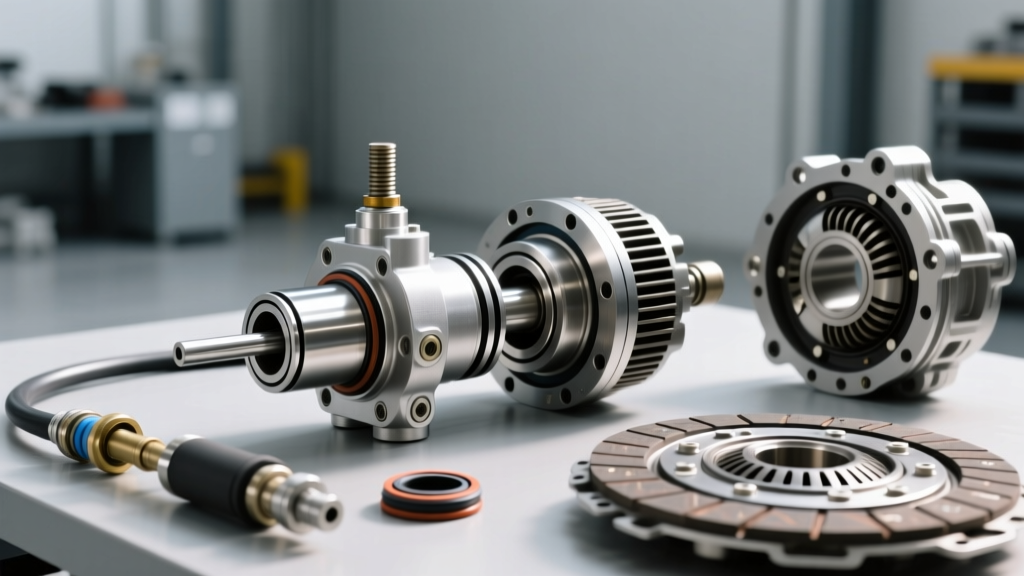
When diagnosing manual transmission issues on modern Jeeps, understanding the specific hydraulic architecture is critical. Unlike the older CJ and YJ models that relied on mechanical linkages and Z-bars, the TJ, JK, and JL generations utilize a closed-loop hydraulic system. For the immensely popular JK generation (2007-2018) equipped with the Mercedes-derived NSG370 6-speed manual, and the newer JL generation utilizing the Aisin manual transmissions, the clutch slave cylinder is an external, bellhousing-mounted component.
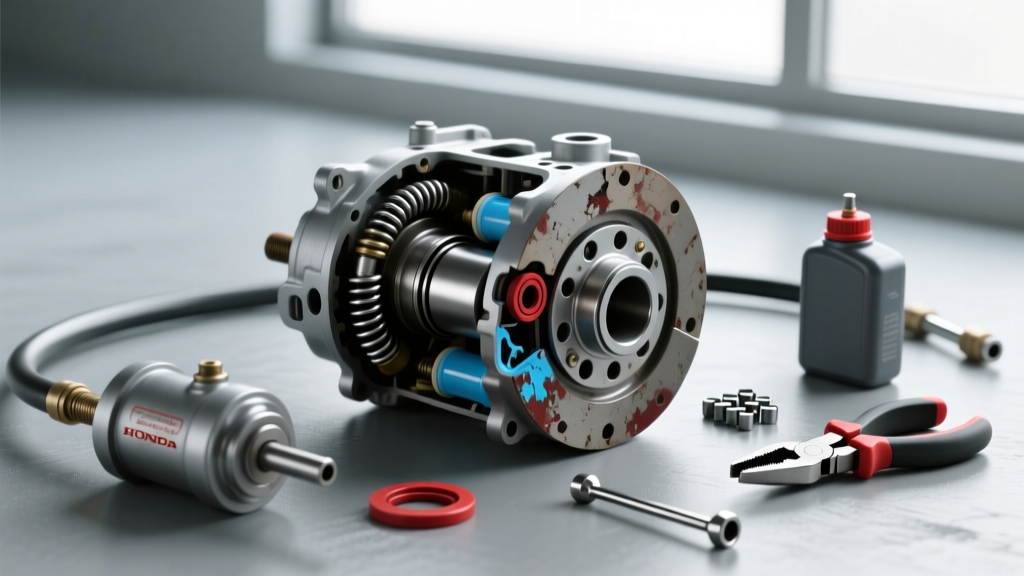
As these vehicles age and accumulate off-road mileage, the Jeep Wrangler clutch slave cylinder replacement becomes one of the most common drivetrain services. Exposure to extreme heat from the exhaust, corrosive trail mud, and degraded DOT 3 fluid leads to internal seal blowouts and external weeping. In this comprehensive 2026 diagnostic guide, we will isolate the failure, select the correct OEM or aftermarket components, and execute a replacement and bleed procedure that actually works on the notoriously stubborn Wrangler hydraulic loop.
Symptom Diagnosis: Master Cylinder vs. Slave Cylinder
Before ordering parts, you must confirm the slave cylinder is the actual point of failure. A spongy pedal or a clutch that fails to disengage can originate at the master cylinder (located on the firewall), the hydraulic hardline, or the slave cylinder itself. Use the diagnostic matrix below to isolate the fault.
| Symptom | Slave Cylinder Fault | Master Cylinder Fault | Air in System / Line Issue |
|---|---|---|---|
| Pedal drops to the floor with no resistance | Highly Likely (Internal bypass or external blowout) | Likely (Internal cup failure) | Unlikely |
| Fluid loss visible at bellhousing weep hole | Confirmed (Slave seal failure) | Unlikely | Unlikely |
| Pedal feels spongy but returns slowly | Possible (Weak return spring) | Likely (Master piston binding) | Highly Likely (Trapped air) |
| Fluid loss on firewall / carpet | Unlikely | Confirmed (Master rear seal leak) | Unlikely |
| Clutch fails to disengage (grinding into gear) | Likely (Insufficient stroke due to wear) | Likely (Insufficient fluid volume pushed) | Highly Likely (Air compressing) |
The Bellhousing Weep Hole Dilemma
A frequent point of confusion for Wrangler owners is spotting fluid dripping from the bottom of the transmission bellhousing weep hole. This indicates a leak inside the bellhousing, but it could be the slave cylinder pushrod seal or the engine's rear main seal.
The Smell and Color Test: Rub the fluid between your fingers. Engine oil (rear main seal) will feel viscous and smell like petroleum. Brake fluid (slave cylinder) will feel thin, slippery, and have a distinct chemical odor. Furthermore, check your master cylinder reservoir under the hood. If the fluid level is dropping but the engine oil level is stable, you have a hydraulic clutch leak.
Part Selection: OEM Mopar vs. Aftermarket Alternatives
When performing a Jeep Wrangler clutch slave cylinder replacement, part quality dictates the longevity of the repair. The slave cylinder is subjected to intense thermal cycling. Cheap, all-plastic aftermarket units often warp or suffer from premature O-ring degradation. Below is a breakdown of the most reliable options available through suppliers like the RockAuto Jeep Catalog and Mopar Parts Giant.
- OEM Mopar (Part #52087653 / 52087653AB): The gold standard for JK Wranglers. Features high-temp resistant phenolic pistons and OE-spec quick-connect fittings. Expect to pay between $85 and $120.
- Dorman (Part #CM640153): A highly reputable aftermarket alternative. Dorman often improves upon OE designs by using slightly more robust return springs and brass bleeder screws instead of cheap pot-metal. Priced around $45 to $65.
- LuK (Part #LSC108): LuK is an OE supplier for many European and domestic manual transmissions. Their slave cylinders are exceptionally reliable and match OE stroke tolerances perfectly. Priced around $55 to $75.
Pro-Tech Warning: Never reuse the old hydraulic line O-rings or crush washers. If your Wrangler uses a quick-connect fitting, purchase a new retaining clip and lubricate the O-rings with clean DOT 3 fluid before snapping the line into the new slave cylinder.
Step-by-Step Slave Cylinder Replacement Procedure
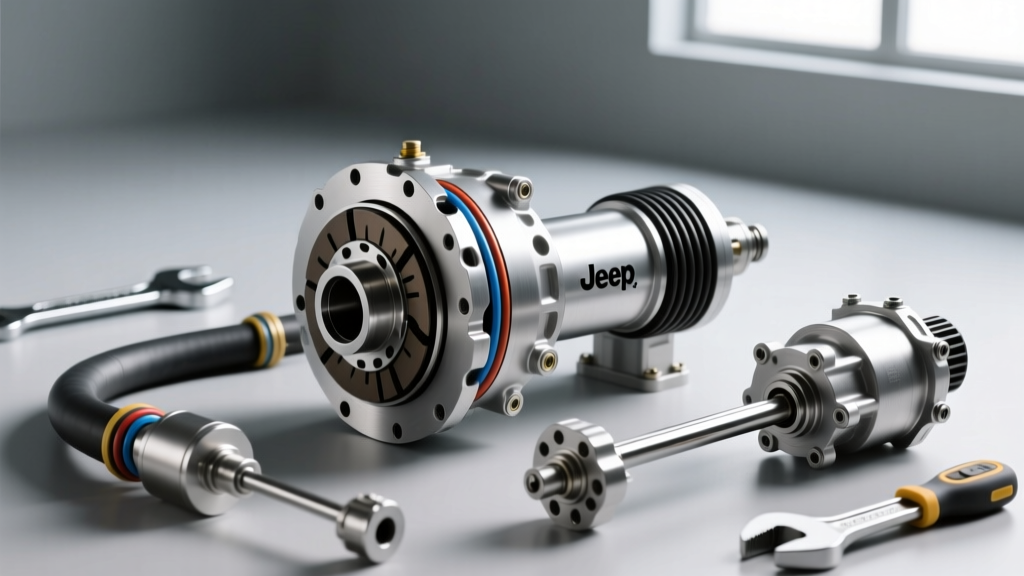
The NSG370 and Aisin transmissions position the slave cylinder on the driver's side of the bellhousing. Access is tight but manageable without dropping the transmission, provided you have the right tools.
Required Tools and Specifications
- 10mm and 13mm deep sockets with a 3/8" drive ratchet
- Line wrench (if equipped with flare nuts instead of quick-connects)
- Needle-nose pliers (for quick-connect retaining clips)
- Torque Wrench (Inch-pounds and Foot-pounds)
- DOT 3 or DOT 4 Brake Fluid (Mopar specifies DOT 3, but high-quality DOT 4 like Motul RBF 600 offers a higher boiling point for off-road crawling)
Execution Steps
- Prep and Safety: Chock the rear wheels. Disconnect the negative battery terminal to prevent accidental starter engagement. Remove the skid plates if equipped to gain better access to the driver's side bellhousing.
- Disconnect the Hydraulic Line: Locate the quick-connect fitting on the slave cylinder. Use needle-nose pliers to carefully remove the metal retaining clip. Wrap a shop towel around the fitting and pull the line straight out. Cap the line immediately to prevent fluid loss and contamination.
- Unbolt the Slave Cylinder: Remove the two M6 mounting bolts securing the slave to the bellhousing. Note the positioning of the pushrod and the heat shield (if equipped).
- Install the New Unit: Position the new slave cylinder. Ensure the pushrod sits correctly in the clutch fork dimple. Hand-thread the M6 bolts to prevent cross-threading the aluminum bellhousing.
- Torque to Spec: Torque the M6 mounting bolts to 8 Nm (71 in-lbs)
Bleeding the Wrangler Hydraulic System: Overcoming Air Traps
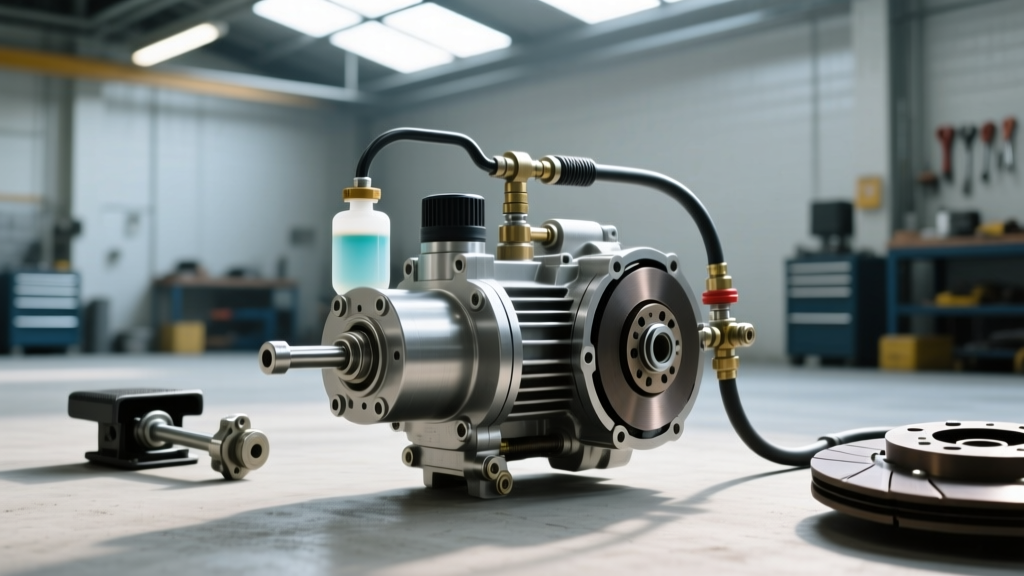
The most frustrating aspect of a Jeep Wrangler clutch slave cylinder replacement is the bleeding process. The JK and JL hydraulic lines feature a high-loop routing near the firewall to prevent heat soak, but this loop acts as a massive air trap. Standard pedal-pumping often fails to purge this air, resulting in a persistently spongy pedal. Consult the experts at the JeepForum JK Technical Section for community-verified bleeding tricks.
The Reverse Bleed Method (Highly Recommended)
Because air rises, pushing fluid from the bottom (slave) to the top (master) is the most physically sound way to bleed a Wrangler clutch.
- Fill the master cylinder reservoir with fresh DOT 3/DOT 4 fluid.
- Attach a reverse bleeder hose to the slave cylinder bleeder screw (Torque spec for bleeder screw: 5 Nm / 44 in-lbs when closed).
- Slowly pump clean fluid upward into the system. Watch the master reservoir for bubbles.
- Once a steady stream of bubble-free fluid enters the reservoir, close the bleeder screw immediately to prevent sucking air back in.
The 'Zip-Tie' Gravity Bleed Alternative
If you lack a reverse bleeder kit, use the gravity method combined with pedal depression. Open the bleeder screw at the slave cylinder. Use a zip-tie or a sturdy stick to wedge the clutch pedal down to the floor. Leave the vehicle overnight. The constant, low-level hydrostatic pressure will slowly force micro-bubbles out of the high-loop hardline and through the open bleeder. In the morning, close the bleeder, remove the zip-tie, top off the reservoir, and test the pedal feel.
Final Diagnostics and System Verification
After completing the replacement and bleed, start the engine and let it idle. Depress the clutch pedal and attempt to shift into Reverse. If you hear gear clash, the clutch is not fully disengaging, meaning air remains in the system or the slave cylinder pushrod stroke is insufficient.
Check the master cylinder fluid level; it should sit precisely at the 'MAX' line. Overfilling the reservoir can cause fluid to expand and vent out of the cap when the engine bay reaches operating temperature, mimicking a leak. Take the vehicle for a low-speed test drive, shifting through all six gears. The engagement point should be roughly 1 to 2 inches off the floor, with a firm, progressive release. By adhering to these precise torque specs, fluid dynamics, and diagnostic steps, your Wrangler's manual transmission will operate flawlessly for the next 100,000 miles of trail and street driving.