The Jeep JK Clutch Disengagement Epidemic
Owners of the 2007-2018 Jeep Wrangler JK equipped with the Mercedes-derived NSG370 6-speed manual transmission are intimately familiar with the "dead pedal" phenomenon. Symptoms include grinding when shifting into reverse, difficulty engaging first gear at a dead stop, and a clutch pedal that feels vague or overly soft. While many enthusiasts immediately blame a failing internal slave cylinder or a worn pressure plate, the root cause is frequently found much further forward in the drivetrain: the clutch master cylinder pushrod.
The factory plastic master cylinder and its fixed-length polymer pushrod are notorious for inadequate fluid displacement. When the pushrod length is incorrect, or when firewall flex robs the pedal of its necessary travel, the hydraulic system cannot generate the volume required to fully actuate the throwout bearing. Furthermore, this lack of stroke velocity creates a secondary nightmare at the other end of the hydraulic line, rendering the clutch bleeder valve nearly useless when attempting to purge trapped air from the system.
Hydraulic Theory: Pushrod Stroke and the Bypass Port
To understand why pushrod adjustment is critical, we must examine the internal anatomy of the master cylinder. The piston inside the bore relies on a compensation port (often called the bypass port) to allow fluid to return to the reservoir when the clutch is released.
- Pushrod Too Long (No Free Play): The piston is held slightly depressed, covering the bypass port. As the fluid heats up and expands, hydraulic pressure builds, causing the clutch to drag and prematurely wear the release bearing.
- Pushrod Too Short (Excessive Free Play): The pedal travels an inch or more before the piston actually begins moving fluid. This robs the slave cylinder of vital stroke length, resulting in incomplete disengagement and gear grind.
When stroke is compromised by a poorly adjusted or failing factory pushrod, fluid velocity drops. Air bubbles in the slave cylinder and hard lines become sluggish. When you finally open the clutch bleeder valve on the bellhousing, the fluid merely trickles out rather than forcefully ejecting the aerated fluid, leaving you with a spongy pedal and a bleeding headache.
Parts, Tools, and Real-World 2026 Costs
Upgrading to an adjustable pushrod is a definitive fix that restores proper pedal geometry and hydraulic volume. Below is a breakdown of the components and realistic pricing for this repair in 2026.
| Specification | OEM Plastic Master/Pushrod | Synergy Mfg Adjustable (8003) | Novak Adjustable Pushrod |
|---|---|---|---|
| Pushrod Material | Molded Polymer | 6061-T6 Aluminum / Steel | Stainless Steel |
| Adjustability | Fixed Length | Threaded w/ Jam Nut | Threaded w/ Jam Nut |
| Avg. Cost (2026) | $120 - $150 (Full Assembly) | $65 - $75 (Pushrod Only) | $75 - $85 (Pushrod Only) |
| Pedal Free Play | Non-Adjustable (Wears out) | Set to 1/16" - 1/8" | Set to 1/16" - 1/8" |
Required Tools and Consumables
- 13mm and 15mm combination wrenches
- Small flathead screwdriver or dental pick (for OEM retaining clips)
- Valvoline DOT 3/4 Synthetic Brake Fluid (Approx. $8/12oz)
- Motive Products Power Bleeder (or equivalent pressure bleeder)
- Russell Speed Bleeder M6 x 1.0 (Part #639600) - Highly recommended upgrade for the NSG370 bellhousing bleeder
- Loctite 243 (Blue) Threadlocker
Step-by-Step Pushrod Adjustment Procedure
Performing this adjustment requires no transmission dropping and can be completed in under an hour. Access is gained from the engine bay and the driver's side footwell.
1. Remove the Factory Retaining Clip
Open the hood and locate the master cylinder mounted to the firewall on the driver's side. You will see the pushrod connecting the pedal arm (through the firewall) to the master cylinder piston. The OEM setup uses a brittle white or red plastic retaining clip. Use a dental pick to carefully pry this clip out. Warning: Do not pry against the plastic tangs of the master cylinder itself, as they will snap, forcing a full master cylinder replacement (LUK Part #CM640153, approx. $95).
2. Install the Adjustable Pushrod
Slide the new billet aluminum or stainless steel pushrod into the master cylinder bore. Secure it using the provided metallic retaining clip or heavy-duty snap ring. Ensure it is fully seated in the pedal arm groove.
3. Setting the Critical Free Play
This is where precision matters. You must set the pushrod length so that there is exactly 1/16-inch to 1/8-inch of free play measured at the center of the clutch pedal pad before you feel the solid resistance of the master cylinder piston engaging.
"Measuring free play at the pedal pad translates to roughly 0.010" to 0.015" of movement at the master cylinder piston. This microscopic gap is exactly what is required to ensure the internal bypass port is fully uncovered, preventing hydraulic lock-up while maximizing forward stroke volume." — Senior Drivetrain Diagnostic Tech, AutoGearNexus
Thread the pushrod in or out to achieve this measurement. Once set, apply a drop of Loctite 243 to the threads and tighten the jam nut securely against the pedal arm bracket using a 13mm wrench.
Optimizing the Clutch Bleeder Valve for Air Evacuation
With the pushrod adjusted and full master cylinder stroke restored, the hydraulic system is now capable of generating the velocity needed to properly bleed the lines. The NSG370 transmission utilizes an internal slave cylinder, but it routes a hard line to an external clutch bleeder valve located on the lower passenger side of the bellhousing.
The Pressure Bleeding Protocol
Because the JK hydraulic system is highly susceptible to micro-bubbles trapping in the convoluted hard lines, manual pedal pumping is largely ineffective. We mandate pressure bleeding.
- Connect a pressure bleeder to the master cylinder reservoir. Set the regulator to 15 PSI. Never exceed 20 PSI, as the internal slave cylinder seals (and the OEM quick-connect fittings) are prone to blowing out under high static pressure.
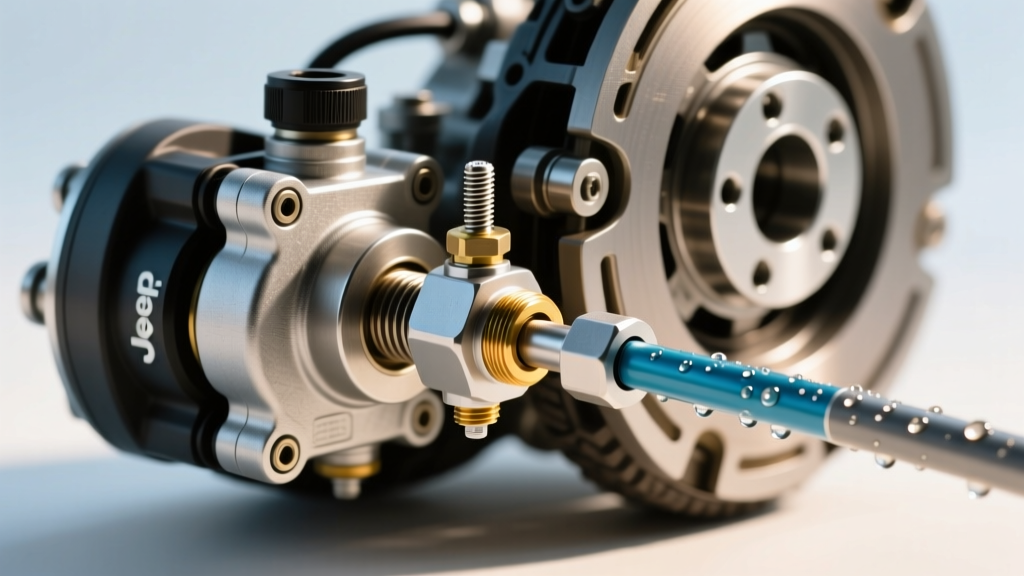
- Crawl under the Jeep and locate the clutch bleeder valve on the bellhousing. If you are still using the OEM plastic bleeder, it is likely rounded off or stripped. Replace it with an M6 x 1.0 steel Speed Bleeder.
- Attach a clear catch tube to the bleeder nipple and route it into a waste container.
- Open the clutch bleeder valve exactly 3/4 of a turn. You will see a rapid, high-volume stream of fluid. Thanks to the newly adjusted pushrod, the fluid velocity is now high enough to drag trapped air bubbles out of the slave cylinder bore.
- Allow roughly 8 to 12 ounces of fluid to pass through, or until the stream is entirely devoid of micro-bubbles.
- Close the valve, release the pressure from the reservoir, and top off with fresh DOT 3/4 fluid.
Diagnostic Edge Cases: When Adjustment Isn't Enough
If you have verified 1/16" of free play at the pushrod and executed a flawless pressure bleed at the clutch bleeder valve, but the pedal still feels soft or disengagement is incomplete, you are likely facing one of two notorious JK edge cases:
Firewall Flex
The JK Wrangler's sheet metal firewall is notoriously thin. Under heavy clutch pedal pressure, the firewall itself bows inward, absorbing up to 1/2" of pedal travel before it ever reaches the master cylinder piston. If you suspect firewall flex, the definitive fix is welding in a steel firewall reinforcement bracket (available from manufacturers like Synergy or ACE Engineering, typically $45-$60) that ties the master cylinder mounting flange directly to the structural cowl bracing.
Fluid Incompatibility and Swollen Seals
The OEM master cylinder and internal slave are designed exclusively for DOT 3 or DOT 4 glycol-based fluids. If a previous owner or a careless lube tech topped the system off with DOT 5 (silicone-based) fluid, the EPDM rubber seals inside the master cylinder and the LUK slave cylinder will swell, blister, and bypass fluid internally. No amount of pushrod adjustment or clutch bleeder valve manipulation will fix a chemically compromised seal. In this scenario, a complete system flush and replacement of both the master and the internal slave (LUK Part #510009310, approx. $185) is mandatory.
For further reading on hydraulic clutch system diagnostics and the physics of fluid displacement, refer to the AA1Car Hydraulic Clutch Bleeding Guide. If you are sourcing billet adjustable components, Synergy Manufacturing provides excellent technical documentation on pedal geometry and pushrod installation tolerances.
By addressing the root cause of hydraulic volume loss at the firewall and pairing it with high-velocity bleeding techniques, you can permanently eliminate the NSG370 gear grind and restore a crisp, predictable clutch pedal.