The Financial Crossroads: Fluid Service vs. Complete Teardown
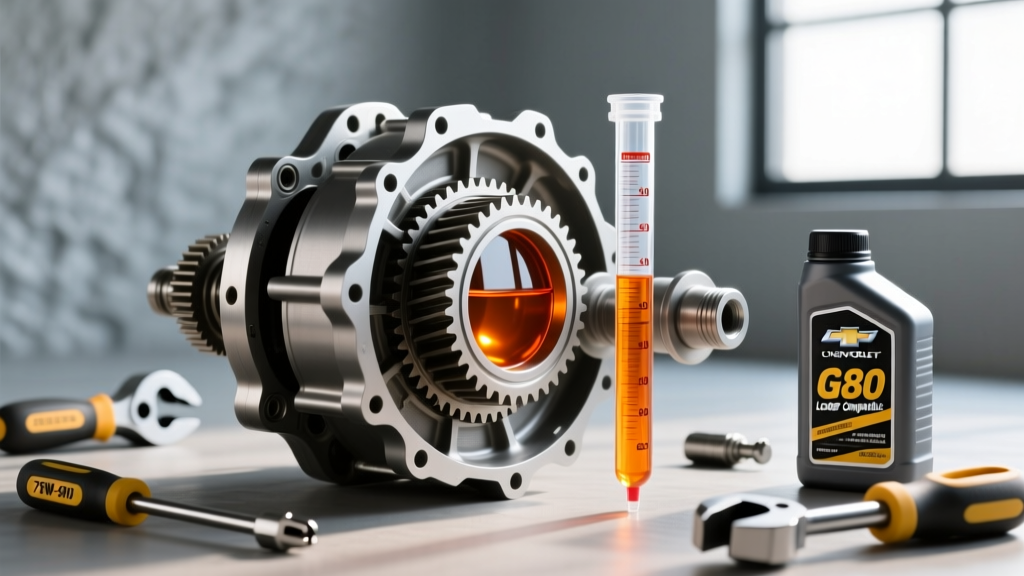
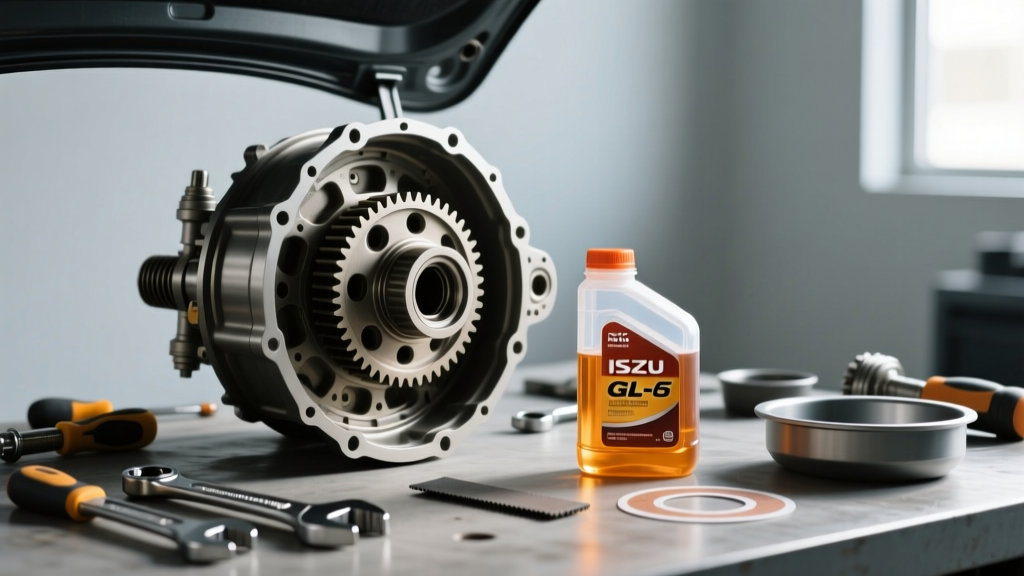
The Isuzu Trooper remains a legendary platform in the off-road and overlanding community, prized for its robust drivetrain and utilitarian design. However, as these vehicles age and accumulate high mileage, drivetrain maintenance becomes a critical financial consideration. When a distinct whine, clunk, or fluid leak develops, owners are often forced to weigh the costs of a routine fluid service against a full Isuzu Trooper rear differential removal and rebuild. In 2026, with shop labor rates averaging $140 to $185 per hour, a complete rear axle teardown and ring-and-pinion replacement can easily exceed $2,200. Conversely, a precise, specification-driven fluid service costs a fraction of that price and can prevent catastrophic failure.
The dividing line between a $75 maintenance job and a $2,500 axle rebuild almost always comes down to one heavily misunderstood factor: differential gear oil specifications. Using the wrong viscosity, neglecting API GL-5 extreme pressure requirements, or omitting limited-slip friction modifiers will rapidly destroy the Trooper’s hypoid gear sets. This guide provides a deep-dive cost analysis and technical breakdown of the exact gear oil specifications required to keep your Trooper’s rear axle on the road and out of the scrap yard.
Decoding Differential Gear Oil Specifications
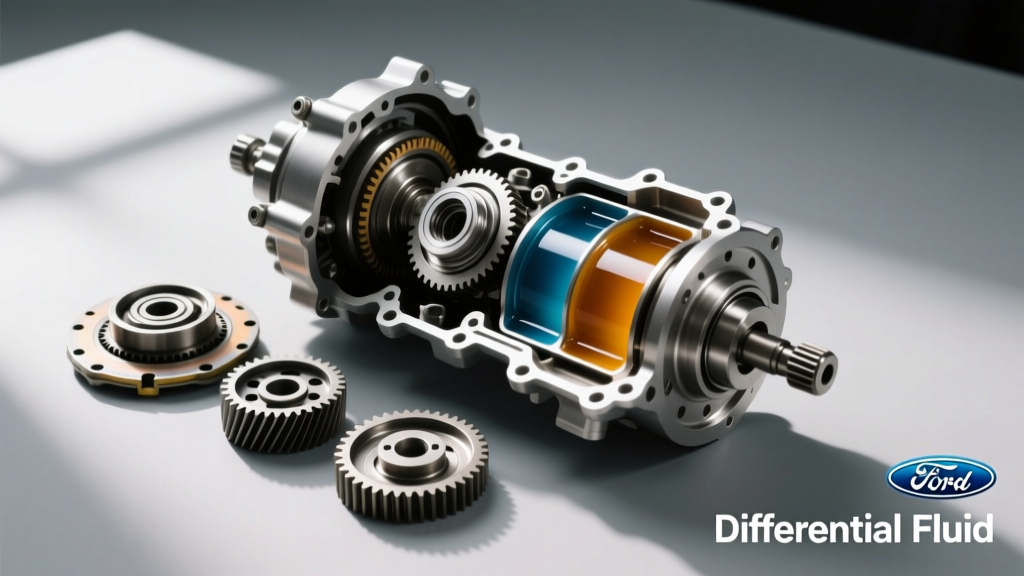
To understand why gear oil is so critical to the financial lifespan of your axle, we must look at the chemical and mechanical engineering behind the fluid. The rear differentials found in the Isuzu Trooper (most commonly the GM Corporate 8.5-inch 10-bolt or the Dana 44 in limited-slip configurations) utilize hypoid gear sets. Unlike standard spur gears, hypoid gears feature a sliding friction motion alongside the rolling contact, generating immense localized heat and shearing forces.
Viscosity and the SAE J306 Standard
Gear oil viscosity is not measured on the same scale as engine oil. It is governed by the SAE J306 Standard, which dictates kinematic viscosity limits for automotive gear lubricants. For the Isuzu Trooper, the factory specification calls for a 75W-90 or 80W-90 gear oil.
- 75W (Winter/Cold Flow): Ensures the fluid remains pumpable and flows over the ring gear at temperatures as low as -40°C (-40°F). This is critical for Troopers operated in cold climates, preventing gear starvation on startup.
- 90 (Operating Temperature): At 100°C (212°F), the fluid must maintain a minimum kinematic viscosity of 13.5 to 24.0 cSt to maintain a hydrodynamic lubricating film between the sliding hypoid teeth.
While conventional 80W-90 is acceptable for mild climates, a full synthetic 75W-90 is highly recommended for severe duty, towing, or off-roading. Synthetic base stocks resist thermal breakdown and oxidation far better than petroleum-based oils, directly extending the interval between services and reducing the long-term cost of ownership.
API GL-5 and Extreme Pressure (EP) Chemistry
Viscosity alone cannot protect a hypoid gear set. The fluid must carry an API GL-5 service classification. GL-5 gear oils are heavily fortified with Extreme Pressure (EP) additives, typically composed of sulfur-phosphorus compounds. Under the extreme localized heat of hypoid gear sliding friction (which can momentarily exceed 300°F at the gear tooth contact patch), these sulfur-phosphorus additives chemically react with the iron surfaces of the ring and pinion.
"The EP additives form a sacrificial microscopic layer of iron sulfide and iron phosphate on the gear teeth. This solid-film boundary prevents metal-to-metal contact and micro-welding when the hydrodynamic oil film is squeezed out under heavy torque loads." — Drivetrain Tribology Engineering Principles
Using a GL-4 fluid (which lacks sufficient EP additives for hypoid gears) in a Trooper rear axle will result in rapid pitting, spalling, and eventual tooth shearing, immediately necessitating a costly Isuzu Trooper rear differential removal.
The Hidden Cost Factor: Limited-Slip Friction Modifiers
If your Isuzu Trooper is equipped with a Limited-Slip Differential (LSD)—such as the Eaton Gov-Loc found in many GM 10-bolt axles or a clutch-type LSD in a Dana 44—the gear oil specification requires an additional chemical component: a Friction Modifier.
Clutch-type and locking differentials rely on precise friction coefficients between the internal clutch packs to operate smoothly. Standard GL-5 gear oil is too "slippery" for these packs, causing them to grab, slip, and chatter during low-speed cornering. This chatter physically tears the friction material off the clutch discs, contaminating the fluid and destroying the differential internals. Adding a specialized friction modifier (typically 4 to 8 ounces) alters the fluid's boundary friction, allowing the clutches to engage progressively. Skipping this $12 bottle of modifier is a guaranteed path to a $400+ clutch pack replacement.
Comprehensive Cost Breakdown: 2026 Pricing Analysis
Below is a detailed cost analysis comparing a proper DIY fluid service, a professional shop service, and the catastrophic cost of a full differential rebuild due to fluid neglect. Pricing reflects average 2026 market rates for premium synthetic lubricants and standard automotive labor.
| Service Scenario | Parts & Fluids Required | Estimated Cost (DIY) | Estimated Cost (Shop) |
|---|---|---|---|
| Standard Open Diff Service | 3 Qts Synthetic 75W-90 GL-5, RTV Sealant, Brake Cleaner | $65 - $85 | $160 - $220 |
| LSD Service (w/ Modifier) | 3 Qts Synthetic 75W-90, 1 Bottle Friction Modifier, RTV | $80 - $105 | $190 - $260 |
| Bearing & Seal Replacement | Axle Seals, Carrier Bearings, Pinion Seal, Fluid | $120 - $180 | $450 - $750 |
| Full R&R / Rebuild (Failure) | Ring & Pinion, Master Bearing Kit, Crush Sleeve, Labor | N/A (Requires Machining/Setup) | $1,800 - $2,800+ |
Note: Premium synthetic gear oils, such as AMSOIL Severe Gear 75W-90 or Red Line 75W90, typically retail between $22 and $28 per quart. While this is a 150% premium over conventional 80W-90 ($9-$12/qt), the shear stability and oxidation resistance easily justify the $30 upfront difference over a 50,000-mile service interval.
Isuzu Trooper Axle Specifications & Torque Data
When performing the service to avoid a full removal, precision is mandatory. Over-torquing the differential cover bolts will warp the mating surface or snap the bolts inside the axle housing, turning a simple fluid change into an immediate axle removal scenario. Always use a calibrated inch-pound or low-range foot-pound torque wrench.
GM Corporate 8.5-inch 10-Bolt (Most Common Trooper Rear)
- Fluid Capacity: 2.1 to 2.4 Quarts (approx. 4.2 - 4.8 Pints)
- Cover Bolt Torque: 20 - 25 lb-ft (Do not exceed 25 lb-ft)
- Pinion Nut Torque: 150 - 250 lb-ft (Requires new crush sleeve and inch-pound rotating drag measurement)
- Friction Modifier: Required if equipped with Eaton Gov-Loc or Auburn LSD.
Dana 44 (Heavy Duty / LSD Configurations)
- Fluid Capacity: 2.5 to 3.0 Quarts (depending on aftermarket cover depth)
- Cover Bolt Torque: 30 - 35 lb-ft
- Carrier Bearing Cap Torque: 60 - 70 lb-ft (Internal rebuild spec)
- Friction Modifier: Mandatory for all clutch-type Dana Trac-Loc units.
When Full Differential Removal is Inevitable
While adhering to strict GL-5 gear oil specifications will prevent 90% of differential failures, age and extreme abuse can still necessitate an Isuzu Trooper rear differential removal. You must pull the axle and perform a complete teardown if you encounter any of the following diagnostic red flags:
- Chunking or Metallic Shards: If you drain the fluid and find chunks of metal larger than a grain of sand, or if the magnetic drain plug is covered in a thick, glittery paste, the carrier or pinion bearings have disintegrated.
- Coast-Whine vs. Drive-Whine: A whine that changes pitch drastically between acceleration (drive) and deceleration (coast) indicates severe wear on the convex and concave sides of the ring gear teeth, requiring a new matched ring-and-pinion set.
- Pinion Seal Leaks with Play: If the pinion seal is leaking, and you can physically wiggle the pinion flange up and down before removing the driveshaft, the pinion bearing is destroyed. Continuing to drive will result in the pinion gear walking out of mesh and shearing the ring gear teeth.
Final Verdict: Invest in Chemistry, Save on Labor
The economics of differential maintenance heavily favor proactive, specification-compliant fluid services. By investing $80 in high-quality synthetic 75W-90 GL-5 gear oil and the correct friction modifiers, you protect the complex metallurgy of the Trooper’s hypoid gears. Ignoring the SAE J306 viscosity standards or the API GL-5 chemical requirements is a false economy that will inevitably lead to a massive repair bill. Treat your gear oil specifications with the same reverence as your engine oil, and your Trooper’s axles will reliably deliver torque to the dirt for decades to come.