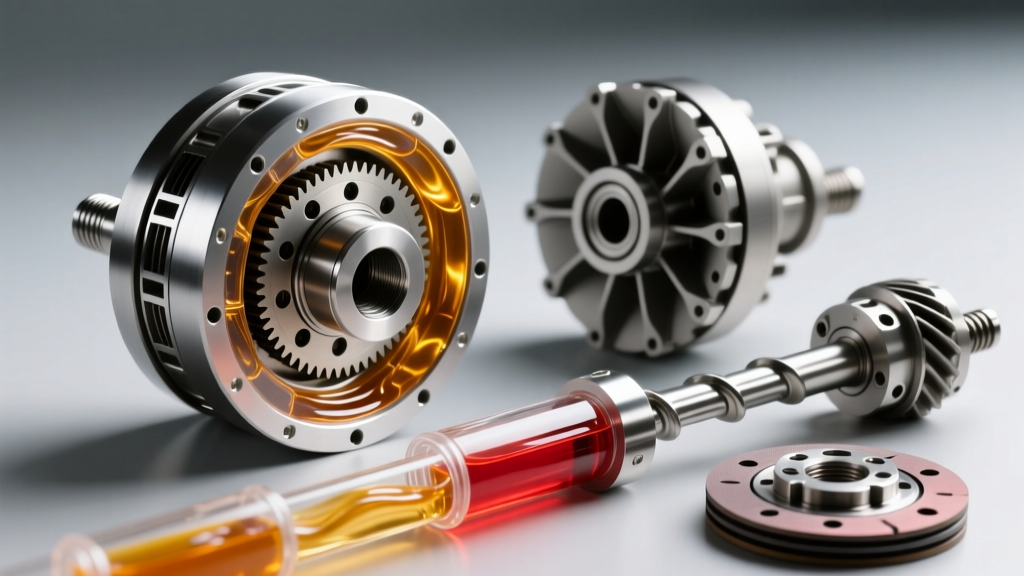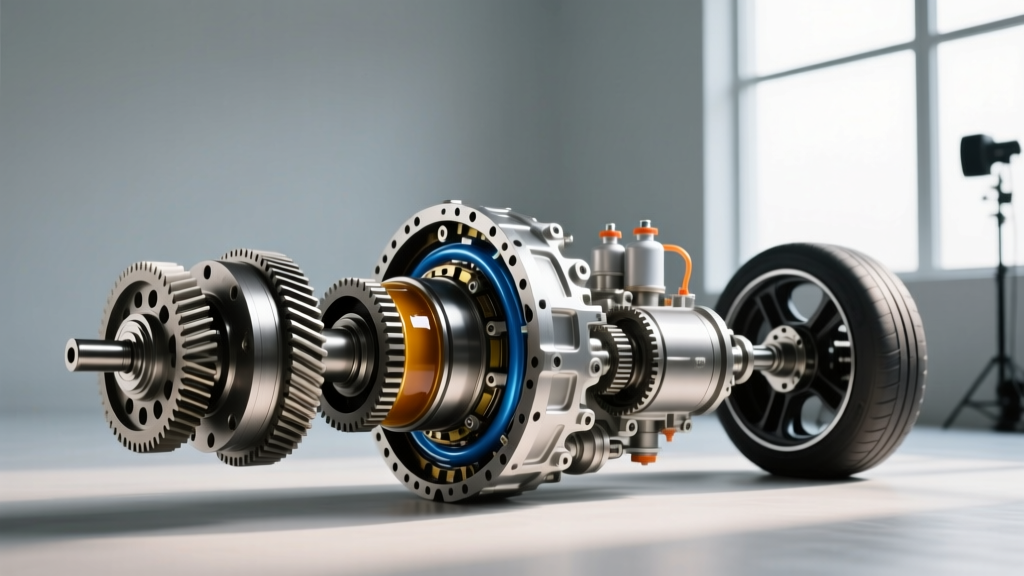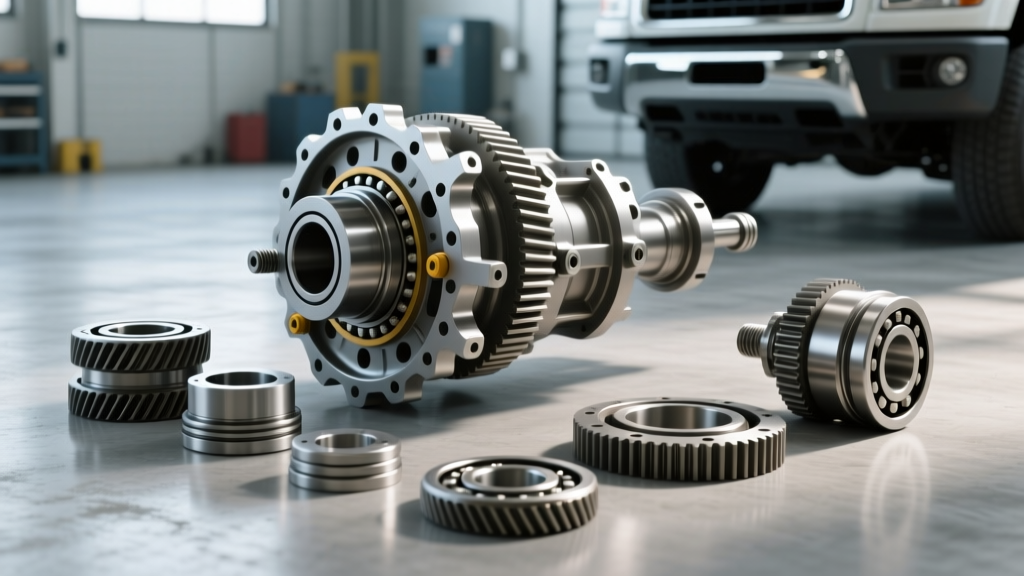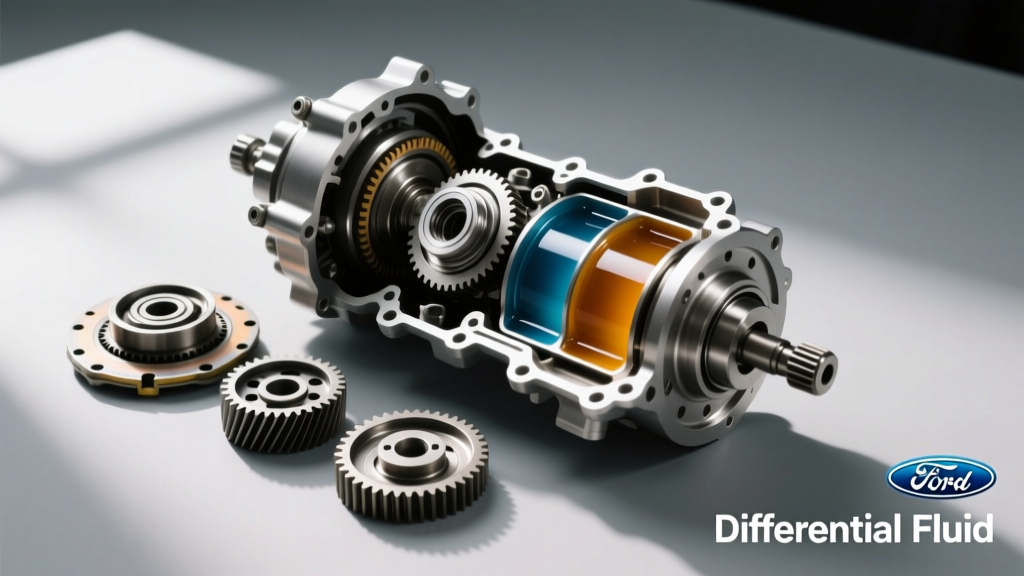
The Architecture of Ford Traction-Lok and Performance Trac-Lok Systems
When evaluating Ford differentials, the limited slip differential (LSD) remains one of the most critical traction-management components in the brand's truck and SUV lineup. Unlike an open differential that routes torque to the path of least resistance, Ford's clutch-pack style limited slip units—primarily the legendary Traction-Lok and the modern Performance Trac-Lok—utilize internal friction to bias torque to the wheel with grip. Understanding the internal mechanics of these units is mandatory for proper maintenance and accurate noise diagnosis.
Inside a standard Ford 8.8-inch or Super 8.8-inch Traction-Lok carrier, you will find a pair of side gears mated to spider gears on a cross-pin shaft. The side gears are backed by clutch packs consisting of alternating friction discs (splined to the side gear) and steel reaction plates (splined to the carrier housing). Preload is maintained by either an S-spring or a set of coil springs situated behind the clutch packs. When one wheel begins to slip, the friction discs bind against the steel plates, transferring torque across the axle to the opposing wheel. According to Eaton's differential engineering documentation, the Performance Trac-Lok utilizes a refined carbon-fiber friction material that offers higher thermal thresholds and smoother engagement compared to the older organic paper-based friction discs found in early 2000s F-150s.
Fluid Dynamics: Viscosity Grades and the Friction Modifier Protocol
The lifeblood of any Ford limited slip differential is its gear oil, but the fluid alone is only half the equation. The chemical interaction between the gear oil and the friction modifier dictates the clutch pack's engagement threshold. As of 2026, Ford's factory fill specifications have bifurcated based on axle architecture and towing requirements.
- Standard Super 8.8 (Light Duty): Motorcraft 75W-85 Premium Synthetic Axle Lubricant. This lower-viscosity fluid was introduced to reduce parasitic drag and improve cold-weather fuel economy.
- 8.8, 9.75, and 10.5 (Heavy Duty / Max Tow): Motorcraft 75W-140 Synthetic Rear Axle Lubricant (XY-75W140-QL). Required for high-heat environments generated by sustained towing or off-road crawling.
Crucially, clutch-pack LSDs require a specialized friction modifier to prevent stick-slip oscillation, which manifests as low-speed cornering chatter. Ford's specification EST-M2C118-A is met by the Motorcraft XL-3 Friction Modifier. The XL-3 additive contains long-chain fatty acids and esters that coat the clutch discs, altering the static-to-kinetic friction coefficient. Without this modifier, the friction discs will grab and release violently during tight turns, leading to premature clutch glazing and eventual failure. The Ford Chemicals and Lubricants Quick Reference mandates the addition of 4 oz (118 ml) of XL-3 to the axle during every fluid service, though high-end aftermarket fluids like Amsoil Severe Gear or Red Line 75W140 often have modifiers pre-blended into their synthetic base stocks.
The Mandatory 'Figure-Eight' Break-In Procedure
Many DIY mechanics and even some quick-lube technicians skip the LSD break-in procedure, leading to immediate warranty claims for differential chatter. After draining the old fluid, replacing the cover gasket, and refilling with the correct volume of gear oil and friction modifier, the clutch packs must be physically worked to distribute the additive evenly across the friction surfaces.
- Locate a large, wet, or damp paved area (water helps prevent tire flat-spotting and reduces surface friction).
- Drive the vehicle in 10 to 12 continuous figure-eight patterns at a slow crawl (5-10 mph).
- Allow the axle to cool for 30 minutes.
- Repeat the figure-eight process one more time to ensure the friction modifier has fully penetrated the porous surface of the clutch discs.
Diagnosing Ford LSD Chatter vs. Bearing Failure
A common pitfall when servicing Ford differentials is misdiagnosing the source of axle noise. Limited slip chatter is frequently confused with failing carrier bearings or worn ring-and-pinion gears. Use this diagnostic framework to isolate the failure mode:
Chatter: Occurs exclusively at low speeds (5-15 mph) during tight steering angles. Feels like a rhythmic binding or hopping in the rear chassis. Solution: Fluid exchange with fresh XL-3 modifier.
Carrier Bearing Whine: A constant low-frequency growl that changes pitch with vehicle speed but remains unaffected by throttle load or steering angle. Solution: Carrier bearing replacement and gear pattern reset.
Pinion Bearing Howl: A high-pitched whine that occurs only on deceleration or coast-down. Solution: Pinion depth adjustment and crush sleeve replacement.
Clutch Pack Rebuild and Axle Torque Specifications
When fluid changes and friction modifiers fail to eliminate chatter, the clutch packs are likely glazed, worn beyond their service limit, or the preload springs have fatigued. Rebuilding a Ford Traction-Lok requires pressing the carrier bearings, removing the cross-pin, and carefully stacking the new friction and steel plates. For a comprehensive teardown guide on the 8.8 platform, The Ranger Station's 8.8 Axle Guide provides excellent visual reference points for S-spring orientation.
Below is the critical torque and capacity data required for Ford differential service. Using a calibrated torque wrench is non-negotiable; over-torquing the carrier bearing caps can distort the housing and cause catastrophic ring gear failure.
| Axle Type | Fluid Capacity | Ring Gear Bolts | Carrier Cap Bolts | Cover Bolts |
|---|---|---|---|---|
| Ford 8.8 (Standard) | 3.8 Pints (1.8L) | 70 - 85 lb-ft | 70 - 85 lb-ft | 28 - 38 lb-ft |
| Super 8.8 (F-150) | 4.2 Pints (2.0L) | 85 - 95 lb-ft | 85 - 95 lb-ft | 33 - 40 lb-ft |
| Ford 9.75 (Super Duty) | 5.5 Pints (2.6L) | 120 - 140 lb-ft | 110 - 130 lb-ft | 33 - 45 lb-ft |
| Ford 10.5 (Super Duty) | 6.9 Pints (3.3L) | 120 - 140 lb-ft | 130 - 150 lb-ft | N/A (Welded/Serviceable) |
Note: Pinion nut torque on Ford axles utilizing a crush sleeve is typically 160-260 lb-ft, but must be measured via rotating torque (in-lbs) to ensure proper bearing preload. Never reuse a crush sleeve.
Sourcing OEM vs. Aftermarket Ford Differential Components
If you determine that a full clutch pack rebuild is necessary in 2026, you have several avenues for parts procurement. Genuine Motorcraft / Ford Performance clutch kits (Part # F75Z-4790-AA for the 8.8) typically retail between $140 and $180. These are manufactured by Eaton and guarantee factory-matched friction coefficients.
For heavy-duty applications, off-road enthusiasts often bypass the clutch-pack LSD entirely, opting to upgrade to a helical gear-based Torsen differential (which requires no friction modifier) or a full locking differential like the Eaton Detroit Locker or Yukon Zip Locker. A complete Yukon Grizzly Locker conversion kit for a Ford 9.75 axle will cost approximately $850 to $1,050, plus the cost of a professional gear setup (shims, crush sleeve, seals, and labor), which generally runs $400 to $600 at a specialized driveline shop.
Whether you are performing a routine 50,000-mile fluid service on a 2024 F-150 Super 8.8 or rebuilding a classic 1990s Explorer 8.8 Traction-Lok, adhering strictly to Ford's chemical specifications and torque sequences is the only way to ensure long-term traction and differential longevity. Neglecting the friction modifier protocol or relying on generic, non-specified gear oils will inevitably result in clutch degradation and an expensive trip to the driveline specialist.