Understanding the Differential Axle: The Heart of Torque Multiplication
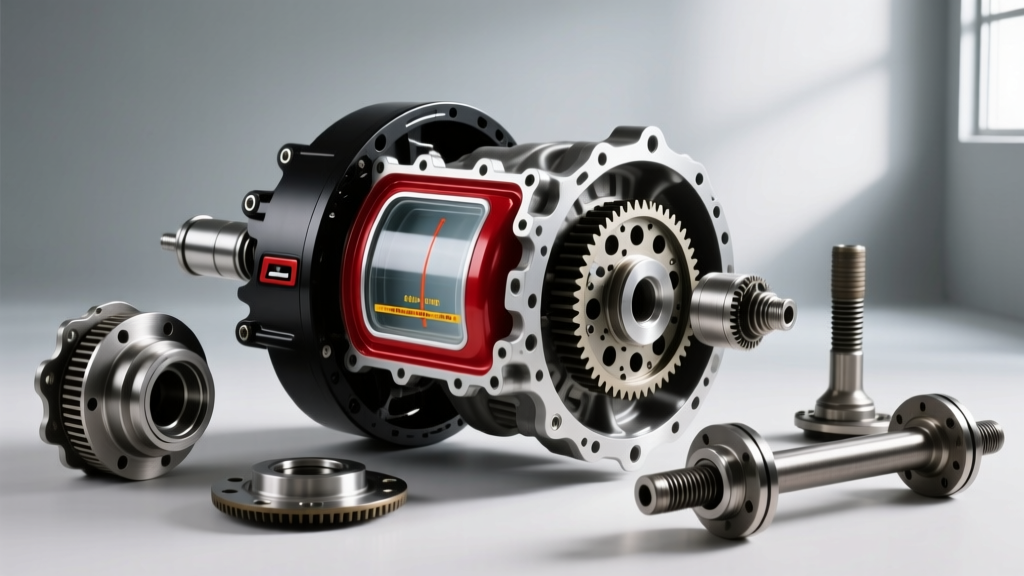
When exploring the drivetrain of any rear-wheel-drive or four-wheel-drive vehicle, the differential axle assembly stands out as a marvel of mechanical engineering. At the core of this assembly lies the ring and pinion gearset. For beginners, setting up a ring and pinion can seem like a dark art reserved for seasoned mechanics. However, by breaking down the physics, measurements, and procedures, anyone can understand how these gears transfer power from the driveshaft to the axle shafts while multiplying torque.
The pinion gear, attached to the driveshaft, meshes with the much larger ring gear, which is bolted to the differential carrier. This arrangement not only changes the direction of rotational force by 90 degrees but also provides the final drive ratio (e.g., 3.73:1 or 4.10:1). A proper setup is critical; even a deviation of a few thousandths of an inch can result in catastrophic gear failure, excessive whining, or premature wear. In this guide, we will demystify the ring and pinion setup process, providing actionable data, torque specifications, and diagnostic frameworks.
The Four Pillars of a Perfect Gear Setup
Setting up a differential axle gearset revolves around four interdependent measurements. Changing one almost always affects the others, which is why patience and precision tools are mandatory.
1. Pinion Depth
Pinion depth refers to how far the pinion gear protrudes into the differential housing relative to the centerline of the ring gear. This is adjusted using shims placed either under the pinion bearing or between the pinion head and the inner bearing cup. If the pinion is too deep, it will bite too far into the heel of the ring gear; if it is too shallow, it will ride on the toe. Manufacturers typically stamp a variance number on the pinion head (e.g., "+2" or "-1") indicating how many thousandths of an inch to add or subtract from the factory baseline depth setting.
2. Backlash
Backlash is the amount of rotational 'play' or clearance between the mating teeth of the ring and pinion gears. It is measured using a dial indicator mounted to the housing, with the indicator tip resting on a ring gear tooth. For most street-driven differential axle applications, the target backlash is between 0.008 and 0.012 inches. Backlash is adjusted by moving the differential carrier laterally using threaded adjusters or carrier shims. Too little backlash causes the gears to bind and overheat; too much causes a clunking sound and accelerates tooth fatigue.
3. Bearing Preload
Bearing preload eliminates internal clearance within the pinion and carrier bearings, ensuring the gears remain rigidly located under heavy torque loads. Pinion preload is typically achieved by tightening a massive pinion nut that crushes a sacrificial steel sleeve (the crush sleeve) between the inner and outer pinion bearings. This requires immense torque—often upwards of 250 ft-lbs—and is measured in inch-pounds of rotational resistance using a beam-style inch-pound torque wrench. Carrier preload is achieved by forcing the carrier into the housing using spreader tools or by tightening side bearing adjusters.
4. The Gear Contact Pattern
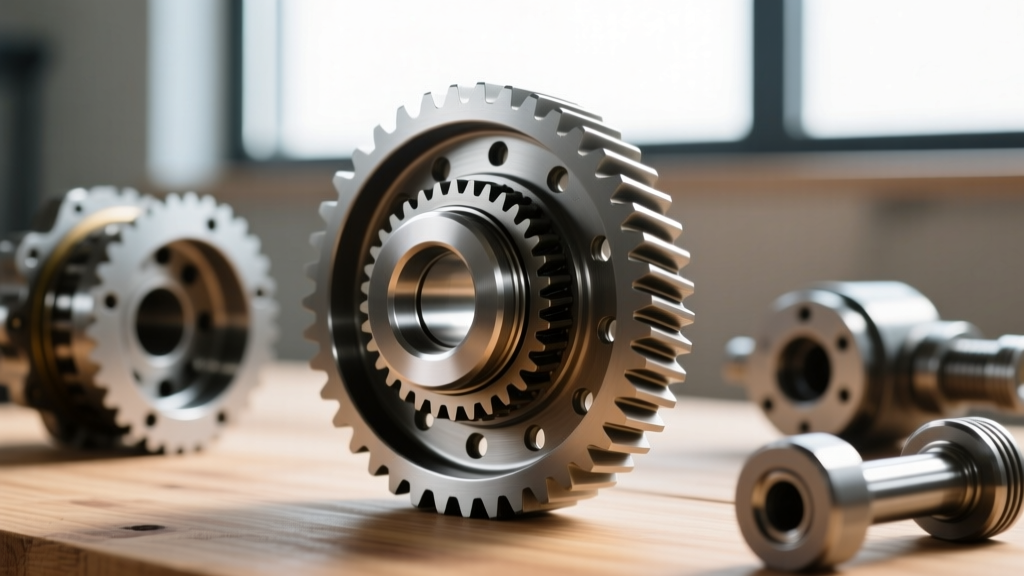
The ultimate proof of a correct setup is the gear contact pattern. By coating the ring gear teeth with a specialized marking compound (like Prussian blue or yellow ochre) and rotating the gears under light resistance, you can observe where the pinion contacts the ring gear. A perfect pattern will be centered vertically on the tooth face and slightly biased toward the toe (the inner edge of the ring gear). You must check both the Drive side (convex side of the tooth) and the Coast side (concave side).
Real-World Specifications: Popular Axle Platforms
To give you a concrete understanding of the tolerances involved, here is a comparison of setup specifications for three of the most common differential axle platforms found in trucks and SUVs.
| Specification | Ford 8.8-Inch | Dana 44 (Standard) | GM 8.5-Inch 10-Bolt |
|---|---|---|---|
| Target Backlash | 0.008" - 0.012" | 0.006" - 0.010" | 0.006" - 0.010" |
| Pinion Bearing Preload (New) | 8 - 14 in-lbs | 14 - 19 in-lbs | 10 - 15 in-lbs |
| Ring Gear Bolt Torque | 70 - 85 ft-lbs (w/ Loctite) | 55 - 65 ft-lbs (w/ Loctite) | 65 - 75 ft-lbs (w/ Loctite) |
| Pinion Nut Torque (Approx.) | 160 - 220 ft-lbs | 200 - 250 ft-lbs | 180 - 230 ft-lbs |
Note: Always refer to the specific factory service manual for your exact year and model, as specifications can vary based on whether the vehicle is equipped with a locking or limited-slip differential.
Pro-Tip: The Setup Bearing Trick
One of the most frustrating aspects of setting up a differential axle is that achieving the correct pinion depth and preload requires pressing the inner pinion bearing onto the pinion shaft. If you use your brand-new, expensive setup bearings for the trial-and-error phase, you will ruin them by repeatedly pressing them on and off. Professional mechanics use a setup bearing. This is an old bearing where the inner race has been honed out slightly so it slips on and off the pinion shaft by hand. Companies like Motive Gear sell dedicated setup bearing kits (e.g., Part # SB-1) specifically for this purpose, saving hours of labor and preventing damage to precision components.
Essential Tools and Estimated Costs
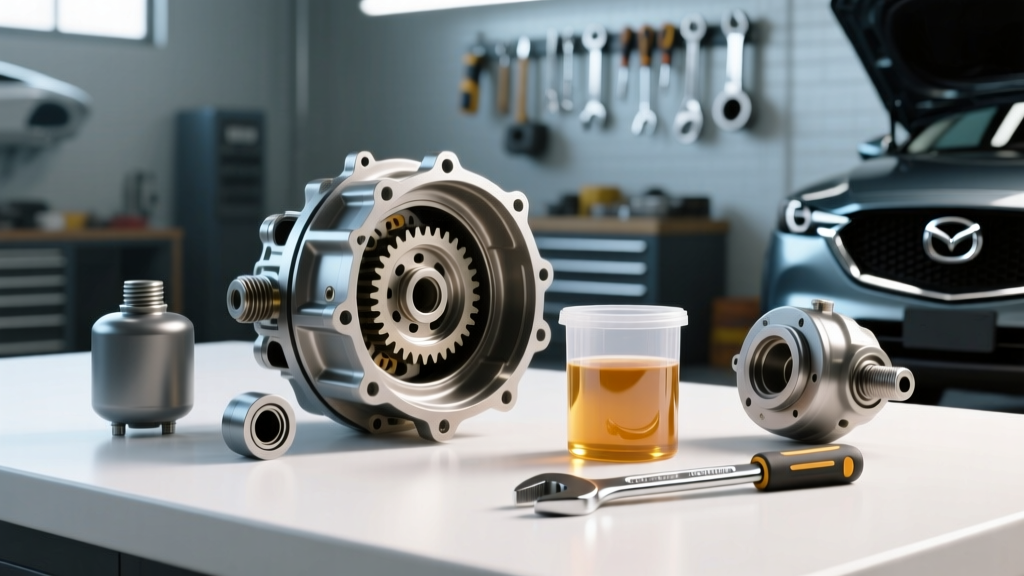
You cannot eyeball a gear setup. Investing in the right tools is non-negotiable. Here is what a beginner needs to assemble before tearing down the differential:
- Dial Indicator with Magnetic Base: Mitutoyo or similar precision brand ($80 - $150). Essential for measuring backlash down to the thousandth of an inch.
- Beam-Style Inch-Pound Torque Wrench: Digital or click-style wrenches are not accurate enough at low ranges. A mechanical beam-style wrench ($40 - $70) is required to measure rotational pinion preload accurately.
- Heavy-Duty Torque Wrench (1/2" Drive): Capable of reading up to 250 ft-lbs for crushing the pinion sleeve ($60 - $120).
- Gear Marking Compound: Yellow ochre or Prussian blue ($10 - $15). Do not use standard grease, as it will not show distinct contact lines.
- Master Install Kit: Includes all new Timken or Koyo bearings, races, crush sleeves, pinion nuts, and shims. (e.g., Yukon Gear & Axle YGK series, $150 - $250).
Fluid Selection and the Critical Break-In Procedure
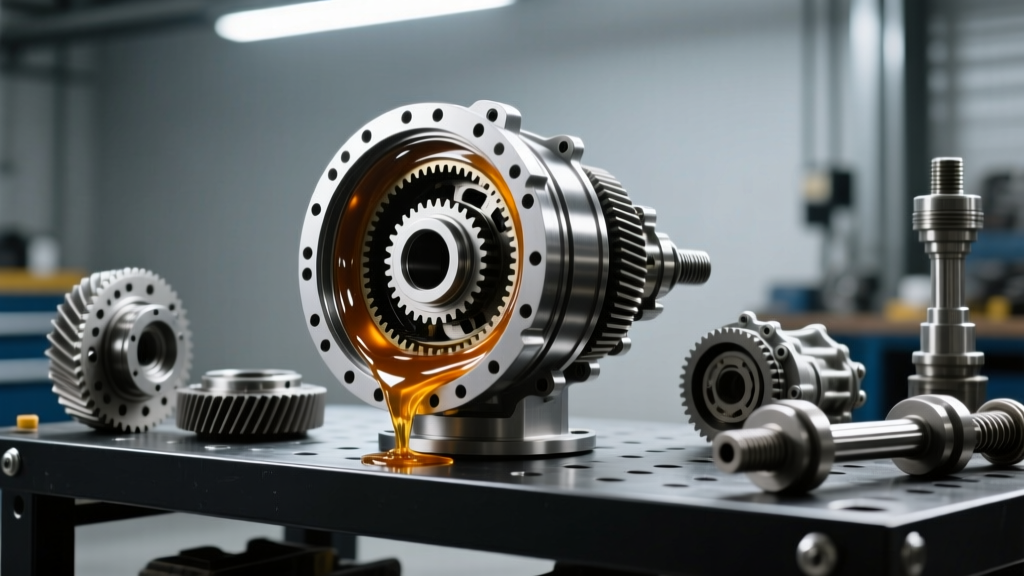
Because this guide falls under our differential fluid maintenance category, it is vital to discuss the break-in procedure. Newly installed ring and pinion gears generate immense friction and heat as the microscopic machining marks wear into each other.
For the first 500 miles, you must use a high-quality conventional or synthetic break-in gear oil (typically 75W-90 or 80W-90 GL-5). Avoid synthetic oils during the initial break-in if possible, as their superior lubricity can prevent the gears from seating properly. Drive conservatively, avoiding heavy towing, hard launches, and sustained highway speeds over 65 MPH. After 500 miles, the differential fluid must be drained immediately to remove the metallic shearing paste (molybdenum and steel particulates) suspended in the oil. Refill with your preferred long-life synthetic fluid (like Amsoil Severe Gear or Red Line 75W-140). If your differential axle houses a clutch-type limited-slip differential, do not forget to add the required friction modifier additive during the final fill to prevent chatter during low-speed cornering.
Diagnosing Setup Failures by Sound
If a gear setup is incorrect, the differential axle will communicate the error through distinct acoustic signatures. Learning to identify these sounds can save you from completely destroying the gearset:
- Whine on Deceleration (Coast): Usually indicates that the pinion depth is too shallow, or the backlash is too tight. The gears are binding on the coast side of the tooth.
- Howl on Acceleration (Drive): Often points to a pinion that is set too deep, or excessive backlash. The load is concentrated on the very tip or heel of the ring gear tooth.
- Constant Rumble or Growl: This is rarely a gear pattern issue. It almost always indicates damaged or pitted pinion/carrier bearings, often caused by improper preload or contaminated differential fluid.
- Clunking on Load Reversal: Excessive backlash, worn carrier side gears, or loose ring gear bolts (which should always be secured with Red Loctite 271 and torqued to spec).
Final Thoughts for the Aspiring Drivetrain Builder
Setting up a ring and pinion in a differential axle is a test of patience, not necessarily brute mechanical skill. By relying on precision measuring tools, adhering strictly to manufacturer torque specifications, and taking the time to read the gear contact pattern, a beginner can achieve a factory-quality rebuild. For further technical documentation and installation guides, authoritative resources like the Dana Spicer technical library and the expert forums at Ring & Pinion Inc. offer invaluable schematics and troubleshooting flowcharts. Treat the setup process with respect, and your differential will provide thousands of miles of quiet, reliable torque multiplication.