The Hidden Culprit Behind Intermittent Clutch Slip
Intermittent clutch slip is one of the most frustrating drivetrain anomalies to diagnose. Unlike a completely worn friction disc that slips consistently under load, an intermittent issue might only manifest in 4th gear at wide-open throttle, or only after the engine bay has reached peak operating temperatures. While many technicians immediately condemn the dual-mass flywheel (DMF) or the clutch pressure plate, the root cause frequently lies upstream in the driver’s footwell. Specifically, the mechanical and hydraulic relationships within the brake clutch and gas pedal assembly are often overlooked during standard transmission troubleshooting.
When evaluating the driver's footwell, the relationship between the brake clutch and gas pedal mounting points is critical. These three pedals typically share a common pivot shaft and mounting bracket (the pedal box) bolted directly to the vehicle's firewall. If this assembly experiences wear, deflection, or misadjusted hydraulic clearances, it can dynamically alter clutch engagement while driving. In this comprehensive diagnostic guide, we will explore how pedal box dynamics cause intermittent clutch problems and provide exact specifications to resolve them.
Pedal Box Dynamics and Firewall Deflection
The pedal box is subjected to immense physical stress. Every time the driver actuates the brake clutch and gas pedal sequence during aggressive downshifts, hundreds of pounds of force are transferred through the pivot bushings into the firewall. In vehicles known for thin firewall stampings—such as the Ford Mustang (MT-82 transmission) and various Honda K-Series platforms—firewall deflection is a documented cause of intermittent hydraulic issues.
When the firewall flexes backward under heavy braking or forward under hard acceleration, the physical distance between the clutch pedal pivot and the Clutch Master Cylinder (CMC) changes by fractions of a millimeter. If the clutch master cylinder pushrod clearance is already at the minimum tolerance, this flexion can momentarily block the hydraulic compensating port. According to AA1Car's technical library on clutch hydraulics, a blocked compensating port prevents fluid from returning to the reservoir, leading to a phenomenon known as 'hydraulic pre-load.' As the transmission fluid and hydraulic fluid heat up, the trapped fluid expands, slightly applying the clutch release bearing and causing intermittent slip that disappears once the vehicle cools down.
Top 3 Causes of Intermittent Engagement Issues
1. The 1mm Pushrod Clearance Rule
The most common cause of heat-induced intermittent clutch slip is zero clearance between the clutch pedal arm and the master cylinder pushrod. There must always be a minimum of 0.5mm to 1.0mm of freeplay at the pushrod before the piston begins to move. If an aftermarket adjustable pushrod is set too tight, or if the pedal stop bumper has worn down, the master cylinder piston never fully retracts. This blocks the fluid return port, causing the clutch to slip intermittently as hydraulic pressure builds from thermal expansion.
2. Clutch Delay Valve (CDV) Swelling
Many modern manual vehicles, particularly Honda, BMW, and Subaru models, utilize a Clutch Delay Valve in the hydraulic line to smooth out engagement for novice drivers. The OEM Honda CDV (Part Number 46920-S5A-003) contains a small internal O-ring and spring. Over time, exposure to DOT 3 or DOT 4 brake fluid causes this O-ring to swell. A swollen CDV will intermittently restrict fluid flow, causing clutch chatter on cold starts and delayed engagement or slip during rapid gear changes. Deleting the CDV and replacing it with a standard restriction-free banjo bolt is a proven fix for these specific intermittent symptoms.
3. Cruise Control Cancel Switch Interference
Modern engine control units (ECUs) rely on the clutch pedal top-stop switch to cancel cruise control and adjust rev-matching or torque management parameters. If the plunger on this switch sticks or the pedal return spring weakens, the ECU may intermittently register that the clutch is depressed while the driver is actually accelerating. This causes the ECU to alter ignition timing or cut fuel, perfectly mimicking the sensation of a slipping clutch or severe drivetrain shudder.
Diagnostic Data Table: Pedal and Hydraulic Specifications
Use the following reference table to verify pedal box and hydraulic clearances. Always consult your specific vehicle's factory service manual, as tolerances vary between platforms like the ZF 6-speed manual and the Tremec T56 Magnum.
| Measurement Parameter | Typical Specification | Diagnostic Consequence if Out of Spec |
|---|---|---|
| Clutch Pedal Freeplay (at pad) | 12mm - 25mm (0.5" - 1.0") | Excessive freeplay causes incomplete disengagement; zero freeplay causes intermittent slip. |
| CMC Pushrod Clearance | 0.5mm - 1.0mm | Zero clearance blocks compensating port, causing heat-induced hydraulic lock and slip. |
| Pedal Box to Firewall Torque | 25 Nm (18 lb-ft) | Loose bolts cause firewall flex, altering pedal geometry under heavy load. |
| CMC Mounting Nuts Torque | 12 Nm (9 lb-ft) | Overtightening cracks the plastic CMC housing; undertightening causes fluid leaks. |
| Slave Cylinder Bleeder Torque | 8 Nm (6 lb-ft) | Overtightening strips the soft brass threads, causing intermittent pressure loss. |
Step-by-Step Troubleshooting Protocol
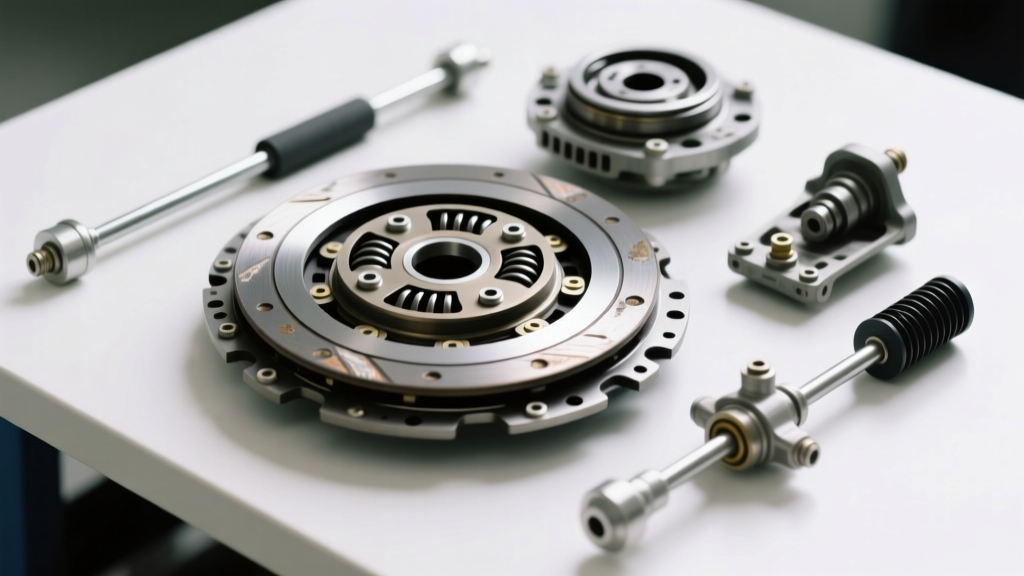
To definitively isolate whether the intermittent slip is caused by the friction assembly (e.g., a failing LuK RepSet or Sachs XTend clutch) or the pedal box hydraulics, follow this diagnostic protocol:
- Measure Static Freeplay: With the engine off, press the clutch pedal by hand. Measure the distance the pedal travels before you feel hydraulic resistance. If it is less than 12mm, adjust the pushrod or replace the worn pedal stop bumper.
- The Zip-Tie Test: If you suspect hydraulic pre-load from a blocked compensating port, zip-tie the clutch pedal fully upward to the steering column bracket. Drive the vehicle until it reaches normal operating temperature and attempt to replicate the slip. If the slip disappears, the master cylinder pushrod is adjusted too tightly.
- Inspect the Cruise Cancel Switch: Use an OBD2 bi-directional scanner to monitor the 'Clutch Switch' PID while driving. If the PID flickers to 'ON' while your foot is on the gas pedal, replace the top-stop switch and inspect the pedal return spring.
- Check for Fluid Bypass: Intermittent slip that occurs only after holding the pedal down for several seconds (like at a long red light) indicates internal master cylinder bypass. The internal cup seals are worn, allowing fluid to leak past the piston. Replace the CMC with an OEM or high-quality FTE replacement.
When to Replace vs. Adjust: Cost Breakdown
Before dropping the transmission to replace a $600 clutch kit and resurfacing the flywheel, rule out the pedal box components. The financial difference between a hydraulic adjustment and a full transmission removal is massive. As noted by Sachs Automotive technical documentation, premature clutch wear is frequently misdiagnosed when hydraulic release issues are actually the primary culprit.
| Component / Service | OEM / Premium Aftermarket Part | Estimated Part Cost | Labor Time |
|---|---|---|---|
| Pushrod Adjustment / Bumper | OEM Pedal Stop Bumper | $5 - $15 | 0.2 Hours |
| Clutch Delay Valve Delete | OEM Banjo Bolt & Washers | $12 - $25 | 0.5 Hours |
| Clutch Master Cylinder (CMC) | FTE or OEM Honda/BMW CMC | $45 - $140 | 1.0 Hour |
| Top-Stop / Interlock Switch | OEM Electrical Switch | $20 - $45 | 0.3 Hours |
| Full Clutch Kit & DMF (Worst Case) | LuK RepSet Pro / Sachs DMF Kit | $450 - $950 | 5.0 - 8.0 Hours |
Final Thoughts on Drivetrain Diagnostics
Intermittent clutch problems require a methodical, systems-level approach. By understanding how the brake clutch and gas pedal assembly interacts with the hydraulic release system, technicians and DIY enthusiasts can avoid unnecessary transmission removals. Always verify pushrod clearances, inspect the pedal box for firewall deflection, and monitor ECU switch data before condemning the internal friction components. Proper diagnosis not only saves thousands of dollars in misdirected labor but also ensures the longevity of your replacement clutch components once they are finally installed.