The Phantom Pedal: Understanding Intermittent Clutch Failure
Intermittent clutch problems are widely considered the most frustrating subset of manual transmission diagnostics. Unlike a completely shattered friction disc or a snapped throwout bearing—which present as permanent, undeniable failures—hydraulic ghosts strike sporadically. You might experience a perfect, crisp engagement point on your morning commute, only to find the pedal sinking to the floorboard and gears crunching in stop-and-go traffic an hour later. As of 2026, with manual transmissions largely relegated to performance, heavy-duty, and enthusiast applications, the hydraulic actuation systems have become highly pressurized and sensitive to minute anomalies.
Diagnosing these 'phantom pedal' symptoms requires a methodical approach. Technicians must differentiate between mechanical fatigue, thermal breakdown, and hydraulic aeration. Often, the diagnostic process itself involves bleeding a hydraulic clutch system not just as a repair, but as an active testing procedure to isolate the root cause of the wandering bite point or sporadic disengagement failure.
Symptom Matrix: Isolating the Ghost in the Machine
Before wrenching, you must categorize the intermittency. Does the failure correlate with temperature, RPM, or vehicle attitude? Use the diagnostic matrix below to narrow down the subsystem at fault.
| Symptom Profile | Primary Suspect | Secondary Suspect | Diagnostic Trigger |
|---|---|---|---|
| Pedal slowly sinks to floor at red lights, returns if pumped | Master Cylinder Internal Bypass | Worn Slave Cylinder Cup Seal | Occurs only when holding pedal depressed >15 seconds |
| Crunching into 1st/Reverse when hot, fine when cold | Concentric Slave Cylinder (CSC) Heat Soak | Fluid Vapor Lock (Low Boiling Point) | Triggered by exhaust/bellhousing heat transfer in traffic |
| Engagement point wanders from high to low randomly | Trapped Air in High-Loop Hard Lines | Ballooning Rubber Flex Hose | Changes based on vehicle incline or high-RPM vibration |
| Pedal feels 'notchy' or sticks to the floor sporadically | Clutch Fork Pivot Ball Wear | Binding Pilot Bearing / Input Shaft | Worse during aggressive, high-RPM shifts |
The Role of Air and Vapor: Why Fluid Dynamics Matter
Hydraulic clutch systems operate on the principle of incompressible fluid transfer. When you introduce air (a gas) into the system, it compresses under pressure, robbing the slave cylinder of its required stroke volume. However, air does not always cause a constant 'spongy' pedal. Micro-bubbles can become trapped in the high-points of the hard lines or the master cylinder reservoir feed port.
Under normal driving, these bubbles may remain dormant. But under high-frequency engine vibrations or steep inclines, the bubbles migrate into the main hydraulic circuit, suddenly causing a loss of pedal pressure. Furthermore, hydraulic clutch fluid is highly hygroscopic. According to NHTSA FMVSS 116 standards, DOT 3 and DOT 4 fluids absorb moisture over time, drastically lowering their boiling points. A DOT 4 fluid with 3% water content can see its dry boiling point drop from 446°F (230°C) to under 311°F (155°C). When the fluid boils inside the bellhousing-mounted slave cylinder, it creates vapor lock—an intermittent, temperature-dependent failure that mimics mechanical wear.
Diagnostic Bleed Procedure: Beyond the Standard Pump-and-Hold
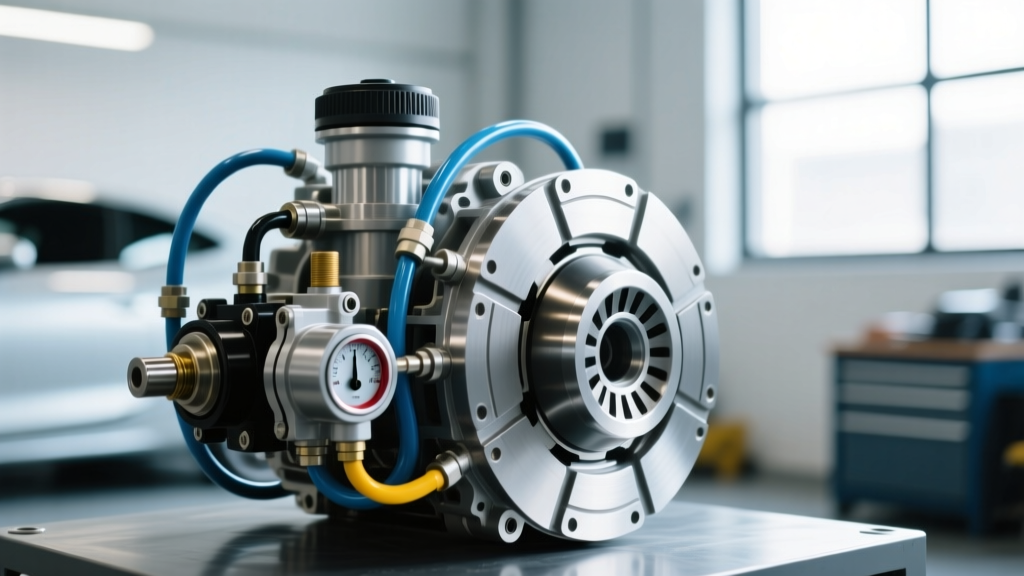
When bleeding a hydraulic clutch system to diagnose an intermittent fault, the traditional 'pump-and-hold' two-person method is often inadequate. It can actually chop large air pockets into micro-bubbles, making the pedal feel deceptively firm while leaving compressible gas in the slave cylinder. For definitive diagnosis, employ a pressure bleeding sequence:
- Cap and Pressurize: Use a motive power bleeder with the correct reservoir adapter (e.g., Cap 0107 for standard GM/Ford twist-lock reservoirs). Pressurize the system to exactly 12-15 PSI. Do not exceed 20 PSI, or you risk blowing out the master cylinder pushrod seal.
- Gravity Pre-Soak: Open the 10mm bleeder valve at the slave cylinder. Allow fluid to gravity-feed for 3 minutes before applying pressure. This establishes a solid, non-aerated fluid column.
- The Vibration Test: With the bleeder valve open and pressure applied, have an assistant gently tap the hydraulic hard lines, flex hose, and bellhousing with a rubber mallet. This dislodges trapped micro-bubbles clinging to the line walls.
- Torque and Seal: Close the bleeder valve. Critical Spec: Torque soft brass bleeder screws to exactly 6-8 Nm (4.5-6 lb-ft). Over-torquing will snap the valve or strip the slave cylinder casting, turning a diagnostic procedure into a $250 repair.
If the intermittent sinking pedal persists immediately after a verified pressure bleed, you have conclusively ruled out aeration. The fault is mechanical—most likely the master cylinder cup seal bypassing fluid internally under sustained load.
Advanced Hydraulics: Concentric Slave Cylinder (CSC) Heat Soak
Modern performance manuals, such as the Tremec T-56 Magnum and the Ford MT-82, utilize Concentric Slave Cylinders (CSC) that wrap directly around the transmission input shaft. While this eliminates the need for external clutch forks and pivot balls, it places the hydraulic cylinder inches away from exhaust headers and the friction disc.
Case Study: The MT-82 Traffic Jam Failure
A common complaint on 2018-2024 Mustang GTs is a clutch that disengages perfectly on the highway but refuses to disengage in stop-and-go traffic, resulting in grinding into first gear. This is rarely a mechanical failure of the clutch disc. Instead, the OEM plastic CSC and standard DOT 3 fluid succumb to radiant heat from the exhaust H-pipe. The fluid locally boils inside the slave, creating a gas pocket. Because the system is closed, the gas compresses the pedal without moving the throwout bearing. Once the vehicle moves and air flows over the bellhousing, the vapor condenses back to liquid, and the clutch 'magically' works again.
The definitive fix for this thermal intermittency involves upgrading to a high-temperature fluid like Motul RBF 600 or Castrol SRF (which boasts a 590°F dry boiling point) and installing a braided stainless-steel clutch line to prevent flex-hose ballooning under thermal expansion.
Component Replacement and Cost Matrix (2026 Estimates)
When diagnosis confirms a failed hydraulic component, quality matters. OEM plastic master cylinders and slaves are prone to premature thermal degradation. Below is a guide to replacement costs and torque specifications for common manual transmission hydraulic overhauls.
| Component | Avg. Part Cost (OEM vs. Performance) | Labor Time | Critical Torque Specification |
|---|---|---|---|
| Master Cylinder Assembly | $60 - $220 (Wilwood/Tilton) | 1.5 - 2.5 Hours | Banjo Bolt: 18-22 lb-ft; Pushrod Locknut: 12-15 lb-ft |
| Concentric Slave Cylinder (CSC) | $90 - $350 (Sachs/LUK) | 4.0 - 8.0 Hours (Requires Trans Drop) | Mounting Bolts: 15-18 lb-ft; Line Fitting: 10-12 lb-ft |
| Braided Clutch Flex Line | $45 - $120 (Russell/Earls) | 0.5 - 1.0 Hours | Frame Bracket Bolts: 18-25 lb-ft |
| Fluid Flush (DOT 5.1 / RBF 600) | $25 - $45 | 0.5 Hours | Bleeder Valve: 6-8 Nm (4.5-6 lb-ft) |
Note: Always consult Tremec's official service documentation for exact bellhousing depths and CSC spacer shim requirements. Installing a new CSC without verifying the air-gap clearance with a dial caliper can result in immediate, catastrophic release bearing failure.
Verifying the Repair: The Static Load Test
Once the hydraulic system is bled and reassembled, do not immediately start the engine. Perform a static load test. Depress the clutch pedal and hold it to the floor with a heavy object (like a 25lb dumbbell or a specialized pedal depressor tool). Leave it for 30 minutes. Inspect the master cylinder pushrod area, the flex line banjo fittings, and the bellhousing inspection cover for weeping. More importantly, measure the slave cylinder stroke with a ruler. If the slave retracts even 2mm during the 30-minute hold, your master cylinder is internally bypassing, and the unit must be replaced before the vehicle is driven.
By treating the hydraulic bleed as an active diagnostic instrument rather than a mere maintenance chore, you can confidently isolate the root cause of intermittent clutch faults, saving hours of unnecessary transmission removal and ensuring crisp, reliable shifts for the life of the drivetrain.