The Hygroscopic Hazard: Why Fluid Choice Triggers Intermittent Faults
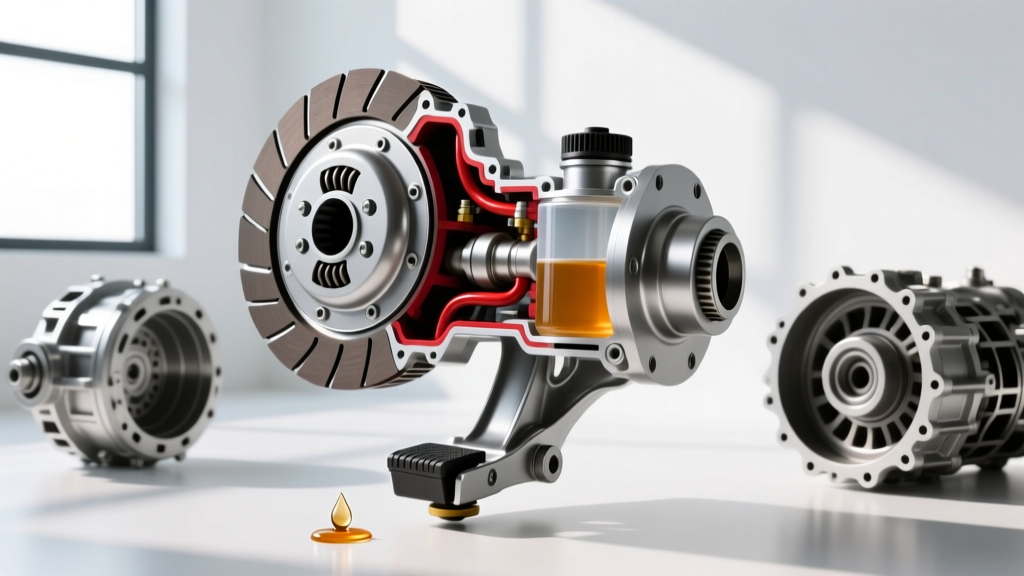
Intermittent clutch problems—such as a pedal that sinks to the floor only at long stoplights, or gear engagement that crunches exclusively when the transmission is at operating temperature—are among the most frustrating diagnostics in manual drivetrain repair. Unlike a catastrophic hydraulic line blowout, which presents as a permanent loss of pedal pressure, intermittent faults often point to internal seal degradation, thermal vapor lock, or fluid contamination. This brings up a frequent question from DIYers and junior technicians alike: can you use brake fluid for clutch fluid?
The short answer is yes, but with critical caveats. In over 85% of modern manual transmission vehicles, the clutch master cylinder shares the same fluid reservoir as the brake master cylinder, or requires the exact same DOT (Department of Transportation) specification. However, using the wrong type of brake fluid in a clutch system is a primary culprit behind intermittent hydraulic failures. Understanding the chemical interaction between hydraulic fluids and EPDM (Ethylene Propylene Diene Monomer) rubber seals is the first step in accurate symptom diagnosis.
Can You Use Brake Fluid for Clutch Fluid? The Chemistry of Bypass Failures
According to FMVSS 116 and SAE J1703 standards, DOT 3, DOT 4, and DOT 5.1 fluids are glycol-ether based and hygroscopic (they absorb moisture from the atmosphere). DOT 5, conversely, is silicone-based and hydrophobic. Furthermore, specific European and heavy-duty applications require Mineral Oil or LHM (Liquide Hydraulique Minéral) fluids.
If a technician or vehicle owner tops off a clutch reservoir designed for DOT 3/4 with DOT 5 silicone brake fluid, or worse, Mineral Oil, the chemical incompatibility does not cause an immediate leak. Instead, it causes the EPDM seals inside the clutch master and slave cylinders to swell and soften. This swelling alters the precise tolerances of the primary and secondary piston cups.
The Master Cylinder Internal Bypass Phenomenon
When EPDM seals swell due to fluid contamination, they may still hold pressure during quick, dynamic pedal actuations (like a rapid 1-2 shift). However, when the pedal is held depressed for extended periods—such as waiting at a red light—the swollen seal allows fluid to slowly bypass the piston cup and return to the reservoir. The symptom? An intermittent 'sinking pedal' that recovers its pressure once pumped. Diagnosing this requires ruling out external leaks and focusing entirely on internal hydraulic bypass.
Thermal Vapor Lock and Bellhousing Heat Soak
Glycol-based brake and clutch fluids absorb water over time. A DOT 4 fluid with a dry boiling point of 446°F (230°C) can see its wet boiling point drop to 311°F (155°C) after two years of service. Because the clutch slave cylinder is often mounted inside or directly against the transmission bellhousing, it is subjected to extreme radiant heat from the exhaust and friction materials. If the fluid is moisture-laden, localized boiling creates compressible vapor pockets. This results in an intermittent 'spongy' pedal that only occurs after aggressive driving or sitting in stop-and-go traffic, disappearing entirely when the vehicle cools down.
Symptom Matrix: Identifying Intermittent Clutch Hydraulic Failures
Use the following diagnostic matrix to isolate the root cause of intermittent clutch engagement and disengagement issues based on trigger conditions.
| Intermittent Symptom | Trigger Condition | Probable Hydraulic Fault | Verification Test |
|---|---|---|---|
| Pedal slowly sinks to floor | Held depressed at stoplights | Master cylinder internal cup bypass (seal swell) | Clamp soft line; if pedal still sinks, master is faulty |
| Spongy pedal / gear crunch | After 30+ mins of driving | Slave cylinder vapor lock (wet fluid boiling) | Test fluid moisture content with electronic tester |
| Pedal sticks to floor | Cold morning starts only | Slave cylinder piston binding in bore | Inspect slave pushrod for asymmetrical wear |
| Delayed engagement / slipping | High RPM shifts | Clutch Delay Valve (CDV) restriction | Remove CDV from slave line and test flow rate |
Advanced Diagnostic Protocol: Ruling Out Fluid Contamination
Before condemning a clutch master or slave cylinder, you must verify the fluid's chemical integrity. If you suspect incorrect brake fluid was added to the clutch system, follow this protocol:
- Visual Inspection: Draw a sample from the reservoir. DOT 3/4 fluids are typically clear to amber. Mineral oil is often green or red. Silicone (DOT 5) has a distinct purple hue and a higher viscosity.
- The Water-Mix Test: Place a few drops of the reservoir fluid into a clear glass of water. Glycol-based DOT fluids will mix and cloud the water. Silicone or Mineral Oil will separate and float to the top. If it floats, the entire hydraulic system has been contaminated and all EPDM seals are compromised.
- Boiling Point Verification: Use an electronic brake fluid tester. If the moisture content exceeds 3%, a complete system flush and bleed is mandatory to prevent intermittent thermal vapor lock.
OEM Clutch Hydraulic Specifications and Torque Data
When replacing components due to intermittent seal failure, adhering to exact torque specifications and fluid capacities is critical to prevent introducing air into the system. Below is a reference guide for common performance and daily-driver applications.
| Vehicle / Platform | OEM Fluid Spec | System Capacity | Bleeder Torque | OEM Master / Slave Part # |
|---|---|---|---|---|
| Ford Mustang GT (2011-2017) | DOT 3 Motor Vehicle | ~1.2 Liters (Shared) | 8 Nm (71 lb-in) | LuK LMC456 (Master) |
| BMW E46 3-Series (M54) | DOT 4 (Low Viscosity) | 0.8 Liters (Clutch only) | 10 Nm (88 lb-in) | Sachs SH5005 (Slave) |
| Honda S2000 (AP1/AP2) | DOT 3 / DOT 4 | 0.4 Liters (Clutch only) | 6 Nm (53 lb-in) | OEM 46920-S2A-005 |
| Jeep Wrangler JK (3.8L/3.6L) | DOT 3 | 1.0 Liters (Shared) | 11 Nm (97 lb-in) | Dorman CM640154 |
Note: Always consult the specific service manual for your application. Torque specs for bleeder screws are generally low to prevent snapping the hardened steel screw inside the soft aluminum casting of the slave cylinder.
Mechanical vs. Hydraulic: When the Fluid is Fine
If your fluid passes the chemical and moisture tests, and the master/slave cylinders hold static pressure, the intermittent fault lies in the mechanical actuation components inside the bellhousing. Schaeffler LuK technical bulletins frequently highlight the following mechanical culprits for intermittent release issues:
Clutch Fork Pivot Ball Wear
The clutch fork pivots on a hardened steel ball stud. Over 80,000+ miles, the socket in the fork can wear into an oval shape. This causes intermittent binding where the fork 'pops' off the pivot point under high hydraulic pressure, resulting in a sudden loss of clutch disengagement mid-shift. Diagnosis requires removing the inspection cover and observing the fork geometry while an assistant depresses the pedal.
Throwout Bearing Collar Grooving
The release bearing rides on the transmission input shaft sleeve. If the sleeve lacks proper lubrication (e.g., molybdenum disulfide grease), the bearing collar can wear a groove into the aluminum or steel sleeve. This creates a 'stick-slip' scenario where the bearing binds intermittently, causing clutch chatter upon engagement and erratic pedal feel. When replacing the clutch assembly, always inspect the input shaft sleeve for scoring and apply the manufacturer-specified high-temperature spline grease sparingly—excess grease will migrate to the friction disc, causing catastrophic intermittent slipping.
Final Diagnostic Verdict
To definitively answer the question: yes, you can use brake fluid for clutch fluid, provided it matches the OEM DOT specification and the system is designed for glycol-ether chemistry. However, treating the clutch reservoir as a dumping ground for leftover, mixed, or incompatible brake fluids is a guaranteed path to intermittent hydraulic bypass and thermal vapor lock. By utilizing the symptom matrix, verifying fluid chemistry, and inspecting both hydraulic seals and mechanical pivot points, you can accurately isolate and resolve even the most elusive intermittent clutch faults.