The Phantom Menace: Why Intermittent Faults Defy Standard Clutch Life Expectancy
When automotive engineers calculate standard clutch life expectancy, they typically base their projections on consistent, linear wear. For a modern organic friction disc paired with a properly functioning hydraulic release system, that baseline sits comfortably between 80,000 and 120,000 miles. However, as transmission specialists in 2026, we frequently see vehicles entering the shop with catastrophic friction material failure at barely 35,000 miles. The culprit is rarely aggressive driving alone; it is the insidious, hard-to-pinpoint nature of intermittent clutch problems.
Intermittent faults—such as sporadic hydraulic vapor lock, temperature-dependent master cylinder bypass, or dual-mass flywheel (DMF) harmonic resonance—create localized, high-intensity wear events. Because these symptoms do not occur on every gear shift, they bypass the driver's conscious awareness and standard OBD-II diagnostic routines. Diagnosing these ghost faults requires a deep understanding of clutch thermodynamics, fluid hygroscopy, and precise mechanical tolerances.
Thermal Dynamics: How Micro-Slips Destroy Friction Material
To understand why intermittent slip obliterates clutch life expectancy, we must look at the thermal dynamics of the friction interface. A standard organic clutch disc (such as the Sachs Performance organic kits) operates optimally between 150°C and 250°C. When an intermittent fault causes a 2-second slip event under high load—such as merging onto a highway in 4th gear at 3,500 RPM—the localized surface temperature at the friction interface can instantly spike past 650°C (1,202°F).
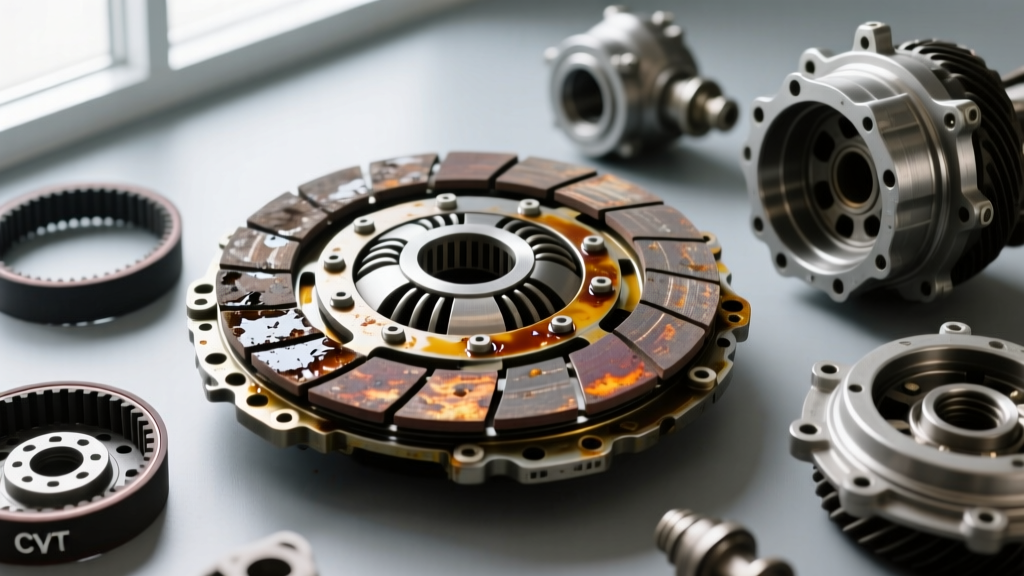
According to SAE International technical papers on clutch thermal management, these extreme micro-slip thermal spikes cause the resin binders in organic friction material to carbonize and glaze. This creates "hard spots" on the disc. Once glazed, the coefficient of friction drops from a healthy 0.35–0.40 down to below 0.20, triggering a cascading failure cycle where the clutch must slip even more to transfer engine torque. The intermittent nature of the initial fault masks the damage until the disc can no longer hold torque in higher gears.
Hydraulic Ghosts: Vapor Lock and Internal Seal Bypass
The most common cause of intermittent clutch engagement issues lies in the hydraulic actuation circuit. Modern manual transmissions utilize Concentric Slave Cylinders (CSC) located inside the bell housing, subjecting the hydraulic fluid to immense radiant heat from the exhaust and friction disc.
The Hygroscopic Threat to Clutch Life Expectancy
Most OEMs specify DOT 4 or DOT 5.1 brake fluid for clutch systems. These fluids are highly hygroscopic. Over 24 to 36 months, the fluid absorbs ambient moisture, which drastically lowers its boiling point. While dry DOT 4 fluid boils at 446°F (230°C), fluid with just 3% moisture content boils at 311°F (155°C). During stop-and-go traffic, the CSC absorbs enough heat to boil the moisture-laden fluid, creating a vapor pocket. The result? An intermittent soft pedal that completely disappears once the vehicle cools down, leaving mechanics scratching their heads during morning cold-start tests.
Master Cylinder Internal Bypass
Another intermittent hydraulic failure is the internal seal bypass within the Clutch Master Cylinder (CMC). In units like the widely used FTE Automotive KG15022 series, the primary cup seal can develop a microscopic tear. Under rapid pedal actuation, the seal holds pressure. However, if the driver holds the pedal at the bite point for more than three seconds (such as waiting at a red light on an incline), fluid slowly bypasses the seal internally. The pedal subtly drops to the floor, and the clutch re-engages unexpectedly, causing severe driveline shock and premature spline wear on the transmission input shaft.
Dual-Mass Flywheel (DMF) Resonance and Intermittent Chatter
Dual-mass flywheels are engineered to absorb torsional vibrations from modern, low-displacement turbocharged engines. However, as the internal arc springs fatigue and the proprietary damping grease degrades, the DMF develops intermittent chatter. This chatter usually manifests only at specific RPM windows—typically between 1,600 and 1,900 RPM under load.
Unlike a worn clutch disc that chatters constantly from a dead stop, a failing DMF causes the clutch to chatter intermittently, leading to uneven friction material wear and stress fractures on the torsional dampers of the clutch disc itself. As outlined in Schaeffler's REP (RElease Bearing) technical guides, failing to diagnose DMF runout and replacing only the friction disc will result in the new clutch failing within 10,000 miles due to the unmitigated harmonic violence.
Diagnostic Matrix: Intermittent Symptoms vs. Component Failure
Use the following diagnostic matrix to cross-reference customer complaints with likely mechanical culprits and current 2026 market pricing.
| Intermittent Symptom Pattern | Probable Culprit | OEM / Aftermarket Part Example | Avg 2026 Repair Cost (Parts + Labor) |
|---|---|---|---|
| Pedal drops to floor when hot; normal when cold. | CSC Vapor Lock / Fluid Degradation | LuK 510 0338 10 (CSC) + DOT 5.1 Fluid | $650 - $850 |
| Chatter only at 1,800 RPM lug; smooth otherwise. | DMF Internal Spring Fatigue | LuK 415 0230 09 (BMW F-Chassis DMF) | $1,400 - $1,800 |
| Delayed engagement / slip in 3rd gear under high boost. | Clutch Delay Valve (CDV) Restriction | CDV Delete Kit / Modified Fitting | $150 - $250 |
| Pedal slowly sinks while held at stoplights. | CMC Internal Seal Bypass | FTE Automotive KG15022.1.1 | $350 - $500 |
Step-by-Step Diagnostic Protocol for Ghost Faults
Diagnosing intermittent clutch problems requires moving beyond the standard "pump the pedal" test. Implement this advanced protocol to uncover hidden faults that threaten clutch life expectancy.
Step 1: Thermal Imaging and Fluid Analysis
Before tearing down the transmission, use a FLIR thermal camera on the bell housing inspection cover immediately after a test drive designed to induce slip. If the CSC area shows localized hot spots exceeding 180°C, suspect fluid boiling. Follow this by testing the clutch fluid with a digital moisture pen. If moisture content exceeds 2.5%, a complete hydraulic flush using a low-viscosity ISO 4925 Class 6 DOT 4 fluid is mandatory.
Step 2: Dial Indicator Flywheel Runout Test
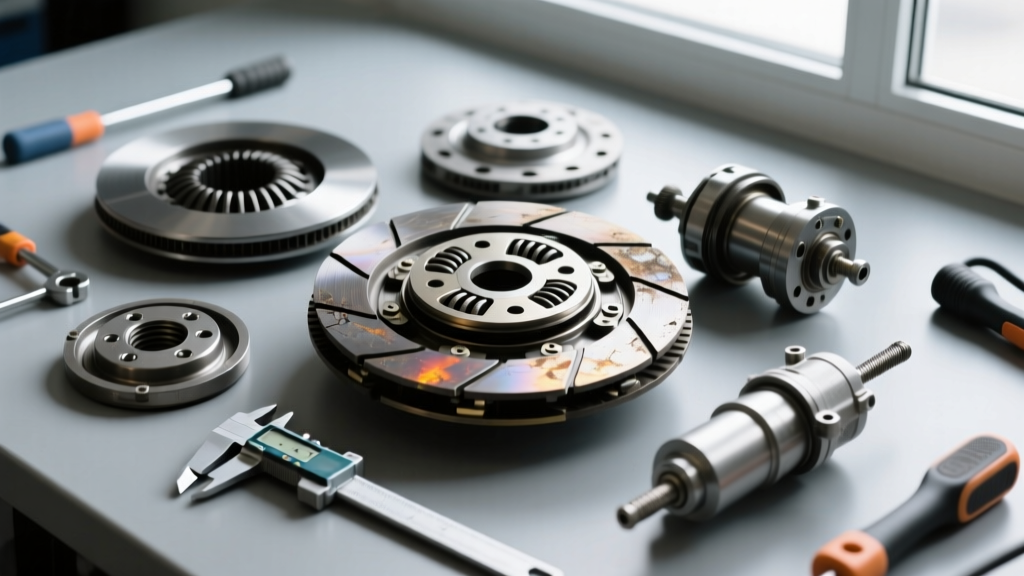
If chatter is reported, you must measure the DMF or single-mass flywheel runout. Mount a magnetic dial indicator to the engine block and rest the probe on the friction surface of the flywheel. Rotate the crankshaft 360 degrees.
- Acceptable Runout: Less than 0.50mm (0.020 inches).
- Failure Threshold: Anything exceeding 0.80mm (0.031 inches) will cause intermittent release bearing wear and clutch chatter, drastically reducing clutch life expectancy.
Expert Tech Tip: When reinstalling a new flywheel on GM LS-series engines (e.g., LS3, LT1), the OEM flywheel-to-crank bolts (Part #11515751) are Torque-To-Yield. You must torque them to 74 lb-ft (100 Nm) plus an additional 90-degree turn. Reusing old bolts or under-torquing will cause intermittent flywheel shift under load, mimicking a slipping clutch.
Step 3: Clutch Delay Valve (CDV) Evaluation
Many modern European manuals (especially those paired with ZF 6-speed transmissions) feature a Clutch Delay Valve in the hydraulic line to smooth out shifts for NVH (Noise, Vibration, and Harshness) compliance. Over time, the internal restrictor orifice becomes clogged with microscopic rubber debris from the deteriorating CMC. This causes an intermittent delay in clutch engagement, resulting in the driver revving the engine while the clutch is still partially disengaged, leading to severe friction disc glazing. Removing or replacing the CDV is a critical step in restoring proper hydraulic actuation speed.
Preserving Clutch Life Expectancy Through Proactive Maintenance
Ultimately, preserving your vehicle's clutch life expectancy requires treating the hydraulic actuation system with the same rigor as the engine's oiling system. Flushing the clutch hydraulic fluid every 30,000 miles, listening for early-stage DMF rattles at idle, and addressing any pedal inconsistencies immediately will prevent the catastrophic thermal events that destroy friction materials. For deeper insights into OEM clutch system architectures, refer to the ZF Services clutch system engineering documentation. By diagnosing the intermittent ghosts before they manifest as permanent mechanical failures, you ensure the drivetrain operates within its engineered thermal and mechanical limits for years to come.