The 'Midnight' Phenomenon: Understanding Intermittent Carriage Clutch Faults
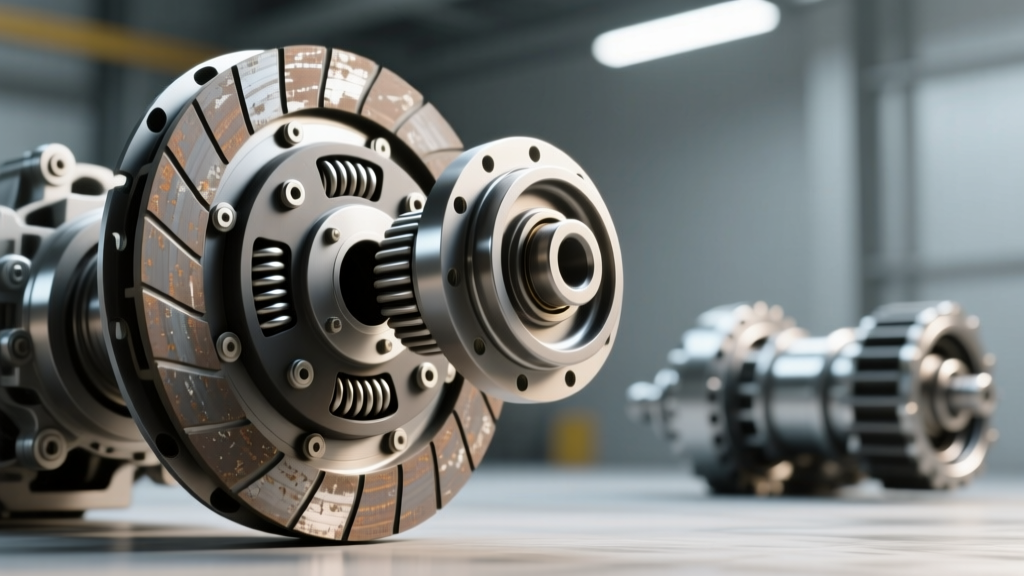
Motorized carriage conversions, parade vehicles, and specialized light-industrial PTOs frequently rely on enclosed drum-style centrifugal clutches. Among these, the 'Cinderella' carriage clutch—a colloquial and trade term for heavy-duty, enclosed centrifugal friction clutches that notoriously 'turn into a pumpkin' (fail to engage or slip unpredictably) under specific thermal or RPM conditions—presents a unique diagnostic challenge. Unlike standard manual automotive clutches or modern automatic transmission wet clutch packs (such as those found in the ZF 8HP series), the Cinderella carriage clutch operates purely on centrifugal force, mechanical spring tension, and friction shoe expansion.
When owners report intermittent clutch problems—where the carriage drives perfectly in the cool morning air but slips violently at dusk, or engages smoothly at 1,800 RPM but chatters unpredictably at 2,200 RPM—the root cause is rarely a simple worn shoe. In 2026, with the advent of advanced Kevlar-infused sintered bronze friction materials, intermittent faults require a systematic diagnosis of thermal dynamics, metallurgical fatigue, and linkage geometry. This guide provides a master-level troubleshooting framework for isolating these unpredictable failures.
Thermal Hysteresis and Heat-Soak Slipping
The most common cause of intermittent slipping in a Cinderella carriage clutch is thermal hysteresis. As the clutch drum operates, friction generates immense heat. If the carriage is used in stop-and-go parade conditions or heavy-load agricultural towing, the drum temperature can easily exceed 350°F (176°C).
The Expansion Mismatch
The clutch drum is typically manufactured from cast iron or stamped steel, while the friction shoes are composed of organic cork composites or modern sintered metallic compounds. These materials have vastly different coefficients of thermal expansion. According to tribological data published by SAE International (SAE J2522), when the drum expands outward due to heat-soak, the centrifugal springs may lack the necessary tensile force to push the friction shoes outward at the same rate. The result? A clutch that engages perfectly when cold, but slips intermittently once the drum reaches operating temperature and expands beyond the effective throw of the shoes.
- Diagnostic Tool: Use a Fluke 62 MAX+ infrared pyrometer to measure the external drum temperature immediately after a slip event.
- Threshold: If slipping consistently occurs when the drum surface exceeds 320°F, thermal expansion mismatch is your primary suspect.
- Fix: Upgrade to high-tension stainless steel engagement springs and verify drum ventilation ports are clear of debris.
Centrifugal Spring Fatigue and RPM-Dependent Intermittency
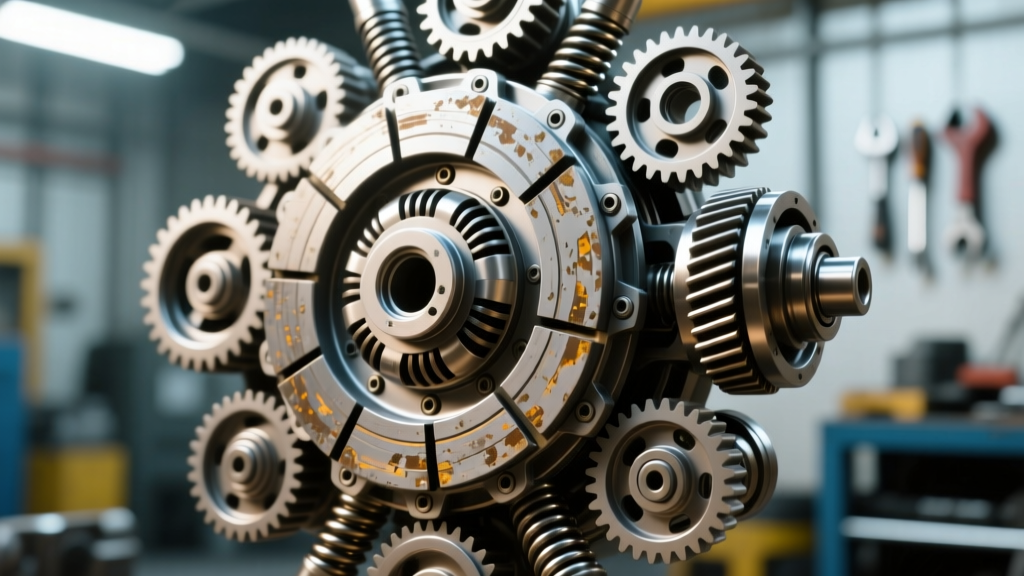
If the intermittent chatter or slipping is strictly tied to engine RPM rather than temperature, you are likely dealing with centrifugal spring fatigue or weight hysteresis. The Cinderella clutch relies on a series of heavy-duty extension springs to hold the shoes retracted at idle and control the engagement threshold.
Over time, these music-wire or stainless-steel springs undergo cyclic loading. A spring that originally required 45 lbs of force to extend to 1.25 inches may degrade to 30 lbs after 5,000 engagement cycles. This causes the clutch to 'feather' or engage intermittently at lower RPMs, creating a severe chatter that feels like a misfiring engine.
Expert Insight: Never replace just one fatigued spring. Mixing new and old springs creates an imbalanced centrifugal force vector, leading to catastrophic drum warping and severe driveline vibration. Always replace the entire spring array as a matched set.
Diagnostic Matrix: Intermittent Fault Isolation
Use the following matrix to cross-reference the specific 'flavor' of intermittency you are experiencing in the field. This will narrow down your teardown inspection points.
| Symptom Profile | Primary Root Cause | Verification Method | Estimated 2026 Repair Cost |
|---|---|---|---|
| Slips only after 30+ minutes of runtime | Drum thermal expansion / Heat-soak | Infrared pyrometer surface scan | $45 - $85 (Spring upgrade) |
| Chatter at 1,800 RPM, smooth at 2,500 RPM | Spring fatigue / Uneven shoe wear | Tensile tester / Micrometer shoe measurement | $115 - $160 (Full rebuild kit) |
| Engages, then violently releases randomly | Linkage binding / Cable fraying | Visual inspection of manual override pivot balls | $30 - $60 (Cable and pivot kit) |
| Slips in high humidity, grips in dry weather | Hygroscopic friction material degradation | Visual inspection for glazing / moisture ingress | $180 - $250 (New drum and shoes) |
Environmental Contaminants and the 'Pumpkin' Effect
Carriage clutches are uniquely exposed to the elements. Unlike a sealed automotive transmission (e.g., a 4L60E or 6L80), the Cinderella carriage clutch often breathes through unfiltered ventilation slots to dissipate heat. This allows moisture, fine dust, and road grime to enter the drum cavity.
Many older or budget-friendly replacement shoes utilize organic cork or cellulose-based friction materials. These materials are highly hygroscopic. In high-humidity environments or after a light rain, the friction material absorbs moisture, drastically lowering the coefficient of friction. As documented in the Engineering Toolbox's friction coefficient database, the presence of even a microscopic water film can drop the static friction coefficient of organic composites from 0.45 to below 0.15. The clutch will slip intermittently until the friction generates enough heat to boil off the moisture, at which point it suddenly 'bites'—causing a jarring, unpredictable engagement.
The Fix: Upgrade to sintered bronze or Kevlar-reinforced metallic friction shoes. These materials are virtually impervious to moisture and provide a consistent friction coefficient regardless of ambient humidity.
Step-by-Step Intermittent Fault Isolation Protocol
When a customer brings in a motorized carriage complaining of a 'ghost in the clutch,' follow this exact teardown and measurement protocol to guarantee an accurate diagnosis.
Step 1: Cold vs. Hot Engagement Testing
Before disassembly, perform a controlled slip test. Mark the drum and the input shaft with a paint pen. Run the carriage under load until the slip occurs. Immediately measure the drum temperature. If the slip correlates with a temperature spike above 300°F, order a high-tension spring kit and ventilated drum cover.
Step 2: Drum and Shoe Micrometer Measurement
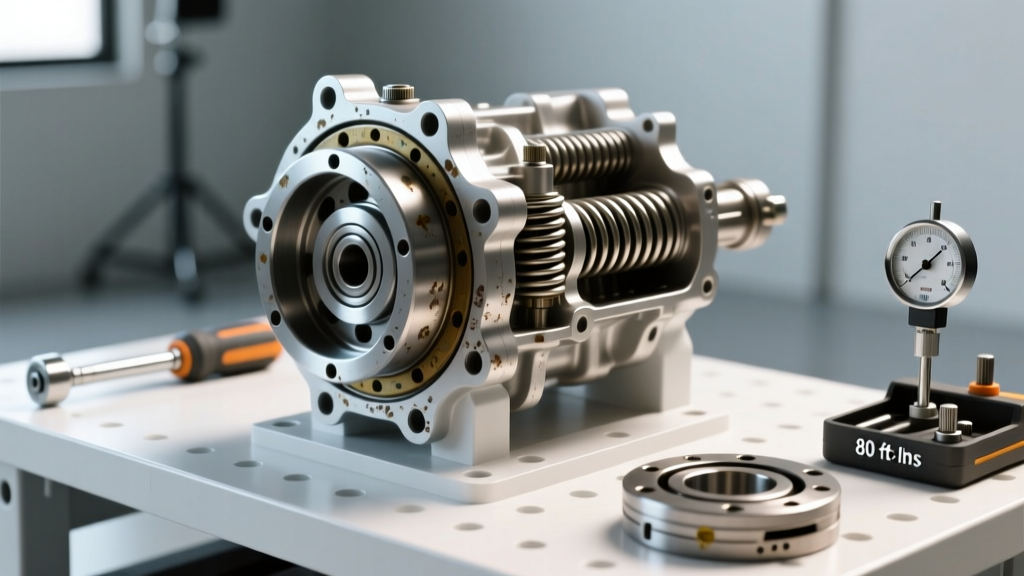
Remove the clutch assembly. The drum retaining nut typically requires 65-75 lb-ft of torque for removal and installation; always apply a medium-strength threadlocker (such as Loctite 243) upon reassembly to prevent catastrophic loosening. Once the drum is off, use a Mitutoyo digital inside micrometer to measure the drum's inner diameter (ID). Check for out-of-round wear. If the drum ID varies by more than 0.008 inches across different axes, the drum is warped. A warped drum will only make partial contact with the shoes, leading to intermittent gripping and slipping as the drum rotates.
Step 3: Spring Tension Verification
Remove the centrifugal springs and test them with a digital force gauge. A standard Cinderella carriage clutch spring should yield between 45 and 55 lbs of tension at 1.5 inches of extension. If any spring falls below 40 lbs, the entire set must be replaced. A complete OEM-equivalent rebuild kit (typically Part #CC-880-K or similar) ranges from $115 to $160 in 2026, making it a cost-effective insurance policy against recurring intermittency.
Conclusion
Intermittent Cinderella carriage clutch problems are rarely random; they are the physical manifestation of thermal dynamics, material fatigue, and environmental exposure. By moving beyond simple visual inspections and utilizing pyrometers, micrometers, and tensile testing, technicians can permanently resolve the 'midnight pumpkin' effect, ensuring smooth, reliable power delivery for motorized carriages and specialized PTO applications.