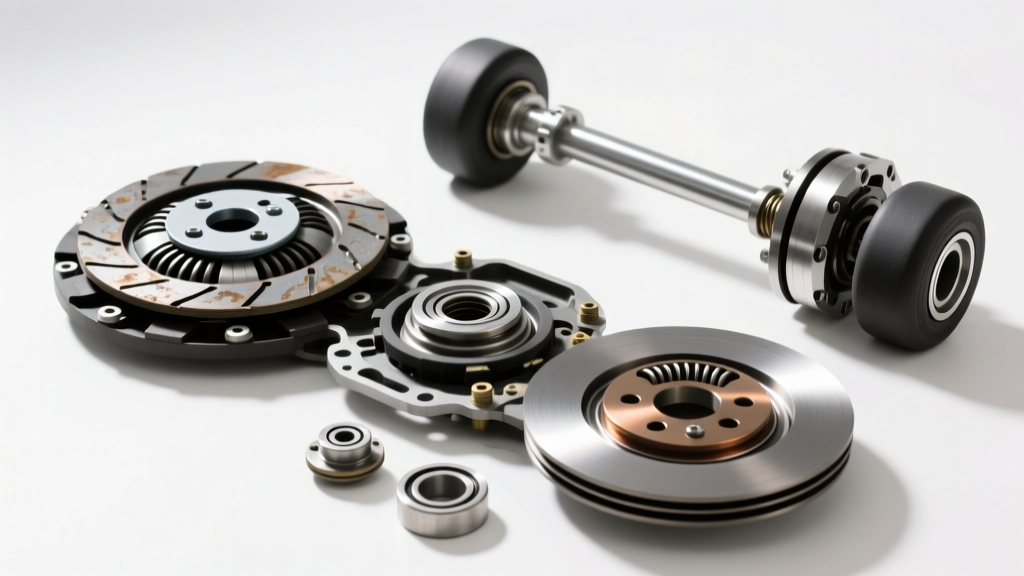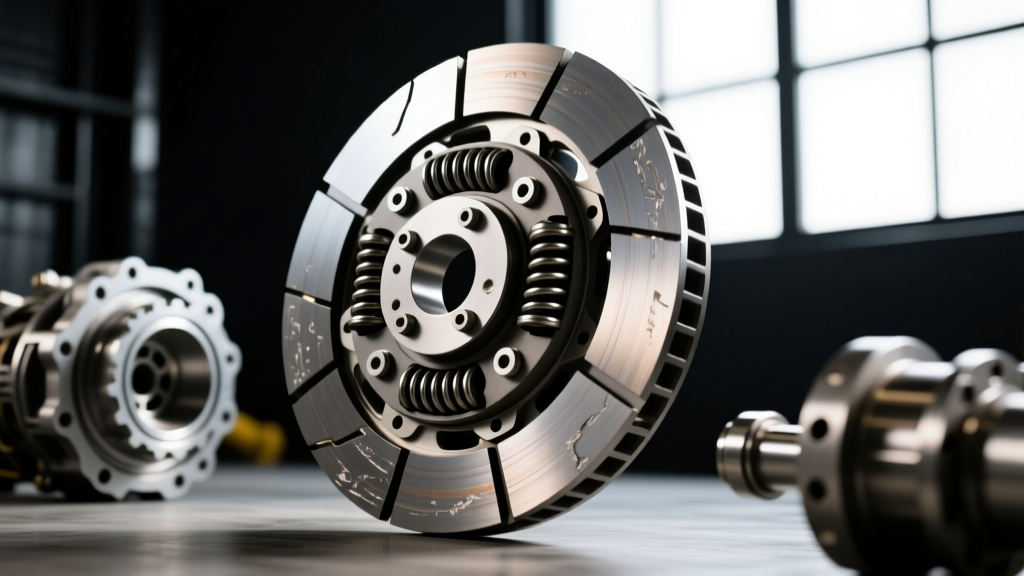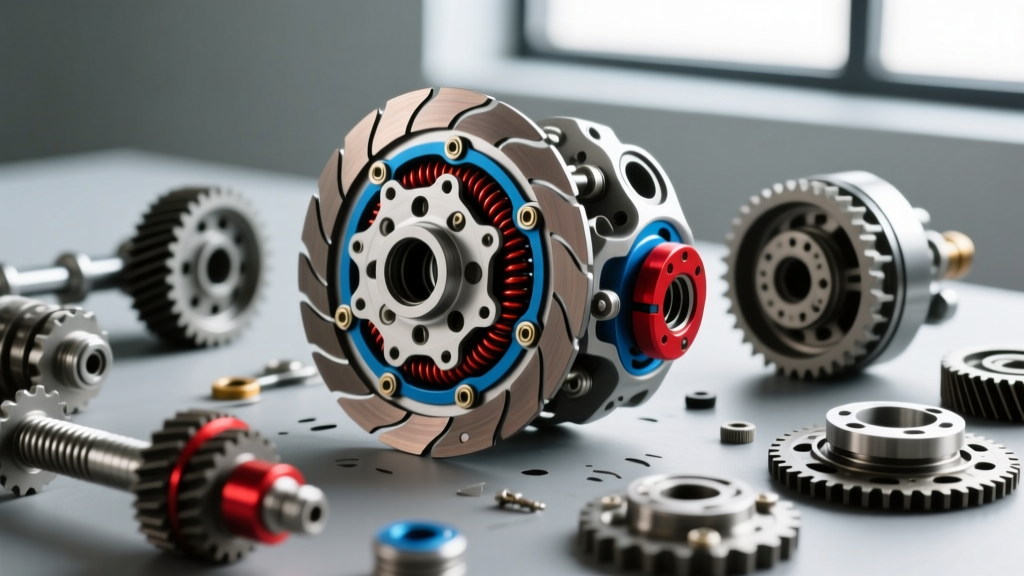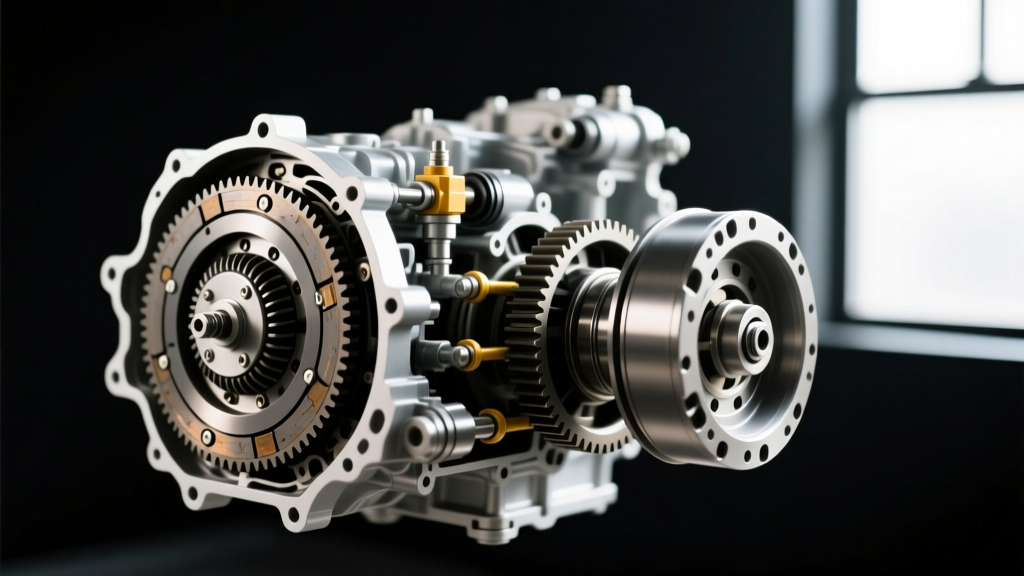
The Anatomy of Hyundai DCT Chatter: Dry vs. Wet Systems
Hyundai’s dual-clutch transmission (DCT) lineup is split between two primary architectures: the D7UF1 (7-speed dry) and the D8LF1 (8-speed wet, branded as N DCT in performance models). While both deliver lightning-fast shift times, they are inherently susceptible to clutch chatter, low-speed shudder, and high-RPM vibration when pushed beyond their factory thermal thresholds or when friction materials degrade. For performance enthusiasts and track-day drivers, understanding the root cause of this vibration is the first step toward building a bulletproof drivetrain.
Chatter in a Hyundai dual clutch system is rarely a simple friction plate issue. It is a complex harmonic resonance caused by the interaction between the dual-mass flywheel (DMF) torsional springs, the clutch actuator rod clearance, and the Transmission Control Unit (TCU) line pressure mapping. When the friction coefficient drops due to thermal glazing or fluid shear, the TCU struggles to modulate the clutch bite point, resulting in aggressive micro-slip that manifests as a violent shudder through the chassis.
Diagnostic Protocol: Isolating the Vibration Source
Before throwing aftermarket parts at the problem, a precise diagnostic sequence must be followed using a bi-directional OBD2 scanner or Hyundai’s Global Diagnostic System (GDS). Guesswork leads to misdiagnosed actuators and wasted labor.
Step 1: TCU Clutch Wear Index & Adaptation Reset
The TCU continuously monitors the stroke distance of the clutch actuators to compensate for friction material wear. Access the TCU data stream and locate the Clutch 1 Wear Index and Clutch 2 Wear Index.
- Index 0.00 - 0.60: Normal wear. Chatter is likely caused by DMF fatigue or TCU mapping.
- Index 0.61 - 0.84: Moderate wear. A TCU adaptation reset and fluid service (on wet DCTs) may temporarily cure the shudder.
- Index 0.85 - 1.00: Critical wear limit reached. The clutch pack is mechanically glazed or depleted. Replacement is mandatory.
If the wear index is below 0.85, perform a Clutch Touch Point Adaptation Reset. This forces the TCU to relearn the exact bite point of both clutches, often eliminating the 1st-to-2nd gear shudder caused by software drift.
Step 2: Actuator Rod Play Measurement (Dry D7UF1)
For the 7-speed dry DCT, the external actuators use pushrods to engage the clutches. Over time, the pivot balls and rod ends wear, creating dead-zone clearance. With the transmission in neutral and the engine off, measure the lateral play of the actuator rods. Hyundai specifies a maximum allowable play of 0.5mm. If play exceeds this, the actuator cannot apply smooth, linear pressure, causing an on/off light-switch engagement that results in severe low-speed chatter.
Step 3: Dual-Mass Flywheel (DMF) Runout Check
Vibration under heavy load (e.g., 4,000+ RPM in 3rd gear) is frequently misdiagnosed as clutch slip when it is actually DMF failure. The internal torsional springs fatigue, and the secondary mass warps under extreme thermal cycling. Mount a dial indicator to the engine block and measure the axial runout of the DMF friction surface. Maximum allowable runout is 0.15mm. Anything beyond this requires flywheel replacement, as no clutch material can absorb the harmonic wobble.
Performance Upgrades to Eradicate DCT Shudder
If you are tracking an Elantra N (D8LF1) or tuning a Sonata 1.6T (D7UF1) for high-torque output, OEM organic friction materials will quickly glaze under repeated launch control or aggressive downshifts. Upgrading the friction material alters the thermal threshold and bite characteristics.
| Friction Material | Thermal Threshold | Torque Capacity | Drivability & NVH | Best Application |
|---|---|---|---|---|
| OEM Organic | ~250°C (482°F) | 320 Nm (236 lb-ft) | Smooth, low chatter | Daily driving, stock tune |
| Kevlar / Ceramic Blend | ~400°C (752°F) | 450 Nm (331 lb-ft) | Moderate low-speed shudder | Stage 2 street/track builds |
| Sintered Metallic | ~550°C (1022°F) | 650+ Nm (479+ lb-ft) | High chatter when cold, aggressive bite | Dedicated track cars, drag racing |
Expert Insight: When upgrading to a Kevlar or Sintered clutch pack in a Hyundai DCT, you must pair it with a TCU tune that increases clutch line pressure. Without increased hydraulic clamping force, the aggressive friction material will chatter violently at low speeds because the TCU is trying to modulate it using OEM organic pressure maps.
Wet DCT Fluid Degradation and Shear Stability
For owners of the 8-speed wet DCT (D8LF1), chatter is often a fluid dynamics issue rather than a mechanical failure. The N DCT relies on specialized fluid to cool the clutch packs and actuate the mechatronic valves. Under track conditions, the fluid's shear stability breaks down, leading to a drop in hydraulic pressure and erratic clutch modulation.
Hyundai specifies their proprietary DCT Fluid (Part No. 04500-00121). However, for high-performance applications, many specialists recommend switching to a high-shear racing DCT fluid like Fuchs Titan FFL-4 or Motul Multi DCTF, which maintain stable viscosity at sustained temperatures of 140°C+. A complete fluid flush (capacity: 7.2 Liters for the D8LF1) every 15,000 miles is non-negotiable for track-driven Hyundais.
Precision Installation: Torque Specs and Clearances
When replacing the clutch packs or the DMF, precision is paramount. The Hyundai DCT bellhousing and engine block mating surfaces must be surgically clean. Even a 0.2mm variance in mating depth will alter the clutch pack clearance, leading to immediate drag or slip upon startup.
Critical Torque Specifications (2.0T GDI / N-Series Engines)
- DMF to Crankshaft Bolts (M10x1.25): 72.3 - 79.6 lb-ft (98 - 108 Nm) + 90° torque-to-yield turn. Always use new OEM bolts (Part No. 23231-23800).
- Clutch Pack Retaining Ring: Seat fully and verify snap-ring engagement with a feeler gauge; no rotational play allowed.
- Bellhousing to Engine Block (M10): 43.3 - 57.8 lb-ft (59 - 78 Nm).
- Actuator Mounting Bolts (Dry DCT): 14.5 - 21.7 lb-ft (20 - 29 Nm). Over-torquing these will warp the actuator housing and bind the pushrods.
TCU Calibration: The Final Step
Hardware upgrades are only half the battle. To fully eliminate chatter and optimize shift firmness, the TCU must be recalibrated. Using platforms like HP Tuners or EcuTek, tuners can modify the clutch pressure tables, alter the torque-to-pressure mapping, and adjust the shift drum actuation speed.
For aftermarket clutches, increasing the Clutch Fill Pressure by 10-15% during the torque phase of the shift ensures the sintered or Kevlar material engages instantly, preventing the micro-slip that causes high-RPM vibration. Furthermore, disabling the factory "Comfort Mode" clutch slip algorithms in Sport/N-Mode prevents the TCU from intentionally slipping the clutches to smooth out shifts, thereby preserving your upgraded friction materials. For official factory service procedures and wiring diagrams, always cross-reference your VIN on Hyundai TechInfo before beginning any mechatronic disassembly.
Cost Breakdown and ROI
Addressing Hyundai dual clutch chatter is an investment in drivetrain longevity. Here is what you can expect to spend in the current market:
- OEM Clutch Pack Replacement (Dry DCT): $450 (Parts) + $900 (Labor) = ~$1,350
- OEM D8LF1 Fluid Service & Adaptation: $150 (Fluid) + $150 (Labor/Scanner) = ~$300
- Aftermarket Performance Clutch Kit + TCU Tune: $1,800 - $2,600 (Parts & Software)
- Dual-Mass Flywheel Replacement: $850 (OEM DMF) + $400 (Labor incremental)
By diagnosing the exact source of the vibration—whether it is a 0.6mm actuator rod wear, degraded FFL-4 fluid, or a warped DMF—you avoid the costly trial-and-error approach. Upgrading the friction materials and pairing them with a custom TCU pressure map transforms the Hyundai DCT from a fragile daily-driver component into a motorsport-grade power transfer unit.