The Performance Paradox: Why Your DCT is Chattering
Hyundai’s N division has fundamentally changed the hot hatch and sport sedan landscape, largely thanks to their lightning-fast gearboxes. However, as enthusiasts push these platforms with ECU tunes, track days, and launch control abuse, a notorious issue emerges: severe low-frequency shudder. Diagnosing hyundai dual clutch transmission chatter requires understanding the delicate balance between friction coefficients, thermal management, and mechatronic calibration. When you introduce 300+ wheel horsepower to a system designed for factory output, the stock slip-phase parameters break down, resulting in aggressive chassis vibration and clutch chatter during 1-2 and 2-3 upshifts.
As of 2026, the aftermarket support for Hyundai’s DCT platforms has matured significantly, offering robust solutions for track-focused builds. Whether you are wrestling with the 7-speed dry D7UF1 found in the Veloster N and Elantra N, or the newer 8-speed wet N DCT (8SPD) in the Ioniq 5 N, identifying the root cause of the vibration is the first step toward a reliable performance upgrade.
Dry vs. Wet DCT Dynamics (D7UF1 vs. 8SPD)
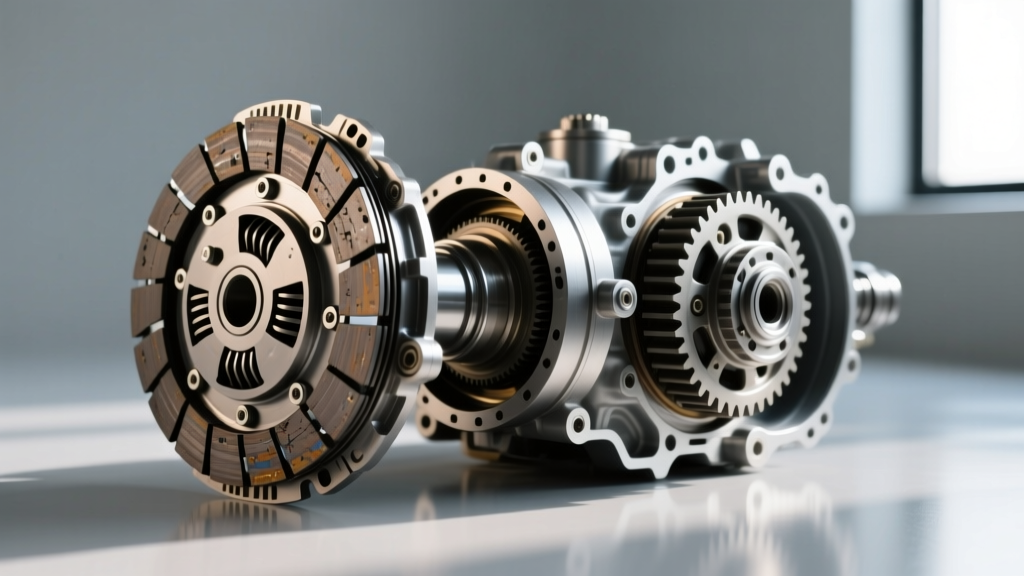
The D7UF1 utilizes two dry friction clutches actuated by external brushless DC motors. Dry clutches offer high mechanical efficiency and rapid shift times but are highly susceptible to thermal glazing. When the friction material overheats during repeated hard launches, the surface becomes glassy. This causes the clutch to grab and release in rapid succession (stick-slip phenomenon) during engagement, manifesting as a violent 15-30 Hz chatter felt through the steering wheel and floorpan.
Conversely, the wet 8SPD DCT relies on oil-bathed multi-plate clutch packs. Chatter in wet systems is rarely caused by glazing; instead, it stems from DCT fluid shear breakdown, warped steel separator plates, or degraded friction linings shedding material into the mechatronic valve body. Understanding which system you are diagnosing dictates your upgrade path.
Root Cause Analysis: Chatter Under Hard Launch
Before tearing into the bellhousing, you must isolate whether the vibration is mechanical, hydraulic, or software-induced. A systematic diagnostic approach will save you from replacing perfectly good hardware.
1. DMF Spring Fatigue and Harmonic Resonance
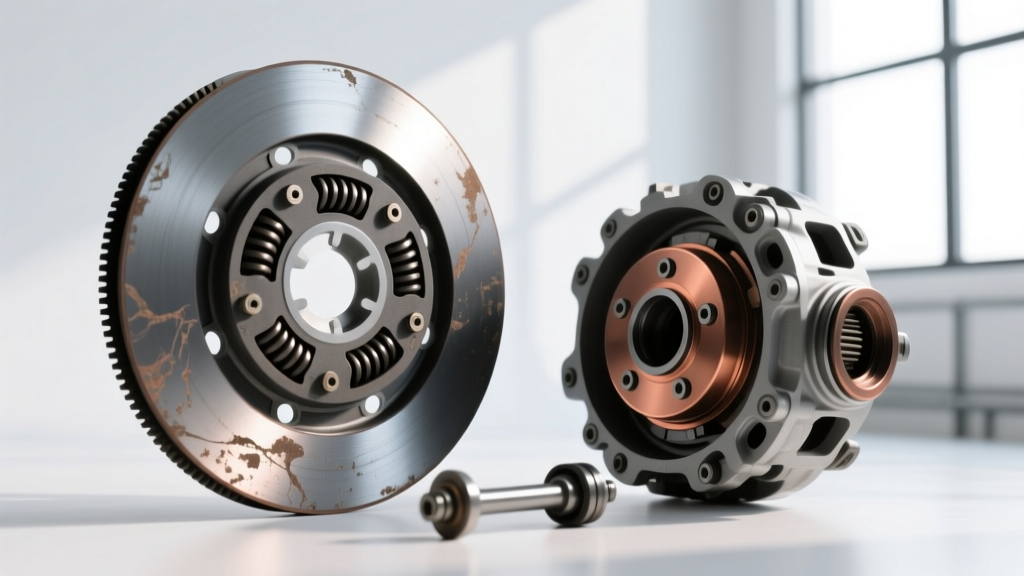
The Dual-Mass Flywheel (DMF) is designed to absorb torsional vibrations from the engine's power pulses. Inside the DMF, arc springs and hysteresis dampers manage the rotational energy. Under the extreme torque spikes of a tuned 2.0T engine (e.g., the Theta III producing over 320 lb-ft at the crank), these internal springs can fatigue or bottom out. When the DMF loses its torsional damping capability, engine harmonics are transferred directly into the transmission input shafts, causing a metallic rattle at idle and severe chatter during the clutch bite-point.
2. Actuator Rod Play and Mechatronic Adaptation
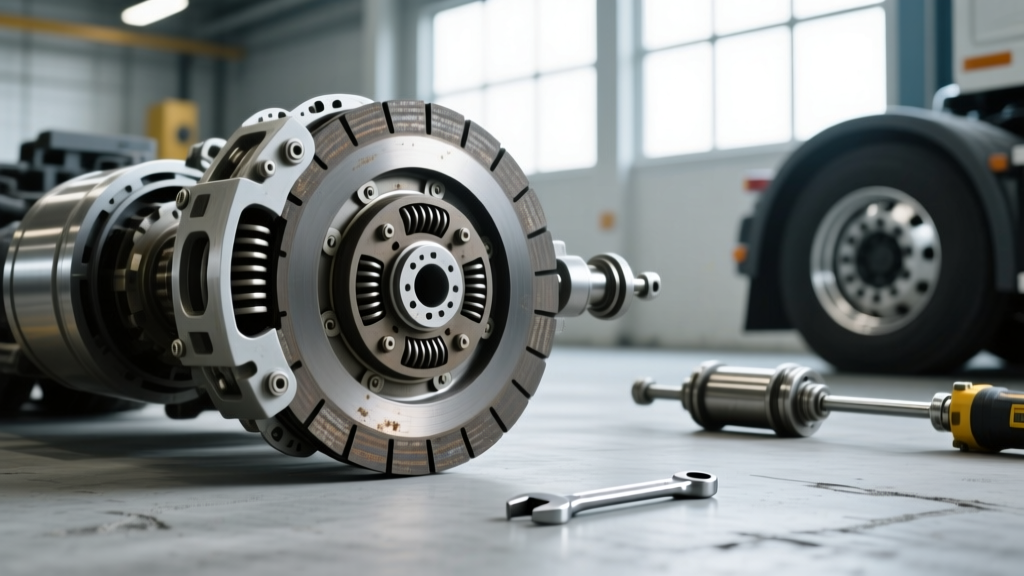
The external clutch actuators on the D7UF1 push release forks to engage the diaphragm springs. Over time, the spherical pivot points on the release forks wear, creating excessive free-play. If the actuator rod travel exceeds the factory adaptation limits, the Transmission Control Unit (TCU) struggles to modulate the slip-phase smoothly. The TCU compensates by rapidly pulsing the actuator motor, which physically vibrates the transmission casing.
3. TCU Clamp Load Mapping
Factory TCU maps prioritize smooth, NVH-free (Noise, Vibration, and Harshness) engagement. This means the clutch clamp load during the slip-phase is kept relatively low. When you add a Stage 2 tune, the engine torque overwhelms the stock clamp load. The clutch slips microscopically, generates immense heat, and chatters. Without a custom TCU map to increase the line pressure and clamp force, no physical clutch upgrade will completely solve the issue.
Diagnostic Checklist: Tools and Measurements
Perform these checks before ordering replacement parts:
- Scan Tool Adaptation Reset: Use a professional GDS (Global Diagnostic System) tool to perform a 'Clutch Touch Point Learning' and 'Actuator Stroke Adaptation'. If chatter persists immediately after a reset, mechanical wear is confirmed.
- Actuator Fork Play Measurement: Remove the external actuators. Use a dial indicator on the release fork pivot ball. Maximum allowable lateral play is 1.0mm. Anything beyond 1.2mm requires fork and bearing replacement.
- DMF Runout Check: With the transmission removed, mount a magnetic dial indicator to the engine block and measure the flywheel friction surface runout. Spec is <0.5mm (0.020 inches). Warped flywells will destroy new clutch packs within 500 miles.
Data Table: Stock vs. Upgraded DCT Clutch Assemblies
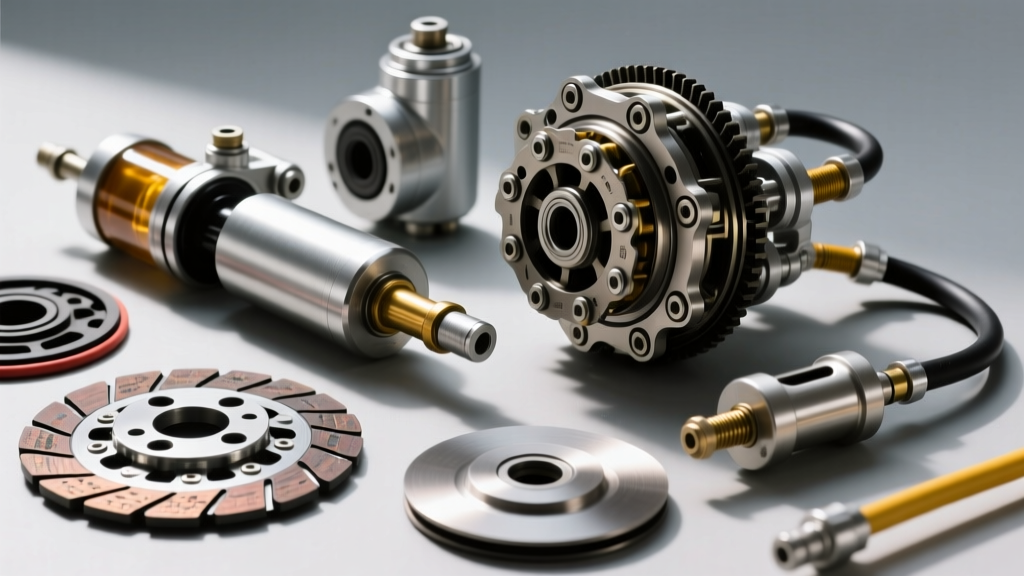
Choosing the right friction material is critical for balancing track performance with street drivability. Below is a comparison of common upgrade paths for the Hyundai D7UF1 dry DCT platform.
| Clutch Type | Friction Material | Torque Capacity | Engagement Bite | NVH / Chatter Risk | Est. Price Range (USD) |
|---|---|---|---|---|---|
| OEM Replacement | Organic Paper/Kevlar | ~320 lb-ft | Progressive, Soft | Low (when new) | $600 - $850 |
| Performance Street | Cerametallic / Carbon | ~450 lb-ft | Aggressive, Immediate | Moderate (Low-speed shudder) | $1,100 - $1,500 |
| Track / Drag Spec | Sintered Iron | 600+ lb-ft | On/Off Switch | High (Requires SMF & TCU tune) | $1,800 - $2,400 |
Note: Upgrading to Sintered Iron on a dry DCT requires a Single-Mass Flywheel (SMF) conversion and aggressive TCU tuning to prevent actuator burnout due to the heavy pedal effort required to compress the stiffer diaphragm springs.
The Upgrade Path: Eliminating Vibration for Track Use
For dedicated track builds or high-horsepower street cars, addressing chatter requires a holistic approach involving hardware and software.
Upgrading to a Performance DMF or SMF
If you are retaining a streetable setup, companies like Exedy Global and Spec offer reinforced DMFs with stiffer arc springs and upgraded greases that withstand the 150°C+ temperatures generated during track sessions. For pure drag or time-attack builds, converting to an aluminum Single-Mass Flywheel (SMF) eliminates DMF spring failure entirely. However, be warned: an SMF removes the torsional damping, resulting in noticeable gear rattle at idle and increased cabin vibration. To mitigate this, you must utilize a clutch disc with a high-capacity marcel spring and polyurethane hysteresis dampers.
TCU Calibration and Clutch Bite-Point Tuning
Hardware upgrades must be paired with software. Tuning platforms (such as those offered by Lap3 or SXTH Motorsports) allow you to modify the DCT torque tables. By increasing the clutch clamp load (measured in kN) during the 1-2 and 2-3 shift phases, you force the friction plates to lock up faster, reducing the slip-time that generates heat and chatter. Furthermore, adjusting the 'Touch Point' voltage parameters ensures the mechatronic unit accounts for the thinner friction material of aftermarket cerametallic discs.
Wrenching Specs: Reassembly and Torque Sequences
When reinstalling the DCT and clutch assembly on Hyundai's N-platform engines (e.g., 2.0T GDI Theta III), precise torque specifications are non-negotiable to prevent warping and subsequent vibration.
- Flywheel to Crankshaft (M10x1.25 Bolts): Torque to 72.3 - 86.8 lb-ft, followed by a 90-degree angle turn. Always use new stretch bolts and apply medium-strength threadlocker.
- Clutch Pressure Plate to Flywheel: Torque in a star pattern to 18 - 22 lb-ft. Use a DCT-specific alignment tool; the dual-input shafts of the D7UF1 make blind alignment impossible.
- Transmission Bellhousing to Engine Block: Torque M12 bolts to 43 - 50 lb-ft, and M10 bolts to 33 - 39 lb-ft. Ensure the two dowel pins are seated perfectly to prevent input shaft misalignment, which is a primary cause of high-speed driveline vibration.
- Actuator Mounting Bolts: Torque to 15 - 22 lb-ft. Do not overtighten, as the actuator housings are cast aluminum and prone to cracking.
For comprehensive vehicle specifications and factory powertrain layouts, refer to the Hyundai Elantra N Official Specs. Additionally, engineers looking for deeper NVH analysis can consult research publications via SAE International regarding dual-clutch torsional damping strategies.
Final Thoughts on DCT Longevity
Chatter in a Hyundai dual clutch transmission is a warning sign, not just an annoyance. It indicates that the friction interface is failing to manage the kinetic energy of the drivetrain. By diagnosing the exact failure point—whether it is a glazed organic disc, a fatigued DMF, or an out-of-adaptation mechatronic unit—you can select the precise upgrade path. Pairing high-torque friction materials with custom TCU clamp-load mapping is the ultimate key to transforming your DCT from a chattering liability into a bulletproof performance asset.