The Hidden Link Between Hydraulics and Clutch Life
When drivers experience shifting issues, the immediate instinct is to blame the friction disc or pressure plate. However, as manual and automated-manual transmissions evolve into highly precise, close-ratio machines in 2026, the hydraulic actuation circuit has become the primary determinant of overall clutch life. A compromised hydraulic system does not merely result in a spongy pedal; it causes micro-slippage, incomplete disengagement, and severe drag that can glaze a friction disc or destroy a release bearing in under 5,000 miles.
For automotive technicians and advanced DIYers, mastering hydraulic clutch system diagnosis is no longer optional—it is the cornerstone of preventive drivetrain maintenance. This guide details the exact diagnostic protocols, fluid chemistry requirements, and mechanical tolerances necessary to protect your transmission's friction components and maximize clutch life.
Anatomy of the Modern Hydraulic Clutch Circuit
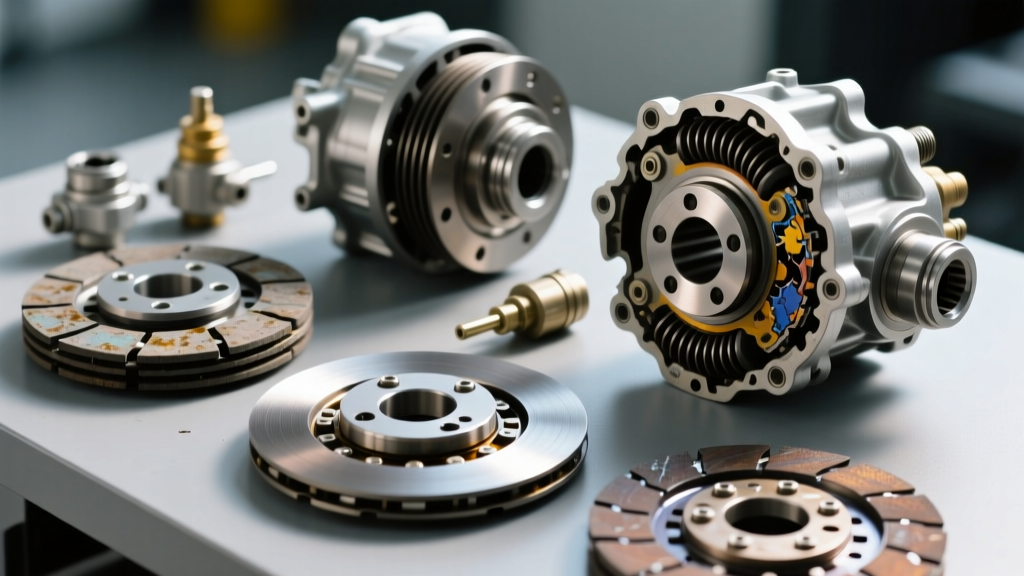
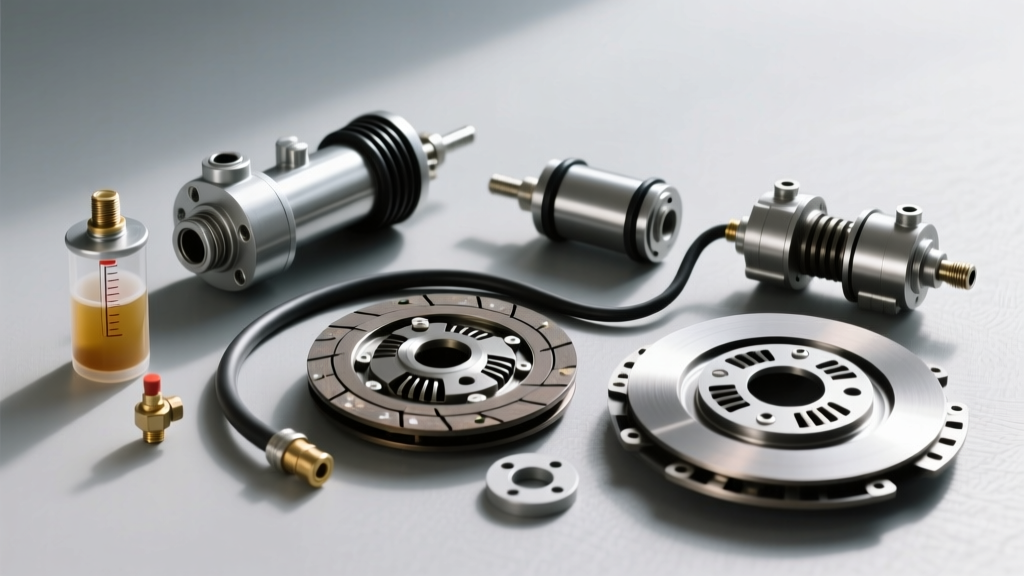
Modern manual transmissions, from the Tremec T56 Magnum F to the Porsche G50 transaxles, rely on a closed-loop hydraulic system. Unlike older cable-actuated setups that provided direct mechanical feedback, hydraulic systems use incompressible fluid to multiply pedal force. The primary components include:
- Clutch Master Cylinder (CMC): Typically a 5/8-inch or 3/4-inch bore piston that generates hydraulic pressure.
- Hydraulic Hardlines and Flex Hoses: Often featuring PTFE (Teflon) inner linings in high-performance applications to prevent hose expansion under pressure.
- Concentric Slave Cylinder (CSC) or External Slave: The actuator that pushes the release fork or directly engages the diaphragm spring fingers.
According to technical documentation from FTE Automotive, a leading OEM supplier of hydraulic clutch actuation systems, over 65% of premature clutch wear cases traced back to the workshop are actually rooted in hydraulic bypass failures or CSC micro-leaks, not defective friction materials.
Master Cylinder Compensation Port Failures
The most insidious killer of clutch life is a blocked compensation (bypass) port in the master cylinder. When the clutch pedal is fully released, the master cylinder piston must retract completely to uncover a tiny fluid port. This port allows expanding fluid (due to engine bay heat) to return to the reservoir. If the pushrod is misadjusted, or if the internal return spring fatigues, the port remains blocked. The trapped, expanding fluid acts like a foot resting on the clutch pedal, causing continuous micro-slippage that generates immense heat and rapidly destroys the friction material.
Concentric Slave Cylinder (CSC) Micro-Leaks
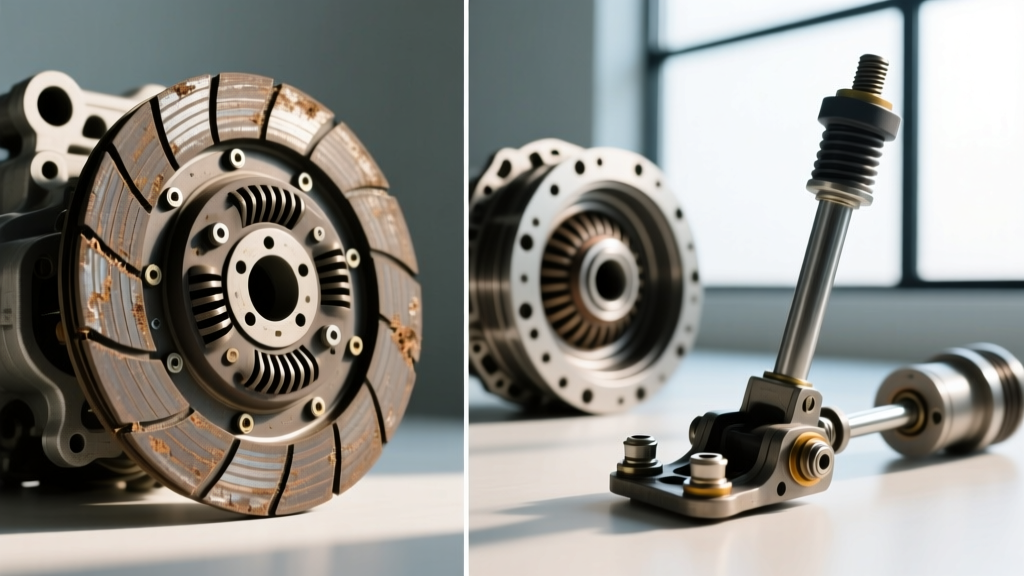
Most modern front-wheel-drive and transverse-engine vehicles utilize a CSC that wraps around the transmission input shaft. While Schaeffler REPXPERT designs these units to withstand extreme thermal cycling, the internal PTFE seals can degrade. A weeping CSC will spray atomized DOT fluid directly onto the clutch disc. Because glycol-ether brake fluid acts as a solvent, it instantly strips the friction material's binding resins, leading to catastrophic, unrepairable clutch slip.
Hydraulic Diagnostic Matrix: Symptoms vs. Culprits
Use the following diagnostic matrix to isolate hydraulic faults before they compromise the mechanical clutch assembly.
| Driver Symptom | Probable Hydraulic Culprit | Preventive Diagnostic Action |
|---|---|---|
| Pedal slowly sinks to the floor while held down | Internal Master Cylinder seal bypass | Perform static pressure leak-down test on CMC |
| Clutch drags or grinds into 1st/Reverse | Air in system or flex hose ballooning | Check hose expansion under load; perform vacuum bleed |
| Pedal feels stiff and notchy mid-travel | CSC bearing seizure or lack of lubrication | Inspect CSC travel with borescope; measure fork ratio |
| Clutch slips under high torque (3rd/4th gear) | Blocked CMC compensation port (fluid expansion) | Verify 1-2mm freeplay at CMC pushrod; check reservoir return |
Preventive Maintenance: Fluid Chemistry and Intervals
To preserve clutch life, the hydraulic fluid must be treated with the same reverence as engine oil. Most OEMs specify DOT 4 or DOT 5.1 fluid, which are glycol-ether based and inherently hygroscopic (moisture-absorbing).
Hygroscopic Degradation and Boiling Point Collapse
As DOT fluid absorbs ambient moisture through microscopic pores in rubber flex hoses and reservoir caps, its boiling point plummets. A fresh DOT 4 fluid boils at roughly 446°F (230°C). At just 3% water content, that boiling point collapses to 311°F (155°C). In a heavy-duty application or track environment, the heat radiating from the bell housing can cause the fluid inside the CSC to boil, creating vapor pockets. Since vapor is compressible, the pedal goes soft, and the clutch fails to fully disengage, leading to forced synchro wear and gear grinding.
2026 Service Standard: Always use Low Viscosity (LV) DOT 4 or ISO 4925 Class 6 fluid for modern hydraulic clutches. These fluids, such as Bosch ESI6 or Motul DOT 4 LV, maintain superior flow characteristics at sub-zero temperatures, ensuring rapid clutch engagement and reducing shift shock that damages driveline mounts.
Preventive flushing must occur every 24 months or 30,000 miles. Utilizing a digital brake fluid moisture tester is mandatory; any reading above 2% moisture dictates an immediate system flush.
Step-by-Step Hydraulic Pressure and Leak-Down Testing
Before condemning a clutch disc for slipping, verify the hydraulic circuit's mechanical integrity using this exact sequence:
- Verify Pushrod Freeplay: Measure the gap between the clutch pedal arm and the CMC pushrod. There must be exactly 0.5mm to 1.5mm of freeplay. Zero freeplay guarantees a blocked compensation port.
- Inspect the Reservoir Return: Have an assistant depress the clutch pedal while you observe the master cylinder reservoir. You should see a small geyser of fluid returning to the reservoir when the pedal is released. No geyser indicates a blocked port or collapsed internal seal.
- Perform a Hydraulic Block Test: Install a hydraulic line block-off tool at the master cylinder outlet. Depress the pedal. If the pedal feels rock solid and holds indefinitely, the CMC is healthy. If it still sinks, the master cylinder internal seals are blown.
- Measure CSC Travel: Using a dial indicator or digital calipers, measure the slave cylinder pushrod travel. Most OEM clutches require between 11mm and 14mm of exact travel to fully disengage the diaphragm spring. Travel less than 10mm indicates air in the lines or a worn CSC piston.
Critical Torque Specifications
When servicing hydraulic lines to perform these tests, adhere strictly to OEM torque specifications to prevent stripping soft aluminum housings or crushing PTFE line seals:
- CMC Banjo Bolts (M10x1.0): 18 - 22 Nm (13 - 16 lb-ft)
- CSC Bleeder Screws (M8x1.0 or M10x1.0): 7 - 10 Nm (5 - 7 lb-ft) — Never exceed 12 Nm, or the zinc-alloy bleeder will snap.
- Hydraulic Hardline Flare Nuts: 14 - 16 Nm (10 - 12 lb-ft)
Cost-Benefit Analysis: Preventive Flush vs. Reactive Overhaul
Failing to diagnose hydraulic anomalies early results in exponential repair costs. The table below illustrates the financial impact of preventive hydraulic maintenance versus reactive clutch replacement in the current 2026 market.
| Service Scenario | Parts Required | Estimated Labor Time | Total Cost Range (USD) |
|---|---|---|---|
| Preventive Hydraulic Flush (Bi-Annual) | 1L DOT 4 LV Fluid | 0.5 Hours | $85 - $140 |
| CMC Replacement (Early Diagnosis) | OEM Master Cylinder | 1.5 Hours | $250 - $450 |
| Reactive CSC & Clutch Kit (Fluid Contamination) | Luk RepSet, CSC, Flywheel, Fluid | 6.0 - 9.0 Hours | $1,200 - $2,400+ |
Final Verdict
Maximizing clutch life is rarely about how gently you drive; it is about how meticulously you maintain the hydraulic actuation system. By monitoring fluid moisture content, verifying master cylinder compensation port clearances, and measuring exact slave cylinder travel, you can identify and neutralize hydraulic faults long before they manifest as mechanical friction failures. Treat the hydraulic circuit as the lifeblood of your manual transmission, and your clutch assembly will routinely surpass 100,000 miles of reliable, slip-free service.