The Hidden Cost of Ignoring Hydraulic Diagnostics
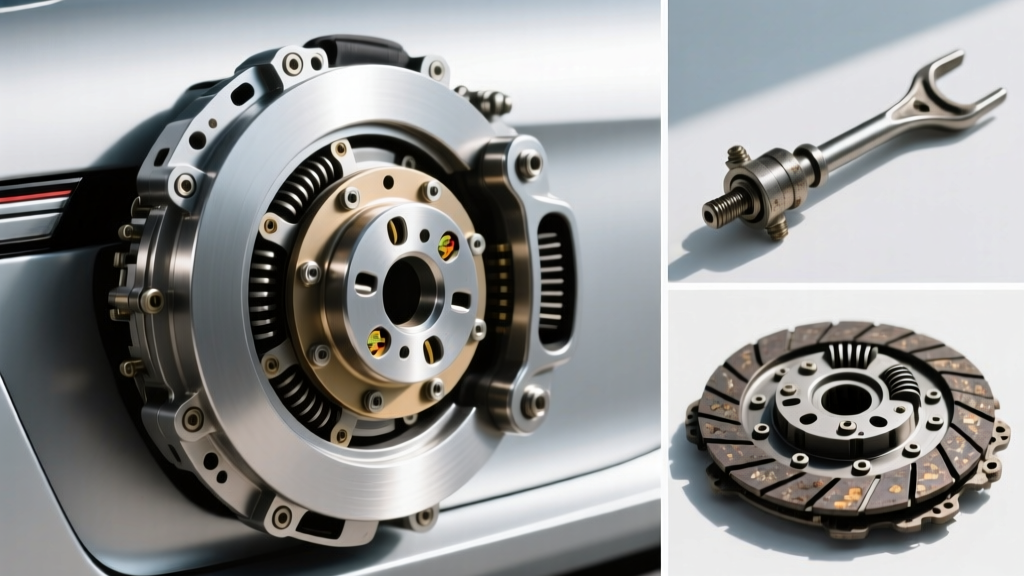
When a manual transmission vehicle begins to exhibit slipping, grinding, or incomplete disengagement, the immediate assumption by many technicians and DIYers is that the friction disc is worn out. This knee-jerk reaction often leads to a full transmission clutch repair—a labor-intensive job that requires dropping the drivetrain, replacing the flywheel, pressure plate, and disc, and can easily cost between $1,500 and $3,000 in 2026 shop rates. However, a significant percentage of these symptoms originate not in the bellhousing, but in the hydraulic actuation system. Misdiagnosing a failing master cylinder, a delaminated flex hose, or aerated fluid as a worn friction disc results in unnecessary parts replacement and wasted labor. Proper hydraulic clutch system diagnosis is the ultimate preventive maintenance tool to extend the life of your clutch assembly and avoid premature transmission clutch repair.
Fluid Chemistry and the Hygroscopic Threat
The hydraulic clutch system shares its fluid architecture with the brake system, typically utilizing DOT 3, DOT 4, or DOT 5.1 polyglycol ether-based fluids. These fluids are inherently hygroscopic, meaning they absorb moisture from the atmosphere through microscopic pores in rubber hoses and reservoir vents. According to SAE International Technical Standards, a DOT 4 fluid that starts with a dry boiling point of 500°F (260°C) can see its wet boiling point drop to 311°F (155°C) after absorbing just 3.7% water by volume.
When clutch fluid boils under heavy stop-and-go traffic or track use, vapor bubbles form. Because gases are compressible and liquids are not, this aeration results in a spongy pedal and incomplete clutch disengagement. Forcing the transmission into gear while the clutch is partially engaged causes severe friction disc glazing and heat checking on the flywheel. Flushing the hydraulic system every 24 months or 30,000 miles with a high-quality DOT 4 or DOT 5.1 fluid (such as Motul RBF 600 or Castrol SRF) is a mandatory preventive measure to maintain hydraulic integrity and stave off a massive transmission clutch repair bill.
Diagnostic Matrix: Spongy Pedals vs. Hard Engagement
Accurate diagnosis requires isolating the hydraulic circuit from the mechanical linkage. Below is a diagnostic matrix to help identify the root cause of clutch actuation anomalies before authorizing a teardown.
| Symptom | Probable Hydraulic Cause | Preventive Diagnostic Action |
|---|---|---|
| Pedal sinks slowly to the floor under constant pressure | Internal master cylinder bypass (cup seal failure) | Inspect pushrod seal for weeping; rebuild or replace master cylinder. |
| Grinding entering 1st or Reverse (incomplete disengagement) | Air in system, worn Concentric Slave Cylinder (CSC), or flex hose delamination | Pressure bleed system; measure CSC stroke (min 0.450"); inspect flex line. |
| Clutch slips under heavy load but pedal feels normal | Blocked master cylinder compensation port due to zero pushrod freeplay | Measure pushrod clearance; adjust to 0.010" - 0.020" freeplay. |
| Pedal feels spongy but travels fully to the floor | Micro-bubbles in fluid or degraded rubber flex hose expanding under pressure | Replace OEM rubber hose with braided stainless steel (e.g., Russell Performance #640350). |
Internal Delamination: The Silent Clutch Killer
One of the most frequently missed diagnoses in manual transmission troubleshooting is the internal delamination of the rubber flex hose that connects the chassis hard line to the transmission slave cylinder. Over time, heat and chemical degradation cause the inner Teflon or rubber lining of the hose to peel away. This detached lining acts as a one-way check valve. When you press the clutch pedal, fluid pressure forces its way past the flap to engage the slave cylinder. However, when you release the pedal, the flap seals shut, trapping hydraulic pressure and preventing the slave cylinder from fully retracting.
This trapped pressure keeps the release bearing lightly loaded against the pressure plate fingers, causing the clutch to slip continuously. The resulting heat will rapidly destroy the friction disc and warp the flywheel, forcing a complete transmission clutch repair. If a vehicle exhibits clutch slip but the hydraulic system appears to hold pressure and the pedal freeplay is correct, always replace the flex hose before condemning the clutch disc.
Concentric vs. External Slave Cylinder Considerations
Modern manual transmissions utilize two primary slave cylinder designs, each with unique diagnostic requirements:
External Slave Cylinders (e.g., Tremec T56 Magnum)
External slaves are mounted on the bellhousing and actuate the clutch fork. They are easily accessible for inspection and replacement. When diagnosing an external slave, check for fluid weeping around the pushrod boot. According to Tremec Driveline Solutions, the T56 Magnum requires a specific stroke length for proper clutch wear compensation. If the slave cylinder pushrod travel exceeds 0.550 inches, the internal seals are likely bypassing, necessitating replacement. Torque the external slave mounting bolts to 18 lb-ft (25 Nm) to prevent bellhousing distortion.
Concentric Slave Cylinders (e.g., Ford MT-82, GM TR-6060)
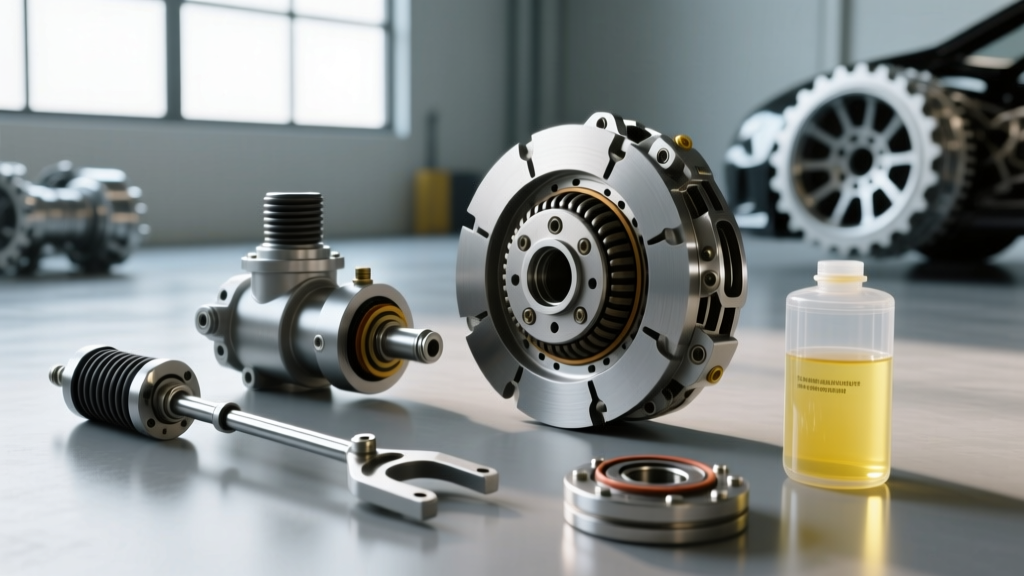
Concentric Slave Cylinders (CSC) wrap around the transmission input shaft and eliminate the need for a clutch fork. While they offer superior pedal feel and self-adjusting capabilities, they are notoriously difficult to diagnose without dropping the transmission. A common failure mode in CSCs is the wear of the internal carbon-graphite release bearing. If you hear a high-pitched squealing noise that changes pitch exactly with engine RPM when the clutch is partially depressed, the CSC bearing is failing. Because the CSC must be replaced from inside the bellhousing, many shops will recommend a full transmission clutch repair at this stage, even if the friction disc has 50% of its life remaining, simply because the labor to access the CSC overlaps with a full clutch job.
Precision Bleeding and Torque Specifications
Gravity bleeding is rarely sufficient for modern hydraulic clutch systems due to the complex routing of lines and the upward trajectory of fluid from the master cylinder to the slave. To properly purge air and prevent the spongy pedal feel that leads to gear grinding, use a pressure bleeder (such as the Motive Power Bleeder) set to 15 PSI.
Follow this precise maintenance protocol:
- Reservoir Prep: Clean the cap area thoroughly to prevent debris from entering the master cylinder. Fill with fresh DOT 4 fluid.
- Pressure Application: Apply 15 PSI to the reservoir. Higher pressures can blow out the master cylinder cap seal or rupture aging lines.
- Bleeder Valve Torque: Open the slave cylinder bleeder valve. Once fluid runs clear and bubble-free, close the valve. Torque the bleeder screw to exactly 80 in-lb (9 Nm). Over-torquing will snap the brittle brass screw inside the slave cylinder body, instantly turning a $20 fluid flush into a $300 slave cylinder replacement.
- Master Cylinder Nuts: If the master cylinder was removed for bench bleeding, torque the firewall mounting nuts to 11 lb-ft (15 Nm) to prevent firewall cracking on aluminum-bodied vehicles.
Pushrod Freeplay: The Compensation Port Criticality
The master cylinder pushrod must have a specific amount of freeplay—typically 0.005 to 0.020 inches—before it makes contact with the master cylinder piston. This tiny gap ensures that when the clutch pedal is fully released, the piston retracts completely, uncovering the compensation port. The compensation port allows fluid to return to the reservoir and equalizes pressure changes caused by ambient temperature fluctuations.
If an aftermarket adjustable pushrod is set too tight, or if the firewall flexes and alters the geometry, the piston will rest over the compensation port. As the fluid heats up and expands, the trapped hydraulic pressure will partially apply the clutch release bearing. This subtle, continuous drag generates immense friction heat, leading to premature disc failure. Checking pushrod freeplay with a feeler gauge during every oil change is a zero-cost preventive measure that safeguards against catastrophic transmission clutch repair scenarios.
Economic Breakdown: Prevention vs. Repair
Understanding the financial implications of hydraulic neglect highlights the value of proactive diagnosis. Based on 2026 national average shop rates of $175 per hour, here is how preventive maintenance compares to reactive repairs:
- Routine Hydraulic Flush: 0.5 hours labor + $25 fluid = $112.50
- Flex Hose & Slave Cylinder Replacement (External): 1.5 hours labor + $120 parts = $382.50
- Full Transmission Clutch Repair (R&R Transmission, Flywheel, Disc, Pressure Plate): 7.0 hours labor + $850 parts = $2,075.00
As demonstrated, addressing hydraulic anomalies immediately yields an 80% to 90% cost savings compared to ignoring the symptoms until the friction materials are destroyed. For more in-depth teardowns and diagnostic procedures, resources like Hagerty Media Tech provide excellent visual guides on identifying master cylinder bypass and slave cylinder leaks.
Conclusion
The hydraulic clutch system is the vital link between driver intent and mechanical execution. By understanding fluid chemistry, recognizing the signs of internal hose delamination, respecting concentric slave cylinder nuances, and adhering to strict torque and clearance specifications, you can accurately diagnose actuation issues before they destroy your friction materials. Never assume a slipping or grinding clutch requires a full transmission clutch repair until the hydraulic circuit has been pressure-tested, bled, and verified for proper compensation port operation. Preventive maintenance in the hydraulic domain is the most cost-effective way to ensure the longevity of your manual drivetrain.