The GMT360 Platform Reality: Fan Clutch vs. Drivetrain Clutch
When owners of the 2005 Chevrolet Trailblazer search for solutions to "clutch pedal problems" or investigate a failing 05 chevy trailblazer fan clutch, a fundamental mechanical misunderstanding is often at play. The 2005 Trailblazer, built on General Motors' GMT360 platform, is equipped exclusively with the 4L60-E four-speed automatic transmission (RPO M30). It does not possess a manual clutch pedal. Therefore, drivers reporting a vibrating, spongy, or hard "clutch" pedal are actually experiencing one of three distinct mechanical failures: a severely imbalanced viscous engine fan clutch transferring harmonic resonance through the firewall, a failing 4L60-E Torque Converter Clutch (TCC) causing lockup shudder, or a brake master cylinder internal bypass misidentified as a clutch issue.
As we navigate the aging GMT360 platform in 2026, these vehicles are crossing the 20-year threshold. Rubber components, hydraulic mounts, and viscous silicone fluids have long exceeded their service life. Understanding how to isolate a roaring, shaking fan clutch from an actual drivetrain torque converter clutch shudder is critical for accurate diagnostics and avoiding unnecessary transmission teardowns.
Why a Failing 05 Chevy Trailblazer Fan Clutch Causes Pedal Vibration
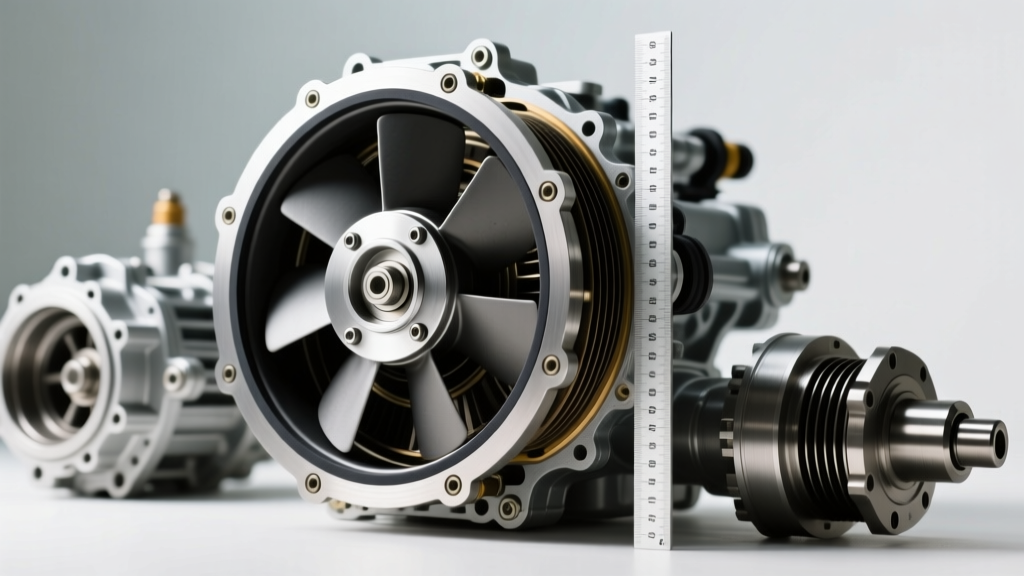
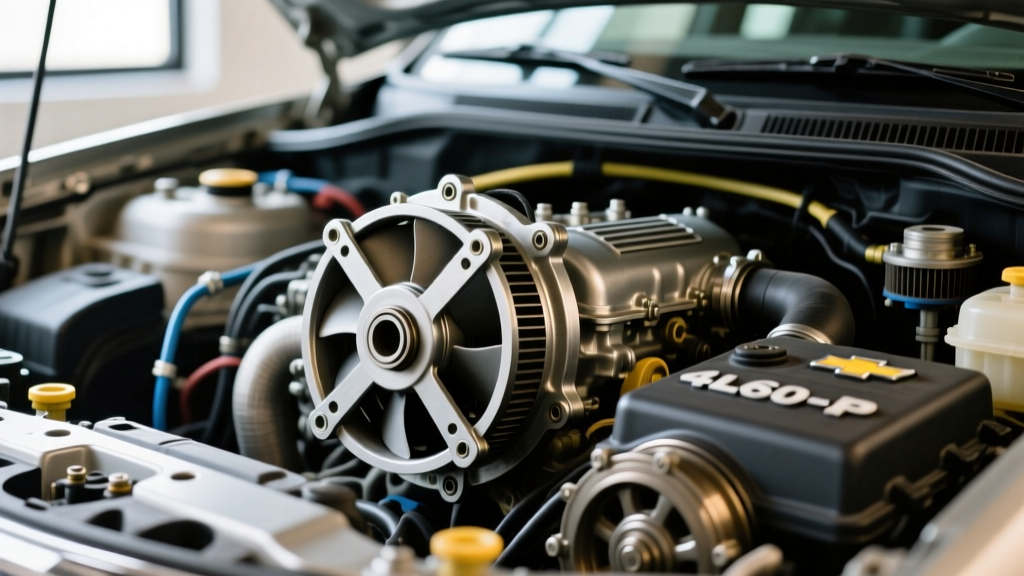
The most common engine in the 2005 Trailblazer is the 4.2L Atlas LL8 inline-6. This engine utilizes a massive mechanical cooling fan driven by a viscous fan clutch. Unlike modern electric PWM fans, the viscous clutch relies on a bimetallic thermostatic coil and a precise volume of silicone shear fluid to modulate fan speed based on radiator inlet temperature.
The Mechanics of Harmonic Resonance
When the internal bearing of the fan clutch degrades, or the silicone fluid loses its shear stability due to two decades of thermal cycling, the fan assembly develops a radial wobble. Because the Trailblazer's engine bay is tightly packaged, this wobble creates a low-frequency harmonic vibration (typically between 25Hz and 45Hz). This vibration travels directly through the water pump shaft, into the engine block, and down into the chassis.
Crucially, the vibration is amplified if the passenger-side hydraulic engine mount (GM Part # 15810367) has collapsed—a near-guarantee on unmaintained 2005 models. When the hydraulic mount fails, the engine rests metal-on-metal on the subframe. The resulting harmonic shake is violently transferred through the firewall and directly into the steel pedal bracket assembly, causing the brake pedal (which drivers often mistakenly refer to as the clutch pedal) to vibrate intensely at idle or low speeds.
The Real "Clutch" Problem: 4L60-E Torque Converter Clutch (TCC) Shudder
If the vibration in your pedal assembly occurs specifically between 40 mph and 55 mph while lightly accelerating or maintaining highway speeds, you are not feeling the fan clutch. You are feeling the Torque Converter Clutch (TCC) inside the 4L60-E transmission slipping and grabbing.
The 4L60-E uses a Pulse Width Modulated (PWM) TCC apply valve to smoothly lock the torque converter, eliminating slippage and improving fuel economy. By 2026, the valve body bore for the TCC apply valve suffers from severe wear due to the constant oscillation of the aluminum valve against the cast aluminum valve body. This wear allows clutch apply fluid to leak past the valve, resulting in rapid, involuntary apply-and-release cycles of the TCC friction material.
Expert Diagnostic Tip: TCC shudder feels exactly like driving over highway rumble strips. If you tap the brake pedal lightly while maintaining speed (which signals the PCM to instantly disengage the TCC) and the vibration immediately vanishes, your 4L60-E torque converter clutch is failing, not your engine fan clutch.
For a deep dive into valve body wear patterns, transmission specialists frequently reference the engineering data provided by Sonnax, which outlines how installing a sleeved TCC PWM valve or a Zip Kit can restore hydraulic integrity without replacing the entire transmission.
Diagnostic Matrix: Isolating the Pedal Vibration Source
To prevent misdiagnosis, use the following matrix to isolate whether your 2005 Trailblazer requires a cooling system repair, a transmission service, or a brake system overhaul.
| Symptom Profile | RPM / Speed Dependency | Stationary vs. Moving | Primary Culprit | Required Action |
|---|---|---|---|---|
| Intense shaking in pedal bracket, accompanied by a "roaring" or "jet engine" noise from the hood. | RPM dependent. Worsens between 1,200 and 1,800 RPM. | Stationary (in Park or Drive at idle). | Viscous Fan Clutch Failure & Collapsed Engine Mount. | Replace Fan Clutch (36mm) & Passenger Mount. |
| Rumble-strip vibration felt through the seat and pedals during light throttle. | Speed dependent. Occurs at 40-55 mph in 3rd or 4th gear. | Moving only. Stops when brake is tapped. | 4L60-E TCC PWM Valve Wear / TCC Shudder. | Valve body repair (Sonnax Zip Kit) & fluid exchange. |
| Pedal slowly sinks to the floor when held down at a stoplight; feels "spongy". | Independent of RPM or Speed. | Stationary or Moving. | Brake Master Cylinder Internal Bypass (often confused for a spongy clutch). | Replace Master Cylinder (GM # 18029932). |
Addressing "Spongy" Pedal Sensations
Because the Trailblazer lacks a manual clutch master cylinder, reports of a "spongy clutch pedal" are universally misidentified brake pedal issues. The 4.2L LL8 engine utilizes a standard vacuum-assisted brake booster. If the brake pedal feels spongy but there are no external fluid leaks at the calipers or ABS module, the internal seals of the brake master cylinder are bypassing fluid. Replacing the master cylinder and performing a thorough bench-bleed is the only remedy. Do not attempt to bleed a "clutch" line on this vehicle, as none exists.
Step-by-Step Fan Clutch Replacement & Torque Specs
If your diagnostic confirms the 05 Chevy Trailblazer fan clutch is the source of the harmonic pedal vibration, replacement requires specific tooling and adherence to torque specifications to prevent water pump damage.
Required Parts and Tools
- Fan Clutch Assembly: ACDelco 2102-322 or Hayden 2722 (Do not use cheap aftermarket knock-offs; they often arrive with unbalanced blades that worsen vibration).
- Tooling: 36mm Fan Clutch Wrench and a Water Pump Pulley Holding Tool (e.g., Lisle 39260).
- Engine Mount: GM Genuine 15810367 (Passenger Side Hydraulic Mount).
Removal and Installation Procedure
- Secure the Pulley: Wrap a serpentine belt holding tool or use the specific water pump pulley holder to prevent the pulley from spinning. The 4.2L Atlas engine uses a standard right-hand thread on the fan clutch nut, unlike some older GM V8s that used reverse threads.
- Break the Nut Free: Use a 36mm open-end wrench or a specialized fan clutch wrench. Strike the wrench sharply with a dead-blow mallet if the nut is seized from two decades of thermal expansion.
- Water Pump Torque Specs: If you are replacing the water pump concurrently (highly recommended at this mileage), the water pump-to-block mounting bolts must be torqued to 11 lb-ft (15 Nm). Over-torquing these small M6 bolts will strip the aluminum block threads, requiring a timesert repair.
- Clearance Check: After installing the new ACDelco fan clutch, spin it by hand to ensure the fan shroud clearance is even. A misaligned shroud will cause airflow turbulence that mimics a failing clutch bearing.
Final Thoughts on GMT360 Drivetrain Diagnostics
Diagnosing pedal issues on the 2005 Chevy Trailblazer requires ignoring the nomenclature of manual transmissions and focusing on the physical realities of the GMT360 chassis. Whether you are battling the infamous harmonic shake of a seized 05 chevy trailblazer fan clutch, mitigating 4L60-E torque converter shudder with upgraded valve body components, or simply replacing a bypassing brake master cylinder, precise identification of the vibration's frequency and trigger conditions will save you hundreds of dollars in misdirected repairs. Always consult the latest technical service bulletins and rely on authoritative transmission engineering resources like Sonnax Industries and ACDelco for OEM-grade replacement data.