The Diagnostic Divide: Legacy Forks vs. Hypercar Hydraulics
When diagnosing manual transmission engagement faults, veteran technicians immediately look for clutch fork and pivot issues. In traditional rear-wheel-drive layouts—ranging from the Tremec T56 to the classic Porsche G50 transaxles—the external clutch fork and hardened steel pivot ball are the primary mechanical linkages between the hydraulic slave cylinder and the throwout bearing. However, as automotive engineering evolved into the hypercar era, these external mechanical linkages were abandoned in favor of internal hydraulic actuation. Nowhere is this evolutionary leap more evident than in the Carrera GT clutch system. For master technicians and high-end restoration shops in 2026, understanding how to translate traditional clutch fork and pivot diagnostic logic into the realm of the Porsche 980 chassis’s Concentric Slave Cylinder (CSC) and Porsche Ceramic Composite Clutch (PCCC) is critical for accurate troubleshooting and avoiding catastrophic financial misdiagnoses.
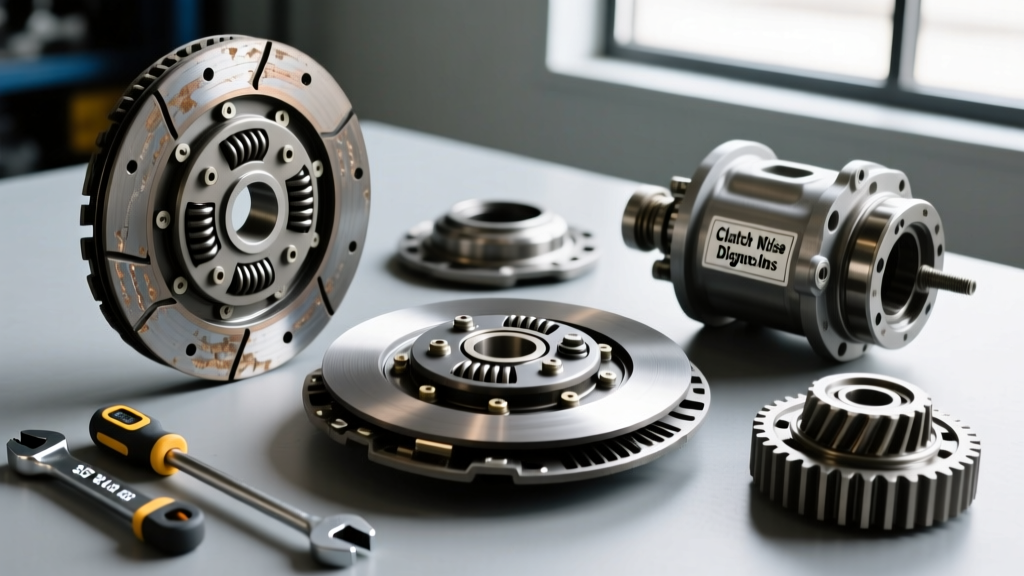
Anatomy of Traditional Clutch Fork and Pivot Issues
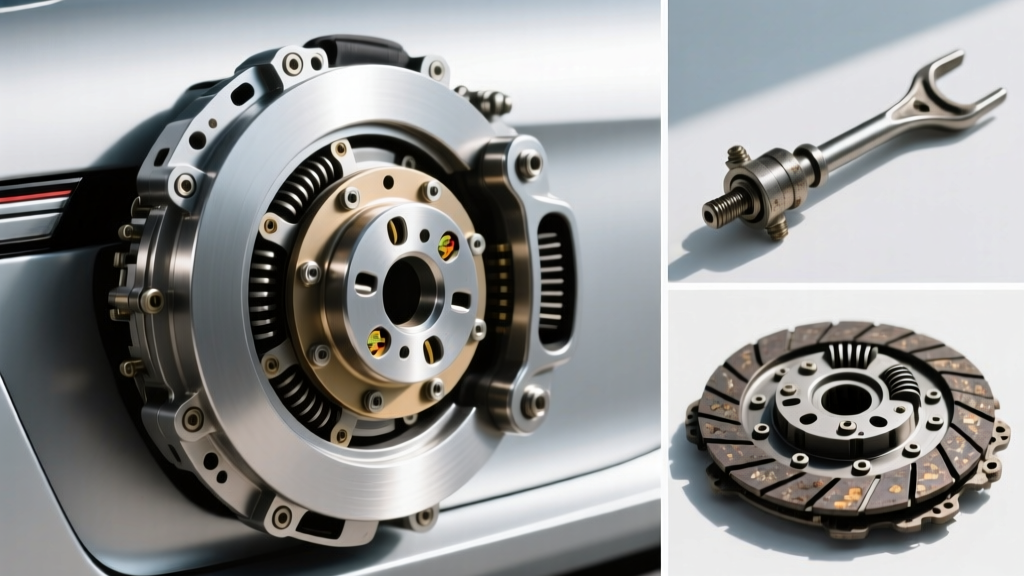
To understand the advanced diagnostics of the Carrera GT, we must first establish the baseline failure modes of traditional clutch fork and pivot assemblies. The clutch fork acts as a lever, pivoting on a hardened steel ball stud pressed or bolted into the bell housing. Over tens of thousands of miles, the constant friction and high clamping loads (often exceeding 2,500 lbs of force at the pressure plate) cause distinct wear patterns.
Common Failure Modes and Symptoms
- Pivot Ball Dish Wear: The fork’s contact point wears a microscopic "dish" into the pivot ball. This alters the fulcrum geometry, reducing the effective travel of the throwout bearing. Symptoms include a high, erratic pedal bite point and incomplete disengagement, leading to gear clash.
- Fork Bending and Torsional Twist: Under extreme clamping loads (common in upgraded aftermarket setups), the stamped steel or cast aluminum fork can slightly twist. This causes the throwout bearing to contact the pressure plate fingers at an angle, resulting in severe clutch chatter during takeoff and a distinct metallic clicking noise at the bell housing.
- Pivot Ball Detachment: In press-fit applications, the pivot ball can slowly work its way out of the bell housing bore. This leads to sudden, catastrophic loss of clutch pedal resistance and immediate disengagement failure.
In legacy systems, a technician can often inspect the pivot ball and fork pad through the inspection cover or slave cylinder port without dropping the transmission. This is not the case with modern internal hydraulic systems.
The Carrera GT Clutch: PCCC and Concentric Slave Dynamics
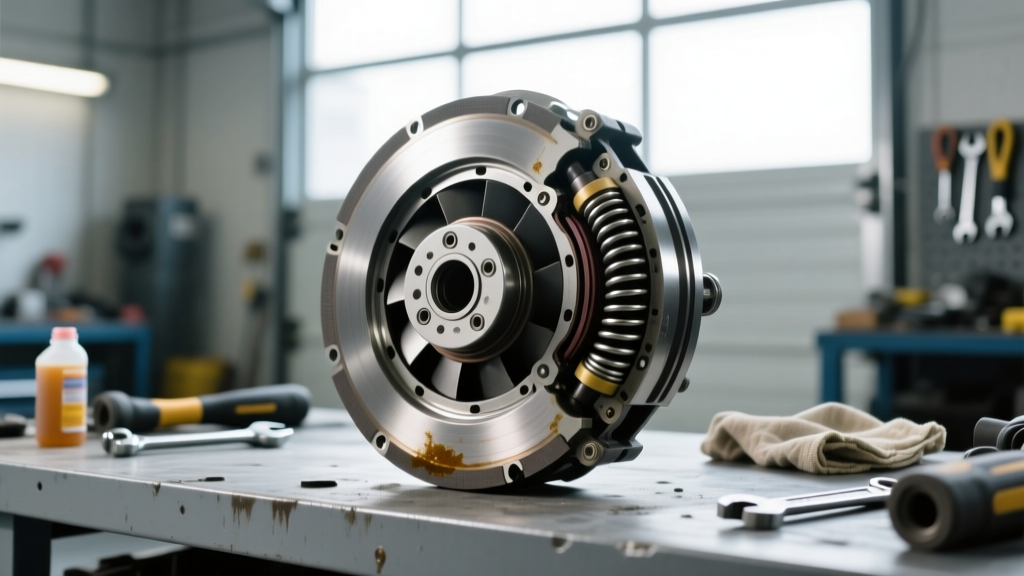
The Porsche Carrera GT (chassis code 980) utilizes a bespoke 5.7-liter V10 producing 612 horsepower, mated to a specialized 6-speed manual transaxle. To handle the immense torque while minimizing rotational mass and polar moment of inertia, Porsche developed the PCCC (Porsche Ceramic Composite Clutch). Unlike a traditional steel friction disc, the PCCC uses a ceramic matrix friction material that is incredibly thin, highly resistant to fade, and significantly lighter.
Crucially, the Carrera GT clutch actuation system completely eliminates the external clutch fork and pivot ball. Instead, it relies on an internal Concentric Slave Cylinder (CSC) that wraps directly around the transmission input shaft. When hydraulic pressure is applied, the CSC pushes the release bearing directly against the pressure plate diaphragm spring. The "pivot" in this system is effectively the internal guide sleeve on the input shaft and the internal bearing race of the CSC itself.
Translating Fork Symptoms to the Carrera GT Platform
When a Carrera GT exhibits symptoms traditionally associated with clutch fork and pivot issues—such as engagement chatter, pedal vibration, or erratic bite points—technicians must pivot their diagnostic framework to internal hydraulic and guide sleeve anomalies. Below is a cross-reference table to help translate legacy symptoms to the 980 platform.
| Traditional Fork/Pivot Symptom | Carrera GT Equivalent Fault | Diagnostic Verification Method |
|---|---|---|
| Clutch chatter on takeoff | Internal CSC bearing failure or PCCC friction surface glazing/contamination. | Inspect pedal feel for notchiness; check for DOT 4 fluid weeping at the bell housing weep hole. |
| Erratic or high bite point | Hydraulic cavitation, air ingress in the CSC, or internal guide sleeve wear. | Perform a 2.0 bar pressure bleed; measure pedal travel via OBDII telemetry or linear potentiometer. |
| Metallic clicking at bell housing | CSC internal return spring fatigue or input shaft guide sleeve scoring. | Stethoscope probing on the transaxle bell housing while an assistant slowly depresses the pedal. |
| Sudden loss of pedal pressure | CSC internal seal blowout or master cylinder pushrod pivot wear at the firewall. | Inspect the pedal box master cylinder pivot pin; check fluid level in the shared DOT 4 reservoir. |
The Danger of Fluid Contamination
One of the most critical differences between a traditional fork setup and the Carrera GT clutch system is the consequence of a seal failure. If a traditional external slave cylinder leaks, the fluid drips harmlessly onto the outside of the bell housing. If the Carrera GT’s internal CSC leaks, Pentosin DOT 4 fluid is sprayed directly onto the porous ceramic matrix of the PCCC. Ceramic composite friction materials act like a sponge for glycol-based brake fluids. Once contaminated, the PCCC cannot be cleaned or resurfaced; it is permanently ruined. A leaking CSC on a 980 chassis almost always mandates a full PCCC replacement.
Expert Service Protocols: Torque, Fluid, and Bleeding
Servicing the Carrera GT clutch actuation system requires strict adherence to Porsche Motorsport engineering specifications. The days of manually pumping the clutch pedal to bleed the system are over; doing so on a 980 chassis will leave air trapped in the CSC and cause irreversible internal seal damage.
Hydraulic Bleeding Best Practices
According to technical discussions on the Rennlist Carrera GT Technical Forum, the hydraulic system must be bled using a regulated pressure bleeder. The pressure must be strictly limited to 2.0 bar (29 psi). Exceeding this pressure can blow out the internal seals of the concentric slave cylinder, leading to immediate failure upon reassembly. The system requires approximately 1.5 liters of Pentosin DOT 4 LV (Low Viscosity) fluid to ensure proper displacement and boiling point resilience.
Critical Torque Specifications
When the transaxle is removed to address internal guide sleeve wear or replace the CSC, precise torque values are non-negotiable to prevent input shaft misalignment, which mimics the chatter of a bent clutch fork:
- Flywheel to Crankshaft (M8 Bolts): 20 Nm + 90-degree angular turn. (Must use new stretch bolts).
- PCCC Pressure Plate to Flywheel: 15 Nm in a star pattern.
- Bell Housing to Engine Block (M10x1.5): 45 Nm.
- Concentric Slave Cylinder to Transaxle Case: 8 Nm (Handle with extreme care; the CSC housing is fragile).
2026 Market Realities: PCCC Replacement Costs
The financial stakes of misdiagnosing a clutch engagement issue on a hypercar are staggering. In 2026, the global supply chain for legacy Porsche Motorsport parts has tightened, driving up the cost of the PCCC assembly (Part Number 980.116.011.00). A brand-new, genuine Porsche Ceramic Composite Clutch assembly now routinely exceeds $14,000 to $16,000 for the parts alone. When factoring in the specialized labor required to safely drop the 980 transaxle, replace the CSC, and perform the proprietary hydraulic bleeding sequence at a Porsche Classic Partner or elite independent specialist, total invoice prices for a clutch replacement range from $22,000 to $28,000.
This is why accurately diagnosing the root cause of chatter or pedal inconsistency is paramount. A technician must rule out master cylinder pivot wear at the firewall and hydraulic cavitation before condemning the internal PCCC and CSC assembly. For comprehensive hydraulic troubleshooting procedures applicable to Porsche platforms, the Pelican Parts Porsche Clutch Hydraulics Guide remains an excellent foundational resource for understanding the master-to-slave fluid dynamics.
Expert Tip: If you have just replaced the Carrera GT clutch and CSC, the PCCC requires a very specific bedding procedure. Unlike traditional organic or Kevlar clutches, the ceramic matrix requires controlled thermal cycling. Perform 10 to 15 moderate engagements from 40 mph down to 15 mph in 3rd gear, allowing 30 seconds of cooling between each. Avoid aggressive, high-RPM drag-racing launches during the first 500 miles, as localized overheating will glaze the ceramic surface and induce permanent chatter.
Conclusion
While the external clutch fork and pivot ball remain a staple of traditional manual transmission diagnostics, the engineering reality of the Carrera GT clutch demands a completely different analytical approach. By understanding how internal guide sleeve wear, CSC seal integrity, and hydraulic cavitation mimic the symptoms of legacy pivot failures, master technicians can accurately diagnose engagement faults, protect the fragile ceramic friction surfaces, and preserve the mechanical soul of one of the greatest analog hypercars ever built.