The Woodward Avenue Torture Test: Why Hydraulics Fail
If you have ever spent a Friday night during the legendary Woodward Dream Cruise navigating the brutal stop-and-go traffic near Clutch Cargo's Pontiac Michigan, you already know the immense thermal and mechanical toll it takes on a manual transmission. While enthusiasts often obsess over clutch disc friction materials and flywheel step dimensions, the hydraulic actuation system is the unsung hero—and most frequent point of failure—in heavy traffic scenarios. A failing hydraulic clutch circuit doesn't just ruin your night at the meet; it can lead to catastrophic transmission damage via incomplete disengagement and forced gear synchronization.
In this 2026 preventive maintenance guide, we bypass generic advice and dive deep into the exact diagnostic protocols, fluid chemistry, and mechanical clearances required to keep your hydraulic clutch system operating flawlessly, whether you are daily driving a modern Mustang MT-82 or rowing gears in a classic GM LS-swapped Pro-Touring build.
Anatomy of the Hydraulic Clutch Circuit
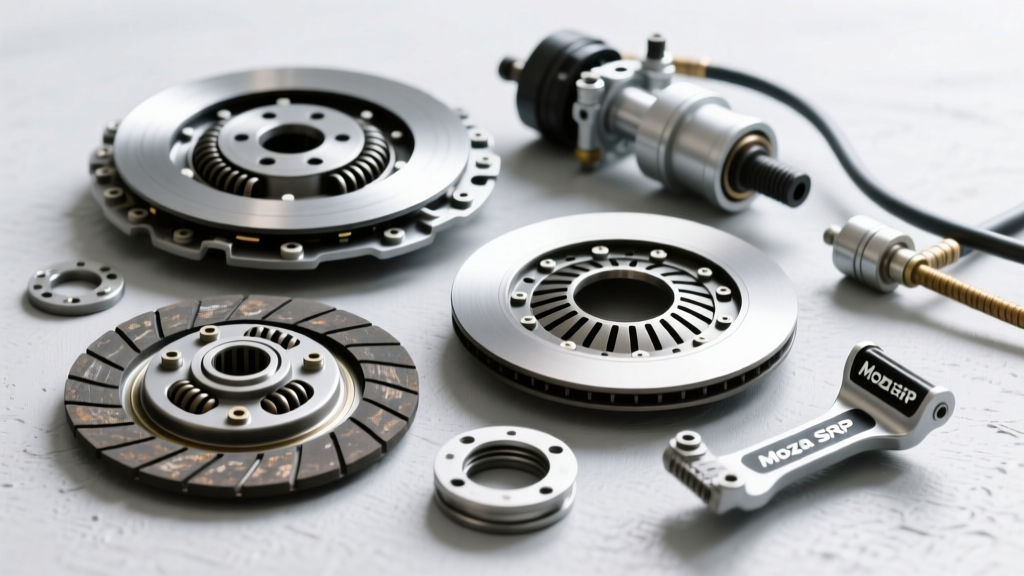
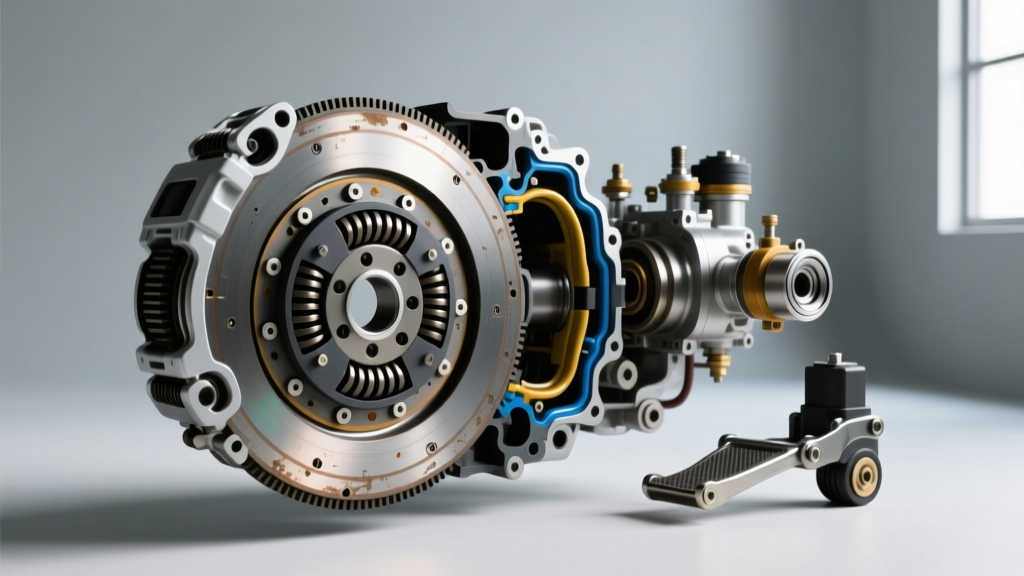
Before diagnosing a fault, you must understand the pressure dynamics of the system. A standard hydraulic clutch operates on a closed-loop, non-compensating (or semi-compensating) circuit consisting of:
- Master Cylinder: Converts mechanical pedal force into hydraulic pressure. Contains a primary cup, return spring, and a critical compensating port that allows fluid expansion and contraction.
- Hard Lines & Flex Hose: Transmits pressure. The flex hose bridges the gap between the chassis-mounted hard line and the transmission-mounted slave cylinder, accommodating engine and drivetrain movement.
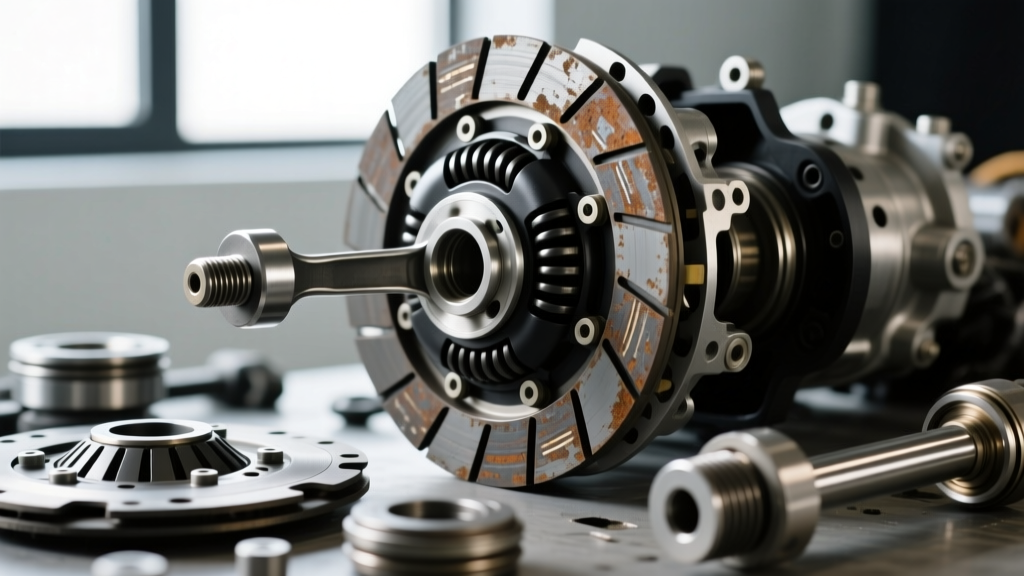
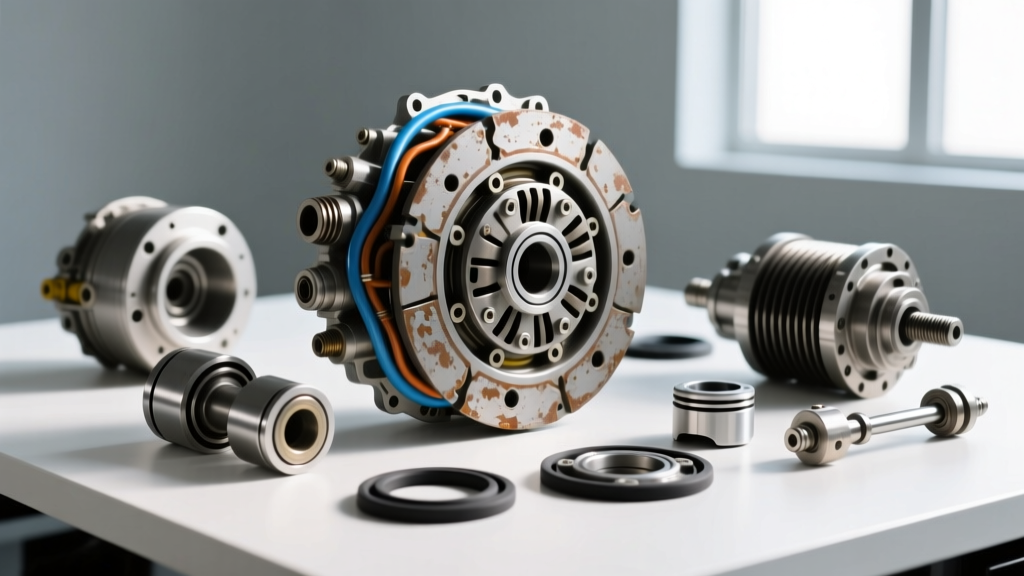
- Slave Cylinder: Converts hydraulic pressure back into mechanical force. Modern vehicles (like those with Tremec T56 Magnum or ZF S6-650 transmissions) frequently use Concentric Slave Cylinders (CSC) that wrap around the transmission input shaft, combining the slave and release bearing into one unit.
Diagnostic Matrix: Symptoms vs. Hydraulic Faults
When troubleshooting clutch engagement issues, pedal feel is your primary data point. Use the following diagnostic matrix to isolate the failure mode before throwing parts at the vehicle.
| Symptom | Probable Hydraulic Fault | Diagnostic Verification Step |
|---|---|---|
| Spongy pedal, low engagement point | Air ingress or hygroscopic fluid boiling | Check reservoir level; perform a pressure bleed. Inspect for micro-leaks at the master cylinder pushrod seal. |
| Pedal sinks to the floor under constant pressure | Internal master cylinder bypass (blown primary cup) | Hold pedal to the floor for 30 seconds. If it slowly drops without external fluid leaks, the master cylinder is internally bypassing. |
| Hard pedal, clutch dragging, difficult gear entry | Blocked compensating port or collapsed flex hose | Crack the bleeder valve at the slave. If fluid ejects under high pressure with the pedal UP, the flex hose is acting as a check valve. |
| Fluid on the bellhousing inspection cover | Concentric Slave Cylinder (CSC) seal failure | Remove inspection cover. If fluid is present, the CSC must be replaced (requires transmission removal). |
Deep Dive: The Collapsing Flex Hose Phenomenon
One of the most misdiagnosed issues in the classic car and restomod community is the collapsing rubber flex hose. Over time, the inner PTFE or synthetic rubber lining of the clutch hose degrades and delaminates. This creates a microscopic 'flap' that acts as a one-way check valve. When you press the clutch pedal, fluid forces its way past the flap to the slave cylinder. However, when you release the pedal, the flap blocks the return flow. This traps hydraulic pressure in the slave cylinder, keeping the clutch partially disengaged (dragging), which will rapidly destroy your synchronizers and clutch disc. According to Hagerty Media's technical archives, replacing the rubber flex hose with a stainless steel braided line is the only permanent cure for this age-related degradation.
Preventive Maintenance: Fluid Chemistry & Flush Protocols
Hydraulic clutch systems share the same fluid as your brakes, but they operate under different thermal stresses. The clutch master cylinder is often mounted near the exhaust manifold or engine block, subjecting the fluid to intense radiant heat. Furthermore, DOT 3 and DOT 4 fluids are highly hygroscopic (they absorb moisture from the atmosphere).
As moisture content increases, the fluid's wet boiling point plummets. When the fluid boils in the slave cylinder due to heat soak from the transmission bellhousing, vapor bubbles form. Because vapor is compressible, your pedal goes straight to the floor.
'In high-heat environments, upgrading from DOT 3 to a high-performance DOT 4 or DOT 5.1 fluid is critical. DOT 5.1 offers the high boiling point of DOT 4 racing fluids but maintains the hygroscopic properties necessary to prevent localized water pooling and internal cylinder corrosion.' — Drivetrain Engineering Standards Summary.
Flush Interval: For street-driven vehicles and weekend cruisers, flush the hydraulic clutch system every 24 months or 30,000 miles. Use a motive power bleeder set to 15-20 PSI to push fresh fluid from the master cylinder down to the slave, ensuring no air is drawn past the slave cylinder bleeder threads.
Precision Wrenching: Torque Specs and Clearances
Proper preventive maintenance requires adherence to exact mechanical specifications. Guessing torque values or clearances leads to premature wear and catastrophic leaks. Reference these baseline specifications for common GM and Ford manual applications:
- Master Cylinder Pushrod Clearance: There must be a 0.1mm to 0.5mm air gap between the master cylinder pushrod and the piston seat. Zero clearance will block the compensating port, leading to system over-pressurization and blown slave cylinder seals.
- Clutch Pedal Free Play: Measure 0.5 to 1.0 inches of free play at the pedal pad before the pushrod engages the master cylinder piston.
- Slave Cylinder Bleeder Valve Torque: 7 to 9 Nm (62 to 80 lb-in). Over-torquing will snap the hardened steel bleeder screw inside the aluminum slave body.
- Hard Line Inverted Flare Fittings (3/16-inch): 10 to 14 lb-ft. Always use a crowfoot wrench to avoid rounding the soft steel nuts.
- Concentric Slave Cylinder (CSC) Mounting Bolts: Typically M6x1.0 bolts, torqued to 8 to 10 Nm (71 to 89 lb-in).
Upgrading for Reliability: Braided Lines & Performance Slaves
If you are building a car to survive the traffic of Woodward Avenue or track days at local Michigan circuits, the OEM rubber lines and plastic-bodied slave cylinders are your weakest links.
- Stainless Steel Braided Lines: OEM rubber hoses expand under pressure, stealing pedal travel and creating a vague, 'mushy' feel. Upgrading to a DOT-compliant braided line (e.g., Russell Performance part #640310 for common GM applications) eliminates hose expansion, delivering a crisp, 1:1 pedal ratio.
- Heavy-Duty Slave Cylinders: For GM T56 and T56 Magnum applications, the OEM plastic concentric slaves are notorious for melting or cracking under high-RPM heat soak. Upgrading to a heavy-duty aftermarket CSC (such as the Sachs SH5071 or LUK LMC134 master/SH5071 slave combo) provides reinforced internal seals and high-temperature PTFE piston rings.
- Adjustable Master Pushrods: When swapping pedals or upgrading masters, an adjustable pushrod (with a jam nut and spherical rod end) allows you to dial in the exact 0.2mm air gap required to protect your compensating port while maximizing stroke volume.
Final Thoughts for the 2026 Cruise Season
A hydraulic clutch system is a precise, pressure-dependent circuit that demands respect. By understanding the fluid dynamics, monitoring for the subtle signs of internal bypass or hose delamination, and adhering to strict torque and clearance specifications, you can ensure your drivetrain survives the worst traffic conditions. For deeper dives into OEM fluid specifications and brake/clutch system standards, refer to the SAE International J1703/J1704 standards documentation or consult TREMEC's official drivetrain installation guides. Keep your hydraulics bled, your clearances checked, and we will see you on the road.