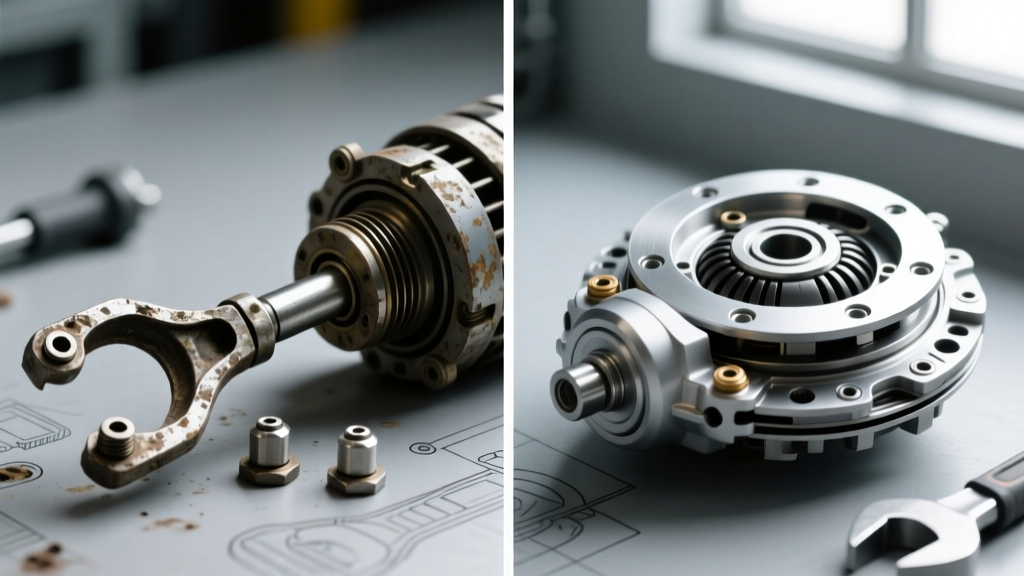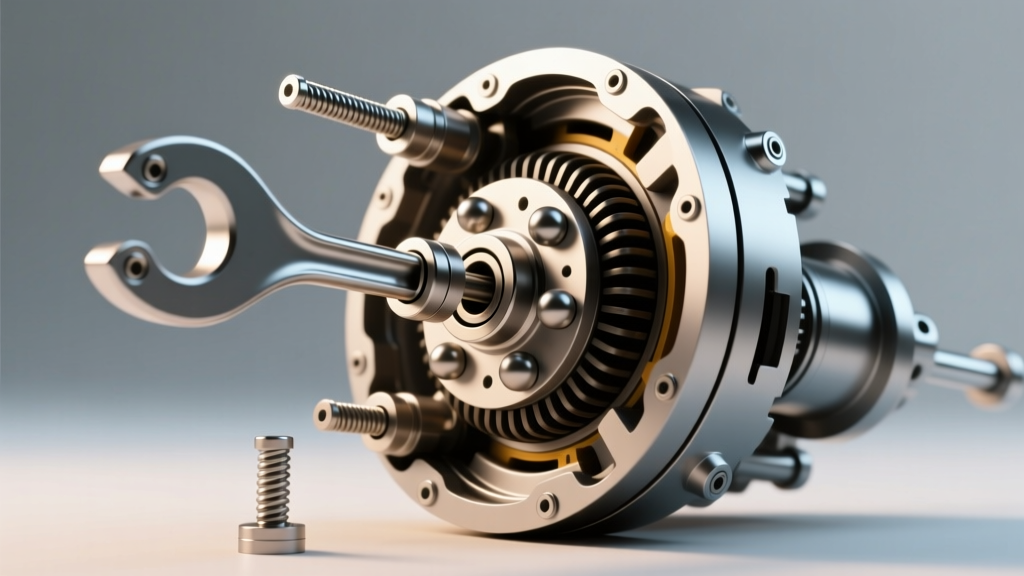
The Mechanical Bottleneck in Modern Hydraulic Swaps
As of 2026, hydraulic clutch conversions remain the gold standard for high-horsepower manual swaps, heavy-duty truck builds, and dedicated track cars. While the HydraMax hydraulic clutch system—specifically their robust external slave cylinder configurations—delivers consistent pedal feel, eliminates cable stretch, and handles extreme line pressures, a critical vulnerability remains. The weak link in an otherwise flawless hydraulic system is almost always the mechanical clutch fork and the pivot ball.
Many builders mistakenly believe that upgrading to a premium hydraulic slave cylinder solves all actuation issues. However, when an external hydraulic slave pushes a stamped-steel or cast-iron clutch fork against a hardened steel pivot ball, immense lateral and rotational shear forces are introduced. Modern twin-disc clutches, such as the McLeod RST or Street Twin, can exert over 2,400 lbs of clamping force. This translates to roughly 450 to 600 lbs of reactive force directly on the clutch fork pivot. In this expert guide, we break down the exact failure modes of clutch forks and pivot balls in hydraulic setups, providing actionable diagnostics and upgrade paths.
Diagnostic Matrix: Identifying Fork and Pivot Failures
Before tearing into the bellhousing, it is crucial to accurately map your symptoms to their mechanical root causes. The following diagnostic matrix outlines the most common HydraMax external slave and fork-related issues.
| Symptom | Root Cause | Diagnostic Check & Measurement |
|---|---|---|
| Inconsistent engagement point / Pedal drop | Pivot ball migration or backing out | Measure fork pivot point variance; check for 1/16' play at the fork pad. |
| High-frequency squeaking at half-pedal | Dry pivot ball, worn fork dimple, or lack of lubrication | Visual inspection via bellhousing inspection cover or borescope. |
| Slave cylinder pushrod bending or binding | Misaligned fork geometry or incorrect pushrod angle | Check pushrod angle at mid-stroke; verify it is within 2 degrees of 90°. |
| Incomplete disengagement (gear crunch) | Stamped-steel fork flexing under hydraulic pressure | Measure total fork travel at the throwout bearing pad; should exceed 0.550'. |
Deep Dive: The Pivot Ball Wear Epidemic
The pivot ball is typically threaded directly into the bellhousing or the front bearing retainer of transmissions like the Tremec T-56 Magnum or the newer TKX. In a hydraulic system, the slave cylinder applies immediate, unyielding pressure. Unlike a mechanical cable that might 'give' slightly, hydraulic fluid does not compress. If the pivot ball is worn, or worse, if it has migrated out of its threaded hole, the entire geometry of the clutch actuation shifts.
Torque Specs and Thread Migration
A shockingly common issue in the field is pivot balls that were installed without proper threadlocker or torque. According to the Tremec T-56 Magnum Installation Guide, the pivot ball must be torqued to exact specifications to prevent migration. For most standard 1/2'-13 or 5/8'-11 pivot balls, the target torque is 25 to 35 lb-ft, secured with high-strength threadlocker (such as Loctite 272). If the pivot ball backs out by even 0.050 inches, the throwout bearing will ride at an incorrect angle on the pressure plate fingers, leading to catastrophic finger wear and premature throwout bearing failure.
The Dimple and Pad Wear Pattern
The interface between the clutch fork and the pivot ball relies on a machined dimple or a replaceable bronze/nylon pad. Under the 400+ lb lateral load of a hydraulic slave, standard steel-on-steel contact points will gall and wear rapidly. If you inspect the fork dimple and find it has elongated into an oval shape, the fork is effectively 'shortening' the travel distance, robbing your HydraMax slave cylinder of the stroke needed to fully disengage the clutch.
Pushrod Geometry: The HydraMax Sweet Spot
When utilizing a HydraMax external slave cylinder, the pushrod geometry is paramount. The pushrod must strike the clutch fork pad at a precise 90-degree angle at the exact mid-point of the clutch pedal travel.
If the pushrod is angled upward or downward at rest, the hydraulic force will introduce a severe lateral side-load. This side-load will bend 5/16' or 3/8' pushrods, destroy the internal seals of the HydraMax slave cylinder, and accelerate wear on the fork pad. Expert builders utilize adjustable pushrods with integrated Heim joints to dial in this geometry. You must maintain exactly 0.050' to 0.080' of free-play between the pushrod and the fork pad at rest to ensure the throwout bearing is not preloaded against the pressure plate fingers, which would cause the bearing to spin continuously and overheat.
Expert Upgrade Path: Eliminating the Weak Links
If you are diagnosing persistent fork and pivot issues, or if you are building a high-torque application (800+ lb-ft) using a hydraulic external slave, standard OEM replacement parts will not suffice. Implement the following upgrades to bulletproof your actuation system:
- Spherical Pivot Bearings ($120 - $180): Replace the standard steel ball with a self-aligning spherical pivot bearing (such as those offered by Tilton Engineering or McLeod). This replaces the high-friction point-load with a smooth, self-aligning rotational surface, virtually eliminating squeaking and galling. As noted in Tilton Engineering's Hydraulic Clutch Tech, spherical bearings are mandatory for endurance racing and high-clamp-load street applications.
- Chromoly or Forged Aluminum Clutch Forks ($150 - $280): Discard stamped-steel forks. A forged chromoly fork resists flexing under the immense hydraulic pressure of a 3/4' bore master cylinder, ensuring that 100% of the slave cylinder's stroke is translated to the throwout bearing.
- Adjustable Pivot Balls ($60 - $95): If your bellhousing depth varies slightly due to block decking or aftermarket bellhousings, an adjustable pivot ball allows you to dial in the exact fork position, ensuring the throwout bearing maintains the proper 1/8' air gap to the pressure plate fingers.
- Heavy-Duty Pushrods with Spherical Rod Ends ($45 - $75): Upgrade to a 7/16' chromoly pushrod with heat-treated spherical rod ends to eliminate lateral binding and ensure pure axial force transfer.
Bleeding the System Post-Fork Service
Once the fork, pivot, and pushrod geometry are corrected, the HydraMax hydraulic system must be bled properly. Air trapped in the system will mimic the symptoms of a worn pivot ball (spongy pedal, inconsistent engagement). Because the external slave cylinder is often mounted lower than the master cylinder, gravity bleeding is rarely sufficient.
Best practice dictates using a pressure bleeder set to 15 to 20 PSI. Cycle the pedal slowly through 50 full strokes while monitoring the fluid for micro-bubbles. For further insights on hydraulic line routing and master cylinder sizing to match your slave cylinder volume, refer to the McLeod Racing Clutch Installation Tips documentation. Proper fluid selection is also critical; always use high-quality DOT 3 or DOT 4 synthetic fluid, and never mix in DOT 5 silicone fluid, which will destroy the internal EPDM seals of the HydraMax slave cylinder.
Conclusion
A HydraMax hydraulic clutch system is only as reliable as the mechanical components it actuates. By understanding the extreme forces exerted on the clutch fork and pivot ball, adhering to strict torque specifications, and upgrading to spherical bearings and forged forks, you can transform a problematic, squeaking manual swap into a buttery-smooth, race-proven drivetrain. Never let a $15 piece of stamped steel compromise a $2,000 hydraulic clutch investment.