The Architecture of Hybrid Torque Converters vs. Traditional
When diagnosing drivetrain shudder, slip, or noise in a hybrid vehicle, it is critical to understand that the component serving the function of a torque converter in modern hybrid architectures is fundamentally different from the fluid couplings found in legacy automatic transmissions. As of 2026, the proliferation of Dedicated Hybrid Transmissions (DHTs) and P2 hybrid architectures has completely rewritten the rules of drivetrain diagnostics.
In traditional automatics (like the GM 6L80 or Ford 6R80), the torque converter utilizes a fluid coupling, a stator, and a relatively simple Torque Converter Clutch (TCC) piston to manage engine torque multiplication and lockup. However, hybrid powertrains handle torque handoffs differently:
- Toyota Hybrid Synergy Drive (e.g., P710/P810 Transaxles): These systems eliminate the fluid torque converter entirely. Instead, they use a highly specialized mechanical torsional damper assembly that connects the Internal Combustion Engine (ICE) to the planetary gearset and Motor-Generator 1 (MG1).
- Ford 6F35 Hybrid & GM 8L90 eAssist: These applications do utilize a fluid coupling, but the lockup clutch features advanced multi-stage Centrifugal Pendulum Absorbers (CPAs) and specialized carbon-woven friction materials designed to handle the immediate, violent torque spikes generated during electric motor assist and regenerative braking.
Because of these architectural differences, the diagnostic approach—and the viability of traditional repair methods—must be adjusted accordingly.
Top 4 Symptoms of a Failing Hybrid Torque Converter or Damper
Hybrid torque converters and torsional dampers fail in unique ways due to the extreme torsional vibrations they must absorb during the transition between electric and gas power. Look for these primary symptoms:
1. EV-to-ICE Transition Shudder
The most common complaint in aging hybrids is a violent shudder or "clunk" exactly when the vehicle transitions from pure EV mode to ICE power. When the ICE fires, MG1 must spin the engine up to match the RPM of the drivetrain in milliseconds. If the torsional damper springs inside the hybrid torque converter assembly have fatigued, or if the CPA springs have collapsed, the drivetrain cannot absorb this 300+ ft-lb torque spike, resulting in a severe shudder felt through the chassis.
2. High-Frequency TCC Slip Codes (P0741 / P0744)
In fluid-coupled hybrids like the Ford Escape Hybrid (6F35), the Transmission Control Module (TCM) commands micro-slip TCC apply to maintain fuel economy while dampening engine pulses. A failing TCC piston seal or glazed hybrid-specific friction material will cause the actual RPM to deviate from the commanded RPM by more than 100-150 RPM, triggering P0741 (TCC Stuck Off) or P0744 (TCC Intermittent Slip). Unlike traditional vehicles, hybrid TCC slip often triggers a fail-safe that disables regenerative braking to protect the planetary gearset.
3. Rattling at Idle or Low RPM (CPA Failure)
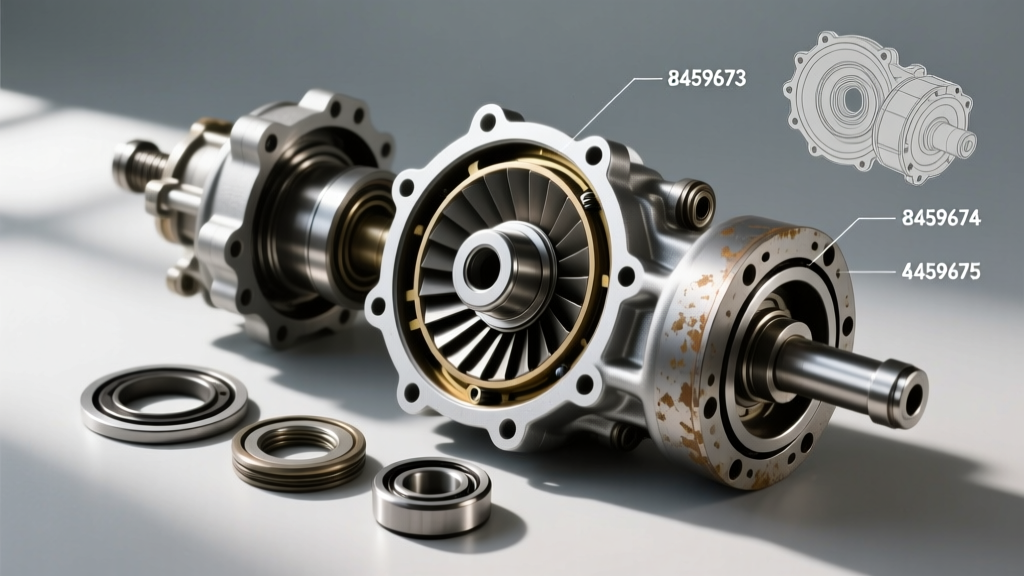
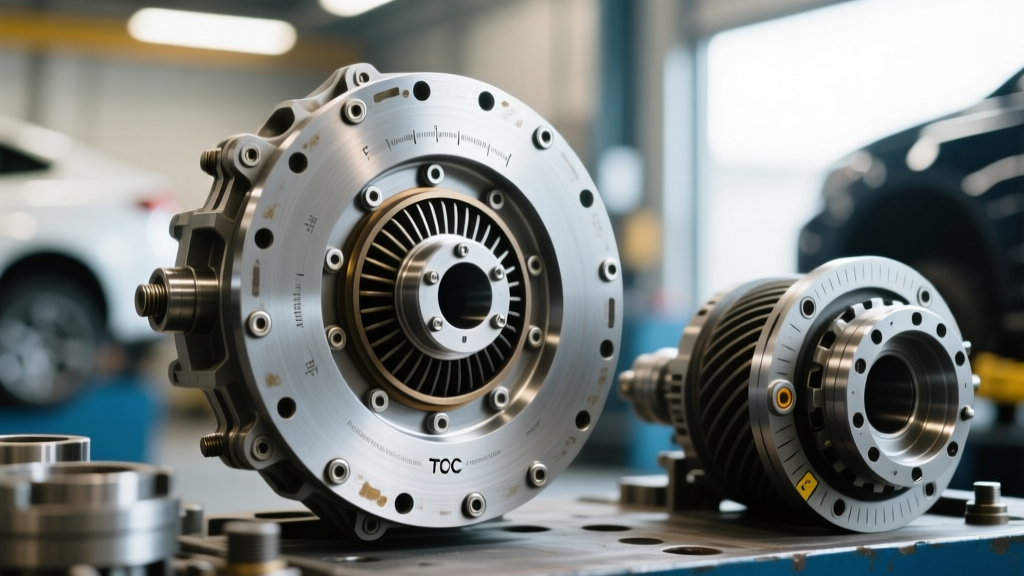
Centrifugal Pendulum Absorbers (CPAs) are tuned mass dampers built into the torque converter cover to cancel out specific engine firing frequencies. If the internal pendulum pins wear out or the springs fracture, you will hear a distinct metallic rattling or "marbles in a can" noise at idle or during low-speed deceleration. This is a definitive mechanical failure of the TC cover assembly.
4. Degraded Regenerative Braking Feel
During heavy regenerative braking, the torque converter lockup clutch must modulate perfectly to transfer negative torque from the wheels back to the motor-generator. If the TCC apply pressure is bleeding past a worn piston O-ring, the ECU will detect the slip and artificially limit regen capacity, resulting in a sudden, jarring transition to the physical friction brakes.
The "Torque Converter Rebuild Kit" Myth for Hybrids
When facing these symptoms, many DIY mechanics and general repair shops instinctively search for a torque converter rebuild kit, assuming they can slice the casing open on a lathe, swap the friction paper, and weld it shut. In the hybrid segment, this approach is a recipe for catastrophic drivetrain failure and wasted capital.
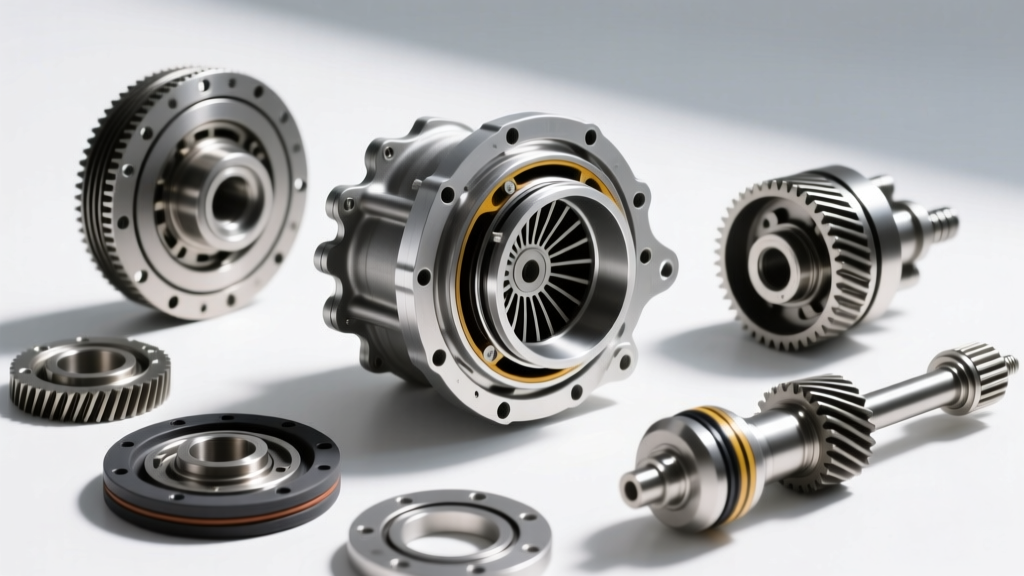
Standard rebuild kits (typically costing $45 to $120 from aftermarket suppliers) contain standard bumpers, O-rings, stator supports, and basic cellulose or Kevlar friction discs. These are entirely useless for hybrid applications for three critical reasons:
- CPA Tuning: Hybrid TCs contain precision-tuned pendulum weights. A generic kit does not include the mathematically tuned CPA springs required to match the specific firing frequency of the hybrid's Atkinson-cycle engine.
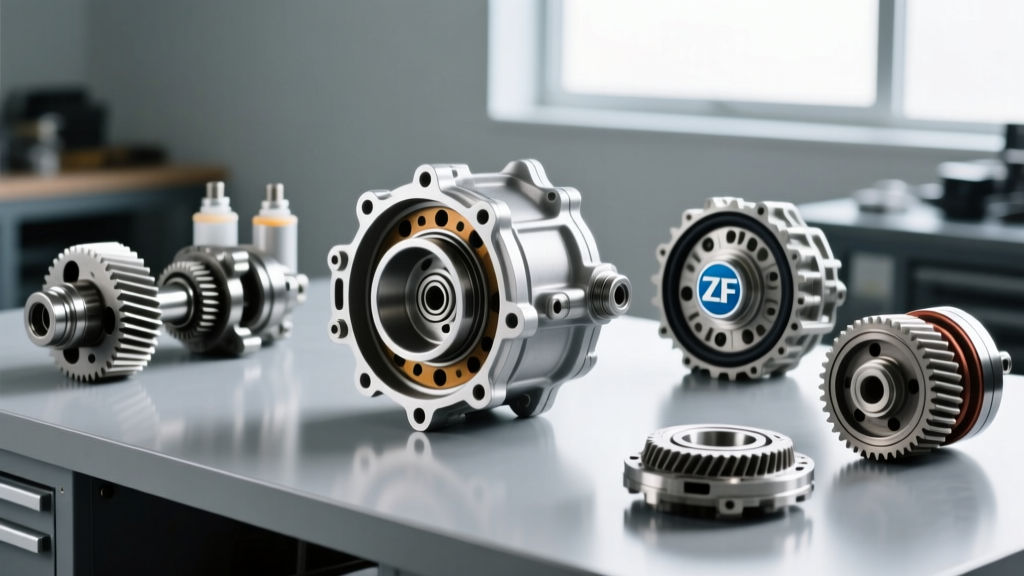
- Integrated Motor Rotors: In many P2 hybrid setups, the torque converter cover serves as the mounting point or housing for the electric motor-generator rotor. Cutting this open requires specialized CNC lathes and vacuum testing equipment that 99% of local shops do not possess.
- Dynamic Balancing: While a standard 4L60E torque converter requires balancing to roughly 15-20 gram-cm, hybrid motor-integrated assemblies require dynamic balancing to within 2 to 5 gram-cm. Any imbalance will destroy the motor-generator bearings within 5,000 miles.
According to Sonnax Technical Resources, the complexity of modern multi-stage dampers means that localized cut-and-weld rebuilding is being rapidly phased out in favor of unit replacement or specialized OEM-level remanufacturing.
Diagnostic Protocol: Verifying the Failure
Before condemning the torque converter or damper assembly, you must isolate the hydraulic and electrical circuits. Follow this 2026-standard diagnostic protocol:
Step 1: PicoScope Transmission Pressure Test
Hook up a high-resolution pressure transducer to the TCC apply port. Command a TCC micro-slip via your bidirectional scan tool. If the commanded pressure is 120 PSI but the transducer reads a pulsing 85-95 PSI, you have a mechanical leak inside the torque converter (likely a blown TCC piston seal or warped apply plate). If the pressure holds steady at 120 PSI but the RPM still fluctuates, the friction material inside the TC is glazed or the damper springs are bottoming out.
Step 2: Solenoid vs. Mechanical Isolation
Hybrid TCC PWM solenoids operate at much higher frequencies than traditional solenoids to manage the micro-slip. Use an oscilloscope to verify the solenoid duty cycle. A degraded solenoid spool can mimic a failing torque converter. Always verify solenoid resistance and PWM waveforms before pulling the transaxle.
Serviceability: Traditional vs. Hybrid TC Components
| Feature | Traditional TC (e.g., 6L80, 6R80) | Hybrid TC / Torsional Damper (e.g., P710, 6F35 Hybrid) |
|---|---|---|
| Rebuild Viability | High (Cut, clean, replace kit, weld) | Extremely Low (Unit replacement or specialized reman) |
| Damper Type | Standard coil springs / Single-stage | Multi-stage with Centrifugal Pendulum Absorbers (CPA) |
| Balancing Tolerance | 15 - 20 gram-cm | < 5 gram-cm (Motor-integrated) |
| Friction Material | Standard Woven Carbon / Kevlar | Specialized High-Temp Micro-Slip Carbon Matrix |
| Fluid Requirement | Standard ATF (e.g., Dexron VI, Mercon LV) | Ultra-Low Viscosity (e.g., Toyota WS, Mercon ULV) |
Cost Breakdown: Rebuild vs. Replace in 2026
Because a generic torque converter rebuild kit is not a viable solution for hybrid vehicles, shops and consumers must rely on OEM or certified remanufactured assemblies. The Automatic Transmission Rebuilders Association (ATRA) consistently advises against local welding of hybrid dampers due to the risk of altering the heat-treat of the CPA components and misaligning the motor-generator stator.
Real-World Pricing Examples
- Toyota P710/P810 Torsional Damper Assembly: The OEM damper assembly (often mislabeled as a TC by parts counters) typically retails between $1,400 and $1,900. Labor requires transaxle removal (6.5 - 8.5 hours), bringing the total shop replacement cost to roughly $2,800 - $3,500.
- Ford 6F35 Hybrid Torque Converter: A certified remanufactured hybrid TC with updated CPA springs and micro-slip clutch packs costs between $900 and $1,300. Always pair this with a complete flush using Motorcraft MERCON ULV fluid, as standard MERCON LV will cause immediate TCC shudder due to incorrect friction modifiers.
- GM eAssist / P2 Hybrid Assemblies: Because these often integrate the electric motor rotor directly into the converter housing, expect OEM replacement costs to exceed $2,500 for the part alone.
For further diagnostic data on hybrid-specific friction materials and hydraulic schematics, technicians should consult Raybestos Powertrain's technical library to ensure they are ordering the correct OEM-equivalent replacement assembly rather than wasting time searching for non-existent rebuild kits.
Final Diagnostic Takeaway
If you are diagnosing a hybrid vehicle with EV-to-ICE shudder, TCC slip codes, or low-RPM rattling, abandon the idea of a DIY rebuild. The integration of motor-generators, ultra-precise CPA dampers, and micro-slip friction materials means the torque converter must be treated as a sealed, precision-balanced module. Proper diagnosis requires high-speed pressure transducers and oscilloscopes, and the repair requires a certified replacement assembly matched exactly to your transaxle's specific software calibration.