The True 2012 Toyota Camry Torque Converter Replacement Cost
When diagnosing torque converter clutch (TCC) shudder, lockup slip, or internal stator failure in the seventh-generation Camry, the 2012 Toyota Camry torque converter replacement cost is the primary metric driving consumer and technician decisions. However, viewing this repair strictly through a financial lens ignores the mechanical reality of the drivetrain. The actual cost of this service is entirely dictated by the precision of the torque converter bolt pattern, flexplate mating surface, and oil pump engagement. A mismatched bolt circle or improper preload gap will not only destroy the newly installed unit but will also shatter the transmission oil pump, effectively doubling the repair invoice.
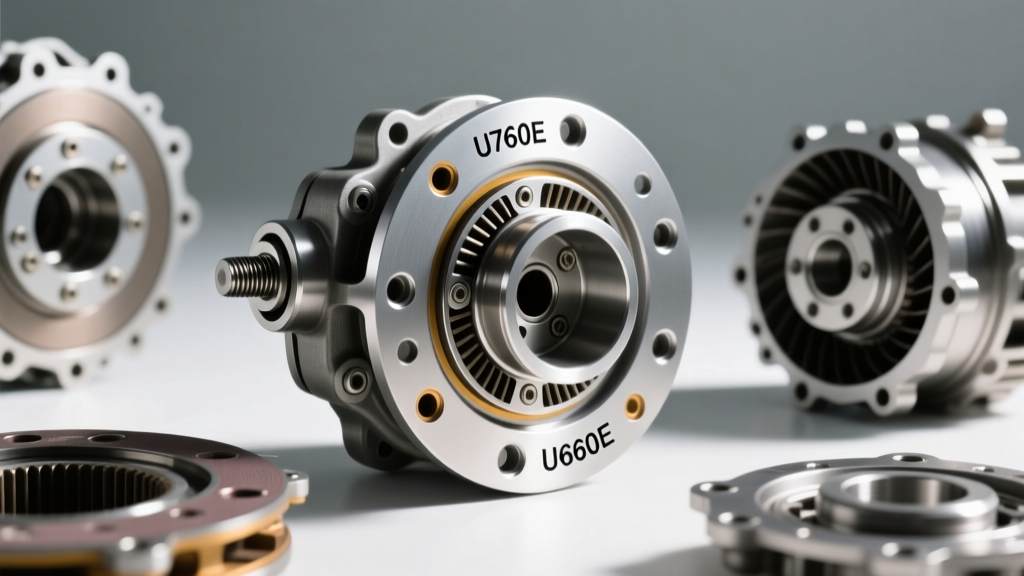
In 2026, with the automotive aftermarket flooded with varying grades of remanufactured and new torque converters, understanding the exact fitment parameters of the Toyota U760E (4-cylinder) and U660E (V6) transaxles is critical. This technical deep-dive explores the precise bolt patterns, fastener protocols, and dimensional tolerances required to execute this repair correctly the first time.
Baseline Pricing vs. Fitment-Induced Catastrophic Costs
Before dissecting the bolt patterns, we must establish the financial baseline for a 2012 Camry torque converter replacement. The labor to remove and reinstall the transaxle typically ranges from 6.0 to 7.5 hours. When combined with parts and OEM fluids, the standard pricing matrix looks like this:
- OEM Torque Converter (U760E 2.5L): $750 - $890 (Part #32000-39015 or updated supersessions)
- OEM Torque Converter (U660E 3.5L V6): $850 - $1,050 (Part #32000-39045)
- Aftermarket/Remanufactured Units: $350 - $550
- Labor (Average $150/hr): $900 - $1,125
- Toyota ATF WS Fluid & Seal Kit: $85 - $120
The baseline 2012 Toyota Camry torque converter replacement cost sits between $1,400 and $2,200. However, if a technician forces the transaxle to the engine block without verifying that the torque converter is fully seated on the oil pump drive gear, the resulting hydraulic pump casing fracture will add $1,200 to $1,800 in internal hard parts and machine shop labor. Proper bolt pattern alignment and pull-out measurement are your only defenses against this catastrophic failure mode.
U760E and U660E Bolt Pattern & Flexplate Specifications
The 2012 Camry utilizes two distinct powertrain configurations, each requiring a specific flexplate-to-torque converter mating interface. The bolt pattern is not universal, and attempting to adapt a V6 torque converter to a 4-cylinder flexplate (or vice versa) will result in severe harmonic imbalance and immediate fastener shearing.
| Specification | 2.5L 2AR-FE (U760E Transaxle) | 3.5L 2GR-FE (U660E Transaxle) |
|---|---|---|
| Flexplate Pad Count | 4-Pad Configuration | 3-Pad / 4-Pad (Model Dependent) |
| Bolt Circle Diameter | Approx. 240mm | Approx. 255mm |
| Fastener Thread Pitch | M8 x 1.25mm | M10 x 1.25mm |
| OEM Torque Spec | 35 lb-ft (47 Nm) | 41 lb-ft (55 Nm) |
| Pilot Hub Diameter | Specific to 2AR-FE Crank Bore | Specific to 2GR-FE Crank Bore |
According to the Toyota Technical Information System (TIS), the fastener stretch and clamping load on these specific M8 and M10 bolts are calibrated to handle the torsional vibrations generated by the TCC lockup apply cycles. Using incorrect hardware or failing to apply the proper threadlocking compound will lead to bolt elongation, resulting in a distinct knocking noise at idle that mimics rod knock.
Critical Fitment Metrics: Pilot Hub, Pull-Out, and Pump Engagement
The most common cause of premature torque converter failure post-installation is improper engagement with the transmission oil pump. The torque converter hub features two distinct flat spots (drive tangs) that must slot perfectly into the inner gear of the transaxle's mechanical oil pump. Furthermore, the pilot hub—the machined snout at the very center of the converter—must slide smoothly into the engine crankshaft pilot bore to support the rotating mass and maintain concentricity.
The 'Three-Pull' Seating Protocol
When mating the U760E or U660E transaxle to the torque converter on the bench, technicians must verify full seating using the industry-standard 'three-pull' method. As you slide the torque converter onto the transaxle input shaft, you must feel three distinct drops or 'clunks':
- First Drop: The turbine splines engage the transaxle input shaft.
- Second Drop: The stator support shaft engages the stator one-way clutch assembly.
- Third Drop: The drive tangs on the converter hub fully seat into the oil pump inner gear.
If the third drop is not felt, the converter is hanging on the input shaft. If the bellhousing bolts are tightened in this state, the converter will be pulled forward, violently extracting the oil pump gear from its housing and cracking the aluminum pump stator. As noted in Sonnax technical resources, pump gear shearing is the leading cause of immediate 'no-move' conditions following a torque converter swap.
Measuring the Preload Gap
Once the transaxle is bolted to the engine block, you must measure the gap between the torque converter mounting pad and the flexplate surface before installing the flexplate-to-converter bolts. Using a straight edge and a feeler gauge or caliper, measure the pull-out distance. For the 2012 Camry U760E and U660E, the ideal gap is between 1/16-inch (1.5mm) and 1/8-inch (3.0mm).
If the gap is zero, the torque converter is bottomed out against the flexplate, meaning it is not fully seated on the oil pump. If the gap exceeds 3/16-inch (4.5mm), the converter pilot hub may not be fully engaged in the crankshaft bore, risking severe vibration and crankshaft seal damage. Always verify this measurement before drawing the flexplate to the converter pads with the M8/M10 bolts.
Flexplate Runout and Harmonic Balancing
A frequently overlooked variable in the 2012 Toyota Camry torque converter replacement cost equation is the condition of the flexplate itself. The flexplate acts as a dampening membrane between the engine's combustion pulses and the transmission's hydraulic load. Over time, the 2AR-FE and 2GR-FE flexplates can develop micro-fractures around the crankshaft mounting bolt circle or exhibit excessive lateral runout.
Before installing the new torque converter, mount a magnetic dial indicator to the engine block and measure the lateral runout of the flexplate mating pads. Maximum allowable runout is typically 0.020 inches (0.5mm). If the runout exceeds this specification, the torque converter will be subjected to cyclical bending loads every time the engine rotates. This leads to premature failure of the internal lockup clutch friction material and eventual hub fracture. Replacing a warped flexplate adds roughly $120 to $180 in parts to the total repair cost but is mandatory to protect the warranty on the new torque converter.
Fastener Protocols and Threadlocker Application
The bolts securing the flexplate to the torque converter are subjected to immense shear stress, particularly during the aggressive TCC lockup events characteristic of the U760E's fuel-saving programming. Toyota mandates strict fastener protocols for this interface:
- Clean all threads: Use a dedicated brake cleaner or aerosol solvent to remove all oil, grease, and factory wax from both the flexplate threaded holes and the bolt threads. Oil contamination will result in inaccurate torque readings due to hydraulic lock in the blind holes.
- Threadlocker Application: Apply a medium-strength, removable threadlocker (such as Loctite 243 or equivalent blue threadlocker) to the first three threads of the bolt. Do not use high-strength (red) threadlocker, as it requires extreme heat for removal and will complicate future drivetrain services.
- Torque Sequence: Tighten the bolts in a star or crisscross pattern to ensure the converter pad is drawn evenly against the flexplate. For the M8 bolts on the 2.5L U760E, the final torque is 35 lb-ft (47 Nm). For the M10 bolts on the V6 U660E, the final torque is 41 lb-ft (55 Nm).
Fluid Capacity and TCC Shudder Prevention
Post-installation, the transaxle must be filled with the correct fluid to ensure the torque converter clutch applies smoothly. The 2012 Camry requires Toyota Genuine ATF WS (World Standard). This is a low-viscosity, highly specialized synthetic fluid designed specifically for the slip-controlled lockup clutches found in the U760E and U660E transaxles.
Using generic 'multi-vehicle' ATF can alter the friction coefficient of the TCC lining, resulting in the exact shudder symptoms that prompted the replacement in the first place. The total dry fill capacity of the U760E is approximately 6.5 quarts (6.2 liters), but a standard torque converter replacement and cooler line drain will require roughly 3.5 to 4.5 quarts. Always verify the fluid level using the transaxle's overflow plug procedure with the fluid temperature strictly between 104°F and 113°F (40°C - 45°C), as monitored via an OBD2 bidirectional scan tool.
Summary: Protecting Your Drivetrain Investment
Ultimately, managing the 2012 Toyota Camry torque converter replacement cost requires a shift in focus from simple parts-swapping to precision mechanical fitment. By verifying the U760E or U660E bolt pattern, adhering to the three-pull pump engagement rule, measuring the critical preload gap, and torqueing the flexplate fasteners to exact OEM specifications, technicians and DIYers can ensure a lasting repair. For further reading on automatic transmission hydraulic pump preservation and torque converter dynamics, industry professionals frequently consult Transmission Digest for ongoing case studies and failure analysis reports. Treat the bolt pattern and fitment metrics with the same reverence as the internal friction components, and the transaxle will deliver reliable service for another 150,000 miles.