The Great Drivetrain Misconception
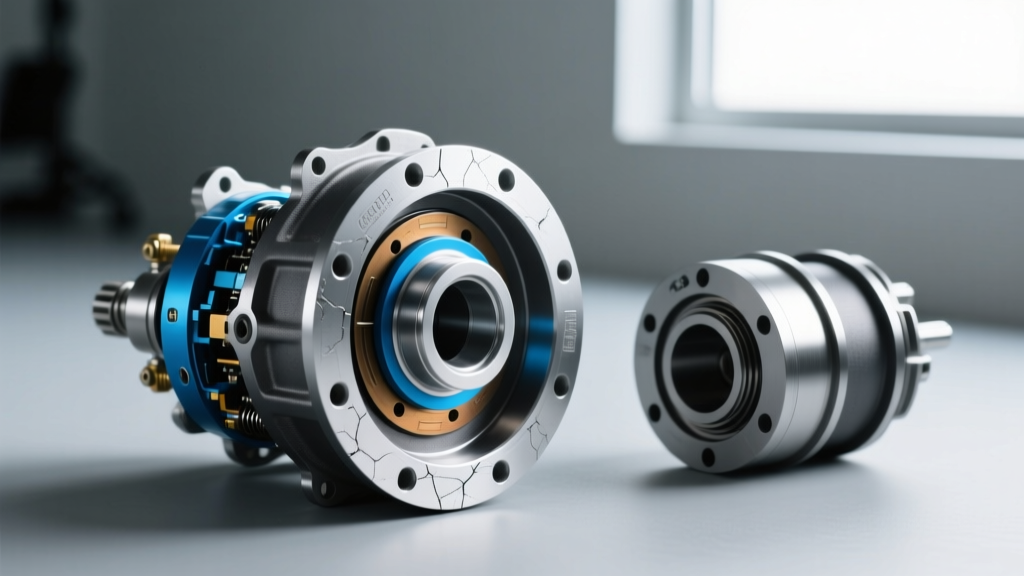
When technicians and enthusiasts encounter severe drivetrain shudder, slipping, or torque-handling limitations, one of the most common search queries in the traditional rear-wheel-drive space is the 6L80 billet torque converter upgrade. For GM's ubiquitous 6-speed longitudinal transmission, upgrading to a billet steel cover, forged stator, and high-capacity TCC (Torque Converter Clutch) from manufacturers like Circle D or Stallion is the gold standard for eliminating shudder and supporting high-horsepower builds.
However, as of 2026, the automotive landscape is heavily dominated by electrification. When a technician attempts to apply this traditional fluid-coupling diagnostic logic to a hybrid vehicle—such as a Toyota RAV4 Hybrid, Ford Escape PHEV, or Honda Accord Hybrid—they hit a mechanical wall. Why? Because the vast majority of hybrid vehicles do not even have a torque converter. Attempting to diagnose a hybrid's drivetrain shudder using traditional automatic transmission troubleshooting trees will lead to misdiagnosis, wasted labor, and frustrated customers.
Traditional Fluid Coupling vs. Hybrid Power-Split Devices
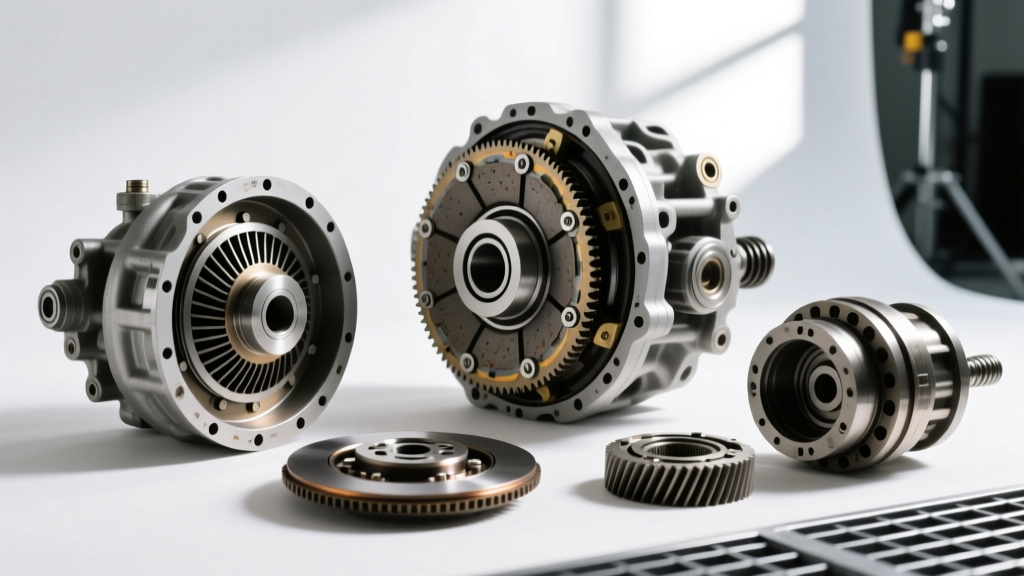
To understand why a 6L80 billet torque converter upgrade is entirely irrelevant to hybrid symptom diagnosis, we must examine the architecture. Traditional automatics use a hydrodynamic torque converter to multiply torque and absorb engine torsional vibrations before they reach the gearset. Hybrids, conversely, utilize a Power-Split Device (PSD) or an electrified continuously variable transmission (e-CVT) architecture.
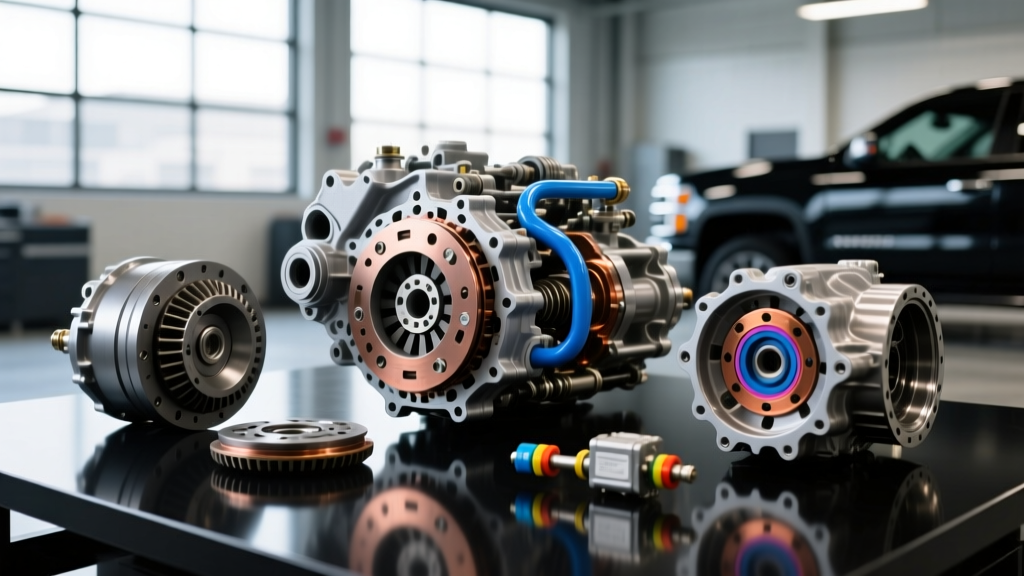
In architectures like the Aisin P810 transaxle (found in modern Toyota hybrids) or Ford's HF35, the internal combustion engine (ICE) is connected to the transaxle via a torsional damper assembly, not a fluid coupling. This damper relies on heavy-duty coil springs and friction plates to absorb the violent torsional spikes of the ICE, feeding mechanical power directly into a planetary gearset that blends power between Motor-Generator 1 (MG1) and Motor-Generator 2 (MG2).
| Feature | Traditional 6L80 Torque Converter | Hybrid Torsional Damper / PSD |
|---|---|---|
| Primary Function | Fluid coupling & torque multiplication | Vibration isolation & direct mechanical linking |
| Lockup Mechanism | Hydraulic TCC Friction Clutch | Direct mechanical spline (always locked) |
| Common Upgrade | 6L80 Billet Torque Converter Upgrade | Heavy-duty damper springs (rarely available) |
| Primary Failure Symptom | TCC slip, shudder at 40-50 mph | Clunk on ICE start, rattle at idle, regen shudder |
Recognizing Hybrid 'Torque Converter' Symptoms
Because the hybrid torsional damper serves the vibration-isolation role of a traditional TC, its failure symptoms often mimic a failing torque converter. However, the underlying physics are entirely different.
1. Regenerative Braking Shudder
Customers often report a violent shudder under light braking, assuming the TCC is failing to unlock. In a hybrid, this is rarely a transmission issue. It is typically caused by MG2 inverter switching faults, degraded brake actuator stroke sensors, or worn planetary gearset bearings that cannot handle the reverse-torque pulses of regenerative braking. According to SAE International technical papers on hybrid powertrains, high-frequency shudder during regen is often an electromechanical resonance issue, not a mechanical friction issue.
2. ICE Start/Stop Clunking
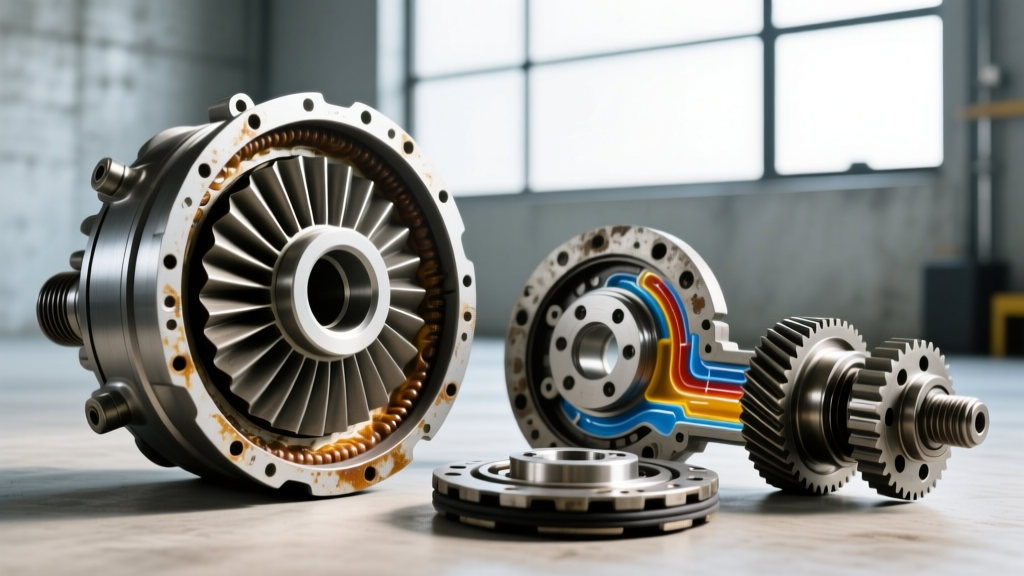
When the hybrid system starts the gas engine via MG1, the sudden rotational mass creates a massive torque spike. The torsional damper springs compress to absorb this. If the springs are fatigued, broken, or if the damper friction plates are worn, the vehicle will exhibit a violent metallic clunk upon engine start. This is the hybrid equivalent of a shattered TC stator clutch.
3. High-Frequency Whine and Rattle
A rattling noise at a dead stop (while in EV mode or ICE idle) is a classic symptom of collapsed damper springs. Unlike a 6L80 where you might suspect a failing TCC apply valve or a worn stator bearing, the hybrid rattle is purely mechanical metal-on-metal contact within the damper housing.
Advanced Diagnostic Protocols for Hybrid Drivetrains
Diagnosing these symptoms requires abandoning traditional transmission pressure gauges and relying on high-speed data logging and oscilloscopes.
- Crankshaft Position Sensor (CKP) Variance: Using OEM software like Toyota Techstream or Ford IDS, monitor the CKP sensor data during ICE start events. Excessive variance or misfire codes (P0300 series) that only occur during the transition from EV to ICE mode point directly to a failing torsional damper or degraded active engine mounts.
- Active Engine Mount Verification: As of 2026, many hybrids utilize active vacuum or electromagnetic engine mounts to cancel out low-frequency vibrations that a traditional TC would absorb. A failed active mount will transmit engine harmonics directly into the chassis, perfectly mimicking TCC shudder. Always command the active mount solenoid OFF via bidirectional controls to isolate the vibration source.
- Resolver Sensor Calibration: If the shudder occurs under acceleration, check the MG1 and MG2 resolver sensors. A misaligned resolver will cause the inverter to deliver AC current out of phase, resulting in a severe drivetrain shudder that feels exactly like a slipping torque converter clutch. For deeper insights into traditional vs. hybrid shudder, refer to Sonnax Technical Resources on TCC Shudder.
Repair Economics: Billet Upgrades vs. Hybrid Damper Replacement
The financial reality of repairing a hybrid drivetrain vibration issue is vastly different from traditional V8 platforms. A standard 6L80 billet torque converter upgrade might cost $800 to $1,200 for the part, with a relatively straightforward R&R (Remove and Replace) procedure.
In contrast, replacing a hybrid torsional damper requires the complete removal of the transaxle, as the damper is bolted directly to the engine flexplate and slides into the transaxle input shaft. Let us look at the real-world costs for a common application, such as the Toyota RAV4 Hybrid (Aisin P810 transaxle):
Toyota Hybrid Damper Assembly (Part # 13050-47040 or generation-specific equivalent)
Part Cost: $350 - $550
Labor Time: 8.5 - 11.0 Hours (Transaxle removal, subframe drop, axle shaft extraction)
Total Estimated Repair: $1,600 - $2,800
Furthermore, unlike the robust aftermarket support for the 6L80, there are virtually no 'billet' or 'heavy-duty' performance upgrades for hybrid torsional dampers. The OEM engineering is tightly coupled with the ECU's mapping for MG1 torque delivery. Installing stiffer aftermarket springs would disrupt the harmonic balance, potentially shattering the planetary gearset or damaging the MG1 rotor.
Summary for the Modern Drivetrain Technician
The search for a 6L80 billet torque converter upgrade represents the pinnacle of traditional internal combustion drivetrain tuning. However, the modern technician must recognize the architectural paradigm shift. Hybrid vehicles rely on torsional dampers, power-split devices, and active electromechanical controls to manage NVH (Noise, Vibration, and Harshness). By understanding the distinct symptoms of hybrid damper failure, utilizing OEM bidirectional scanner controls, and recognizing the role of active engine mounts, you can accurately diagnose hybrid shudder without falling into the trap of traditional transmission myths.