The FWD Benchmark vs. The Electric Future
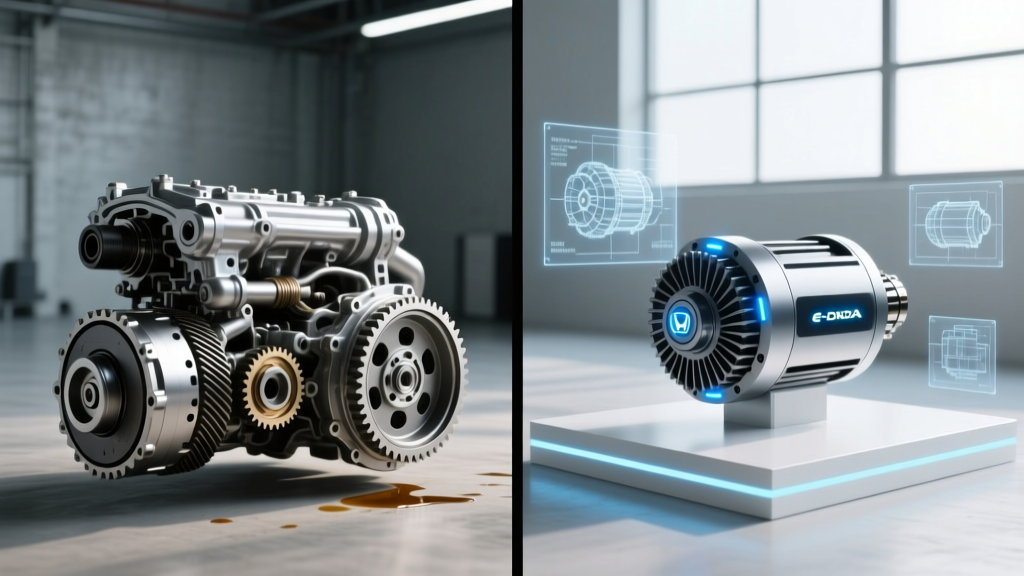
In the 2026 automotive aftermarket, enthusiasts and builders are caught between two distinct philosophies: preserving the analog brilliance of 90s Japanese FWD coupes and embracing the instant torque of electric vehicle (EV) architectures. At the center of this debate is the legendary Honda Prelude drivetrain. Known for its packaging efficiency, helical limited-slip differentials, and double-wishbone suspension compatibility, the Prelude’s FWD layout remains a masterclass in mechanical engineering. However, as EV crate motors and e-axles become more accessible, builders are increasingly comparing traditional internal combustion engine (ICE) drivetrains against modern electric alternatives.
This buyer’s guide and technical comparison breaks down the mechanical realities, packaging constraints, and economic factors of restoring a classic Honda Prelude drivetrain versus executing a modern EV e-axle swap. Whether you are rebuilding an H22A-powered manual transmission or fabricating motor mounts for a Tesla Small Drive Unit (SDU), understanding the drivetrain dynamics of both platforms is critical for your build.
The Analog Benchmark: Honda Prelude Drivetrain Anatomy
The fifth-generation Honda Prelude (1997-2001) utilizes a transverse FWD layout that prioritizes weight distribution and cornering agility. The drivetrain is anchored by the H22A1 or H22A4 2.2L DOHC VTEC engine, mated to the F23 or F20B manual transmission. This setup is renowned for its mechanical grip and tactile feedback, but it comes with specific maintenance and operational characteristics that builders must respect.
Key Specifications and Torque Data
- Transmission: F23 5-speed manual with factory helical LSD (Limited Slip Differential).
- Fluid Capacity: 1.9 quarts of Honda Manual Transmission Fluid (MTF). Using standard GL-4/GL-5 gear oil will cause synchro grinding due to the lack of specific friction modifiers required for Honda's carbon-coated synchronizers.
- Axle Configuration: Unequal length front half-shafts with an intermediate shaft on the passenger side to mitigate torque steer.
- Hub/Axle Nut Torque: 134 lb-ft (180 Nm). This high-torque staking nut is critical; failure to stake it properly after a CV joint service will result in hub bearing failure within 500 miles.
- Intermediate Shaft Bracket Bolts: 40 lb-ft. These are prone to snapping if seized in the engine block; induction heating is recommended during removal.
Failure Modes and Edge Cases
The most common failure point in the Honda Prelude drivetrain is the degradation of the inner CV joint tripod bearings. Because the Gen 5 Prelude uses a double-wishbone suspension, the CV joints experience a wider range of articulation angles compared to MacPherson strut setups. When the inner CV joint tripod needle bearings wear out, they create a cyclic vibration under acceleration that is often misdiagnosed as warped brake rotors or unbalanced tires. Furthermore, the F23 transmission’s 3rd and 4th gear synchros are notorious for wearing prematurely if the previous owner neglected Honda MTF changes every 30,000 miles.
The Electric Challenger: Modern EV e-Axle Configurations
On the other side of the spectrum are modern EV e-axles—integrated units that combine the electric motor, inverter, and reduction gear into a single, compact housing. For FWD restomods and EV swaps in 2026, the most popular options are the Tesla Small Drive Unit (SDU) and the Cascadia Motion iDM-100. These units offer massive torque density but introduce entirely different packaging and thermal management challenges.
e-Axle Technical Breakdown
- Tesla SDU (Small Drive Unit): Originally designed for the rear axle of AWD Model 3s, the SDU produces up to 250 kW (335 hp) and roughly 250 lb-ft of instant torque. It features an 8.28:1 internal reduction ratio and requires an external inverter controller (like the Cascadia CM300) if repurposed outside a Tesla ecosystem.
- Cascadia iDM-100: A purpose-built crate e-axle featuring an integrated inverter, park pawl mechanism, and a helical gear reduction set. It outputs 100 kW (134 hp) and 184 lb-ft of torque, making it a closer match to the H22A’s power band but with zero RPM latency.
- Cooling Requirements: Unlike an ICE drivetrain that relies on ambient airflow and splash lubrication, EV e-axles require active liquid cooling. The inverter and stator jackets must be plumbed into a dedicated 12V water pump circuit, typically flowing 3 to 5 gallons per minute (GPM) using a dielectric coolant like Prestone EV fluid or a 50/50 Propylene Glycol mix.
Head-to-Head: ICE FWD vs. EV e-Axle Data Matrix
When planning a build, the decision between retaining the Honda Prelude drivetrain or swapping to an EV e-axle comes down to fabrication limits, budget, and intended use. The table below outlines the critical engineering differences.
| Feature | Honda Prelude (H22A + F23) | EV e-Axle (Cascadia iDM-100) |
|---|---|---|
| Peak Torque | 156 lb-ft @ 5,500 RPM | 184 lb-ft @ 0 RPM (Instant) |
| Drivetrain Weight | ~310 lbs (Engine + Trans + Axles) | ~165 lbs (e-Axle + Inverter) |
| FWD Packaging | OEM Engine Mounts, Direct Fit | Custom Billet Mounts, Subframe Mod |
| Half-Shafts | OEM Honda 28-spline inner / 32mm outer | Custom Hybrid Shafts Required |
| Maintenance Interval | MTF every 30k miles, CV boots yearly | Coolant flush every 50k, Reduction gear fluid |
| Estimated 2026 Cost | $2,500 - $4,500 (Rebuild/Refresh) | $9,000 - $14,000 (Crate + Controller) |
2026 Buyer’s Guide: Sourcing and Fabrication Economics
If you are committing to a build in 2026, understanding the supply chain and fabrication costs for both drivetrain layouts will save you thousands of dollars and months of downtime.
Restoring the Honda Prelude Drivetrain
Sourcing OEM Honda drivetrain components is becoming increasingly difficult. New Old Stock (NOS) H22A synchro rings and LSD friction plates are largely backordered or discontinued. Builders are now turning to aftermarket solutions like PPG dog-engagement gearsets or OS Giken limited-slip differentials to replace the aging factory helical units. A complete F23 transmission rebuild, including new bearings, seals, and aftermarket synchros, typically costs between $1,800 and $2,500 in parts. If you are pushing over 250 wheel-horsepower via forced induction, upgrading to The Driveshaft Shop Level 5.9 aluminum half-shafts ($1,400 per pair) is mandatory to prevent OEM CV joint explosion under high-boost launches.
Executing the EV e-Axle Swap
Swapping an EV e-axle into a FWD chassis like the Prelude requires significant custom fabrication. Because the Prelude’s engine bay was designed for a transverse inline-4, mounting an in-line or transverse e-axle requires cutting the front subframe and welding in custom tubular motor mounts. Furthermore, mating the EV e-axle to the Prelude’s wheel hubs requires custom hybrid half-shafts. Shops like The Driveshaft Shop specialize in welding a Tesla/Cascadia inner CV joint (often a 28-spline or 31-spline tripod) to a Honda Prelude outer CV joint (32mm hub spline). Expect to pay upwards of $1,600 for custom EV-to-ICE hybrid axles.
Additionally, you must factor in the cost of high-voltage components. A reputable supplier like EV West offers battery management systems (BMS), DC-DC converters, and high-voltage cabling that will add $3,500 to $5,000 to your drivetrain budget. Safety interlocks and inertia cut-off switches are non-negotiable in 2026 to ensure the vehicle disables the high-voltage contactors in the event of a collision.
Maintenance Realities: Synchros vs. Inverters
The long-term ownership experience of these two drivetrains is vastly different. The Honda Prelude drivetrain requires mechanical sympathy. You must rev-match to save the carbon synchros, inspect the rubber CV boots for dry rot every spring, and listen for the tell-tale whine of a failing intermediate shaft bearing. It is a hands-on, mechanical relationship.
Conversely, an EV e-axle drivetrain eliminates mechanical wear items like clutches, synchros, and engine mounts. However, it introduces electrical and thermal maintenance. The reduction gear bearings in EV e-axles spin at incredibly high RPMs (up to 15,000 RPM). If the dielectric cooling loop develops a micro-leak or the fluid degrades, the inverter IGBTs can overheat and fail catastrophically, resulting in a $3,000+ replacement bill. Furthermore, the park pawl mechanism in crate e-axles requires specific adjustment; if the shift cable stretches, the pawl may not fully disengage, leading to sheared parking gears when moving off.
Final Verdict: Which Drivetrain Wins?
Choosing between the Honda Prelude drivetrain and a modern EV e-axle depends entirely on your project's end goal. If you are building a weekend canyon carver that values lightweight chassis balance, analog feedback, and the nostalgia of VTEC engagement, restoring and upgrading the OEM Honda FWD layout is the superior choice. The aftermarket support for H-series and K-series swaps remains robust, and the double-wishbone geometry perfectly complements the ICE torque curve.
However, if your goal is to build a stealthy, high-torque street sleeper with zero emissions and minimal drivetrain maintenance, an EV e-axle swap offers an unmatched torque-to-weight ratio. While the upfront fabrication and high-voltage safety costs are steep, the result is a FWD coupe that can out-accelerate modern sports cars off the line while retaining the classic 90s exterior styling. In 2026, both paths offer incredible engineering satisfaction—provided you respect the torque specs, cooling requirements, and fabrication realities of each platform.