The Honda Odyssey has long been the gold standard for family haulers, but its automatic transmissions—specifically the 5-speed and early 6-speed units paired with the J35 V6 engine—have a well-documented Achilles heel: heat vulnerability. As of 2026, hundreds of thousands of these minivans are still on the road, serving as daily drivers, towing light campers, and hauling heavy cargo. For owners and fleet managers focused on long-term reliability, installing an auxiliary Honda Odyssey transmission cooler is one of the most cost-effective preventive maintenance upgrades available.
The Thermal Reality of the J35 Automatic
Honda's 5-speed automatic transmissions (commonly bearing codes like BGFA, B7TA, and MCTA in 2005–2010 models) and the subsequent 6-speed units were engineered with tight tolerances and specific fluid dynamics. Under normal commuting conditions, the factory radiator-integrated cooler maintains Automatic Transmission Fluid (ATF) temperatures between 175°F and 195°F. However, the Odyssey's aerodynamic profile, combined with stop-and-go traffic, mountain passes, or towing loads up to its 3,500-lb maximum rating, routinely pushes ATF temperatures past 220°F.
Thermodynamics dictates a harsh reality for transmission fluid: for every 20°F increase in temperature above 200°F, the oxidative life of the ATF is cut in half. When fluid degrades, its friction modifiers fail, leading to the notorious torque converter shudder and clutch pack glazing that plagues high-mileage Odysseys.
Core Benefits of an Auxiliary Cooler Setup
1. Preserving the 3rd Clutch Pack and Wave Plates
The 5-speed Odyssey transmission is infamous for premature 3rd clutch pack failure. This failure is rarely a mechanical design flaw in the friction materials themselves; rather, it is a thermal management issue. The 3rd clutch operates under high slip conditions during the 2-3 and 3-4 shifts. When ATF temperatures exceed 230°F, the fluid's shear stability drops, resulting in localized micro-welding and accelerated wear on the wave plates. An external cooler drops peak operating temperatures by 20°F to 30°F, keeping the fluid well within its optimal viscosity window and drastically extending the life of these critical friction components.
2. Eliminating Torque Converter Lockup Shudder
Honda's lockup clutch relies on precise hydraulic pressure and specific fluid friction coefficients to engage smoothly. Heat causes the ATF to thin out and oxidize, forming varnish that disrupts the lockup clutch's apply-and-release modulation. This manifests as a low-speed shudder, often misdiagnosed as an engine misfire. By maintaining ATF temperatures below 200°F with a dedicated plate-and-fin cooler, the fluid retains its designed frictional characteristics, ensuring buttery-smooth torque converter lockup.
3. Bypassing the 'Strawberry Milkshake' Catastrophe
Perhaps the most compelling preventive maintenance argument for an auxiliary cooler on older Odysseys is the risk of internal radiator failure. The factory transmission cooler is housed inside the engine's main radiator. If the internal barrier cracks—a known issue in aging cooling systems—engine coolant and ATF mix, creating a destructive emulsion known in the industry as the 'strawberry milkshake.' Coolant destroys the paper-based clutch linings and swells the rubber seals inside the transmission, usually resulting in a total teardown within 50 miles. Routing an external cooler as a complete bypass eliminates this single point of failure.
Sizing and Selection: Matching the Cooler to the Odyssey
Not all coolers are created equal, and slapping an undersized tube-and-fin unit on a 4,500-lb minivan will yield negligible results. When selecting a Derale Performance or Hayden Automotive cooler, you must match the Gross Vehicle Weight Rating (GVWR) and the specific transmission fluid flow rates.
| Cooler Model | Technology | GVWR Rating | Est. Cost (2026) | Best Application |
|---|---|---|---|---|
| Derale Series 8000 (13502) | Plate-and-Fin | 10,000 lbs | $55 - $65 | Standard commuting, light cargo |
| Hayden Rapid-Cool (678) | Tube-and-Fin | 15,000 lbs | $45 - $55 | Budget towing, highway cruising |
| Derale Hyper-Cool (15850) | Stacked-Plate | 24,000 lbs | $110 - $130 | Heavy towing, mountain terrain |
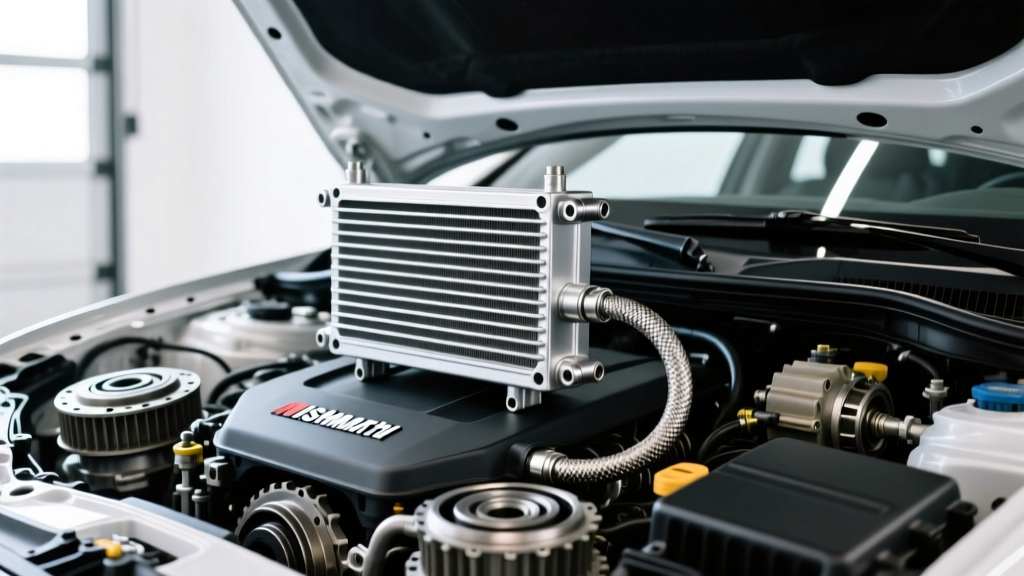
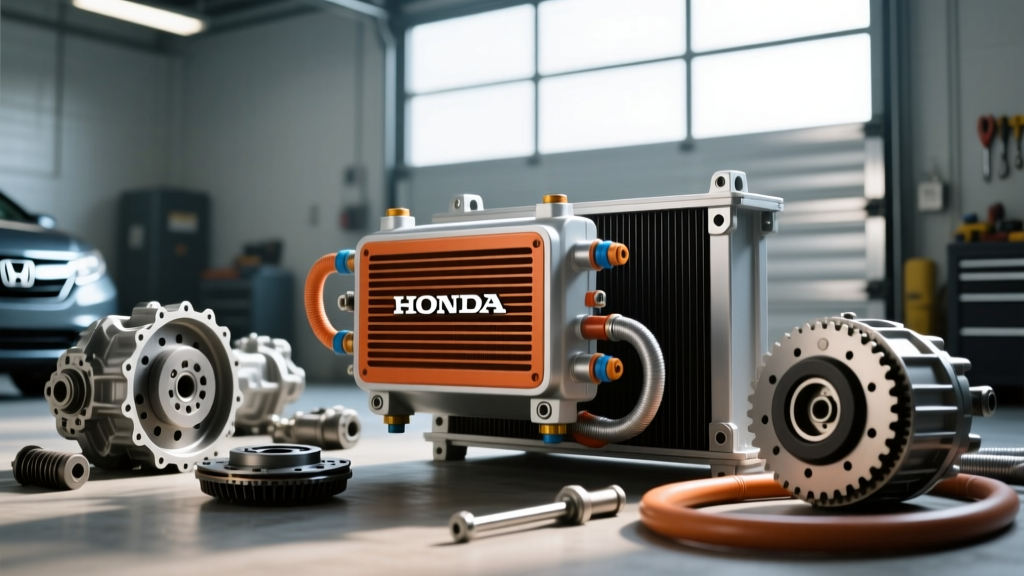
For most Odyssey owners, the Derale Series 8000 Plate-and-Fin cooler offers the best balance of thermal efficiency and physical footprint. Plate-and-fin designs force fluid through turbulators, increasing surface area contact and cooling efficiency by up to 30% compared to traditional tube-and-fin designs, all while fitting neatly behind the Odyssey's front bumper cover or lower grille.
Preventive Routing and Hardware Specifications
Installation routing is where many DIYers compromise the system. You have two primary configurations:
- Supplemental (Series) Routing: Transmission → Factory Radiator Cooler → Auxiliary Cooler → Return Line. This is ideal for cold climates (like Minnesota or Maine) where the factory radiator helps the ATF reach operating temperature faster during winter warm-ups.
- Bypass (Parallel) Routing: Transmission → Auxiliary Cooler → Return Line (Bypassing the radiator entirely). This is the ultimate preventive maintenance setup for Odysseys in moderate to hot climates, entirely eliminating the risk of coolant cross-contamination.
Crucial Hardware Specs for the J35 Platform
When executing the install, use only high-grade components to prevent pressure drops or blown lines under high-load shifting:
- Hose: Use exactly 3/8-inch (9.52mm) ID SAE J1532 rated transmission cooler hose. Do not use standard fuel line or emissions hose, as they will degrade when exposed to hot ATF and engine bay ozone.
- Clamps: Ditch the standard worm-gear clamps. Use constant-tension fuel injection clamps or T-bolt clamps. Torque them to precisely 15–20 in-lbs to prevent cutting into the rubber hose while maintaining a leak-free seal against the 60-80 PSI line pressures generated by the Honda transmission pump.
- Mounting: Zip-ties are a temporary fix. Use the included mounting brackets with M6 stainless steel bolts, securing the cooler to the radiator support crossmember. Maintain at least 1/2-inch of clearance from the A/C condenser fins to prevent chafing and vibration damage.
Fluid Maintenance: The DW-1 Imperative
An auxiliary cooler is only half the preventive maintenance equation; the fluid itself is the other. Honda's engineering team formulated Honda ATF DW-1 (Part No. 08200-9008) specifically for the frictional requirements of their 5-speed and 6-speed automatics. While universal synthetic fluids claim compatibility, long-term data from transmission rebuilders consistently shows that DW-1 provides superior lockup clutch modulation and shift timing stability in Honda units.
Expert Maintenance Tip: The Odyssey's 5-speed transmission holds approximately 8.2 to 8.5 quarts of fluid in total, but a standard drain-and-fill via the transmission pan bolt only yields about 3.3 to 3.5 quarts. To perform a proper preventive fluid exchange after installing a new auxiliary cooler (which adds roughly 0.5 quarts of capacity), perform three consecutive drain-and-fill cycles, driving the van for 10 minutes between each cycle to cycle the fluid through the torque converter and the new cooler lines.
The ROI of Thermal Management
Replacing a failed Honda Odyssey transmission with a remanufactured unit and paying for labor will easily cost between $3,500 and $4,500 in today's market. Conversely, a high-quality auxiliary cooler, premium SAE J1532 hose, and a case of genuine Honda ATF DW-1 will set you back less than $150 and an afternoon of wrenching. For any owner looking to push their Odyssey past the 200,000-mile mark, managing transmission heat isn't just an upgrade—it is the foundational pillar of drivetrain longevity.
For official service procedures and torque specifications regarding the Odyssey's transmission cooling lines, always consult the factory documentation available via Honda TechInfo.