The Great Automotive Debate: Powertrain vs. Drivetrain Defined
Walk into any dealership or browse any automotive forum in 2026, and you will inevitably hear the terms 'powertrain' and 'drivetrain' used interchangeably. For the everyday driver, this confusion is harmless. But for owners of sophisticated electrified vehicles, understanding the distinction is critical for maintenance, warranty claims, and long-term reliability. Nowhere is this distinction more important—and more misunderstood—than when examining the Honda CRV hybrid drivetrain and its accompanying powertrain components.
As a beginner-friendly explainer, this guide strips away the engineering jargon. We will use the wildly popular 6th-generation Honda CR-V Hybrid (featuring the advanced e:HEV two-motor hybrid system) as our primary case study. By the end of this article, you will know exactly where the powertrain ends, where the drivetrain begins, and what specific maintenance your vehicle requires to survive well past the 150,000-mile mark.
Core Definitions: Generating Power vs. Delivering Power
To understand the difference, we must establish a fundamental rule of automotive engineering:
- The Powertrain encompasses every component responsible for generating and converting energy into mechanical force. If it creates power or manages the primary conversion of that power, it is part of the powertrain.
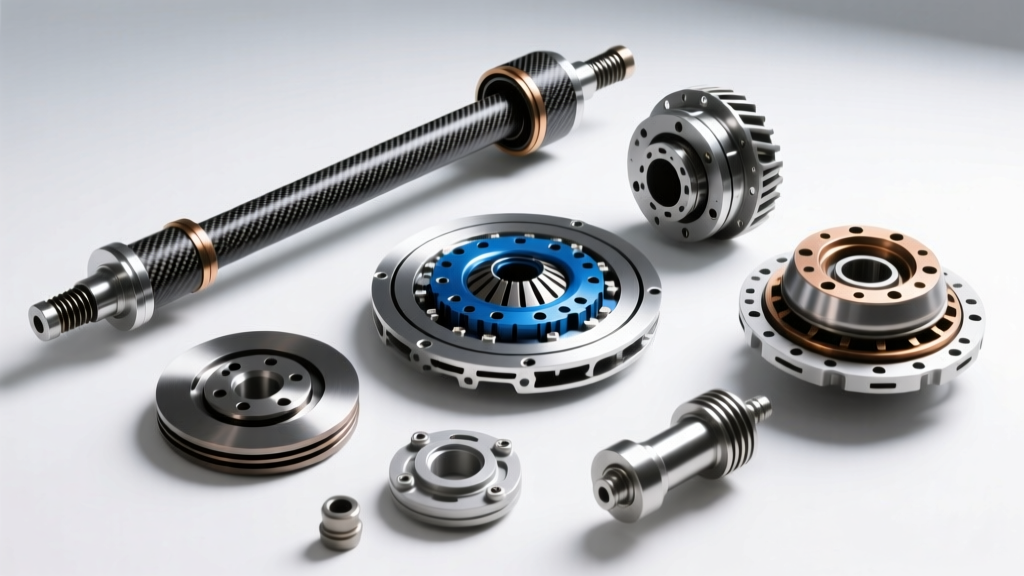
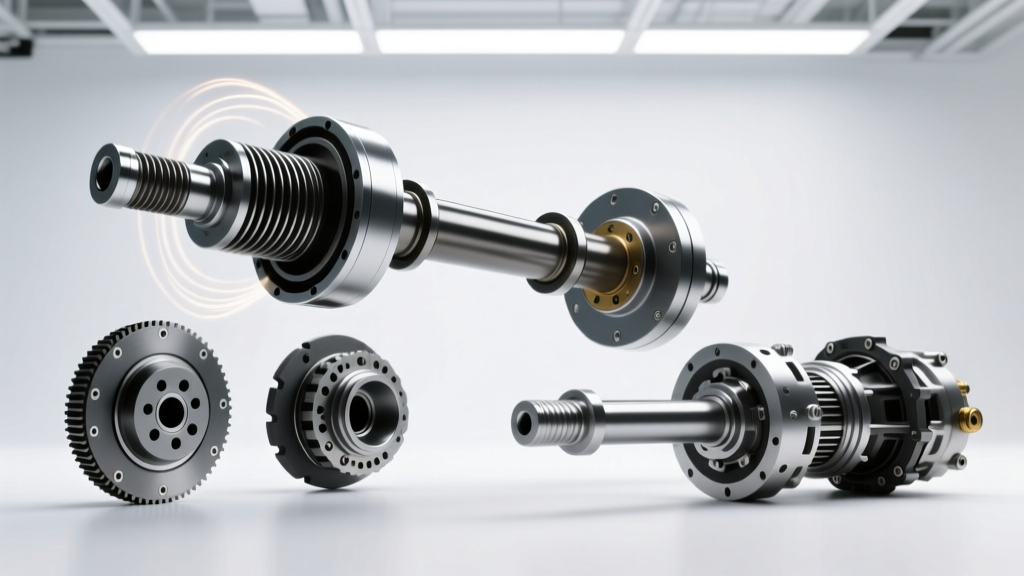
- The Drivetrain encompasses every component responsible for delivering that mechanical force from the transmission to the actual rubber meeting the road. If it routes torque to the wheels, it is part of the drivetrain.
In a traditional internal combustion vehicle, the engine and transmission make up the powertrain, while the driveshaft, differential, and axles make up the drivetrain. But how does this apply to a modern hybrid where electric motors and planetary gearsets blur the lines? Let us dissect the Honda CR-V Hybrid.
Case Study: Dissecting the Honda CR-V Hybrid Powertrain
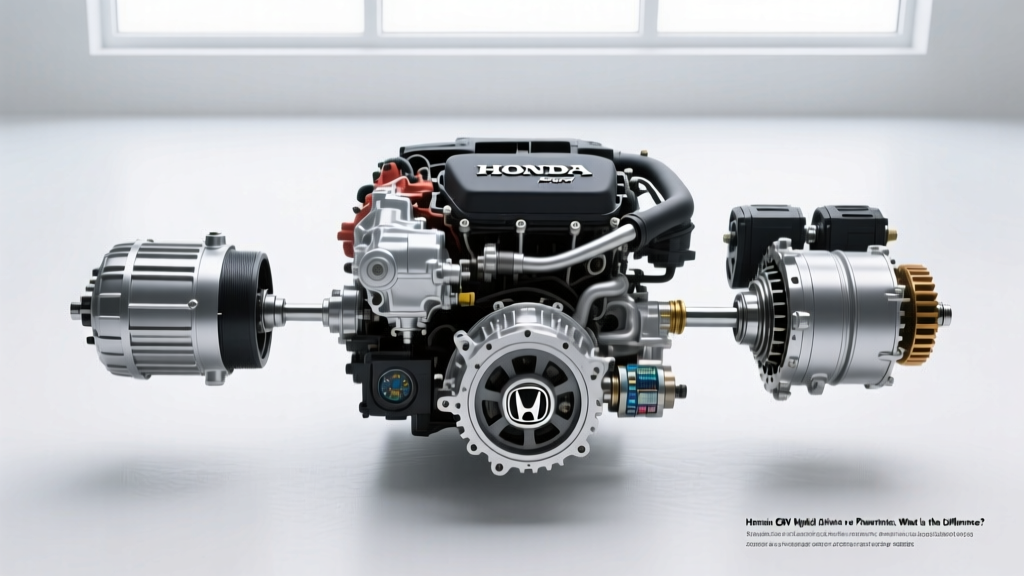
When you press the start button on a modern CR-V Hybrid, a complex symphony of electrical and mechanical engineering wakes up. According to Honda's official CR-V Hybrid lineup, the e:HEV system is a series-parallel hybrid setup. The powertrain includes the 'heart' of the system:
1. The 2.0L Atkinson-Cycle Engine
Unlike traditional engines, the 2.0L DOHC Atkinson-cycle engine (often designated as the LFB-series) prioritizes thermal efficiency over raw low-end torque. It acts primarily as a generator for the electric motors at low speeds, only physically connecting to the wheels via a lock-up clutch during steady-state highway cruising.
2. The Dual Electric Motors
The powertrain houses two distinct electric motors within the transaxle casing: a generator motor (which starts the engine and harvests regenerative braking energy) and a propulsion motor (which provides the instant, punchy torque that makes the CR-V Hybrid feel so responsive off the line).
3. The Intelligent Power Unit (IPU)
Located beneath the rear cargo floor, the lithium-ion battery pack and its associated power control electronics are undeniably powertrain components. They store and deploy the electrical energy that dictates how the vehicle moves.
Where the Drivetrain Begins: Routing Torque to the Pavement
So, if the engine, motors, and battery are the powertrain, what exactly is the Honda CRV hybrid drivetrain? The drivetrain begins the moment torque exits the motor-driven reduction gears and heads toward the wheel hubs.
The e-CVT Transaxle Output
While the internal electric motors and lock-up clutch are powertrain, the final drive reduction gear and the physical casing that outputs torque to the axles bridge the gap into drivetrain territory. Unlike a traditional belt-driven CVT, Honda's e-CVT uses a direct-drive planetary gearset. There are no belts to snap or pulleys to wear out, making this specific drivetrain junction incredibly robust.
Front Half-Shafts and CV Joints
The front constant velocity (CV) axles are pure drivetrain. They take the rotational force from the transaxle and route it to the front wheels, flexing up and down with the suspension while maintaining constant torque delivery.
Real Time AWD Rear Drive Unit
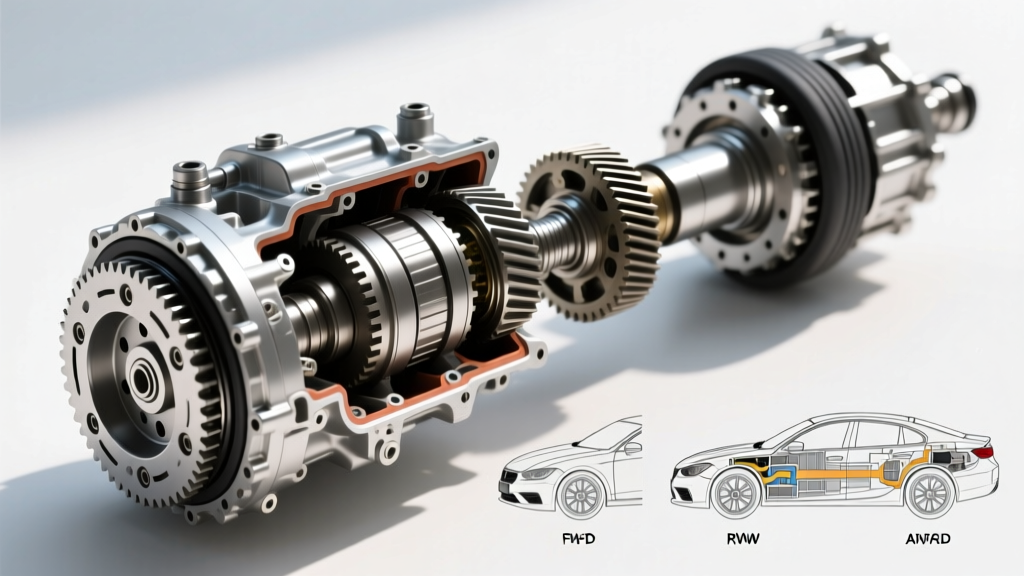
For AWD-equipped CR-V Hybrids, the drivetrain extends to the rear of the vehicle. Unlike some plug-in hybrids that use a completely separate rear electric motor (an 'e-Axle'), the CR-V Hybrid utilizes a mechanical propeller shaft (driveshaft) connected to a rear differential. This Real Time AWD system uses an electronically controlled clutch pack inside the rear differential to send up to 50% of the torque to the rear wheels when slip is detected. This mechanical linkage is a vital, serviceable part of the drivetrain.
Component Breakdown: Powertrain vs. Drivetrain
To visualize how these systems interact in the Honda CR-V Hybrid, review the comparison table below:
| Vehicle System | Component | Primary Function | Warranty Category (Typical) |
|---|---|---|---|
| Powertrain | 2.0L Atkinson Engine | Generates mechanical/electrical power | 5-Year / 60,000-Mile Powertrain |
| Powertrain | Propulsion & Generator Motors | Converts electricity to torque (and vice versa) | 8-Year / 100,000-Mile Hybrid System |
| Powertrain | IPU (Lithium-Ion Battery) | Stores and deploys electrical energy | 8-Year / 100,000-Mile Hybrid System |
| Drivetrain | Final Drive / Reduction Gear | Multiplies torque before exiting transaxle | 5-Year / 60,000-Mile Powertrain/Drivetrain |
| Drivetrain | Front CV Axles / Half-Shafts | Delivers torque to front wheel hubs | 3-Year / 36,000-Mile Bumper-to-Bumper |
| Drivetrain | Propeller Shaft (AWD Models) | Transfers torque to the rear of the vehicle | 3-Year / 36,000-Mile Bumper-to-Bumper |
| Drivetrain | Rear Differential (DPSF) | Distributes torque to rear wheels via clutch pack | 3-Year / 36,000-Mile Bumper-to-Bumper |
Maintenance Realities: Fluids, Torque Specs, and Costs
Understanding the difference between the Honda CRV hybrid drivetrain and powertrain is not just academic trivia; it directly impacts your wallet and your maintenance schedule. Because the drivetrain components rely on specialized lubrication and precise mechanical tolerances, neglecting them leads to catastrophic failures that powertrain warranties will not cover.
As an automotive expert, I highly recommend the following service intervals and specifications for the 2024–2026 CR-V Hybrid models:
1. Transaxle / Hybrid Motor Fluid (HMMF)
The e-CVT transaxle requires specialized lubrication that can handle both high-voltage electrical insulation and intense mechanical shear. Honda specifies Honda Hybrid Motor Fluid (HMMF) or, in some markets, specific ATF DW-1 equivalents.
Capacity: Approximately 2.8 to 3.2 Liters (depending on exact model year and dry/wet fill).
Drain/Fill Plug Torque: 44 Nm (32 lb-ft). Always replace the 18mm aluminum crush washer to prevent weeping.
Estimated Dealer Cost: $90 – $130.
2. Rear Differential Fluid (Real Time AWD)
If your CR-V Hybrid is equipped with AWD, the rear differential uses a dual-pump clutch system. It absolutely requires Honda DPSF-II (Dual Pump System Fluid II). Using standard gear oil will destroy the clutch pack and trigger an AWD warning light on your dash.
Capacity: Approximately 1.1 Liters.
Drain/Fill Plug Torque: 49 Nm (36 lb-ft).
Estimated Dealer Cost: $70 – $100.
Expert Tip: If you ever experience a 'groaning' or 'binding' sensation during tight, low-speed turns in wet parking lots, your DPSF-II fluid has degraded. A simple drain and fill usually cures this drivetrain shudder immediately.
3. Front CV Axle Nut Replacement
When drivetrain components like wheel bearings or CV axles require service, the axle nut must be torqued to exact specifications to prevent hub bearing failure.
Axle Nut Torque Spec: Typically 180 Nm (133 lb-ft) to 235 Nm (173 lb-ft), depending on the specific hub assembly generation.
Critical Rule: Never reuse a Honda staked axle nut. Once the collar is staked into the axle groove, the nut's structural integrity is compromised. A new OEM nut costs roughly $4 to $8 at Honda Automotive Parts and is mandatory for safety.
Warranty Implications: Why the Distinction Matters in 2026
The distinction between the Honda CRV hybrid drivetrain and powertrain becomes fiercely important when a failure occurs just outside the standard warranty window.
The Warranty Trap: Honda's 5-Year/60,000-Mile Powertrain Limited Warranty covers the e-CVT internal components, the hybrid motors, and the engine block. However, if a front CV axle boot tears at 65,000 miles, flinging grease and destroying the drivetrain axle joint, you are entirely out of luck. CV axles, driveshaft U-joints, and rear differential seals are classified as wear-and-tear drivetrain components, usually covered only by the 3-Year/36,000-Mile New Vehicle Limited Warranty.
According to data aggregated by the U.S. Department of Energy's Fuel Economy Guide, hybrid systems are incredibly reliable, often outlasting their gas-only counterparts. However, the mechanical drivetrain components (axles, bushings, differential clutches) still endure the physical punishment of moving a 3,900+ lb SUV. Inspecting your drivetrain CV boots for tears and your rear differential for seepage every 15,000 miles is the cheapest insurance policy you can buy.
Summary: Mastering Your Hybrid's Anatomy
To summarize: the powertrain is the brain and muscle of your Honda CR-V Hybrid, generating electricity and torque through the 2.0L engine and dual electric motors. The drivetrain is the skeleton and sinew, taking that torque through the reduction gears, out to the CV axles, and down the mechanical propeller shaft to the rear differential.
By understanding this boundary, you can better communicate with your service advisor, ensure the correct specialized fluids (HMMF and DPSF-II) are being used, and protect your investment with targeted, proactive maintenance. Whether you are navigating snowy mountain passes or commuting in stop-and-go traffic, knowing what lies beneath the floorboards ensures your CR-V Hybrid will deliver seamless efficiency for years to come.