Understanding Your Civic Si Generation and Transmission
The Honda Civic Si has long been the benchmark for front-wheel-drive enthusiast driving, but the engineering under the hood has evolved dramatically. When planning a Honda Civic Si clutch replacement, the very first step is identifying your exact generation and powertrain, as the clutch kit architecture differs vastly between the naturally aspirated K-Series engines and the modern turbocharged L-Series engines.
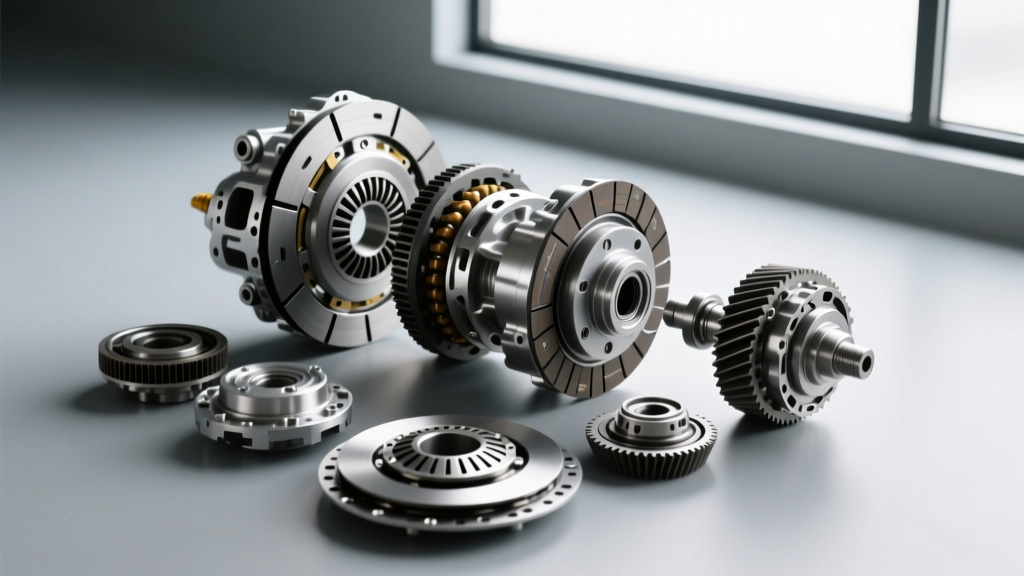
The 8th and 9th generation Civic Si models (FA5/FG2 and FG4) utilize the legendary K20Z3 and K24Z7 engines paired with a robust 6-speed manual transmission featuring a helical limited-slip differential. These setups use a traditional Single Mass Flywheel (SMF) and a Concentric Slave Cylinder (CSC) hydraulic release bearing. In contrast, the 10th and 11th generation Civic Si models (FK8/FC1 and FE1) use the 1.5L Turbo L15B7/L15CA engines. To manage turbo-induced torsional vibrations, Honda equipped these with a complex Dual Mass Flywheel (DMF) and a different hydraulic actuation system.
Selecting the wrong kit not only leads to installation failure but can cause catastrophic transmission damage or unbearable NVH (Noise, Vibration, and Harshness). This step-by-step guide will walk you through selecting the exact clutch kit for your specific Civic Si build.
Step 1: Determine Your Power Goals and Clutch Stage
Before browsing catalogs, you must define the torque output of your Civic Si. Installing an aggressive Stage 3 ceramic clutch on a stock K20Z3 will result in a jarring, undrivable street car that accelerates transmission synchro wear. Conversely, retaining an OEM organic disc on a tuned 1.5T pushing 25 PSI of boost will result in immediate clutch slip and glazing.
| Clutch Stage | Friction Material | Torque Capacity (Est.) | Best Application | Pedal Feel & NVH |
|---|---|---|---|---|
| OEM / Stock | Organic | 180 - 220 lb-ft | Daily driving, stock or mild intake/tune | Smooth, factory pedal, zero chatter |
| Stage 1 | Heavy-Duty Organic / Kevlar | 250 - 300 lb-ft | Bolt-ons, mild turbo (8th gen), aggressive street | Slightly stiffer pedal, minimal chatter |
| Stage 2 / Sprung Hub | Ceramic / Carbon Blend | 320 - 400 lb-ft | Full bolt-on 1.5T, built K20/K24 NA | Stiff pedal, moderate gear rattle at idle |
| Stage 3+ / Twin-Disc | Sintered Iron / Puck | 450+ lb-ft | Track cars, high-boost turbo builds | On/Off switch feel, high NVH, heavy gear rattle |
Step 2: Selecting the Right Flywheel (SMF vs. DMF)
The flywheel selection is arguably the most critical part of your Honda Civic Si clutch replacement kit, especially for 10th and 11th-generation owners.
For 8th and 9th Gen (K-Series) Owners:
Your Civic Si came with a Single Mass Flywheel (SMF). You can safely upgrade to an aftermarket lightweight chromoly SMF (typically weighing between 9 and 11 lbs, compared to the OEM 15 lbs). A lightweight flywheel allows the K-Series engine to rev freely and match RPMs faster during downshifts. However, going lighter than 9 lbs on a street-driven K24Z7 will introduce noticeable gear rattle at idle due to the lack of rotational mass dampening transmission harmonics.
For 10th and 11th Gen (1.5T) Owners:
The turbo L15 engine relies on a heavy Dual Mass Flywheel (DMF) to absorb low-end turbo torque spikes. When your OEM DMF fails (a common issue past 60,000 miles), you have two choices:
- Replace with OEM DMF: Costs upwards of $800 just for the flywheel. Maintains factory smoothness but is heavy and prone to future failure.
- Convert to SMF: Brands like Clutch Masters and ACT offer DMF-to-SMF conversion kits. This saves weight and eliminates the DMF failure point, but will introduce gear rattle and low-RPM lugging vibrations. You must tune the car to avoid low-RPM, high-load scenarios to prevent bearing damage.
Step 3: Choosing the Kit Brand and Exact Part Numbers
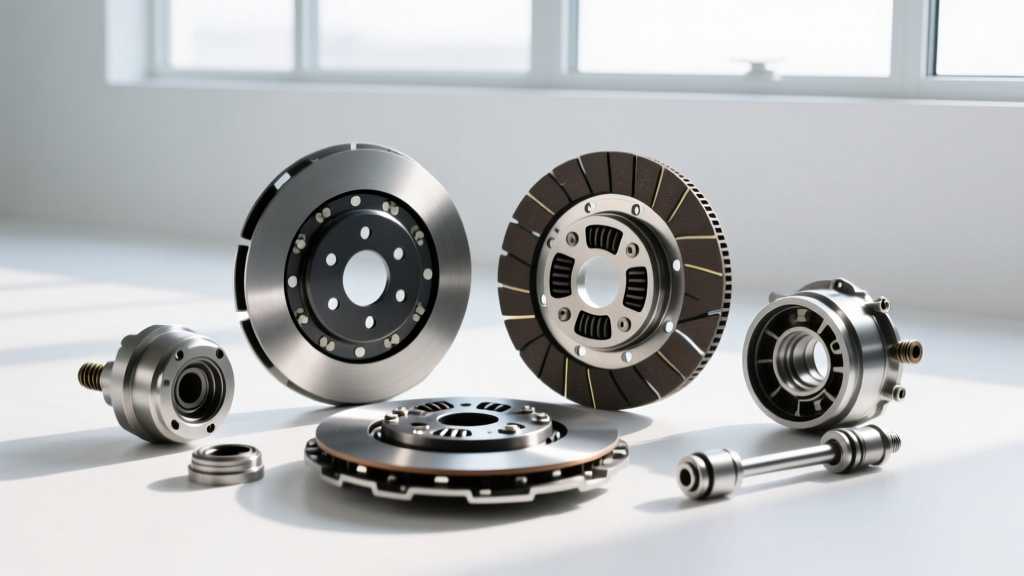
According to data from Exedy USA, they are the OEM supplier for Honda, making their aftermarket kits the gold standard for reliability. However, for modified cars, Advanced Clutch Technology (ACT) and Clutch Masters offer superior clamping force.
Top Part Numbers for 8th/9th Gen (K20Z3 / K24Z7)
- OEM Replacement: Exedy HFD04 (Includes OEM disc, pressure plate, and release bearing). Cost: ~$280.
- Street Performance (Stage 1): ACT HD-SS (Heavy Duty Pressure Plate + Sprung Street Disc). Cost: ~$490. Part# KI2-HDSS.
- Aggressive Grip (Stage 2): Clutch Masters FX350 (Heavy Duty pressure plate with ceramic/organic blend). Cost: ~$650.
Top Part Numbers for 10th/11th Gen (1.5T L15B7 / L15CA)
- OEM Replacement: Exedy HFD11 (DMF replacement kit). Cost: ~$950 (includes DMF).
- SMF Conversion (Stage 1): ACT KSF-HDSS (Includes SMF flywheel, HD pressure plate, organic disc). Cost: ~$850.
- High-Torque Turbo: Clutch Masters FX400 SMF Conversion (6-Puck Ceramic). Cost: ~$920.
Pro-Tip from the Bench: Never reuse the old hydraulic release bearing (Concentric Slave Cylinder) on a K-Series or L-Series Honda. The internal seals degrade over time, and a $60 bearing failure will require you to drop the entire transmission again to fix a fluid leak. Always buy a kit that includes a new OEM Honda or Exedy release bearing.
Step 4: Gathering Hardware, Fluids, and Torque Specs
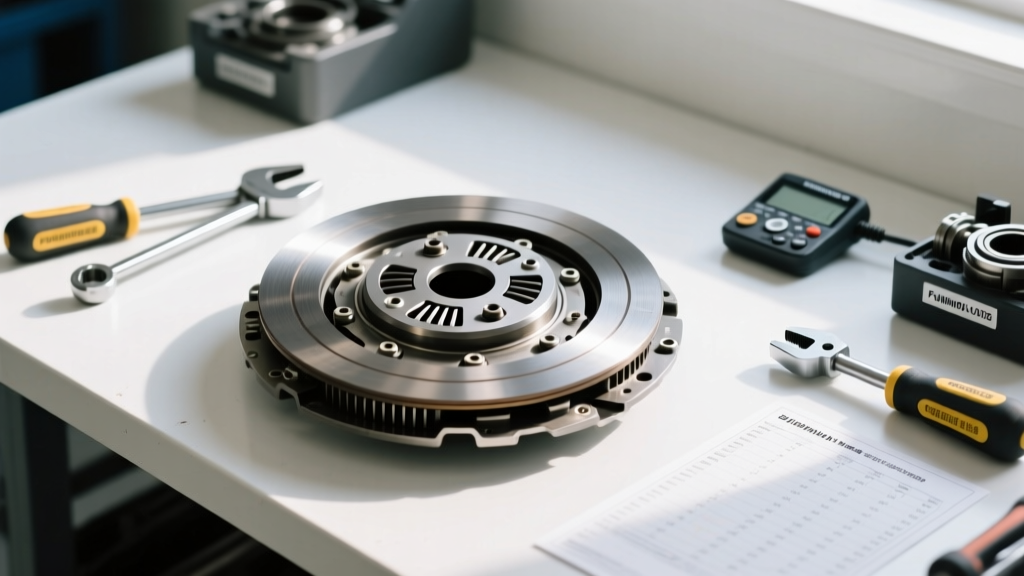
A proper Honda Civic Si clutch replacement requires more than just the friction components. You must prepare the correct fasteners and lubricants. Honda flywheel bolts are Torque-to-Yield (TTY) and stretch during installation. They must be replaced.
| Component | K-Series (8th/9th Gen) | L-Series 1.5T (10th/11th Gen) |
|---|---|---|
| Flywheel to Crankshaft | 76 lb-ft + 90° turn | 39 lb-ft + 90° turn (Verify Helm Manual) |
| Pressure Plate to Flywheel | 19 lb-ft (Star Pattern) | 19 lb-ft (Star Pattern) |
| Axle Nut (Replace Every Time) | 134 lb-ft | 258 lb-ft (Prevailing Torque) |
| Transmission Fluid | Honda MTF or Amsoil Synchromesh (1.9L) | Honda MTF (Approx 1.6L - check dipstick) |
Step 5: Pre-Installation Inspection and Machining
Before bolting the new clutch kit to your Civic Si's flywheel, perform these critical inspections:
- Flywheel Resurfacing: If reusing an OEM SMF (K-Series), it must be resurfaced on a precision grinder to ensure a flat mating surface. A warped flywheel will cause immediate clutch chatter and premature wear. DMFs (1.5T) cannot be resurfaced; they must be replaced or swapped for an SMF.
- Pilot Bearing Check: While Honda manual transmissions typically use the input shaft's front bearing to support the crank (eliminating a traditional needle pilot bearing in the crank), ensure the input shaft sleeve is free of rust and lightly lubricated with high-temp grease.
- Clutch Delay Valve (CDV) Delete: On 10th and 11th-generation Civic Si models, Honda installs a CDV in the hydraulic clutch line to slow down engagement and protect the drivetrain from shock. This causes a 'rubbery' pedal feel and delayed engagement. Use this clutch replacement opportunity to install a CDV delete plate or an aftermarket master cylinder to restore direct, analog pedal feedback.
Common Mistakes to Avoid During Civic Si Kit Selection
Even experienced DIY mechanics stumble when dealing with Honda's nuanced manual transmissions. Avoid these costly errors:
- Mixing K20Z3 and K20Z6 Components: The 8th Gen Civic Si (K20Z3) and the Acura RSX/TSX (K20Z6/A2) share similarities, but their release bearings and clutch fork geometries differ. Buying a kit meant for a TSX will result in the clutch not fully disengaging.
- Ignoring the 1.5T DMF Harmonic Damper: If converting a 10th/11th Gen to an SMF, ensure the kit includes a sprung-hub disc. A rigid-hub (unsprung) disc paired with an SMF on a turbo L15 engine will transmit violent shock loads directly into the transmission gears, leading to catastrophic synchro and gear tooth failure.
- Reusing the Clutch Alignment Tool: Always use the alignment tool provided in the kit or a dedicated Honda input shaft dummy tool. Eyeballing the alignment will cause the transmission input shaft to bind against the disc splines, making it impossible to mate the engine to the gearbox without bending the clutch fork.
By meticulously matching your clutch kit to your Civic Si's specific generation, power output, and driving style, you ensure a seamless transfer of power to the pavement. Whether you are preserving the NA soul of a K20Z3 or maximizing the boost of a 1.5T, the right selection guarantees reliability and performance for the next 60,000 miles.