Introduction: Two Wheels vs. Four Wheels
Whether you are commuting in a daily driver or carving canyons on the weekend, the clutch is the vital bridge between your engine and transmission. For beginners entering the world of automotive and motorcycle maintenance, understanding the financial and mechanical differences between these vehicles is crucial. A common benchmark in the car world is the Volkswagen Jetta clutch replacement cost, often researched by owners of the popular MQB-platform models. But how does that compare to replacing a clutch on a motorcycle?
In this beginner-friendly explainer, we will break down the mechanical architecture of wet multi-plate motorcycle clutches versus the dry single-plate setups found in cars like the VW Jetta. We will provide real-world 2026 pricing, exact part numbers, and actionable DIY advice to help you decide where to turn your own wrenches and where to hand over the keys to a professional.
The Mechanical Divide: Wet Multi-Plate vs. Dry Single-Plate
Before comparing costs, you must understand what you are actually working on. The fundamental difference lies in the operating environment and friction material distribution.
Motorcycles: The Wet Multi-Plate Clutch
Most street motorcycles (from a Kawasaki Ninja 400 to a Honda CB650R) use a wet multi-plate clutch. This system is submerged in engine oil, which cools the friction surfaces and allows for a compact design. Instead of one large friction disc, a motorcycle uses a stack of alternating friction plates and steel separator plates. When you pull the lever, you compress the clutch springs, separating the plates and interrupting power flow.
- Pros: Compact, highly durable due to oil cooling, easier to access (usually behind a right-side engine cover).
- Cons: Requires strict adherence to JASO MA2 oil ratings; friction modifiers in standard car oil will cause immediate clutch slip.
Cars (VW Jetta): The Dry Single-Plate Clutch
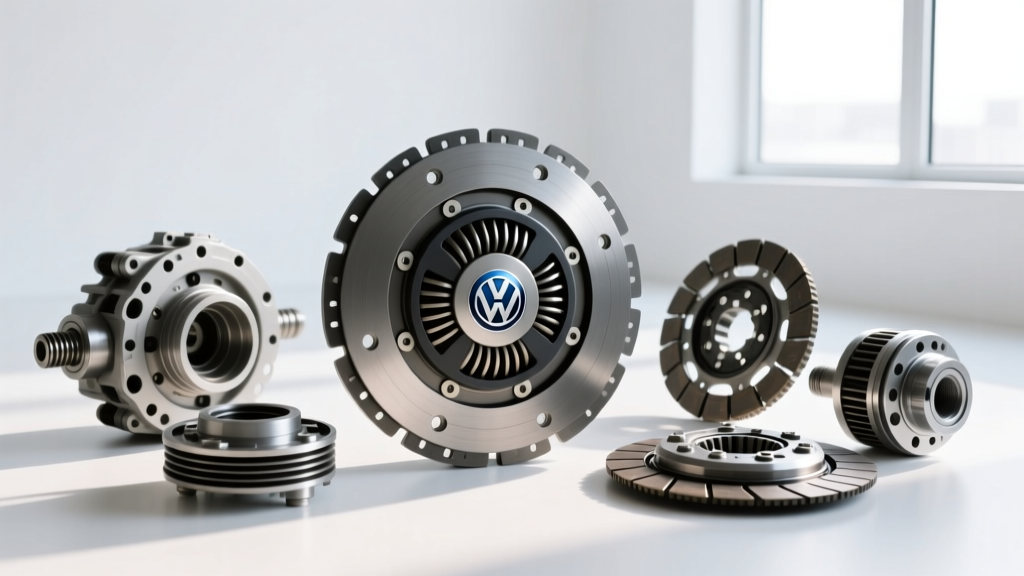
The Volkswagen Jetta (specifically the 1.4T EA211 and 2.0T EA888 manual models) utilizes a dry single-plate clutch mated to a Dual Mass Flywheel (DMF). This system relies on a large friction disc clamped against the flywheel by a heavy-duty pressure plate. Because it operates dry, it requires robust ventilation and a complex release bearing mechanism.
Breaking Down the Volkswagen Jetta Clutch Replacement Cost
When researching the Volkswagen Jetta clutch replacement cost, you are primarily paying for labor intensity and complex German-engineered components. On a 2018-2025 Mk7/Mk7.5 Jetta 2.0T, the transmission must be completely separated from the engine block. This often requires dropping the front subframe, removing the CV axles, and supporting the engine from above.
Parts and Pricing (2026 Estimates)
- OEM Clutch Kit (LuK or Sachs): A complete LuK RepSet (Part # 624 3187 00) including the pressure plate, friction disc, release bearing, and alignment tool typically runs between $350 and $550.
- Dual Mass Flywheel (DMF): VW's DMF is notorious for failing around 90,000 miles, causing a metallic clunk at idle. Replacing the DMF (Part # 415 0225 09) adds $400 to $700 to the parts bill. (Note: Single-mass flywheel conversion kits are available for ~$600 but can introduce cabin vibrations).
- Labor: Dealerships and European specialists charge 6 to 8 hours of labor. At $150-$180/hour, labor alone is $900 to $1,440.
Total VW Jetta Cost: Expect to pay between $1,650 and $2,700 at a professional shop.
For deeper technical service bulletins on VW manual transmissions, the Schaeffler REPXPERT portal is an invaluable resource for mechanics and advanced DIYers.
Motorcycle Clutch Replacement Costs in 2026
Compared to the Jetta, motorcycle clutch service is remarkably affordable, primarily because the engine and transmission share a single casing (unit construction). You do not need to remove the engine or drop a subframe; you simply drain the oil and remove the side cover.
Common Motorcycle Platform Costs
- Kawasaki Ninja 400 / Z400: A complete OEM friction plate set, steel plates, and springs will cost around $130 to $180. Aftermarket options like the EBC Brakes CK Series are similarly priced. Professional labor is 1.5 to 2 hours. Total Shop Cost: $350 - $550.
- Harley-Davidson Sportster (V-Twin): Harley clutches are heavier duty and often require a compensator sprocket inspection. Parts run $150 to $250. Total Shop Cost: $450 - $700.
- BMW R1250GS (Boxer): Requires specific BMW tools for the pushrod and diaphragm spring. Parts are pricier at $250 to $350. Total Shop Cost: $600 - $900.
Cost & Complexity Comparison Chart
| Vehicle Platform | Clutch Architecture | Typical Parts Cost | Labor Time | Total Shop Estimate |
|---|---|---|---|---|
| VW Jetta 2.0T (MQB) | Dry Single-Plate + DMF | $750 - $1,250 | 6 - 8 Hours | $1,650 - $2,700 |
| Kawasaki Ninja 400 | Wet Multi-Plate | $130 - $180 | 1.5 - 2 Hours | $350 - $550 |
| Harley Sportster | Wet Multi-Plate (Heavy) | $150 - $250 | 2 - 3 Hours | $450 - $700 |
| Honda Civic Si (K20) | Dry Single-Plate + SMF | $400 - $600 | 5 - 6 Hours | $1,150 - $1,800 |
Step-by-Step: What a Motorcycle Clutch Job Actually Involves
Replacing a motorcycle clutch is a fantastic beginner DIY project. It requires basic hand tools, a torque wrench, and patience. Here is a generalized workflow based on popular Japanese inline-fours and parallel-twins.
1. Preparation and Draining
Warm up the engine, then drain the engine oil. Remove the right-side rider footpeg and shift lever (if necessary) to access the crankcase cover.
2. Cover Removal and Inspection
Unbolt the clutch cover. Pro Tip: Use a magnetic parts tray. The bolts are often different lengths; map them out on a piece of cardboard. Clean the mating surface with a plastic gasket scraper to avoid gouging the soft aluminum.
3. Measuring the Springs and Steel Plates
Before tearing down the stack, use a clutch holding tool to loosen the center hub nut or the pressure plate bolts. Remove the springs and measure their free length with calipers. For a Ninja 400, the standard spring length is 48.5 mm; the service limit is 46.0 mm. If they are compressed past the limit, they must be replaced. Check the steel separator plates for bluing (heat damage) or warping using a glass surface and feeler gauge.
4. The Crucial Step: Soaking Friction Plates
Unlike car clutches, motorcycle friction plates must be pre-soaked in the exact engine oil you plan to use (e.g., 10W-40 JASO MA2) for at least 2 hours before installation. Installing them dry will cause immediate glazing and failure upon first startup. For more on motorcycle fluid dynamics, check out RevZilla's clutch maintenance guide.
5. Reassembly and Torque Specs
Install the new friction and steel plates in the exact alternating pattern specified in your service manual (usually starting and ending with a friction plate, though some models have a specific offset plate for the basket slot). Torque the pressure plate bolts in a crisscross pattern. For most 250cc-650cc bikes, these small bolts require only 8 to 10 Nm (70-88 in-lbs). Overtorquing will strip the soft aluminum threads of the inner hub.
6. Sealing and Refilling
Install a brand new OEM paper gasket (do not rely solely on RTV silicone, as excess can squeeze into the oil pickup screen and starve the engine). Torque the cover bolts to 10 Nm. Refill with JASO MA2 certified oil.
Hidden Costs & Edge Cases to Watch For
While motorcycles are cheaper, beginners should be aware of a few edge cases:
- Stripped Crankcase Threads: The threads for the clutch cover on older Japanese bikes can be fragile. If you strip one, you will need to install a Heli-Coil thread insert, adding time and $20 in tools.
- Clutch Basket Notching: Over time, the steel plates hammer into the aluminum fingers of the outer clutch basket, creating notches. This causes the clutch to drag and makes shifting clunky. If notched, the basket must be replaced or filed smooth, adding $150-$300 to a bike job.
- VW Jetta Pilot Bearing & Seals: When doing a Jetta clutch, the rear main seal and transmission input shaft seal should always be replaced. The parts are cheap ($30), but ignoring them risks an oil leak that will ruin your new $500 clutch disc.
Final Verdict: Where Should You Wrench?
If you are a beginner looking to build confidence, start with the motorcycle. The accessibility of the side cover, the low cost of entry, and the straightforward mechanical logic of the wet multi-plate system make it an ideal weekend project. You can easily save $200-$300 in labor by doing it yourself in your garage.
Conversely, the Volkswagen Jetta clutch replacement cost is heavily skewed toward labor due to the sheer weight of the transmission and the complexity of the subframe and axle removal. Unless you have access to a professional lift, a transmission jack, and a dual-mass flywheel locking tool, the VW Jetta clutch job is best left to a trusted independent European auto shop. Understanding these differences ensures you budget correctly and keep your machines shifting smoothly for years to come.