The True Cost to Replace Clutch Jeep Wrangler Models in 2026
When researching the cost to replace clutch Jeep Wrangler models, owners quickly discover that pricing is not a one-size-fits-all metric. The Wrangler’s evolution from the classic TJ to the modern JK and JL platforms has introduced significant changes in drivetrain complexity, transmission weight, and hydraulic clutch systems. As an automotive transmission specialist, I frequently see DIYers and shop owners alike underestimate the labor intensity of dropping a Jeep transfer case and manual transmission in a driveway or bay.
In 2026, supply chain stabilizations have brought aftermarket clutch kit prices down slightly, but labor rates and the necessity of specialized tools (like hydraulic concentric slave cylinder bleeders) keep the overall investment substantial. Whether you are wheeling a 2012 JK Rubicon with the Mercedes-derived NSG370 6-speed or a 2021 JL Sport with the Aisin manual, understanding the exact cost breakdown by vehicle type is critical for budgeting your drivetrain overhaul.
Clutch Replacement Cost by Wrangler Generation
The cost to replace clutch Jeep Wrangler assemblies varies wildly depending on the generation. Older models offer generous ground clearance and simpler exhaust routing, while newer models require extensive skid plate removal, exhaust manipulation, and complex hydraulic bleeding procedures.
| Wrangler Generation | Primary Manual Transmission | Avg. Parts Cost (2026) | Avg. Labor Cost | Total Estimated Cost |
|---|---|---|---|---|
| TJ (1997-2006) | Aisin AX5 / AX15 | $200 - $350 | $600 - $850 | $800 - $1,200 |
| JK (2007-2018) | Mercedes NSG370 | $350 - $600 | $900 - $1,400 | $1,250 - $2,000 |
| JL (2018-Present) | NSG370 / Aisin | $400 - $750 | $1,000 - $1,600 | $1,400 - $2,350 |
Why the JK and JL Cost More
The jump in price from the TJ to the JK/JL is primarily driven by the NSG370 transmission. This 6-speed unit is significantly heavier than the AX15, requiring a transmission jack and often a second set of hands to maneuver past the JK/JL’s restrictive crossmembers and exhaust crossovers. Furthermore, the JL generation features extensive factory skid plates and a more complex electronic sway-bar disconnect system on Rubicon trims, adding 1.5 to 2.0 hours of standard book time just for R&R (Remove and Replace) of the surrounding components.
Expert Parts Selection: OEM vs. Aftermarket Kits
Do not cheap out on the clutch kit. The Wrangler’s low-range gearing puts immense shock-load on the pressure plate and friction disc. Based on current shop data and supplier catalogs like RockAuto's Jeep Drivetrain Catalog, here is what you should be sourcing:
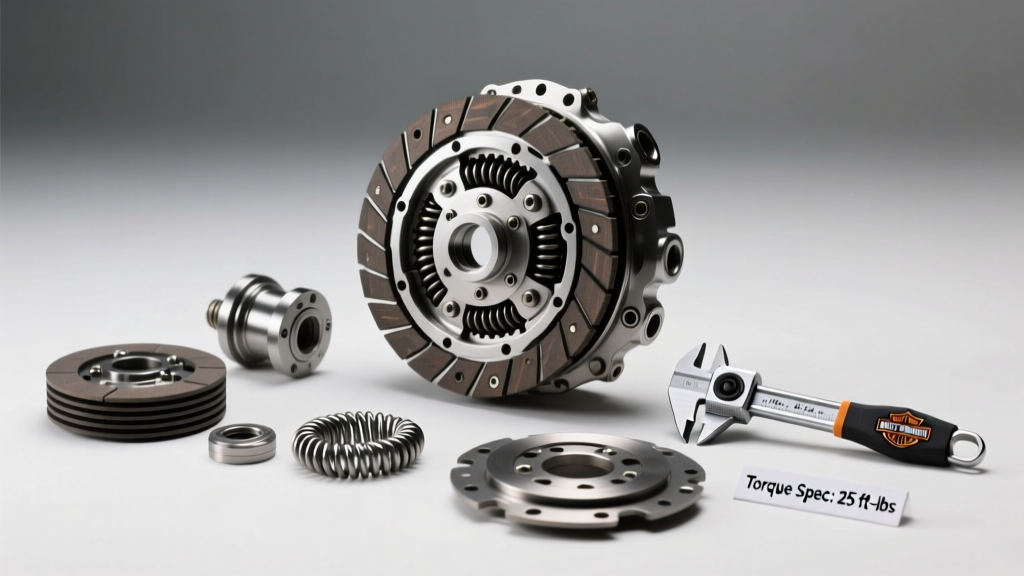
- LUK RepSet (Part # 07-062 for JK 3.8L/3.6L): LUK is the OEM manufacturer for many Chrysler manual applications. Their RepSets include the clutch disc, pressure plate, and crucially, the Concentric Slave Cylinder (CSC). Expect to pay around $380 - $450.
- Sachs OEM Replacement: Excellent for daily-driven JL models. Sachs offers a slightly softer pedal feel while maintaining high thermal capacity. Pricing hovers around $400.
- Exedy / Rhino Pac Heavy Duty: If you are running 35-inch tires or larger with steep re-gearing (e.g., 4.88 or 5.13 ring and pinion), you need an upgraded Kevlar or ceramic puck disc. These kits push the parts cost to $600 - $850.
Expert Warning: Never reuse the hydraulic Concentric Slave Cylinder (CSC) on an NSG370. If the transmission is out of the vehicle, the CSC must be replaced. A failing CSC will leak fluid directly onto your new friction disc, ruining a $1,500 job in less than 500 miles.
The Dual-Mass vs. Single-Mass Flywheel Dilemma
A major factor influencing the cost to replace clutch Jeep Wrangler units is the flywheel. Late-model JKs and early JLs with the 3.6L Pentastar V6 often utilize a Dual-Mass Flywheel (DMF) to dampen engine harmonics. DMFs are notorious for failing, rattling, and costing upwards of $800 to replace.
The Best Practice: Convert to a Single-Mass Flywheel (SMF). Companies like LuK and Sachs offer SMF conversion kits. While you may experience a slight increase in drivetrain chatter at idle, the SMF is virtually bulletproof, handles high-heat off-road crawling better, and cuts the flywheel replacement cost in half. Always verify your kit includes the correct SMF and matching clutch disc, as the friction material thickness differs between DMF and SMF setups.
Critical Torque Specs & Assembly Best Practices
Improper torque sequences are the leading cause of warped pressure plates and premature throwout bearing wear. When reinstalling the drivetrain on a 3.6L Pentastar JK or JL, adhere strictly to these specifications:
- Flywheel to Crankshaft (M10x1.5 bolts): 74 lb-ft (100 Nm). Use a flywheel holding tool and apply a medium-strength threadlocker (Loctite 243) to the bolts.
- Pressure Plate to Flywheel (M8 bolts): 21 lb-ft (250 in-lbs). You MUST use a star-pattern sequence, tightening in 3 progressive steps to ensure the diaphragm springs compress evenly.
- Bellhousing to Engine Block: 35 lb-ft (47 Nm).
- Transfer Case to Transmission: 25 - 30 lb-ft. Ensure the transfer case input shaft is perfectly aligned with the transmission output; forcing it will crack the NSG370’s aluminum rear housing.
- Crossmember to Frame: 75 lb-ft.
The NSG370 Fluid Trap
When reassembling, do not pour standard GL-5 75W-90 gear oil into the NSG370. The sulfur additives in GL-5 will eat the brass synchronizers, resulting in grinding shifts within 10,000 miles. You must use Mopar Manual Transmission Lubricant (Part # 04874459) or an equivalent Pennzoil Synchromesh fluid. The capacity is approximately 2.3 quarts. Sourcing genuine Mopar fluids from dealers or trusted suppliers like Mopar Official Parts is highly recommended.
Hydraulic Bleeding: The Hidden Labor Cost
The most frustrating aspect of the JK and JL clutch replacement is bleeding the hydraulic system. The NSG370 uses a hydraulic line that runs from the master cylinder on the firewall down to the internal CSC. Air naturally rises, meaning air gets trapped in the high-point loops of the line and inside the slave cylinder itself.
Pro-Tip for 2026: Standard pedal-pumping will not bleed this system. You must use a Motive pressure bleeder attached to the master cylinder reservoir, pushing fluid down. Alternatively, many top-tier Jeep specialty shops use a vacuum bleeder at the master cylinder line connection to pull air upward before ever engaging the pedal. If you fail to bleed it properly, the clutch will not disengage, and you will be forced to drop the transmission all over again to replace a dry-fired CSC.
Hidden Costs & Pitfalls to Avoid
When budgeting the final cost to replace clutch Jeep Wrangler assemblies, factor in these frequently overlooked items:
- Pilot Bearing Tool: The Chrysler pilot bearing requires a specific internal puller or a hydraulic extraction method. Prying it out with a screwdriver will score the crankshaft bore. Budget $40 for the correct Lisle or OTC pilot bearing puller.
- Rear Main Seal: With the flywheel off, the rear main seal is staring you in the face. A $15 Mopar rear main seal and 20 minutes of labor now will save you from an oil-soaked clutch disc later.
- Exhaust Hardware: The JK/JL exhaust manifold-to-downpipe bolts are notoriously rusted. Budget time (and potentially a torch or induction heater) for snapped exhaust studs, which can turn a 6-hour job into a 10-hour nightmare.
- Alignment Tool: While many kits come with a cheap plastic alignment tool, investing in a steel dummy shaft specific to the NSG370’s 23-spline input shaft ensures the transmission slides on without binding.
By understanding the generational differences, selecting the correct LUK or Sachs components, and respecting the NSG370’s unique hydraulic and fluid requirements, you can accurately predict the cost to replace clutch Jeep Wrangler components and ensure your rig is ready for both the highway and the Rubicon trail.
For more specific part fitments and aftermarket heavy-duty options, consult specialized off-road drivetrain retailers like Quadratec's Clutch Department.