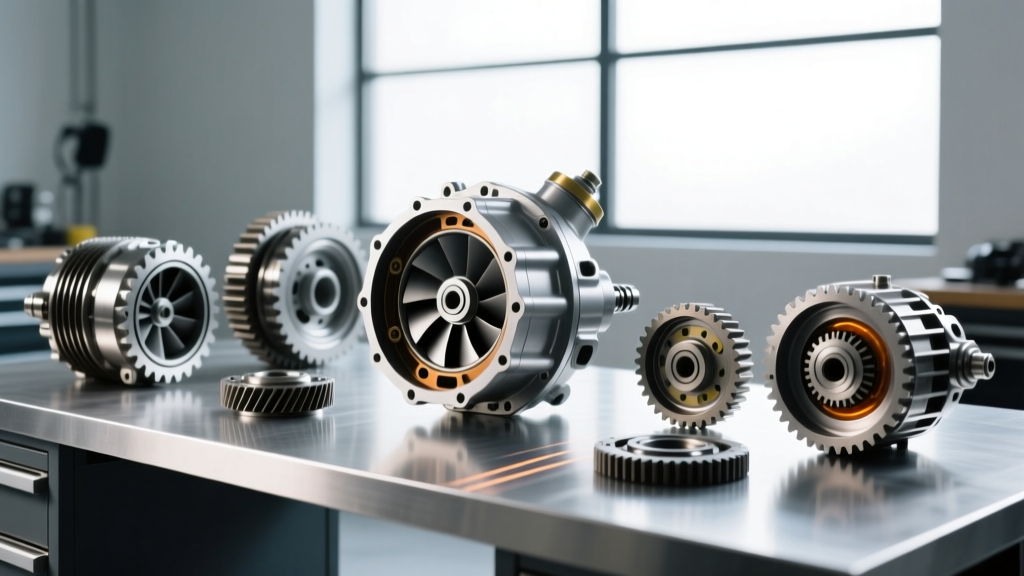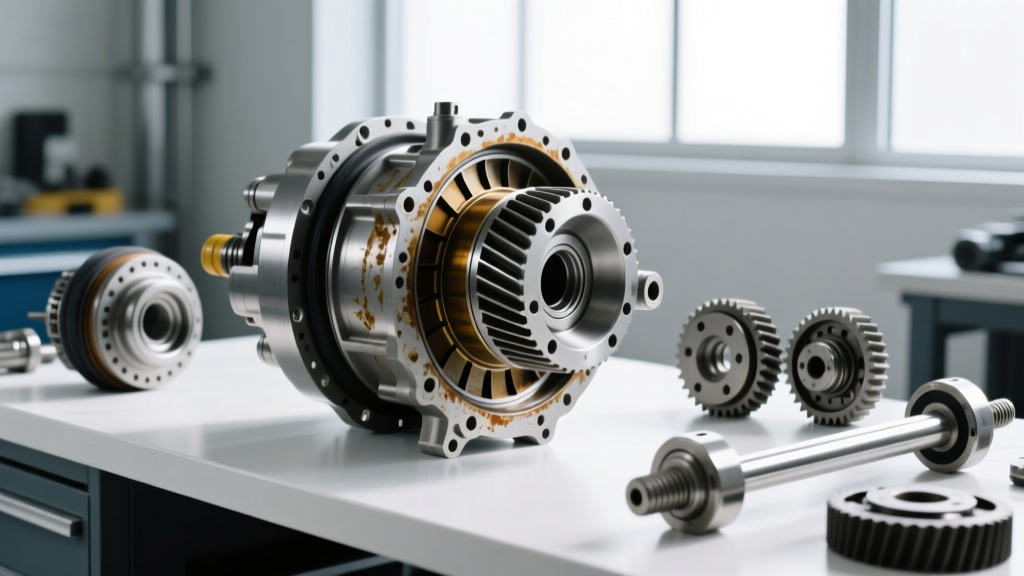
The Performance Bottleneck: Why Stock Converters Fail
When enthusiasts push their platforms past the 450-horsepower mark, the factory drivetrain inevitably becomes the weakest link. While many builders rush to upgrade transmission internals—adding billet servos, Raybestos high-friction clutches, and Sonnax valve body kits—they frequently overlook the fluid coupling. Running a stock torque converter behind a high-lift camshaft, a built bottom-end, or a forced-induction setup is a guaranteed path to a failed torque converter. In the 2026 landscape of performance tuning, where supercharged LT4 swaps and twin-turbo Coyote builds are commonplace, understanding the limits of your OEM torque converter is critical for putting power to the pavement without tearing up your driveline.
Original equipment converters are engineered for fuel economy, NVH (noise, vibration, and harshness) reduction, and low-RPM cruising. They utilize stamped steel covers, brazed fins, and single-disc torque converter clutches (TCC). When you introduce aggressive transmission tuning—such as raising line pressure to 220 PSI in a GM 6L80 to prevent clutch pack slip—the internal turbine and stator fins of an OEM converter can physically deform, separate, or shatter under the hydraulic violence. Furthermore, the stock single-disc TCC will instantly slip and burn up if subjected to the 600+ lb-ft of torque generated by modern performance builds.
Diagnosing a Failed Torque Converter in Modified Applications
The symptoms of a failing unit in a high-horsepower car differ significantly from those in a daily-driven commuter vehicle. In a performance application, you are subjecting the fluid coupling to extreme thermal and mechanical loads. Here is how a failure manifests when you are pushing the limits.
High-RPM Slippage and Flash Stall Inconsistencies
In performance tuning, 'flash stall' is the RPM at which the converter flashes when the vehicle launches under wide-open throttle (WOT). If you have a built 383 stroker or an LS engine with a 230+ duration camshaft, you need a converter that flashes at or slightly below your engine's peak torque RPM (typically 2,800 to 3,200 RPM). If your OEM converter is failing internally—specifically if the stator one-way clutch is seizing or the fins are bending back under load—you will experience severe high-RPM slippage. The engine will scream past its powerband without a corresponding increase in vehicle speed, mimicking a slipping transmission band but originating entirely within the fluid coupling.
Thermal Degradation and Fluid Shearing
A failing torque converter generates massive amounts of parasitic heat. In a heavy, modified vehicle (like a 4,500-lb C6 Corvette or a boosted G8/Tahoe), an inadequate stall speed forces the converter to operate in a constant state of slip at lower speeds. This shears the transmission fluid, breaking down its molecular structure and destroying its lubricity. If you are pulling the dipstick or checking the transmission temperature sensor via your OBD2 scanner and consistently seeing fluid temperatures exceeding 230°F (110°C) during normal street driving, your converter is likely failing to couple efficiently. Burnt-smelling, dark fluid is the immediate byproduct of this thermal degradation.
TCC Lockup Shudder Under Boost or High Load
Modern performance driving requires TCC lockup to eliminate parasitic power loss on the highway or during the top of a drag strip pass. However, OEM single-disc lockup clutches are generally only rated to hold up to 400 lb-ft of torque. If you apply boost or heavy throttle while the TCC is commanded locked, the clutch will micro-slip. This manifests as a violent, rhythmic shudder that feels like driving over highway rumble strips. This shudder is a definitive symptom of a failed torque converter clutch mechanism that is entirely overwhelmed by your engine's output.
Stock vs. Billet Performance Torque Converters: By the Numbers
To understand why an upgrade is mandatory for high-horsepower builds, we must look at the physical construction differences. Below is a comparison of OEM specifications versus popular aftermarket performance units for common platforms.
| Specification | OEM GM 4L60E (Stock) | TCI Super Street Fighter (Part #242500) | OEM GM 6L80 (Stock) | Precision Industries Vigilante (Billet) |
|---|---|---|---|---|
| Cover Material | Stamped Steel | Billet Steel | Stamped Steel | Billet Steel (CNC Machined) |
| TCC Design | Single-Disc Carbon | Multi-Disc High-Friction | Single-Disc Woven | Triple-Disc Carbon/Kevlar |
| Stall Speed Range | 1,600 - 1,800 RPM | 2,800 - 3,200 RPM | 1,400 - 1,600 RPM | Custom Tuned (2,400 - 4,000 RPM) |
| Max Torque Capacity | ~400 lb-ft | ~650 lb-ft | ~550 lb-ft | 1,000+ lb-ft |
| Average Cost (2026) | $250 (Remanufactured) | $850 - $950 | $400 (Remanufactured) | $1,300 - $1,600 |
Data sourced from manufacturer specifications and current aftermarket pricing. For deeper technical insights on fluid coupling dynamics, refer to Summit Racing Technical Advice.
Sizing Your Upgrade: Matching Stall Speed to the Powerband
Selecting the right performance converter is not about picking the highest stall speed available; it is about matching the converter's flash stall to your engine's specific torque curve and the vehicle's rear gear ratio. According to drivetrain engineers at TCI Automotive, a properly sized performance converter should flash stall roughly 500 to 800 RPM below the engine's peak torque RPM at wide-open throttle.
- Mild Cam / Naturally Aspirated (e.g., LS3 with a Texas Speed 224/228 cam): A 2,400 to 2,600 RPM stall converter provides excellent street manners while allowing the engine to bypass the 'loping' idle range and jump straight into its torque curve off the line.
- Aggressive Cam / Nitrous (e.g., Solid Roller or large hydraulic roller): Engines with heavy overlap and poor vacuum below 2,500 RPM require a 3,000 to 3,600 RPM stall to prevent loading the engine and causing violent driveline shock or converter shudder.
- Forced Induction / Centrifugal Supercharger: Because boost builds make massive torque low in the RPM range, you actually want a tighter (lower stall) converter—often in the 2,200 to 2,600 RPM range—paired with a triple-disc TCC to instantly transfer the low-end torque to the wheels without excessive slip.
Critical Installation Specs and Cooling Requirements
Even the best billet torque converter will suffer a premature death if installed incorrectly or paired with inadequate cooling. When swapping from an OEM unit to a heavy billet performance converter, you must adhere to strict installation protocols.
Fastener Torque Specifications and Pre-Load
Billet converters are significantly heavier and thicker than stock units. You must verify the engagement depth into the transmission oil pump before bolting it to the flexplate. The converter must be fully seated into the pump gears (usually requiring 3 distinct 'clunks' or drops). Once seated, measure the gap between the converter mounting pads and the flexplate. There should be a 1/8-inch to 3/16-inch gap. If the converter is flush against the flexplate before you pull the engine forward, you will destroy the transmission oil pump upon startup.
When bolting the converter to the flexplate, use high-grade hardware (Grade 8 or ARP). For standard GM LS applications, the flexplate-to-crank bolts must be torqued to 74 lb-ft with red threadlocker, while the converter-to-flexplate nuts/bolts should be torqued to 35-45 lb-ft depending on the fastener size (typically 3/8-inch or M8). Always consult the specific manufacturer's guidelines, as detailed in Holley Performance Tech resources.
Transmission Cooler Sizing for High-Slip Applications
A performance torque converter with a higher stall speed inherently generates more heat during street driving and stop-and-go traffic. The factory radiator-integrated transmission cooler is vastly insufficient for a modified vehicle. You must install a dedicated, standalone auxiliary cooler. For vehicles producing 400 to 700 horsepower, a minimum of a 45,000 GVW (Gross Vehicle Weight) rated cooler (such as the Tru-Cool 4590 or a dual-pass Derale unit) is mandatory. Plumb the cooler in series or parallel depending on your climate, and ensure you are running a high-quality synthetic fluid like Amsoil Signature Series or Red Line D4 to resist thermal shearing at the elevated temperatures inherent to performance torque converter operation.
Expert Tip: After installing a new billet torque converter, perform a rigorous break-in procedure. Cycle the transmission through all gears, allow the fluid to reach 180°F, and perform 3 to 5 moderate WOT pulls to bed in the multi-disc TCC clutches before subjecting the car to max-effort drag strip passes. This prevents immediate glazing of the friction materials.
Conclusion
Ignoring the fluid coupling in a high-horsepower build is a costly mistake. By recognizing the unique symptoms of a failed torque converter in performance applications—such as flash stall inconsistencies, high-load TCC shudder, and severe thermal fluid degradation—you can save your transmission from catastrophic collateral damage. Investing in a properly spec'd billet converter with a multi-disc clutch and pairing it with a high-capacity cooling system ensures that every ounce of your engine's hard-earned horsepower makes it directly to the tires.