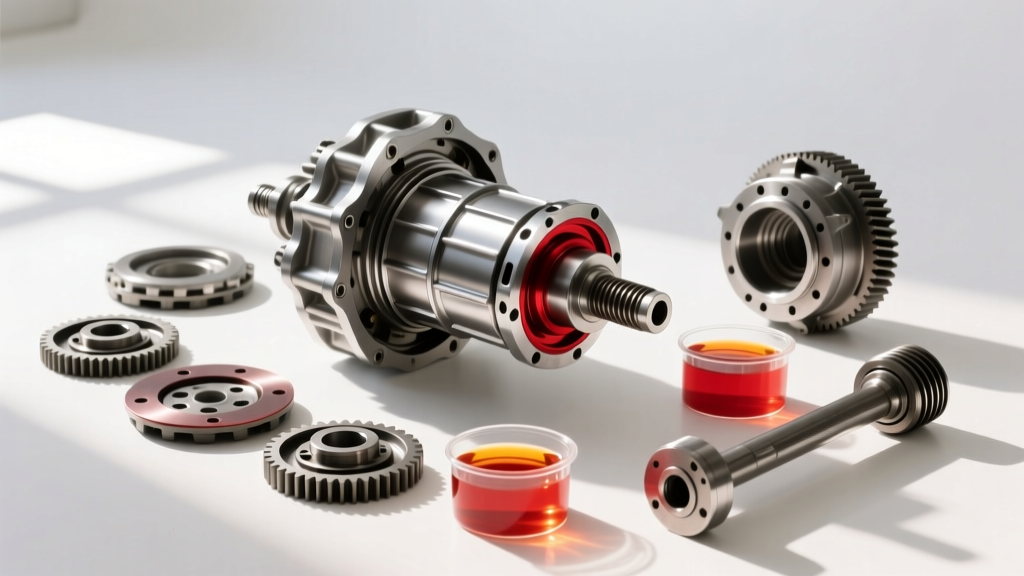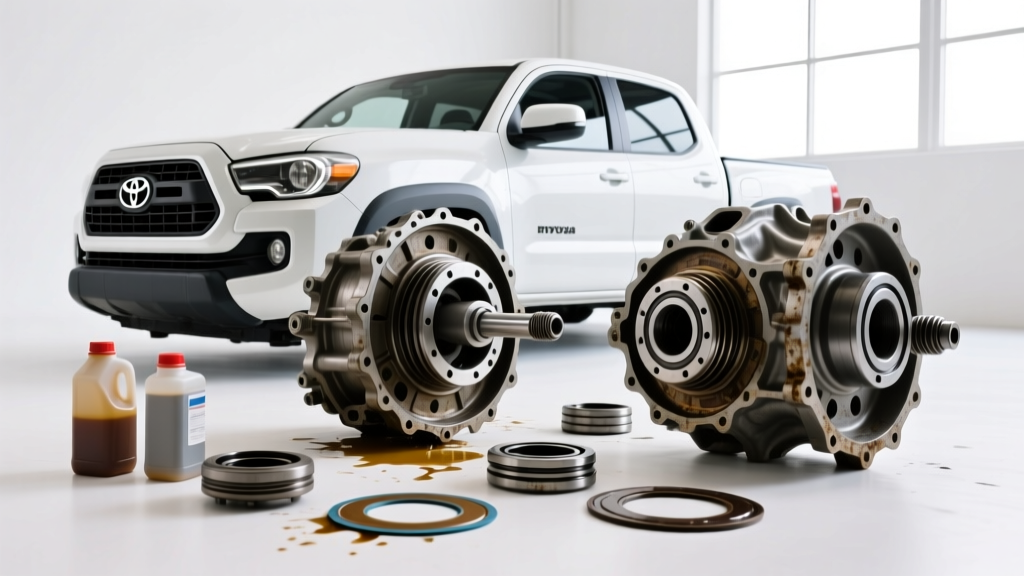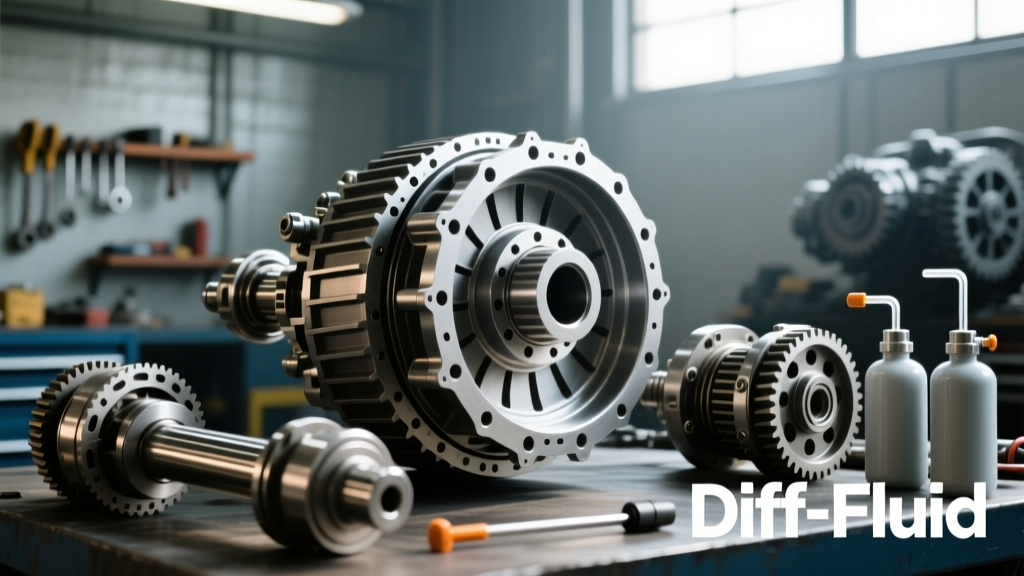
The landscape of heavy-duty truck and SUV drivetrains has evolved drastically by 2026. With modern turbo-diesel and high-output hybrid powertrains pushing well over 1,000 lb-ft of torque from the factory, the stress placed on ring and pinion gears, axle shafts, and differential bearings is at an all-time high. Whether you are daily driving a Ram 3500, towing heavy fifth-wheel loads with a Ford F-250, or wheeling a modified Chevy Tahoe Z71, proper differential maintenance and strategic upgrades are non-negotiable for drivetrain survival.
The Diagnostic Framework: Evaluating Your Axle Needs
When planning a drivetrain build or upgrade, enthusiasts and fleet managers often struggle to define their exact operational needs. To solve this, top-tier 4x4 shops apply a conceptual framework borrowed from psychometrics and survey design: a semantic differential question example. In traditional research, this method measures connotative meaning by having respondents rate a subject on a scale between two bipolar adjectives.
In the axle and differential world, you evaluate your setup by plotting it on opposing performance scales. Think of this semantic differential question example as your ultimate build diagnostic:
- Highway Cruising <------------------> Rock Crawling
- NVH (Noise) Tolerance <------------------> Maximum Traction
- Fuel Economy Focus <------------------> Extreme Towing Load
By answering this semantic differential question example for your specific rig, you eliminate guesswork. If your build leans heavily toward the 'NVH Tolerance' and 'Highway Cruising' side of the spectrum, a helical gear limited-slip differential (LSD) and a 75W-90 synthetic fluid are ideal. If you scale toward 'Rock Crawling' and 'Maximum Traction', you will require a selectable pneumatic locker, 4340 chromoly axle shafts, and a high-viscosity 75W-140 shock-proof gear oil.
2026 Heavy-Duty Axle Hardware & Maintenance Baselines
Before upgrading, you must understand the baseline hardware in your truck or SUV. The most prevalent heavy-duty axles in the North American market require specific maintenance intervals and torque specifications to prevent catastrophic failure under modern torque loads.
AAM 11.5" (Ram Heavy Duty)
The American Axle & Manufacturing (AAM) 11.5-inch rear axle is a staple in Ram 2500 and 3500 trucks. Featuring a massive 11.5-inch ring gear and 33-spline axle shafts in newer models, it is highly robust. However, the factory fluid capacity is roughly 3.75 quarts, and under heavy towing, fluid temperatures can exceed 250°F, leading to rapid shear breakdown of conventional petroleum-based oils. Upgrading to a high-capacity finned aluminum differential cover increases fluid volume by up to 1.5 quarts and drops operating temperatures by 15-20°F.
Dana Super 60 (Ford Super Duty)
Found in the front of modern Ford F-250 and F-350 trucks, the Dana Super 60 (often referred to as the Dana 60 HD) utilizes larger bearings and 35-spline inner shafts compared to the standard Dana 60. Front differential maintenance is frequently neglected because it is only engaged in 4WD. However, the internal shift motor and actuator mechanisms require clean, non-corrosive fluid to prevent binding. Always use a fluid meeting the Ford WSL-M2C192-A specification to protect the internal shift forks.
Differential Fluid Specifications & Performance Upgrades
Gear oil is the lifeblood of your axle assembly. The API GL-5 rating remains the standard for hypoid gear protection, but the MT-1 (Manual Transmission) additive packages found in premium synthetics offer superior thermal stability for 2026 towing applications. Below is a comparative breakdown of OEM versus performance fluid setups.
| Axle Model | OEM Fluid Spec | Performance Upgrade | Capacity | Est. Cost (2026) |
|---|---|---|---|---|
| AAM 11.5 (Rear) | 75W-90 Synthetic | AMSOIL Severe Gear 75W-90 | 3.75 Qts | $110 - $130 |
| Dana Super 60 (Front) | 80W-90 Conventional | Red Line 75W-90 NS Gear Oil | 2.5 Qts | $85 - $100 |
| GM 9.5" (SUV Rear) | 75W-90 Synthetic | Royal Purple Max Gear 75W-90 | 2.75 Qts | $90 - $115 |
| Dana 80 (Rear HD) | 75W-140 Synthetic | Lucas Oil Synthetic 75W-140 | 3.9 Qts | $120 - $145 |
Friction Modifiers and Additives
If your truck or SUV is equipped with a clutch-type limited-slip differential (such as the Auburn or Eaton clutch-based LSDs), the base gear oil is not enough. You must add a friction modifier (e.g., Ford XL-3 or equivalent) to prevent clutch chatter during tight, low-speed turns. Conversely, gear-driven lockers (like the Detroit Locker) and helical units (like the Torsen or Eaton Truetrac) do not require friction modifiers; in fact, adding them can reduce the locking bias and efficiency of the gear mesh.
Ring and Pinion Setup & Torque Specifications
When upgrading to lower numerical gears (e.g., moving from 3.73 to 4.30 or 4.88 ratios to compensate for 37-inch tires), the setup process is where most DIYers fail. A proper gear pattern is dictated by bearing preload, pinion depth, and backlash. According to Dana Spicer Aftermarket engineering guidelines, hypoid gear sets require precise alignment to distribute the immense torque load across the entire face of the gear tooth.
- Backlash Specifications: Most heavy-duty truck axles require a backlash setting between 0.006" and 0.010". This is measured using a dial indicator mounted to the differential housing. Anything looser than 0.012" will result in gear slap and eventual tooth shearing under shock loads.
- Pinion Bearing Preload: Measured in inch-pounds of rotational resistance. For a Dana 60 with a new crush sleeve, you typically need 25 to 35 in-lbs of total rotational drag. Reusing a crush sleeve is a cardinal sin in differential rebuilding; always use a solid spacer conversion kit (available from Yukon Gear & Axle) to eliminate crush sleeve fatigue over time.
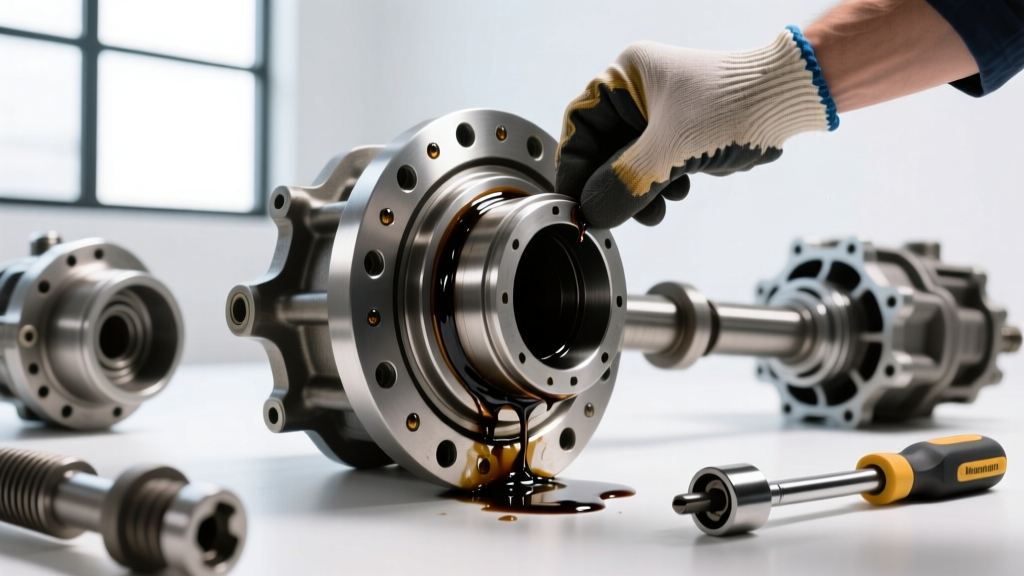
- Cover Bolt Torque: Over-torquing differential cover bolts is a common mistake that warps the mounting flange and causes chronic leaks. For the AAM 11.5 and Dana 60, cover bolts should be torqued to exactly 30-35 lb-ft in a crisscross pattern. Always apply a bead of high-temperature RTV silicone (like Permatex Ultra Black) and allow it to cure for 12 hours before filling with fluid.
- Ring Gear Bolt Torque: Ring gear bolts must be secured with Red Loctite (Threadlocker 271) and torqued to 120-130 lb-ft on most HD truck applications. Failure to use threadlocker will result in bolts backing out and destroying the carrier.
Selecting the Right Traction Device
Returning to our semantic differential question example framework, your choice of traction device hinges entirely on where your truck sits on the bipolar scale of daily drivability versus off-road performance.
1. Helical Gear LSD (e.g., Eaton Truetrac)
Ideal for SUVs and light-duty trucks that see 90% street use and 10% light trail or snow use. They operate silently, require no special additives, and provide seamless torque biasing. However, they cannot hold a lock if one wheel is completely off the ground (zero resistance).
2. Full Locking Differential (e.g., Detroit Locker)
The choice for dedicated trail rigs and heavy rock crawlers. It mechanically locks both axles together, providing 100% torque to both wheels. The trade-off is significant NVH (Noise, Vibration, and Harshness), including loud clunking during cornering and increased tire wear on pavement.
3. Selectable Pneumatic/Electronic Lockers (e.g., ARB Air Locker, Yukon Zip Locker)
The ultimate, albeit most expensive, solution for 2026 builds. These act as open differentials on the highway (preserving drivability and tire life) and lock solid at the flip of a switch when you hit the dirt. Installation requires routing air lines or electrical harnesses through the axle tube, necessitating a specialized hollow pinion nut or wiring slip-ring setup.
Conclusion
Maintaining and upgrading the differential on your truck or SUV is an exercise in precision and self-awareness. By utilizing a semantic differential question example to clearly define your vehicle's purpose, you can confidently select the right gear ratios, synthetic fluids, and traction devices. Whether you are setting backlash on a Dana Super 60 or flushing the AAM 11.5 with severe-duty synthetics, adhering to exact torque specifications and maintenance intervals will ensure your drivetrain survives the immense torque outputs of modern heavy-duty trucks.