The Physics of One-Way Clutches in High-Torque Powertrains
One-way clutches (OWCs), specifically sprag and roller designs, are the unsung heroes of powertrain torque management. Whether you are diagnosing clutch problems in heavy-duty and commercial vehicles equipped with Allison 4000 Series transmissions or troubleshooting the notorious Harley Davidson starter clutch on a high-compression 131-ci Milwaukee-Eight, the fundamental physics of wedge-locking mechanisms remain identical. As we move through 2026, commercial fleets are pushing higher torque outputs from engines like the Cummins X15, while motorcycle builders are dropping massive 131-ci and 144-ci S&S motors into touring frames. Consequently, OWC failure rates have spiked across both sectors due to extreme torsional loads.
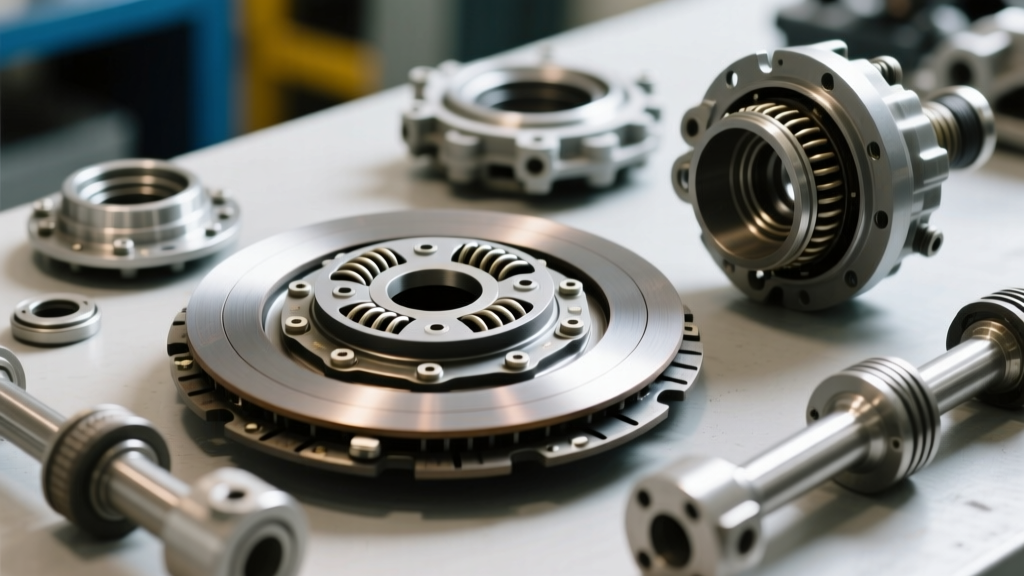
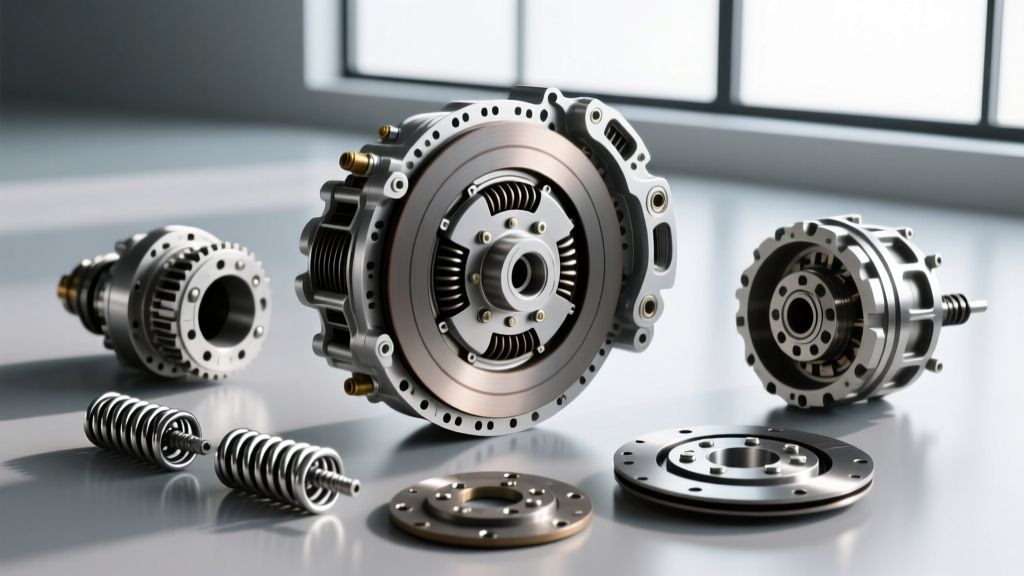
At the core of these systems is a simple mechanical premise: an inner race and an outer race separated by asymmetrically shaped elements (sprags or rollers). When rotated in the 'drive' direction, these elements wedge tightly between the races, locking them together to transfer torque. When rotated in the 'overrun' direction, the elements tilt or retract, allowing the races to freewheel. However, when subjected to extreme shock loading, inadequate lubrication, or severe torsional vibration, these components suffer from spalling, brinelling, and cage deformation. Understanding the failure modes of the Harley Davidson starter clutch provides a masterclass in diagnosing heavy-duty commercial sprag failures.
Heavy-Duty Commercial Clutch Problems: The Allison Stator Sprag
In heavy-duty commercial applications, the most critical one-way clutch is located inside the torque converter, specifically the stator sprag. In an Allison 3000 or 4000 Series transmission, the torque converter multiplies engine torque during initial acceleration. The stator, situated between the turbine and the impeller, redirects fluid flow to multiply torque. The stator sprag clutch locks the stator to the transmission shaft during this phase.
Diagnostic Protocol for Commercial Fleets
When the stator sprag fails, it typically fails in the 'freewheel' direction, meaning it can no longer lock the stator. The torque converter effectively becomes a simple fluid coupling, losing all torque multiplication. The symptoms are often misdiagnosed as internal transmission clutch pack wear, but a proper diagnostic sequence will isolate the stator sprag:
- The Stall Test: With the transmission in gear and the service brakes locked, apply full throttle. A healthy Allison 4000 Series torque converter will stall between 1,400 and 1,600 RPM (depending on the exact model and engine tuning). If the stator sprag has failed, the engine will rev freely past 2,200 RPM, indicating a complete loss of hydraulic resistance and torque multiplication.
- EGT and Thermal Monitoring: A slipping or failed stator sprag causes massive internal fluid shear. Fleet telematics will show Exhaust Gas Temperatures (EGTs) spiking over 1,250°F during takeoff, alongside transmission sump temperatures exceeding 240°F under light loads.
- Part Identification: The stator sprag assembly (often referencing Allison part number 29543242 or similar variant depending on the TC model) requires a complete torque converter teardown or replacement. While the sprag itself costs between $180 and $250, the R&R (Remove and Replace) labor and TC rebuilding costs routinely range from $3,500 to $4,500.
The Harley Davidson Starter Clutch: A Benchmark in Torsional Abuse
While a commercial truck's stator sprag operates in a fluid-dampened, hydrodynamic environment, the Harley Davidson starter clutch operates in a brutal, high-vibration, boundary-lubrication environment. Located inside the primary chaincase, the starter clutch (part number 32900-01A for many Twin Cam applications, with specific variants for the M8 platform) engages the engine's compensator sprocket to the starter motor gear reduction drive.
V-Twin engines produce massive torsional vibrations at low RPMs. When the starter motor engages, the starter clutch must instantly lock and transfer over 100 lb-ft of cranking torque to a high-compression piston. If the ignition timing is slightly off, or if the engine kicks back, the resulting shockwave hammers the starter clutch rollers or sprags against the inner race.
Diagnostic Protocol for V-Twin Starter Systems
Diagnosing a Harley starter clutch requires primary chaincase disassembly. Once the primary cover is removed and the chain tension is relieved, the mechanic must perform a manual rotation test:
- Directional Lockup: Rotating the starter gear assembly clockwise should instantly lock the engine over. Rotating it counter-clockwise should yield a smooth freewheel.
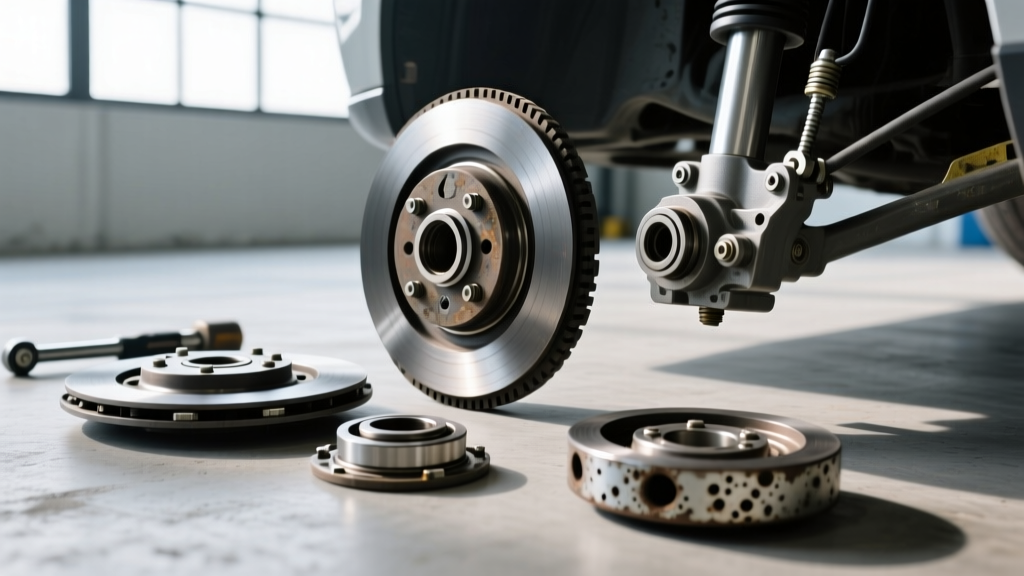
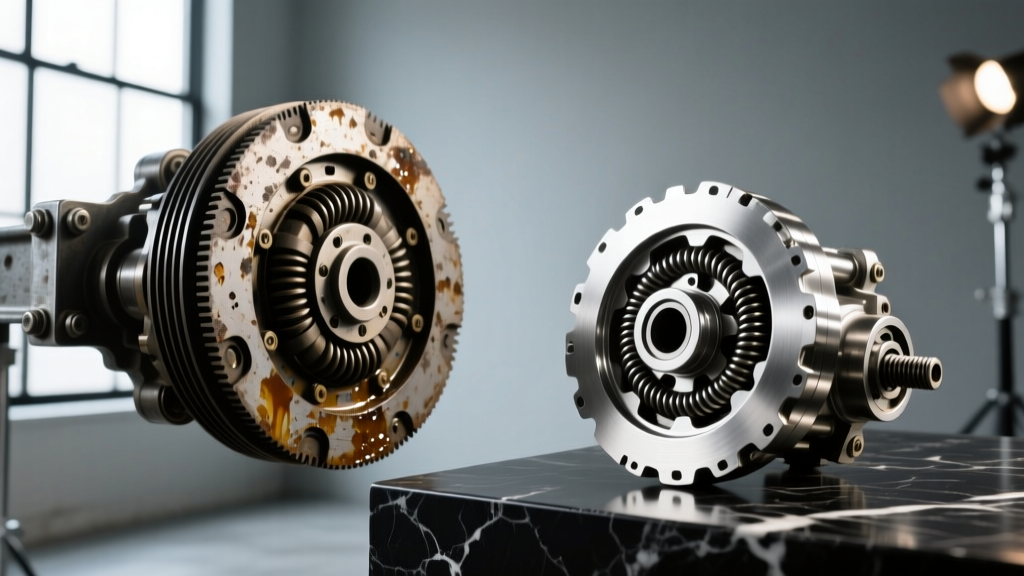
- Inspection for Brinelling: If the clutch slips under load, remove the starter clutch from the shaft. Inspect the inner race for 'brinelling'—small, crescent-shaped indentations caused by the rollers hammering into the steel during engine kickback.
- Spalling and Galling: Look for microscopic metal flakes (spalling) in the primary chaincase fluid. This indicates the outer race or sprag cage is disintegrating due to metal fatigue.
Failure Mode Comparison: Commercial vs. Motorcycle
While the mechanical principles are shared, the operational environments dictate entirely different failure modes. The table below contrasts the heavy-duty commercial sprag with the Harley Davidson starter clutch.
| Parameter | Allison 4000 Stator Sprag | Harley M8 / Twin Cam Starter Clutch |
|---|---|---|
| Mechanism Type | Sprag (Figure-8 wedge elements) | Roller or Sprag (depending on year/upgrade) |
| Primary Failure Cause | Thermal degradation & shock loading | Torsional vibration & low-RPM skidding |
| Operating Environment | Hydrodynamic (Submerged in ATF) | Boundary / Splash (Primary Chaincase Lube) |
| Key Symptom | Loss of torque mult., high EGT, high stall | Starter spins freely, loud grinding, kickback |
| Avg. Replacement Cost | $3,500 - $4,500 (Requires TC teardown) | $350 - $600 (Primary cover removal) |
| Performance Upgrade | DLC-coated races, high-capacity forged cages | Billet inner race, high-torque sprag conversion |
The Tribology Trap: Fluid Selection and Sprag Slippage
One of the most common causes of premature OWC failure in both sectors is incorrect fluid selection. According to SAE International Powertrain Standards, the friction modifiers present in a lubricant dictate how a sprag clutch transitions from freewheeling to locked. If the fluid is too 'slippery', the sprags will skid across the race instead of biting, leading to instant galling and catastrophic failure.
In Heavy-Duty Commercial Vehicles: Allison transmissions require fluids that meet the TES 295 or TES 668 specifications (such as TranSynd). These fluids possess specific shear-stability and friction profiles designed to allow the stator sprag to engage smoothly without chatter. Using a generic, off-brand ATF with incompatible friction modifiers will cause the sprag to slip during heavy-haul takeoffs, generating enough localized heat to weld the sprags to the cage.
In Harley Davidson Motorcycles: The primary chaincase requires a specific lubricant, such as Harley-Davidson Formula+ or Syn3. A fatal mistake made by many amateur mechanics is using standard automotive motor oil or heavy gear oil containing Molybdenum Disulfide (Moly) or Zinc additives in the primary chaincase. Moly is an extreme-pressure friction modifier designed to make metal surfaces slippery. When introduced to the Harley Davidson starter clutch, Moly prevents the rollers from biting the inner race during cranking. The starter motor spins, the clutch slips, and the resulting friction burns the primary fluid and destroys the starter clutch assembly within a few hundred starts.
Performance Upgrades and Assembly Specifications
For performance applications, stock OWCs are rarely sufficient. Upgrading these components requires precision assembly and adherence to strict torque specifications.
Upgrading the Harley Starter Clutch
For high-torque Harley builds (114-ci, 117-ci, or 131-ci), the stock roller-style starter clutch is a known weak point. The industry standard upgrade is a full sprag-style conversion kit featuring a billet steel inner race, offered by specialists like Baker Drivetrain. Sprag clutches offer a vastly superior surface contact area compared to rollers, distributing the cranking load evenly and eliminating the point-loading that causes brinelling.
Critical Assembly Specs (Harley M8 / Twin Cam):
- Compensator Sprocket Nut: Must be torqued to exactly 150 ft-lbs using Red Loctite 271 (High Strength). If this nut backs off, the starter clutch will misalign and shatter the primary cover.
- Starter Motor Mounting Bolts: Torque to 84-108 in-lbs. Over-torquing will distort the starter housing, causing the pinion gear to bind against the starter clutch ring gear.
- Primary Chain Deflection: Set to 3/8-inch to 1/2-inch cold. A loose primary chain will 'whip' during engagement, sending shockloads directly into the starter clutch sprags.
Heavy-Duty PTO and Torque Converter Reinforcements
In commercial sectors, upgrading the torque converter stator sprag involves sourcing aftermarket converters that utilize Diamond-Like Carbon (DLC) coated sprag races. DLC coatings reduce the coefficient of friction during the freewheel phase, minimizing heat generation, while providing an ultra-hard surface that prevents spalling during the high-shock lockup phase. For fleet managers operating in severe-duty environments (e.g., logging, heavy towing), specifying a reinforced torque converter with a billet stator and high-capacity sprag cage during the initial vehicle buildout can prevent the $4,000+ downtime penalty associated with stator failures.
Conclusion
Whether you are turning wrenches on a Class 8 commercial truck or tuning a high-horsepower V-Twin touring motorcycle, the one-way clutch remains a critical vulnerability in the drivetrain. By understanding the shared physics of sprag and roller mechanisms, respecting the tribological requirements of the lubricants, and implementing high-torque billet upgrades where necessary, technicians can eliminate the root causes of OWC failure. For more in-depth diagnostic procedures and Allison Transmission service support documentation, always refer to the latest OEM service bulletins and powertrain engineering standards.