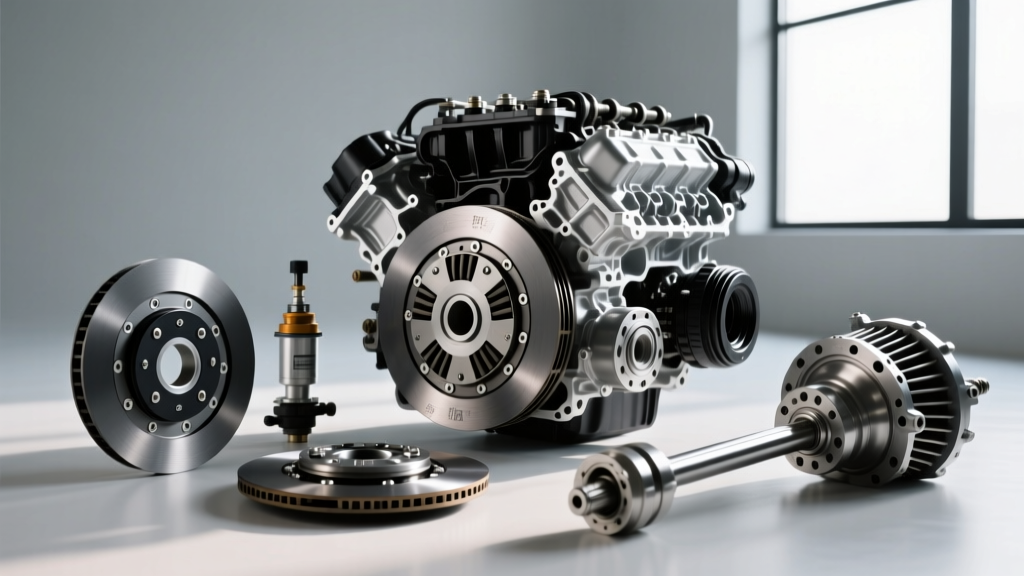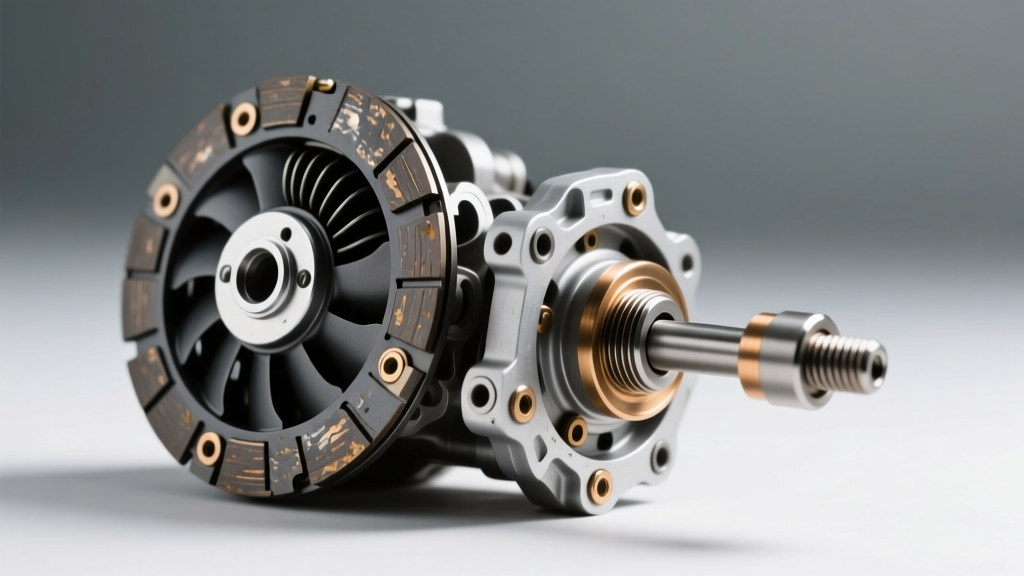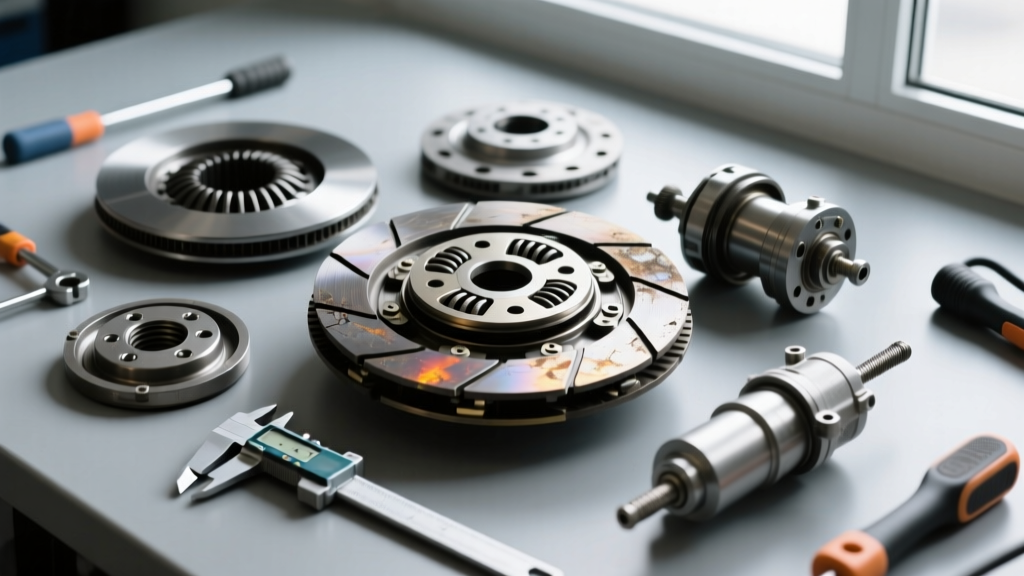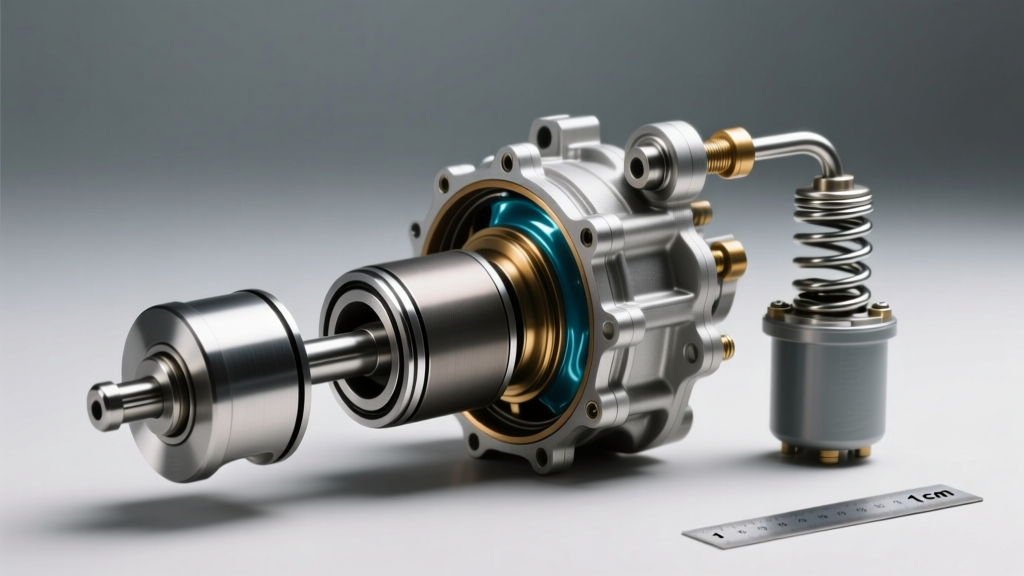
Understanding the Detroit Series 60 Hydraulic Fan Clutch Architecture
The Detroit Diesel Series 60 (encompassing the legendary 12.7L and 14.0L platforms) remains a cornerstone of heavy-duty vocational, marine, and industrial fleets well into 2026. While over-the-road highway trucks predominantly utilize pneumatic (air-actuated) fan clutches like the Kysor K100220, specialized heavy-haul, off-highway, and marine Series 60 applications frequently rely on hydraulic fan drives and hydraulic clutch actuation systems. Diagnosing these hydraulic clutch systems requires a fundamental shift in diagnostic strategy, moving away from standard air-line leak-down tests toward high-pressure fluid dynamics and electronic Pulse Width Modulation (PWM) verification.
A common and costly misdiagnosis occurs when technicians treat a hydraulic fan drive—such as those engineered by Horton or BorgWarner—like a traditional pneumatic clutch. They spend hours tracing air lines and checking the dash-mounted rocker switch, completely ignoring the hydraulic pump, proportional solenoid valves, and the engine's hydraulic PTO (Power Take-Off) loop. This guide provides a comprehensive, expert-level preventive maintenance and diagnostic framework specifically for hydraulic clutch systems paired with the Detroit Series 60 engine.
Core Symptoms of Hydraulic Fan Clutch Failure
Before connecting gauges or scanning the DDEC (Detroit Diesel Electronic Controls) ECM, technicians must identify the physical symptoms that isolate the failure to the hydraulic clutch circuit rather than the engine's primary cooling loop or the hydraulic pump itself.
- Parasitic Horsepower Loss (Clutch Won't Disengage): The fan remains at a 1:1 ratio with the engine crankshaft even at cold startup or low-load idle. This is typically caused by a mechanical failure inside the hydraulic motor, a stuck proportional spool valve, or a loss of the PWM ground signal from the ECM.
- Severe Overheating at Idle (Clutch Won't Engage): The fan fails to pull air through the radiator charge air cooler (CAC) under high load. This points to hydraulic pump cavitation, a sheared pump drive spline, or a clogged high-pressure filter restricting flow to the clutch motor.
- High-Frequency Whining or Cavitation Noise: A distinct whine emanating from the front cover or accessory drive indicates that the hydraulic fluid is aerated, the reservoir breather is clogged, or the suction hose is collapsing under the vacuum of the gear pump.
- Erratic Fan Speed Surging: The fan speeds up and slows down rhythmously without corresponding changes in engine coolant temperature (ECT). This is a hallmark of a failing PWM solenoid or contaminated hydraulic fluid causing the spool valve to stick and release intermittently.
Step-by-Step Hydraulic Clutch System Diagnosis
Proper diagnosis of a Detroit Series 60 hydraulic fan clutch requires verifying three distinct domains: hydraulic pressure and flow, electrical solenoid actuation, and fluid integrity. According to Horton's heavy-duty thermal management guidelines, skipping any of these three domains leads to premature replacement of functional components.
1. Hydraulic Pressure and Flow Verification
Unlike air clutches that operate on 100-120 PSI shop air, hydraulic fan drives operate under extreme pressure. You will need a 5,000 PSI hydraulic test gauge with the appropriate JIC 37-degree flare adapters.
- Locate the pressure test port on the hydraulic fan motor or the manifold block near the front of the engine.
- Connect the test gauge and start the Series 60 engine. Allow it to idle at 600 RPM with a cold coolant temperature (below 160°F / 71°C).
- Disengaged State Reading: In bypass or disengaged mode, system pressure should read between 150 and 300 PSI. If pressure is pegged at 2,500+ PSI while cold, the proportional valve is mechanically jammed in the 'engaged' position, or the ECM is defaulting to a fail-safe 'limp-home' mode (full fan engagement).
- Engaged State Reading: Use a diagnostic scan tool to command a 100% fan clutch engagement override, or wait until the ECT exceeds 210°F (99°C). System pressure should immediately spike to 2,800 - 3,200 PSI. If pressure fails to exceed 1,500 PSI under command, the hydraulic gear pump is worn internally, or there is a massive internal bypass leak in the fan motor.
2. PWM Solenoid and Electrical Circuit Diagnosis
Modern Series 60 applications utilizing the DDEC IV or DDEC V ECM control the hydraulic fan clutch via a Pulse Width Modulated (PWM) signal sent to a proportional electro-hydraulic solenoid. Standardized testing procedures align with SAE International hydraulic standards for electronic valve actuation.
- Voltage Verification: Back-probe the solenoid connector. You should see a clean 12V supply from the ignition relay. A drop below 11.5V indicates high resistance in the chassis harness, common in older vocational trucks exposed to road salt and vibration.
- Oscilloscope Duty Cycle Testing: Connect an oscilloscope to the ECM ground control wire. At cold idle, the duty cycle should be roughly 10% to 15% (minimum fan speed). As the ECM commands engagement, the duty cycle should smoothly ramp up to 85% to 95%. If the scope shows a flat 12V line (0% duty cycle) despite high engine temps, the ECM driver circuit has failed, or the coolant temperature sensor is providing erroneous data to the DDEC module.
- Solenoid Resistance Check: Disconnect the solenoid and measure resistance across the pins. Typical proportional solenoids read between 4.5 and 6.5 ohms at room temperature. An open circuit (OL) confirms a burnt internal coil.
3. Fluid Condition and Contamination Analysis
Hydraulic clutch systems are highly sensitive to fluid viscosity breakdown and particulate contamination. The tight tolerances of the proportional spool valve (often less than 5 microns) mean that microscopic debris will cause the clutch to hang up.
Draw a fluid sample from the hydraulic reservoir. The fluid should be a clear, amber color (if using standard AW46 or AW68 anti-wear hydraulic fluid). If the fluid appears milky, water has ingressed the system, destroying the lubricity and causing the clutch motor bearings to score. If the fluid smells burnt and is dark brown, the system has been operating in a state of continuous high-pressure bypass, generating massive heat. In either case, a complete system flush and filter replacement is mandatory before installing a new solenoid or pump.
Preventive Maintenance Schedule for Hydraulic Clutches
To maximize the lifespan of a hydraulic fan drive on a Detroit Series 60, fleet managers must adhere to a strict preventive maintenance (PM) schedule. Neglecting the hydraulic filters is the number one cause of proportional valve failure.
| Interval (Hours/Miles) | Maintenance Action | Specification / Part Reference | Target Torque / Setting |
|---|---|---|---|
| 250 Hours / 15,000 Miles | Inspect hydraulic reservoir level and breather cap | ISO 46 or ISO 68 Anti-Wear Hydraulic Fluid | N/A - Fill to sight glass mid-line |
| 500 Hours / 30,000 Miles | Replace high-pressure hydraulic inline filter | Donaldson P550371 or Baldwin BH10000 (10-micron absolute) | Filter housing: 35-45 lb-ft |
| 1,000 Hours / 60,000 Miles | Check hydraulic pump drive splines and coupling | Inspect for metal shavings on magnetic dipstick | Pump mounting bolts: 45-55 lb-ft |
| 2,000 Hours / 120,000 Miles | Complete fluid flush and hose inspection | Parker 9000 Series or equivalent abrasion-resistant hose | JIC Fittings: See torque chart below |
Torque Specs and Reinstallation Guidelines
When replacing hydraulic lines, the fan hub, or the clutch motor itself, precise torque application is critical to prevent catastrophic fluid leaks or front-cover damage on the Series 60 block. Always use a calibrated torque wrench and reference Parker Hannifin's hydraulic fitting guidelines for JIC flare connections.
- Fan Hub Mounting to Front Pulley: 235-265 lb-ft (M16 Grade 10.9 bolts). Always apply medium-strength threadlocker (e.g., Loctite 243) to prevent backing out due to harmonic vibration.
- Hydraulic Pump Mounting Bolts: 45-55 lb-ft. Ensure the O-ring seal on the pump flange is lubricated with clean hydraulic fluid prior to installation to prevent pinching.
- JIC 37° Flare Fittings (3/4"-16 Thread): 140-160 lb-ft. Never use Teflon tape on JIC or O-ring face seal (ORFS) hydraulic fittings, as shredded tape will instantly destroy the hydraulic clutch motor.
- JIC 37° Flare Fittings (1/2"-14 Thread): 90-110 lb-ft.
Cost Analysis: Repair vs. Replacement in 2026
Understanding the financial impact of hydraulic clutch components helps fleet managers and owner-operators make informed decisions when diagnosing a Detroit Series 60 cooling issue. Prices reflect the 2026 heavy-duty aftermarket landscape.
- Hydraulic Gear Pump Replacement: $1,200 - $1,800. (Often misdiagnosed; always verify suction line vacuum before condemning the pump).
- Proportional Solenoid Valve: $350 - $550. (The most common failure point due to fluid contamination).
- Hydraulic Fan Motor: $1,500 - $2,400. (Requires specialized pullers to remove from the fan shroud without damaging the radiator CAC).
- Complete Hose Assembly (Custom Parker 9000 series): $150 - $300 per line. (Always replace both pressure and return lines if one fails, as internal rubber degradation happens simultaneously).
- ECM Fan Driver Repair: $800 - $1,200. (If the DDEC module internal transistor blows, sending the ECM out for repair is significantly cheaper than buying a new dealership unit).
Final Diagnostic Takeaways
Diagnosing a hydraulic clutch system on a Detroit Series 60 requires a methodical approach that bridges heavy mechanical torque and precise electronic diagnostics. By verifying hydraulic pressure parameters, analyzing the PWM duty cycle from the DDEC ECM, and enforcing strict fluid contamination controls, technicians can accurately pinpoint failures without resorting to the 'swap-and-hope' method. Proper preventive maintenance of the hydraulic filtration system remains the single most effective way to ensure the fan clutch operates flawlessly, protecting the Series 60 engine from thermal degradation and maximizing fuel efficiency across the fleet.