While automotive enthusiasts and track-day drivers obsess over the lightning-fast, computer-managed shifts of twin clutch cars like the Porsche 911 GT3 or the Ford Mustang Shelby GT500, the heavy-duty commercial sector faces an entirely different, brute-force friction challenge. In passenger vehicles, dual-clutch transmissions (DCTs) prioritize shift speed and lightweight packaging. In the Class 8 commercial trucking world, however, 'twin clutch' refers to massive twin-plate or twin-disc friction clutches designed to absorb over 2,000 lb-ft of torque without suffering catastrophic thermal degradation.
As we navigate the 2026 landscape of heavy-duty powertrains, aggressive downspeeding strategies and high-torque diesel and hybrid-electric setups are pushing standard 14-inch single-plate clutches to their absolute mechanical limits. For fleet managers, owner-operators, and heavy-duty performance builders, understanding the diagnostic symptoms of commercial clutch failure and knowing when to upgrade to a twin-plate setup is critical for maximizing uptime and drivetrain longevity.
The Torque Reality of 2026 Class 8 Powertrains
Modern heavy-duty engines, such as the Cummins X15 Efficiency Series and the Detroit DD15, are routinely generating 1,850 to 2,050 lb-ft of torque at incredibly low RPMs (often peaking between 900 and 1,100 RPM). This downspeeding trend improves fuel economy but generates immense torsional vibration and thermal stress at the flywheel. Standard organic single-plate clutches, which typically max out around 1,650 lb-ft of continuous holding capacity, simply cannot cope with the sustained heat generated during heavy-haul starts on a 6% grade.
Expert Insight: Upgrading from a single-plate organic clutch to a twin-plate cerametallic setup is no longer just for specialized heavy-haul permit trucks; it is becoming the baseline requirement for standard 80,000 lb GVW fleets operating in mountainous terrains.
Diagnosing Heavy-Duty Clutch Failure Modes
Before tearing into the bellhousing, accurate diagnosis is required to differentiate between a worn friction disc, a failed release bearing, or a compromised clutch brake. Commercial clutches exhibit distinct symptoms that differ vastly from the lightweight setups found in twin clutch cars.
1. High-Gear Slip Under Load (Thermal Degradation)
Unlike passenger cars where slip is immediately obvious during hard acceleration, heavy-duty clutch slip often manifests in top gears (9th or 10th) while climbing a grade. If the engine RPM surges without a corresponding increase in vehicle speed, the organic friction facings have likely glazed or burned due to excessive heat. In single-plate setups handling over 1,800 lb-ft, the clamp load of the pressure plate springs is overcome by the engine's torque output, resulting in micro-slipping that eventually turns the friction material into glass.
2. Clutch Brake Drag and Incomplete Disengagement
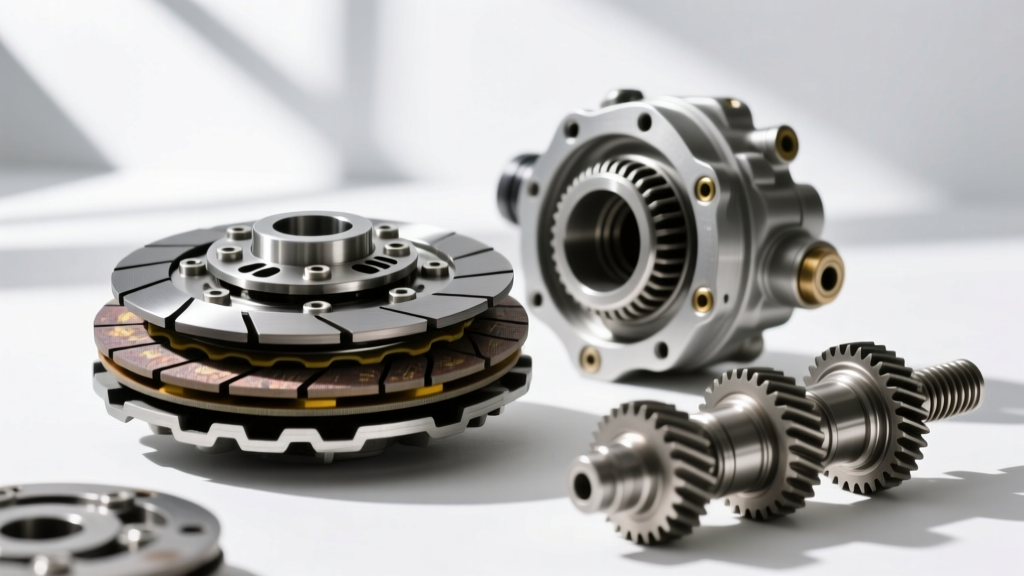
Heavy-duty manual transmissions (like the Eaton Fuller 10, 13, and 18-speed models) rely on a clutch brake to stop the input shaft from spinning, allowing for smooth first-gear and reverse engagement. If the driver experiences severe gear grinding or difficulty shifting into low gears from a dead stop, the clutch brake may be worn, or the release bearing travel is misadjusted. Furthermore, in twin-disc setups, worn intermediate drive straps or warped separator plates can prevent the clutch from fully releasing, causing drag and spline wear on the transmission input shaft.
3. Release Bearing Chatter and Torsional Vibration
A distinct rattling or chatter at idle (around 600-800 RPM) that disappears when the clutch pedal is depressed is a hallmark of torsional vibration. Heavy-duty engines produce massive firing pulses. If the clutch disc's internal dampening springs are fatigued, or if the driveline lacks an adequate vibration isolator, the release bearing will rattle against the transmission bearing retainer. Upgrading to a twin-plate clutch with advanced multi-stage dampening springs is the definitive fix for this harmonic resonance.
Upgrade Pathways: Single vs. Twin-Plate Commercial
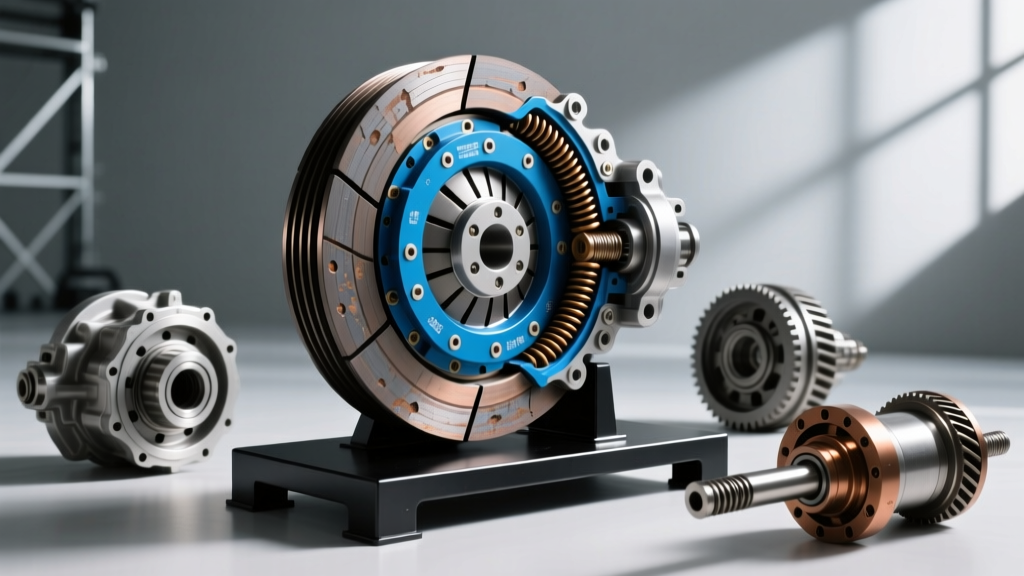
When replacing a failed commercial clutch, upgrading to a twin-plate (twin-disc) assembly provides a massive increase in torque capacity and thermal mass without requiring a larger bellhousing. Below is a direct comparison of standard commercial options available through major suppliers like Eaton Vehicle Group Drivetrain Solutions and Dana Spicer.
| Specification | Eaton Solo 15.5-inch (Single Plate) | Eaton Advantage Twin-Plate |
|---|---|---|
| Friction Material | Organic / High-Temp Composite | Cerametallic / Sintered Iron |
| Max Torque Capacity | 1,650 lb-ft | 2,250 lb-ft |
| Clamp Load | 3,800 lbs | 4,200 lbs (Distributed across 2 plates) |
| Pedal Effort | Moderate (Solo diaphragm spring) | High (Requires pedal assist or hydraulic boost) |
| Estimated Pricing (2026) | $950 - $1,400 | $2,800 - $4,200 |
Note: When upgrading to a twin-plate cerametallic clutch, ensure the transmission input shaft splines are inspected. Cerametallic materials are highly aggressive and will rapidly destroy worn 1.75-inch x 10-spline or 2.0-inch x 10-spline input shafts if excessive backlash is present.
Precision Installation and Torque Specifications
Installing a heavy-duty commercial clutch requires strict adherence to torque specifications and alignment procedures. A sloppy installation will destroy a $3,500 twin-plate clutch in under 20,000 miles. Follow these critical benchmarks:
- Flywheel Resurfacing and Runout: Never install a new heavy-duty clutch on a used flywheel without resurfacing. Maximum allowable flywheel face runout is 0.004 inch TIR (Total Indicator Reading). Flywheel-to-crankshaft bolts (typically Grade 8) must be torqued to 125 lb-ft using a high-strength threadlocker like Loctite 262.
- Bellhousing Alignment: This is the most skipped step in commercial bays. SAE #1 and SAE #2 bellhousings must be checked for concentricity with the crankshaft. Maximum allowable bellhousing bore runout is 0.010 inch TIR. Exceeding this will cause the release bearing to wear a groove into the transmission bearing retainer, leading to catastrophic fluid leaks and input shaft seizure.
- Clutch Brake Squeeze Adjustment: The clutch brake must be 'squeezed' between the release bearing and the transmission housing when the pedal is fully depressed to the firewall. The correct squeeze dimension is 0.500 inch to 0.625 inch. If the gap is too large, the clutch brake will not engage, causing gear grind. If too small, the clutch will not fully engage, causing slip and premature brake failure.
- Intermediate Plate Clearance (Twin-Plate Only):strong> When installing a twin-disc setup, the intermediate drive plate must have a minimum of 0.030 inch to 0.050 inch of axial float when the clutch is disengaged. Failure to verify this float with feeler gauges during installation guarantees clutch drag and first-gear grinding.
Final Thoughts on Fleet Performance
The engineering marvels that allow twin clutch cars to execute 50-millisecond shifts on a road course are fascinating, but they pale in comparison to the sheer mechanical brute force required to launch an 80,000-pound commercial rig up a 7% grade. As 2026 emission standards and hybrid heavy-duty architectures continue to push low-end torque figures past the 2,000 lb-ft barrier, the single-plate organic clutch is rapidly becoming a relic for heavy-haul applications.
By accurately diagnosing thermal slip, harmonic chatter, and clutch brake drag, and by strategically upgrading to twin-plate cerametallic assemblies, fleet operators can drastically reduce drivetrain warranty claims and unscheduled downtime. Always consult the latest American Trucking Associations (ATA) Technology & Maintenance Council recommended practices for heavy-duty clutch installations to ensure your fleet stays on the road and out of the shop.