The Divide: Heavy-Duty Commercial vs. Motorcycle Performance Clutches
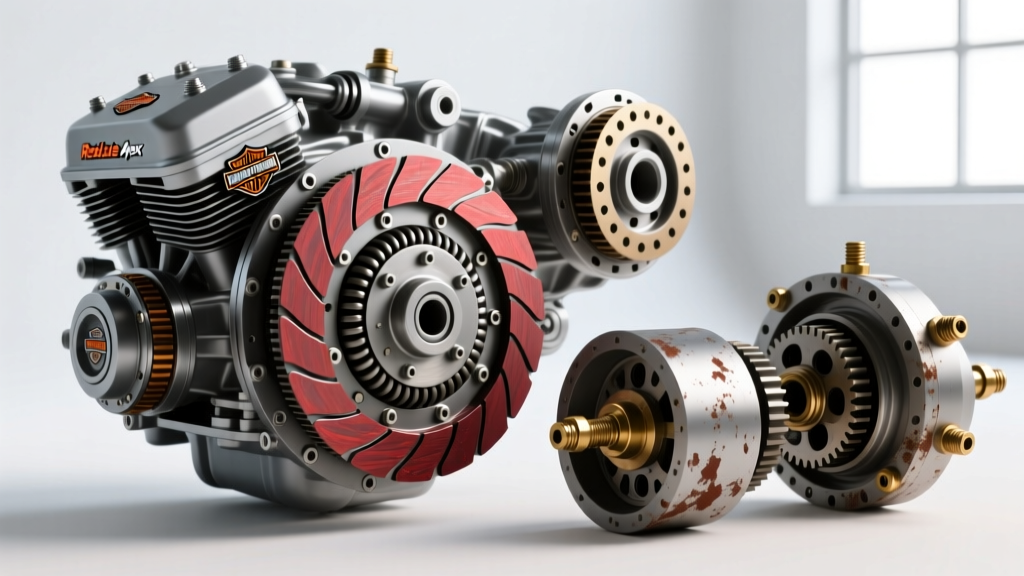
When evaluating drivetrain performance, the engineering priorities between commercial fleet vehicles and recreational motorcycles exist in entirely different universes. A technician reading a Rekluse Apex Clutch Harley M8 review is primarily concerned with lightweight actuation, lever feel, eliminating low-speed drag, and managing the high-vibration pulses of a 114ci Milwaukee-Eight V-Twin engine. In stark contrast, Class 8 commercial clutch diagnostics and upgrades revolve around thermal mass, torsional shock absorption, and the brute-force requirement of moving an 80,000 lb Gross Combination Weight (GCW) up a 6% grade.
As we navigate the 2026 landscape of heavy-duty trucking, where engines like the Cummins X15 and Detroit DD15 are pushing upwards of 2,050 lb-ft of torque, clutch system diagnostics require a highly specialized, data-driven approach. Whether you are maintaining a fleet of Freightliner Cascadias with Eaton Fuller RTLO-18918B 18-speed manuals or spec'ing automated manual transmissions (AMTs) like the ZF TraXon, understanding the failure modes of heavy-duty friction materials is critical for minimizing downtime and maximizing drivetrain longevity.
Core Diagnostic Symptoms in Class 8 Commercial Clutches
Heavy-duty clutches—typically 14-inch single-plate or 15.5-inch twin-plate configurations—fail in ways that directly reflect the immense low-end torque and high-cycle shifting demands of commercial trucking. Below are the primary diagnostic indicators of impending failure.
1. Torsional Damper Spring Fracture and Driveline Clunk
Modern high-displacement diesel engines generate aggressive low-frequency torsional vibrations. The clutch disc's internal torsional damper springs are engineered to absorb these shockwaves before they reach the transmission input shaft. When these springs fracture or fatigue, the primary symptom is a severe metallic clunking at idle, accompanied by harsh gear engagement. If ignored, the unmitigated torsional shock will rapidly destroy the splines on the transmission input shaft and the clutch disc hub, turning a $1,500 clutch job into a $6,000 transmission teardown.
2. Clutch Brake Dragging and Squeeze Degradation
Unlike light-duty vehicles, heavy-duty manual transmissions utilize a clutch brake—a friction disc mounted on the input shaft that stops the transmission's internal rotation to allow stationary gear engagement. A common diagnostic complaint is "hard shifting" or gear grinding when starting from a stop. This is rarely a clutch disc issue; rather, it is a clutch brake adjustment failure. The clutch brake squeeze (the distance the pedal travels after the release bearing contacts the clutch brake) must be precisely between 0.500" and 0.625". If the linkage has stretched or the firewall stop is misadjusted, the clutch brake will not engage, causing catastrophic gear grinding.
3. Release Bearing and Input Shaft Sleeve Wear
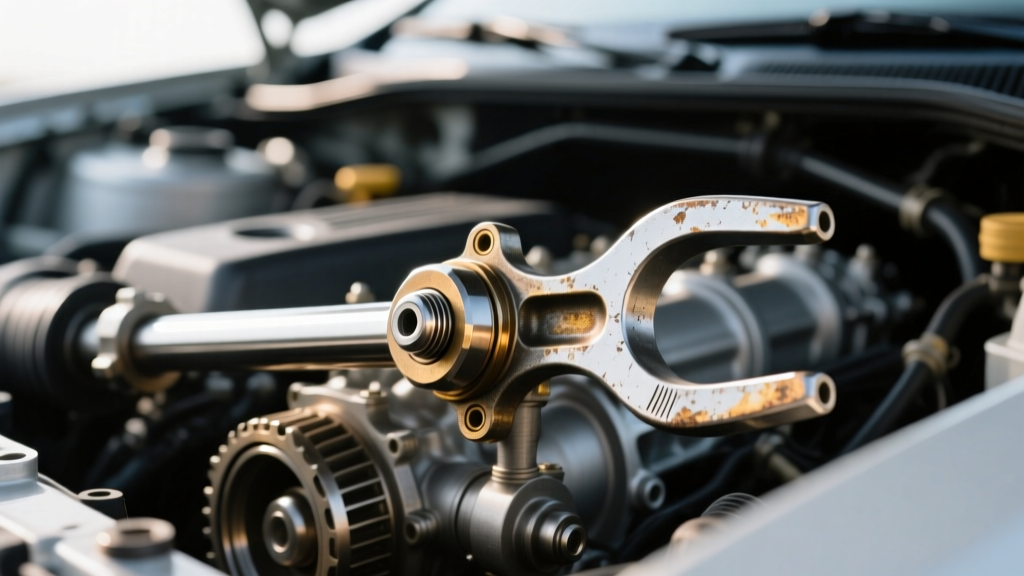
The throw-out bearing rides continuously on the transmission input shaft sleeve during clutch disengagement. In high-mileage commercial applications, inadequate lubrication or "riding" the clutch pedal causes the bearing to wear a physical groove into the hardened steel sleeve. Diagnostics involve checking for lateral play and a high-pitched metallic squeal that changes pitch with engine RPM. If the sleeve is grooved beyond 0.010" depth, the transmission must be disassembled to replace the main drive gear shaft, as a new bearing will bind on the damaged surface.
Heavy-Duty Clutch Upgrade Paths: Organic vs. Cerametallic
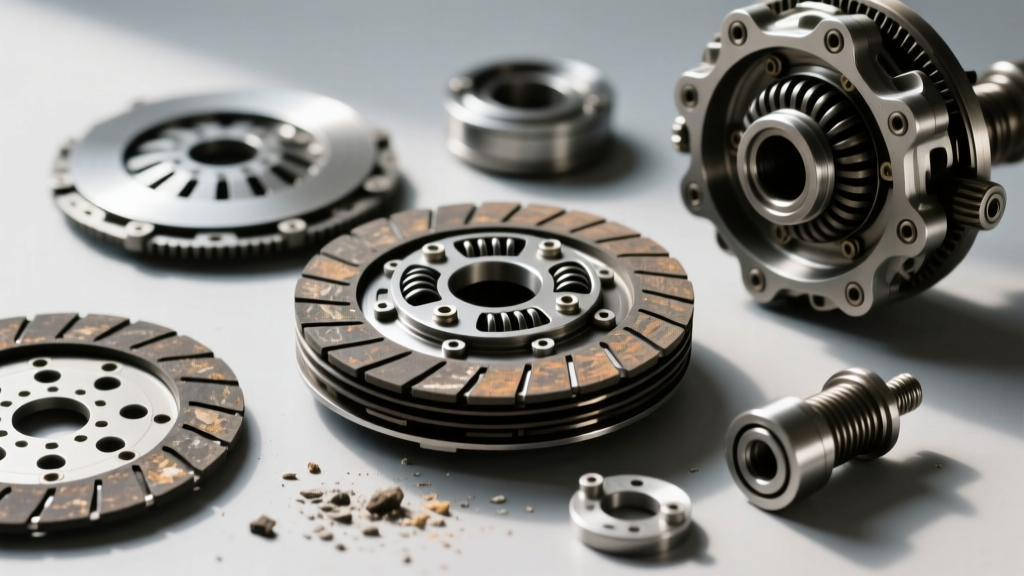
When a heavy-duty clutch reaches the end of its service life, fleet managers must decide between replacing it with an OEM-equivalent organic disc or upgrading to a performance-oriented Cerametallic twin-disc setup. Upgrading is highly recommended for severe-duty applications, such as heavy-haul, logging, or frequent mountainous routing.
| Friction Material | Configuration | Max Torque Capacity | Thermal Limit | Best Application | Est. Kit Cost (2026) |
|---|---|---|---|---|---|
| Organic (Full-Faced) | 14" Single Plate | 1,450 lb-ft | 500°F (260°C) | Regional Haul, Flatland LTL | $850 - $1,100 |
| Cerametallic (Paddle) | 15.5" Twin-Disc | 2,250 lb-ft | 850°F (454°C) | Heavy Haul, Steep Grades, X15/2050 | $1,600 - $2,400 |
| Organic/Cera Hybrid | 15.5" Twin-Disc | 1,850 lb-ft | 650°F (343°C) | Mixed Fleet, Vocational/Dump | $1,300 - $1,800 |
Upgrade Considerations: While a Cerametallic twin-disc clutch (such as the Eaton Advantage or LuK Twin-Disc series) offers vastly superior thermal management and torque capacity, it requires a specific break-in procedure. The metallic friction material will cause severe chatter and flywheel scoring if mated to a glazed or improperly resurfaced flywheel. Furthermore, pedal effort increases by approximately 15-20%, which can contribute to driver fatigue in high-shift-count urban environments unless paired with a modern hydraulic assist system.
Precision Installation: Torque Specs and Clearances
Heavy-duty clutch installation is an exercise in precision metrology. The sheer mass of a 15.5-inch cast-iron clutch cover and the extreme torque loads demand strict adherence to OEM specifications. According to Eaton's Commercial Clutch and Transmission Guidelines, skipping metrology checks is the leading cause of premature warranty denials.
- Flywheel Runout: Must not exceed 0.005" (0.127mm) measured at the friction surface. Excessive runout causes uneven wear on twin-disc intermediate plates and severe release bearing wobble.
- Flywheel Resurfacing Limits: Never remove more than 0.030" of material from a heavy-duty flywheel. Beyond this threshold, the clutch cover diaphragm spring loses its clamping geometry, resulting in massive torque slippage under load.
- Bellhousing Concentricity (TIR): The transmission bellhousing bore must be concentric to the crankshaft within 0.010" (0.254mm) Total Indicator Runout (TIR). If the bellhousing is misaligned, the clutch disc will bind on the input shaft splines, preventing full disengagement and causing gear clash.
- Flywheel to Crankshaft Bolts: Typically torqued to 150-175 lb-ft (verify specific OEM, e.g., Detroit Diesel or Cummins specs) using a calibrated torque wrench and thread locker.
- Clutch Cover to Flywheel: Torque to 35-45 lb-ft in a strict, multi-pass star pattern. Uneven tightening will warp the pressure plate, leading to permanent drag and impossible shifting.
2026 Cost Analysis and Predictive Telematics
The economics of heavy-duty clutch replacement have shifted significantly. In 2026, the average cost for a complete 15.5-inch twin-disc clutch kit ranges from $1,600 to $2,400, while labor for dropping the transmission pan, pulling the driveshaft, and extracting the transmission averages $1,800 to $3,500 depending on shop rates and chassis configuration (e.g., set-forward vs. set-back axle). Total out-of-pocket costs frequently exceed $5,000.
To mitigate these catastrophic expenses, modern fleets are leveraging predictive telematics. AMT systems like the ZF TraXon and Eaton Endurant XD now monitor clutch engagement slip times and actuator motor current draw via the CAN bus. By analyzing this data, fleet maintenance software can predict clutch wear to within 5,000 miles, allowing managers to schedule replacements during planned downtime rather than suffering a roadside breakdown on a steep grade. For deeper insights into managing these costs, FleetOwner Equipment and Maintenance Archives provides extensive case studies on AMT lifecycle management.
Ultimately, whether you are analyzing motorcycle friction modifiers or diagnosing a slipping twin-disc on a Peterbilt 579, the core physics of friction, thermal capacity, and mechanical alignment remain absolute. Heavy-duty commercial clutches demand respect, precision tooling, and an uncompromising adherence to torque specifications to survive the brutal realities of modern freight transport.