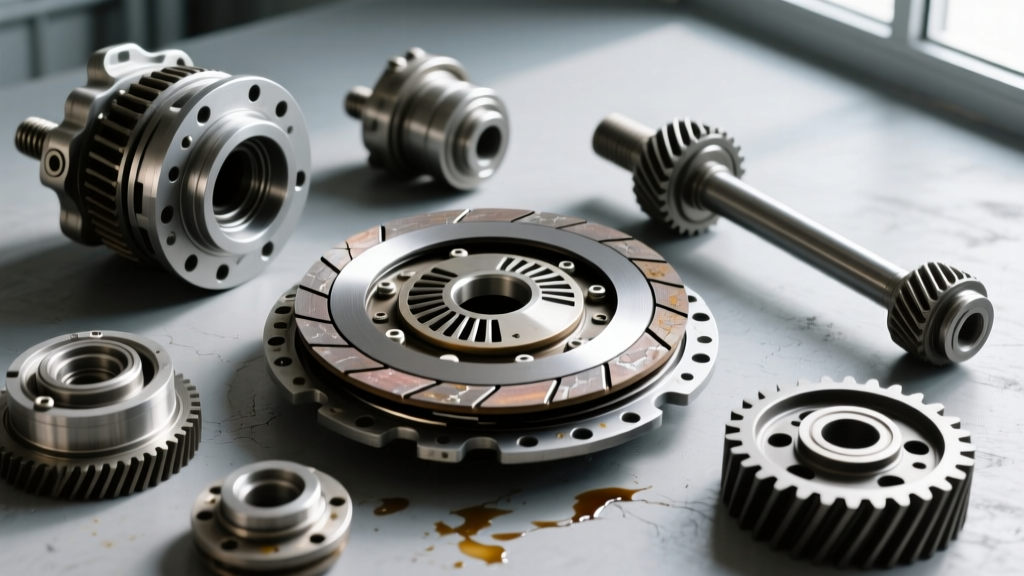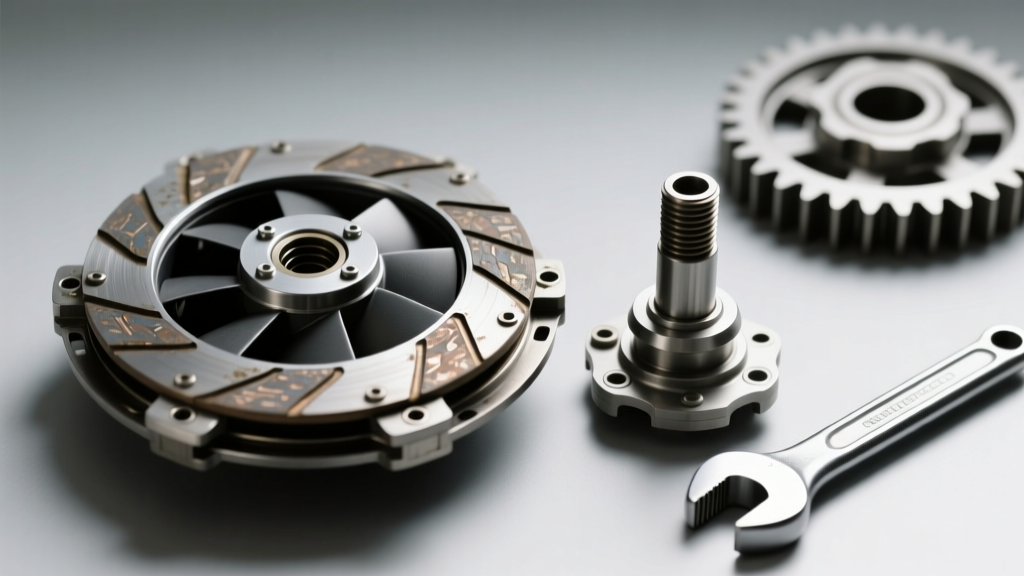
Dropping the transmission on a high-performance manual to replace a shattered bellhousing and bent release fork can easily rival the retail price of a designer Stella McCartney clutch. While high-end fashion accessories demand delicate handling and pristine storage, your drivetrain demands brutal mechanical precision and extreme thermal resilience. Ignoring a $15 pivot ball or a worn nylon fork pad doesn't just result in a stiff pedal; it initiates a catastrophic chain reaction that destroys diaphragm springs, scores input shafts, and ultimately cracks cast-aluminum bellhousings.
As we navigate the 2026 landscape of high-torque manual transmissions—from the Tremec T-56 Magnum in the Cadillac CT5-V Blackwing to the reinforced TR-3160 units in modern Mustangs—the clutch fork and pivot assembly remains a critical, yet frequently overlooked, mechanical fulcrum. This guide provides expert-level diagnostics, precise measurement protocols, and upgrade pathways to ensure your clutch disengagement geometry remains flawless.
The Kinematics of Clutch Fork and Pivot Interaction
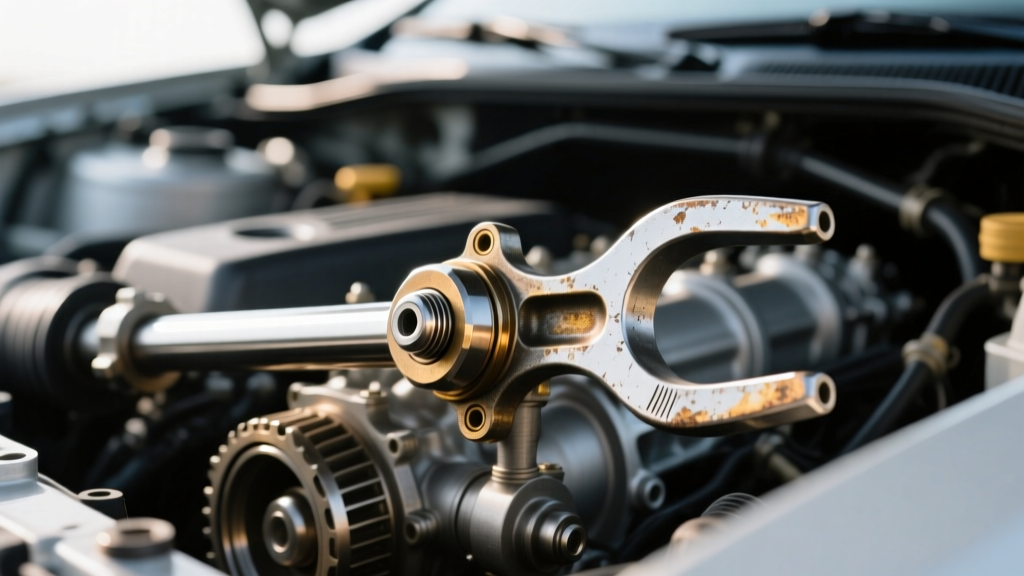
The clutch fork acts as a Class 1 lever, multiplying the hydraulic force from the slave cylinder to overcome the immense clamp load of the pressure plate. The pivot ball (or pivot stud) serves as the fulcrum. In high-RPM, high-clamp-load environments (such as twin-disc setups generating 2,800+ lbs of clamp load), the friction and lateral stress at the pivot point are immense.
Most OEM setups utilize a stamped steel fork with a welded or riveted wear pad—often made of nylon or a soft sintered metal—riding directly on a hardened steel spherical pivot ball. Over time, three distinct failure modes emerge:
- Pivot Ball Grooving: The constant articulation under load wears a trench into the pivot ball, altering the effective ratio of the fork and causing the throwout bearing to bind on the transmission input shaft retainer.
- Fork Pad Degradation: The nylon or soft-metal pad compresses or shatters, introducing dead-stroke into the pedal travel and preventing full clutch disengagement.
- Fork Flex and Fatigue: Stamped steel forks are prone to micro-flexing under extreme hydraulic pressure. This flex absorbs slave cylinder travel, resulting in a spongy pedal and incomplete release bearing stroke.
2026 Diagnostic Matrix: Identifying Pivot and Fork Failure
Before pulling the transmission, a seasoned drivetrain technician will perform a series of dynamic and static tests to isolate fork and pivot issues from hydraulic or friction-disc failures. Use the following diagnostic matrix to pinpoint the exact failure mode.
| Symptom Profile | Likely Pivot / Fork Root Cause | Expert Verification Method |
|---|---|---|
| High-pitch metallic squeal strictly on pedal depression | Pivot ball grooving; dry metal-on-metal contact due to failed nylon pad | Use an automotive stethoscope on the bellhousing inspection cover while an assistant pulses the pedal. |
| Incomplete disengagement (grinding into 1st or Reverse) | Worn fork pad altering the fulcrum ratio; slave pushrod travel lost to dead-stroke | Measure external slave pushrod travel vs. actual fork tip travel. A variance greater than 0.150' indicates pad/fork failure. |
| Pedal vibration or severe chassis chatter on engagement | Fork flexing asymmetrically, causing the release bearing to apply uneven load to diaphragm fingers | Inspect the fork for hairline stress cracks near the pivot radius and check for lateral play exceeding 0.020'. |
| Pedal returning slowly or sticking to the floor | Pivot ball trenching causing the fork to bind and wedge against the bellhousing interior | Disconnect the slave cylinder. If the fork does not return smoothly under light finger pressure, the pivot geometry is compromised. |
The Stack Height Dilemma: Measuring Pivot Ball Geometry
One of the most common errors during a clutch replacement—especially when upgrading from an OEM single-disc to an aftermarket twin-disc setup—is failing to account for clutch stack height. The distance from the bellhousing mounting face to the tip of the pivot ball must perfectly match the release bearing's designed operating window.
According to Ram Clutches Technical Documentation, an incorrect pivot ball height forces the release bearing to operate either fully extended (causing internal hydraulic blowout) or fully compressed (causing parasitic drag and premature bearing failure). For platforms like the GM LS/LT Tremec T-56 Magnum, pivot balls are typically available in 1.375-inch and 1.500-inch heights.
Critical Measurement Protocol
- Establish the Datum: Place a precision machined straight-edge across the bellhousing engine-block mounting face.
- Measure the Stack: Using a digital depth micrometer, measure from the straight-edge to the tip of the installed pivot ball.
- Verify Bearing Preload: Install the clutch and pressure plate. Measure the distance from the bellhousing face to the diaphragm spring fingers. The difference between your pivot height and the finger height must match the release bearing's specified operational envelope (usually between 0.400' and 0.600' of compression travel).
- Adjust Accordingly: If the geometry is off, swap the pivot ball stud. Do not attempt to shim the pivot ball with washers, as this introduces shear points that will snap the stud under 3,000 lbs of clamp load.
Metallurgy and Flex: OEM Stamped vs. Billet Upgrades
When diagnosing a worn fork, the default assumption is to replace it with an OEM equivalent. However, for vehicles producing over 450 lb-ft of torque, OEM stamped steel forks are a liability. The table below contrasts standard OEM configurations with modern aftermarket solutions.
| Component Type | Material / Construction | Flex Under 2,500 lb Load | Estimated Cost (2026) | Best Application |
|---|---|---|---|---|
| OEM Replacement Fork | Stamped Steel w/ Nylon Pad | 0.040' - 0.065' | $60 - $110 | Stock daily drivers, sub-350 lb-ft torque |
| Heavy-Duty Forged Fork | Drop-Forged Steel w/ Bronze Pivot Bushing | 0.015' - 0.025' | $140 - $190 | Track use, mild forced induction, 500 lb-ft |
| Billet Aluminum / Steel Hybrid | CNC Billet w/ Spherical Pivot Interface | Less than 0.005' | $220 - $310 | Drag racing, twin-disc clutches, 800+ lb-ft |
Upgrading to a forged or billet fork eliminates the parasitic pedal travel lost to metal flex. Furthermore, pairing a heavy-duty fork with a spherical pivot ball upgrade drastically reduces the coefficient of friction at the fulcrum point, yielding a noticeably smoother pedal feel and extended component life.
Assembly Best Practices and Torque Specifications
Proper installation of the pivot assembly is just as critical as the diagnosis. A loose pivot stud will back out under vibration, dropping the fork and instantly locking the drivetrain or punching a hole through the bellhousing. Always adhere to manufacturer-specific torque values and surface preparation protocols.
- Tremec T-56 / T-56 Magnum Pivot Stud: 25-30 lb-ft. Must use medium-strength threadlocker (e.g., Loctite 243) on the block threads. Ensure the bellhousing bore is completely free of oil before installation.
- Ford MT-82 / TR-3160 Pivot Bolt: 18-22 lb-ft. These often utilize a bolt-and-bracket design rather than a threaded stud. Inspect the bracket for fatigue cracking at the 90-degree bend.
- Jeep AX-15 / NV3550 Pivot Ball: 30-35 lb-ft. These cast-iron bellhousings are prone to thread stripping if over-torqued. Always chase the threads with a tap before installing a new stud.
- Fork Retention Clips: Never reuse OEM hairpin clips. Use heavy-duty Inconel or stainless steel retention clips to prevent the fork from dislodging from the pivot ball during high-RPM shifts.
The True Cost of Deferred Maintenance
Ignoring the early auditory warnings of a failing clutch fork pivot is a masterclass in false economy. A replacement OEM pivot ball costs between $12 and $25. An upgraded bronze-bushed spherical pivot setup costs roughly $85. Conversely, when a pivot stud snaps or a fork punches through the bellhousing while the vehicle is in motion, the collateral damage is severe.
You are now looking at a cracked aluminum bellhousing ($400-$800), a damaged transmission front bearing retainer ($150), a ruined input shaft ($350+), and the labor to tear down the front of the gearbox (4-6 hours at $150/hr). The total repair bill easily eclipses $2,500. By integrating pivot geometry checks into every clutch service and listening for the tell-tale squeak of a dry fulcrum, you preserve the mechanical integrity of the drivetrain and keep your capital invested in horsepower, not catastrophic repair bills. For further reading on manual transmission alignment and bellhousing runout, consult the official Tremec installation guidelines to ensure your drivetrain is built to survive the limits of modern performance.