The Physics of Torque Overload: From Cruiser Motorcycles to Class 8 Rigs
When evaluating drivetrain stress and clutch system diagnostics in 2026, engineers and fleet mechanics often look at extreme micro and macro examples of torque management. On the micro end of the spectrum, the Yamaha V Star 1100 starter clutch serves as a textbook case study in rotational shock-loading and one-way sprag failure. On the macro end, heavy-duty commercial vehicle clutches—such as those found in Class 8 logging trucks and heavy-haul mining rigs—endure continuous, massive torque loads that demand advanced friction materials and precision damping. Understanding the mechanical failures of both systems provides critical insights into upgrading commercial drivetrains for maximum performance and longevity.
While a cruiser motorcycle and an 80,000-pound GVW commercial truck operate in entirely different worlds, the fundamental physics of engagement shock, thermal degradation, and torsional vibration remain identical. This performance and upgrade guide breaks down the most common clutch problems in heavy-duty and commercial vehicles, using the failure mechanics of the Yamaha V Star 1100 starter clutch as a comparative baseline for understanding torque overload.
Diagnostic Profiles: Heavy-Duty Commercial Clutch Failures
Modern commercial fleets have largely migrated to Automated Manual Transmissions (AMTs) like the Eaton Endurant HD and the ZF TraXon. However, heavy-haul, severe-duty, and owner-operator rigs still frequently utilize robust manual setups, such as the Eaton Fuller RTLO series paired with 15.5-inch twin-plate clutches. When these systems fail, the symptoms are distinct and costly.
Thermal Overload and Friction Face Degradation
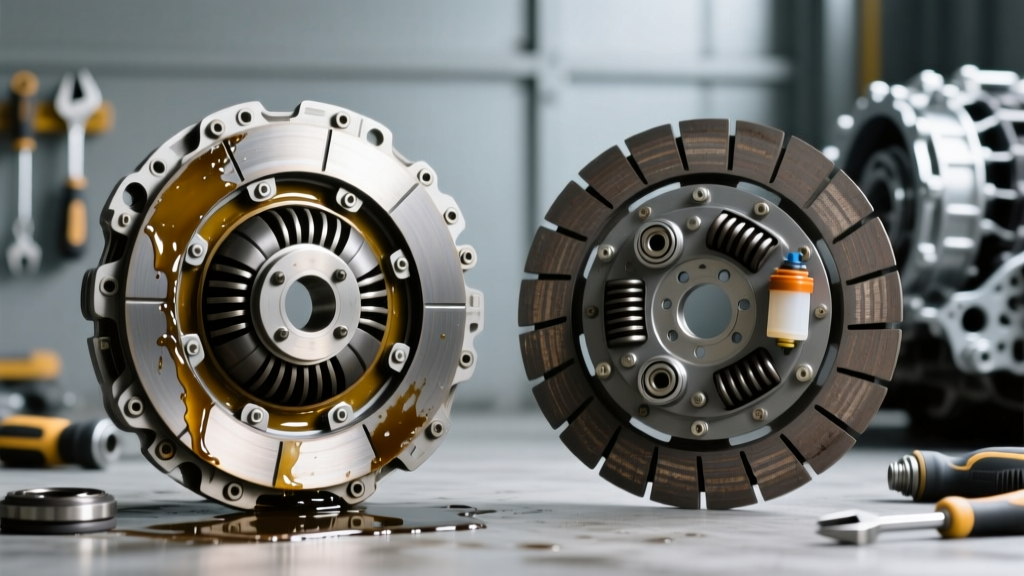
In heavy-duty applications, thermal cracking is the primary enemy of organic friction materials. When a driver rides the clutch pedal on a 12% grade with a fully loaded trailer, surface temperatures on the friction disc can exceed 800°F (426°C). This causes the organic resin to glaze and eventually burn away, leading to catastrophic slippage. Unlike passenger vehicles, a commercial truck clutch slip will rapidly score the cast-iron flywheel and pressure plate, turning a $2,000 clutch replacement into a $5,500 drivetrain overhaul.
Torsional Vibration and Marcel Spring Collapse
Heavy-duty diesel engines, particularly high-torque inline-six configurations producing upwards of 2,050 lb-ft of torque, generate immense torsional vibration. The 'marcel springs' (the wavy friction material riveted to the clutch disc) are designed to absorb micro-shocks during engagement. In severe-duty applications, these springs frequently collapse or fatigue, resulting in aggressive, chattering engagements that send shockwaves through the transmission input shaft and driveline U-joints.
Release Bearing and Yoke Wear
Commercial clutch systems utilize heavy-duty release bearings that must withstand thousands of pounds of clamp load. A common diagnostic symptom of impending failure is a high-pitched squeal or grinding noise that changes pitch with engine RPM but is independent of vehicle speed. If the bearing seizes, it will machine a groove directly into the transmission input shaft retainer collar, necessitating a complete transmission teardown.
The Starter Clutch Analogy: Shock Loading in Sprags vs. Friction Discs
To truly understand shock torque, we must look at the Yamaha V Star 1100 starter clutch (Part # 5KM-15560-00-00). This component is a one-way roller/sprag clutch located behind the left-side crankcase cover. Its job is to engage the starter motor to the engine's crank gear, and then instantly disengage once the engine fires.
Why is this relevant to heavy-duty commercial mechanics? Because the V Star 1100 starter clutch is notorious for shattering under 'kickback' conditions. If the motorcycle's battery is weak, or if the ignition timing is slightly off, the engine can backfire during the cranking cycle. This sends a violent, instantaneous reverse-torque spike back into the starter sprag. Since the sprag is designed to lock in only one direction, this shock-load instantly shatters the internal rollers and strips the driven gear teeth.
Engineering Insight: The destruction of a Yamaha V-Star 1100 starter clutch via cranking kickback is the exact same mechanical phenomenon as 'driveline wind-up' and 'shock loading' in a Class 8 truck. When a heavy-haul truck driver aggressively dumps the clutch pedal at 1,800 RPM to break traction, the instantaneous torque spike bypasses the friction disc's damping capabilities and shears the splines on the transmission input shaft. Both failures are born from unmanaged rotational inertia.
Performance Upgrades for Class 8 and Heavy-Haul
Upgrading a heavy-duty commercial clutch requires moving away from OEM organic materials and embracing advanced ceramics and multi-plate configurations. For trucks operating in the 120,000+ lb GCW (Gross Combination Weight) range, the following upgrades are mandatory for 2026 performance standards.
1. Twin-Plate Ceramic Puck Conversions
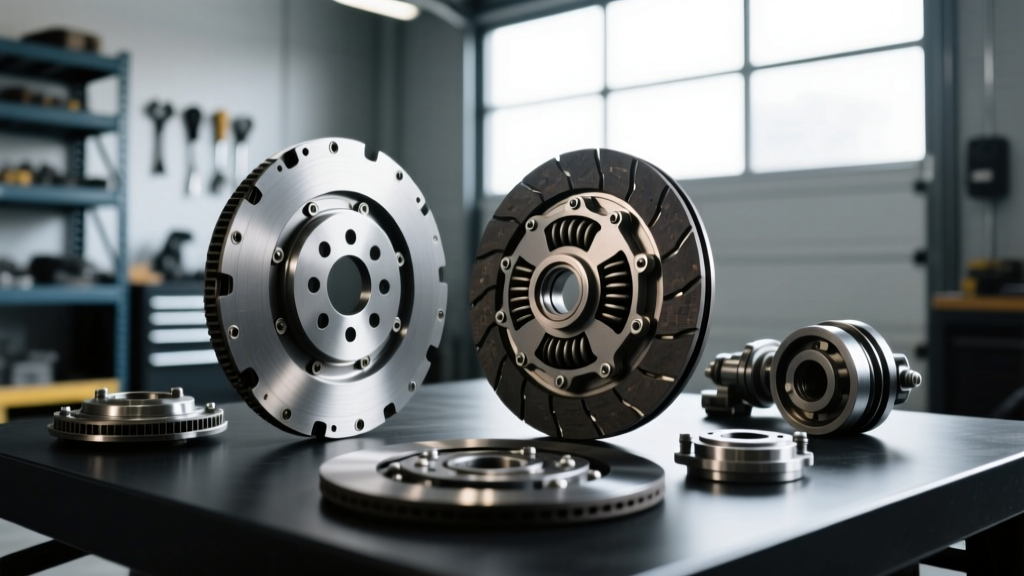
Upgrading from a 15.5-inch full-face organic disc to a twin-plate ceramic puck setup (such as the Eaton 09512 series) increases torque capacity from 1,850 lb-ft to over 2,250 lb-ft. Ceramic pucks do not glaze under high heat, making them ideal for rock-crawling heavy-haul and steep-grade logging operations. The trade-off is a harsher engagement, which requires careful throttle modulation.
2. Dampened Hub and Poly-Spring Upgrades
To combat the torsional vibration that destroys input shafts, performance builds utilize clutch discs with heavy-duty polyurethane dampening springs and reinforced hub splines. These hubs are engineered to absorb the low-frequency harmonic vibrations inherent to modern high-efficiency diesel engines running at lower cruise RPMs.
3. Pneumatic Clutch Assist Systems
Upgrading the mechanical linkage to a modern pneumatic assist system reduces pedal effort by up to 60% while maintaining precise modulation. This prevents the 'riding' habit that leads to thermal degradation, extending the life of high-clamp-load pressure plates (which can exert up to 4,200 lbs of force across twin plates).
Torque Capacity & Failure Matrix
| System / Component | Application | Torque / Load Limit | Primary Failure Mode | Upgrade Solution |
|---|---|---|---|---|
| Eaton Solo 15.5" Organic | Class 8 Highway Fleet | 1,850 lb-ft | Thermal Glazing & Marcel Collapse | Twin-Plate Ceramic Puck |
| Eaton Twin-Plate Ceramic | Heavy-Haul / Mining | 2,250 lb-ft | Spline Shear (Shock Load) | Dampened Poly-Hub / Input Shaft Sleeve |
| Yamaha V Star 1100 Sprag | Cruiser Motorcycle | ~90 lb-ft (Cranking) | Sprag Shatter (Kickback) | High-Torque Starter Gear / Lithium Battery |
| PTO Clutch (Commercial) | Refuse / Mixer Trucks | 800 lb-ft (Continuous) | Friction Disc Wear / Slippage | Sintered Iron Friction Material |
Precision Installation and Torque Sequences
Whether you are replacing the starter clutch gear on a V-Star 1100 or installing a heavy-duty Eaton Fuller clutch assembly into a Class 8 rig, precision torque application is non-negotiable. In heavy-duty commercial applications, the SAE #1 flywheel housing bolts must be torqued to exact specifications—typically 150 to 175 lb-ft depending on the fastener grade—to prevent housing flex under load. The flywheel-to-crank bolts often require upwards of 250 lb-ft, secured with high-strength thread locker.
Similarly, the Yamaha V Star 1100 starter clutch gear bolt requires strict adherence to torque specs (typically around 65 lb-ft) combined with red Loctite. If the bolt backs out due to the harmonic vibrations of the V-twin engine, the starter gear will wobble, chew through the sprag clutch, and ultimately crack the aluminum crankcase cover—a catastrophic failure mirroring a heavy-duty truck's bell-housing crack caused by misaligned dowel pins.
Preventative Maintenance for 2026 Fleets
Diagnosing clutch problems in heavy-duty and commercial vehicles before they result in roadside breakdowns requires proactive telematics and physical inspections. Modern fleet management systems monitor clutch slip percentages via transmission output shaft sensors. If slip exceeds 3% under heavy load, the system flags the vehicle for immediate service. Furthermore, checking the clutch brake stroke and free-play every 25,000 miles ensures the release bearing is not riding against the pressure plate fingers, a common mistake that leads to premature bearing failure and pressure plate warping. By respecting the physics of torque—whether in a 1,063cc V-Twin cruiser or a 15-liter commercial diesel—mechanics can engineer drivetrains that survive the harshest environments on earth.