The High-Stakes Reality of Class 8 FEAD Systems
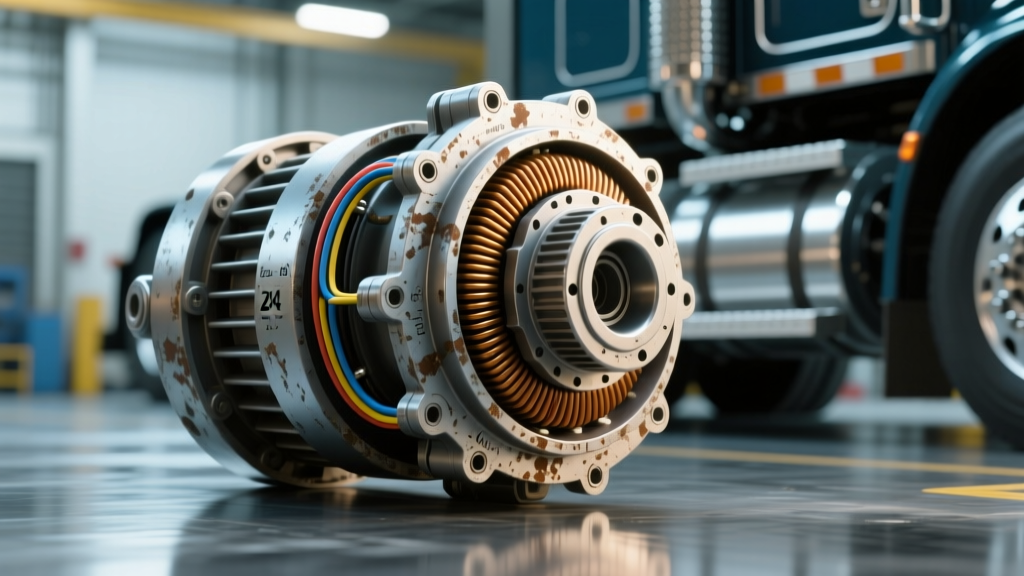
When an ac compressor clutch failure occurs in a standard passenger vehicle, the primary consequence is a loss of cabin cooling. However, when this failure happens in a Class 8 heavy-duty truck—such as a Freightliner Cascadia, Volvo VNL 860, or Kenworth T680—the stakes are exponentially higher. In modern heavy-duty diesel platforms like the Detroit DD15 or Volvo D13, the AC compressor is integrated directly into the Front-End Accessory Drive (FEAD) serpentine belt routing. A seized clutch pulley bearing or a catastrophic pressure plate detachment does not just kill the HVAC system; it shreds the main Poly-V drive belt. This single point of failure instantly disables the water pump, alternator, and hydraulic steering pump, leading to immediate engine overheating and a costly roadside tow.
As we navigate the 2026 landscape of strict CARB and EPA idle-reduction mandates, fleet managers and heavy-duty technicians must view the AC compressor clutch not merely as a comfort component, but as a critical drivetrain-adjacent assembly. This performance and upgrade guide dives deep into the diagnostics, failure modes, and high-performance upgrades required to keep commercial HVAC systems reliable under extreme thermal and vibrational loads.
Anatomy of Heavy-Duty 24V Clutch Architecture
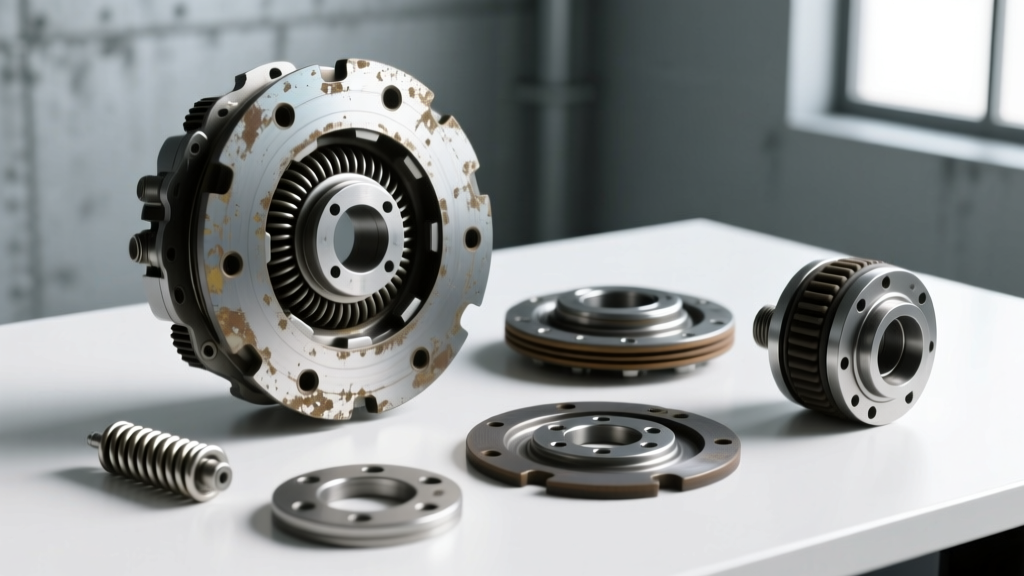
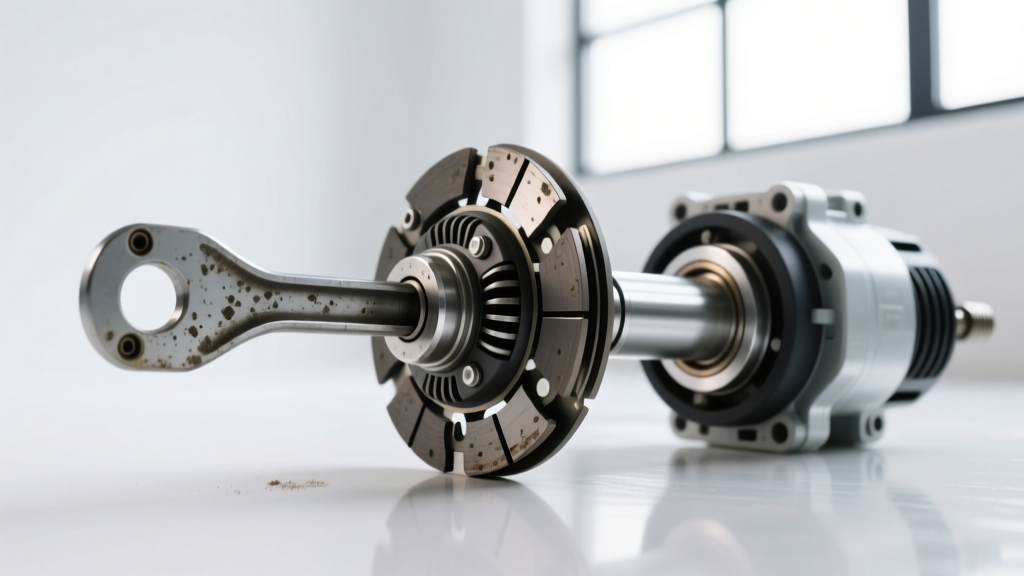
Unlike the 12-volt systems found in light-duty trucks, Class 8 commercial vehicles operate on a 24-volt DC electrical architecture. The most common compressors found in these rigs are the Sanden SD7H15 and various Red Dot / UACK heavy-duty reciprocating models. These compressors utilize massive electromagnetic coils designed to pull a heavy-duty steel friction plate against the pulley face, engaging the compressor shaft while the pulley bearing rides continuously on the compressor snout.
The operational environment for these clutches is brutal. They are subjected to extreme thermal cycling, corrosive road salts, high-amperage voltage spikes from heavy-duty alternators, and relentless harmonic vibration from high-compression diesel engines. According to technical bulletins from Mobile Air Climate Systems Association (MACS), thermal fade and air-gap drift are the leading causes of premature clutch disengagement in commercial fleets operating in high-ambient-temperature corridors.
Diagnostic Matrix: Identifying Failure Before Belt Shredding
Catching clutch degradation before it destroys the FEAD belt requires a systematic approach. Below is a diagnostic matrix tailored for heavy-duty fleet technicians to cross-reference symptoms with root causes.
| Symptom / Observation | FEAD / Drivetrain Impact | Probable Root Cause | Diagnostic Procedure |
|---|---|---|---|
| Intermittent squeal under high cab heat load | Belt slip, accelerated Poly-V wear | Air gap exceeded 0.65mm; magnetic field cannot overcome plate resistance when hot. | Measure air gap with metric feeler gauges at 3 equidistant points around the friction plate. |
| Clutch engages cold, drops out after 20 mins | Compressor short-cycling, sleeper cab overheating | Coil thermal fade; internal copper winding breakdown increasing resistance under heat. | Test coil resistance cold vs. hot using a Fluke 87V multimeter. Look for >15% variance. |
| Continuous metallic grinding from FEAD | Imminent pulley seizure, belt shredding risk | Pulley bearing seal failure, grease washout, and cage disintegration. | Remove serpentine belt, spin pulley by hand. Check for axial play and rough rotational drag. |
| ECM throws parasitic load / belt slip codes | Engine derate, limp mode activation | Friction plate rust-jacking or compressor mechanical seizure transferring load to clutch. | Perform voltage drop test across clutch connector; attempt to rotate compressor hub manually. |
Performance Upgrades for Commercial Fleets
Simply swapping a failed heavy-duty clutch with a standard OEM replacement is often a band-aid solution, especially for trucks running sleeper cab operations or operating in severe-duty environments. To maximize uptime and protect the FEAD system, consider the following performance upgrades.
1. High-Mass 24V Electromagnetic Coils
Standard 24V coils can suffer from thermal fade when the engine bay reaches peak operating temperatures in stop-and-go traffic or during prolonged idling. Upgrading to high-mass, epoxy-encapsulated heavy-duty coils (such as premium aftermarket variants from Red Dot or Sanden) provides a denser copper winding matrix. These coils maintain a stable resistance profile (typically between 3.2Ω and 4.5Ω at 20°C) even when ambient under-hood temperatures exceed 220°F (104°C). The stronger, sustained magnetic field ensures the friction plate remains locked to the pulley, eliminating micro-slipping that generates destructive heat.
2. Ceramic-Coated and Zinc-Plated Friction Plates
For fleets operating in the Rust Belt or regions that heavily use magnesium chloride for de-icing, standard steel friction plates are prone to 'rust-jacking.' This occurs when corrosion builds up between the plate and the pulley face, effectively altering the air gap and causing severe chatter upon engagement. Upgrading to ceramic-coated or advanced zinc-nickel plated friction plates drastically reduces surface corrosion, ensuring consistent engagement torque and extending the life of the pulley bearing by reducing harmonic shock loads.
3. Electric Standby and APU Integration
With 2026 idle-reduction laws tightening across North America, the ultimate 'upgrade' for the engine-driven AC compressor clutch is to eliminate its use during sleeper cab occupancy. Integrating an Auxiliary Power Unit (APU) or an all-electric standby HVAC system (using 48V or high-voltage battery banks) with a dedicated electric scroll compressor removes the mechanical clutch from the equation during rest periods. This not only saves the mechanical clutch from thousands of hours of idling wear but also ensures compliance with anti-idling regulations while providing superior sleeper cab climate control.
Precision Calibration: Air Gaps, Torque, and Electrical Testing
Installing a heavy-duty clutch requires precision. The Sanden International service guidelines emphasize that improper air gap and fastener torque are the primary culprits behind warranty returns. When rebuilding or upgrading the clutch assembly on an SD7H15 or equivalent heavy-duty compressor, adhere strictly to the following specifications:
- Air Gap Specification: The clearance between the friction plate and the pulley face must be set between 0.40mm and 0.55mm (0.015' - 0.022'). Use a non-magnetic brass feeler gauge to measure at three equidistant points. If the gap is too wide, the 24V coil will fail to pull the plate in when the coil is hot. If too narrow, the plate will drag and burn out the friction material.
- Shimming Protocol: Never bend the friction plate to adjust the gap. Always use precision machined shims located on the compressor shaft snout behind the friction plate hub to dial in the exact clearance.
- Center Hub Retaining Bolt: The center bolt (typically M8x1.25 or M10x1.25, Grade 10.9) must be torqued to 18 Nm to 22 Nm (13.3 to 16.2 lb-ft). Always apply a medium-strength threadlocker (such as Loctite 243) to prevent the bolt from backing out due to diesel engine harmonic vibration. A loose hub will strip the compressor shaft splines, destroying a $900 compressor assembly.
- Voltage Drop Testing: Heavy-duty wiring harnesses are long and prone to corrosion at the bulkhead connectors. With the engine running and the AC commanded ON, perform a voltage drop test across the clutch supply wire. A drop greater than 0.5V on a 24V system indicates excessive resistance in the harness or relay, which will starve the coil of the amperage required for full engagement.
- Coil Resistance Baseline: A healthy 24V heavy-duty clutch coil should read between 3.2Ω and 4.5Ω at room temperature. Any reading below 2.0Ω indicates a shorted winding, while an 'OL' (Open Loop) reading signifies a broken internal circuit.
Protecting the Investment: Pulley Bearing Maintenance
The clutch pulley bearing rides continuously whenever the engine is running, regardless of whether the AC is engaged. In heavy-duty applications, these bearings are subjected to immense radial loads from the high-tension FEAD belt (often tensioned upwards of 1,200 Newtons on a Detroit DD15). When upgrading the clutch coil and friction plate, it is highly recommended to press in a new, heavy-duty sealed angular contact bearing. Standard radial bearings often fail under the lateral belt load, leading to pulley wobble, belt mistracking, and eventual FEAD destruction. Using a dedicated hydraulic press and the correct bearing driver tool ensures the bearing is seated squarely without transferring force through the delicate bearing races.
The ROI of Upgrading Fleet HVAC Architecture
Fleet managers often hesitate at the upfront cost of premium heavy-duty clutch components. A standard replacement coil might cost $85, while a high-mass, epoxy-sealed performance coil can range from $180 to $250. However, the mathematics of heavy-duty breakdowns quickly justify the upgrade. A roadside tow for a shredded serpentine belt and subsequent engine overheating can easily exceed $2,500 in recovery fees, missed delivery penalties, and secondary component damage. Furthermore, maintaining optimal sleeper cab cooling is directly tied to driver retention in a highly competitive logistics market.
By treating ac compressor clutch failure as a critical drivetrain vulnerability rather than a secondary comfort issue, and by implementing precision calibration and high-performance 24V upgrades, fleets can secure their FEAD systems, ensure 2026 idle-law compliance, and drastically reduce unscheduled maintenance downtime. For further reading on commercial fleet HVAC best practices and mobile refrigeration standards, technicians should regularly consult resources provided by Heavy Duty Trucking and OEM service bulletins.